



Of Authorized Pattern
Like many other aspects of American society, much of police uniform tradition in the United States comes from across the pond.

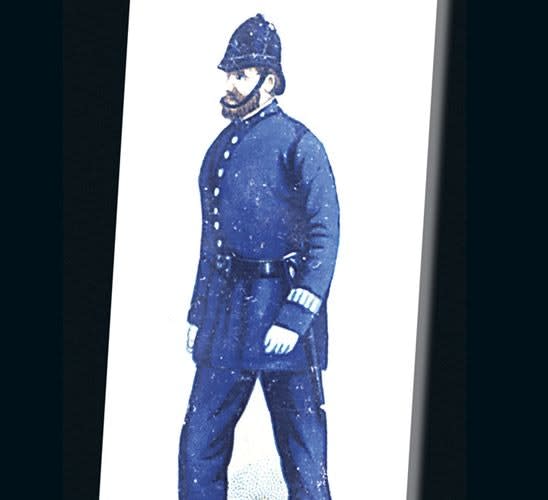
The London Metropolitan Police force was the model for the American city forces. This illustration shows a 19th-century “bobby” in a wool frock coat. Similar uniforms were worn by New York cops of the period.
Like many other aspects of American society, much of police uniform tradition in the United States comes from across the pond. The first modern police force was established in London in 1829, and it set the standards for all Western law enforcement agencies to come, including uniform standards.
The organizers of the British Metropolitan Police made a conscious decision about uniform color when they decided how to dress the agency's officers. One of the biggest public problems in England at the time was civil unrest. The job for quelling these riots fell to the King's Army, and the troops were none too gentle about upholding His Majesty's will. As such the Army's red coats and its "lobsterback" troops were reviled by much of England's common folk. This is why the British Police Force was dressed in blue uniforms, to distance itself from the hated army.
Some 15 years later, the first modern American police force, the New York City Police Department, took to the streets in blue uniforms. Those first NYPD unis were modeled on the British, but ironically they didn't distance the officers from the U.S. military, which also wore indigo blue.
1844 Patrol Suit
Other than the badge and other symbols of authority, today's cop would barely recognize the garments of the 1844 NYPD as a police uniform. Historian and film costume consultant Peter Dervis explains that the first NYPD unis were bulky and uncomfortable compared with today's patrol clothes. The Class B uniform of the era consisted of a wool frock coat with big brass buttons, wool trousers, and a peaked cap. The frock coat was cinched with a black waist belt with a large brass buckle. Most American metropolitan forces followed this model.
Oddly enough in an era of such formal attire, footwear was not uniform. "It wasn't until the late 19th century that footwear was as regulated as we like to think," Dervis explains. "You have to remember that boots were not made for right and left feet prior to the mid-1800s. So probably all the guidelines said was, 'black boots.'"
The earliest uniforms of the NYPD had much in common with the uniforms of Federal troops in the Civil War. They were blue, they were wool, and they featured overcoats. Another similarity between NYPD and other American police personnel and both Federal and Confederate soldiers was that they tended to wear homemade shirts.
"We really don't know what they wore under their uniform coats," says Dervis. "The records will often say, 'of authorized pattern,' but they don't say specifically what that pattern was."
While the mid-1800s uniform of the NYPD sounds like an instrument of torture for modern cops, it really wasn't that bad for the men who wore it. Dervis says some attention was paid to officer comfort. For example, there was a lighter weight summer version of the patrol suit. Further, Dervis argues that the police wardrobe was no warmer and no more constricting than that of the average New Yorker of the time.
Home from France
Throughout the remainder of the 1800s, most of the changes to the basic uniform of the NYPD patrol officer were subtle. Frock coats alternated between single- and double-breasted styles and collars changed in ways that only costume designers can explain.
One uniform addition that wasn't so subtle was the hat. Inspired by the high-crowned hat of the London "bobby," the NYPD adopted what has come to be known as the "Keystone Cops" hat around the turn of the century. That hat was immortalized in silent films, but fortunately for every U.S. cop alive today, it didn't have much staying power as a police fashion statement.
The biggest movement in police garments in the first few decades of the 20th century wasn't silly hats; it was actually more practical uniforms for both the military and the police. Society became much less formal in the 1920s and even the U.S. Army ditched its World War I "choker collar" uniforms in favor of an overcoat and a shirt and tie. However, the NYPD retained its overcoat with choker collar for its dress uniform.
The Atomic Age
Without a doubt the greatest changes in American police uniforms were seen in the years immediately following World War II. Many American servicemen returning from the battlefields of Europe and the Pacific became cops, and they wanted uniforms as functional and comfortable as the ones they had worn in combat.
"If you look at all the uniforms of World War II, the American uniform stands out," says Dervis. "The Germans and the other forces had very traditional uniforms, but the American battle fatigues were a workman's uniform."
The shirt sleeve and no coat look of American World War II combat uniforms were adopted by the NYPD and many other American police agencies in the years following the war. But even though the trend in police uniforms for the post-war years was to make them less formal, Dervis says great care was taken not to make the officers look too relaxed.
"The police officer because of his stature in the community did not become too casual," he explains. "Police agencies were very reluctant to let go of many of the uniform elements that made the police officer an authority to be respected."[PAGEBREAK]
Age of Specialization
Today's police officer is dressed very differently than the officer of the mid-1900s, and the reasons for that go far beyond the trend of less formal clothing in all walks of American life. The contemporary peace officer is often a specialist, a bomb tech, a SWAT officer, a gang officer, a K-9 officer, just to name a few. And the uniform is designed to fit the needs of that specialty.
Another trend for 21st century police agencies is the battle dress uniform. Dervis, who judges the National Association of Uniform Manufacturers and Distributors (NAUMD) best-dressed police force competition, decries the BDU's military look, particularly in green, black, or camouflage.
"The moment you dress a police officer in an army battle dress uniform, you send a different message to the public and the officer," he explains. "There is a fine line between being authoritative and being intimidating."
Dervis acknowledges, however, that more and more agencies are authorizing BDUs for certain special officers because they are comfortable and practical. But he adds that agencies should be very conscious of the message they send through color. "A police blue BDU looks much more benign than green or camouflage," he says. "Black is a really bad color for police officers [unless they need it for night operations] and near-black is just as bad."
Clothing says a lot about a police department and its attitude toward its duty and the people it serves, according to Dervis. That's why he favors blue for all peace officers. "Blue has a long and honorable tradition," he says. "I think it's a mistake to move away from it. Clothing is an instant message sender and jettisoning the traditional police colors may have long-range effects that are less than desirable."
Despite such concerns, there is one undeniable trend in police uniforms over the last 160 years: They've become more comfortable, more practical, and more functional. There are no signs that this trend is going to stop.
Uniform Trends
In contemporary policing, there are three major trends in clothing: the battle dress uniform (BDU), the functional custom uniform, and the tactical uniform.
Mil-Spec BDUs
The leading maker of BDUs for law enforcement is Propper, one of seven or eight authorized manufacturers of BDUs for the U.S. military. Jeff Mason, president of Propper, says the company is the only one of the official military contractors that makes BDUs for police, and it makes the only police BDU that, with one minor change, meets U.S. government guidelines for battle dress uniforms. Police versions are made of polyester/cotton blends and military BDUs are a nylon/cotton blend.
Propper makes BDUs in more than 20 sizes, all rigorously inspected to meet government standards for sewing. Mason says the Propper BDUs feature rugged stitching and seams, including a total of 47 28-stitch bartacks in each garment.
Each Propper police BDU is cut from military patterns so that they match government guidelines for fit. You might think that the way a soldier's uniform fits is a minor concern for the military, but Mason says government inspectors take it very seriously.
And with good reason. "Pretend that you're a soldier, and you're moving in quietly on the enemy," says Mason. "You squat down and take aim, but your saddle (crotch seam and seat seam) pinches you. You flinch, you pick up your foot, snap a twig, and the enemy hears you. You don't want the fit of your clothes to compromise what you're doing in a situation like that."
www.propper.com
Custom Uniforms
Another major change in police clothing in the last 10 years or so has been the adoption of custom uniforms for specific law enforcement applications. A leader in this field is Tacoma, Wash.-based Bratwear.
Originally a sportswear manufacturer, Bratwear entered the law enforcement market several years ago as a maker of spandex shorts for police bicycle units. The company now makes custom bicycle patrol shirts, shorts, pants, vests, jackets, pads, and accessories, as well as custom uniforms for K-9 units and tactical officers.
"My desire is not to run a factory, but to be the Calvin Klein of specialty uniforms," says Bratwear president Sally Swanson. "They call us the 'fashion police,' and I love the label. You might see cops on skateboards and Rollerblades some day, and I'm going to make the knee pads for them."
Some departments swear by Bratwear's custom approach. Stu Bracken of the Tacoma Police Department's bicycle squad was frustrated by the approach of mass-market manufacturers before he talked to Bratwear. "Everybody else said, 'This is how we make it and that's it.' Not Sally; she listens. For instance, we wanted zippers on the outside of our pants legs, not the inside, where they usually are and they get caught up in our bike chains. She did it."
www.bratwear.com
Tactical Clothing
For 15 years, Royal Robbins has been selling its 5.11 Tactical Pants, and they're still in great demand. Any officer who's ever worn them can tell you why. Made of tough 8.5-ounce tactical canvas, 5.11 Tactical Pants have double seats and double knees. The pants feature cargo pockets for knives and cell phones, and a heavy-duty tool strap that lets wearers hold flashlights or batons in their back pockets.
Capitalizing on the popularity of 5.11 Tactical Pants, Royal Robbins has created a complete line of 5.11 Tactical clothing for law enforcement. The line includes the 5.11 Tactical Vest, the 5.11 Tactical Longsleeve Shirt, the 5.11 Tactical Polo Shirt, the 5.11 Tactical Short, and the 5.11 Bluewater Short.
Although the 5.11 Tactical line of police clothing is not strictly uniform wear, the pants, vests, and other garments are being used by some officers as complements to their issued uniform. Wearers say the 5.11 Tactical line is comfortable, practical, and functional for patrol, SWAT, and other police operations.
www.511tactical.com
More Patrol
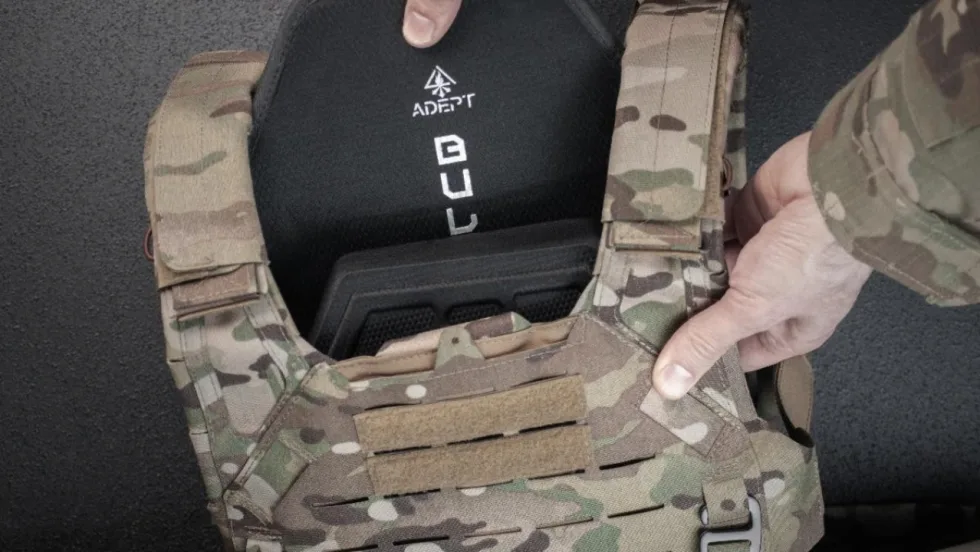
Adept Armor Introduces Two New Rifle Plates
Adept Armor has launched two new Level IV ballistic plates, the Emperor and the Archon Mark 2, which brings Adept Armor’s new Quatroid ceramic to the high-threat, performance-value center of the range at 5.2 pounds.
Read More →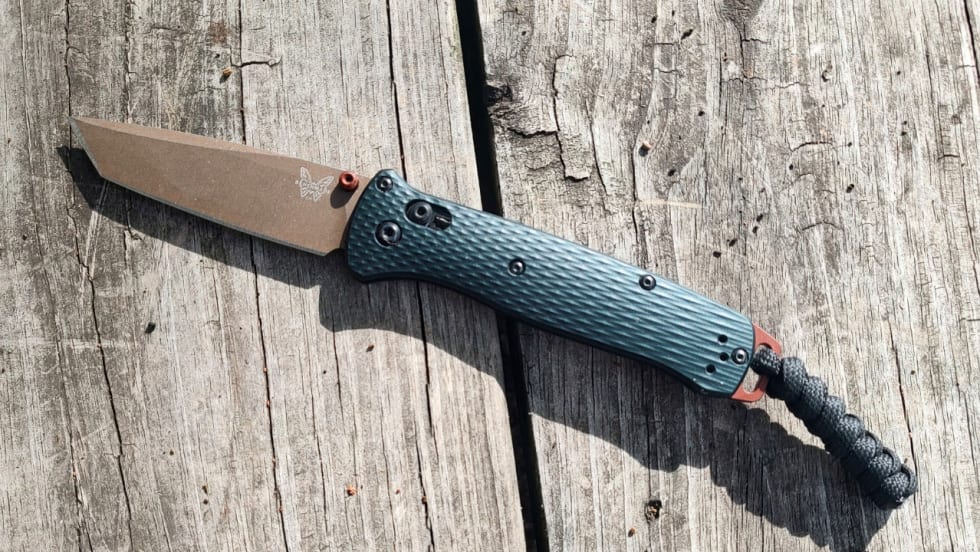
POLICE Product Test: Benchmade Bailout
The Benchmade Bailout is a slim, lightweight carry knife with a deep-ride pocket clip and comes in a variety of blade steels and scales. Here is a detailed review of the Taiga Green Bailout, released earlier this year.
Read More →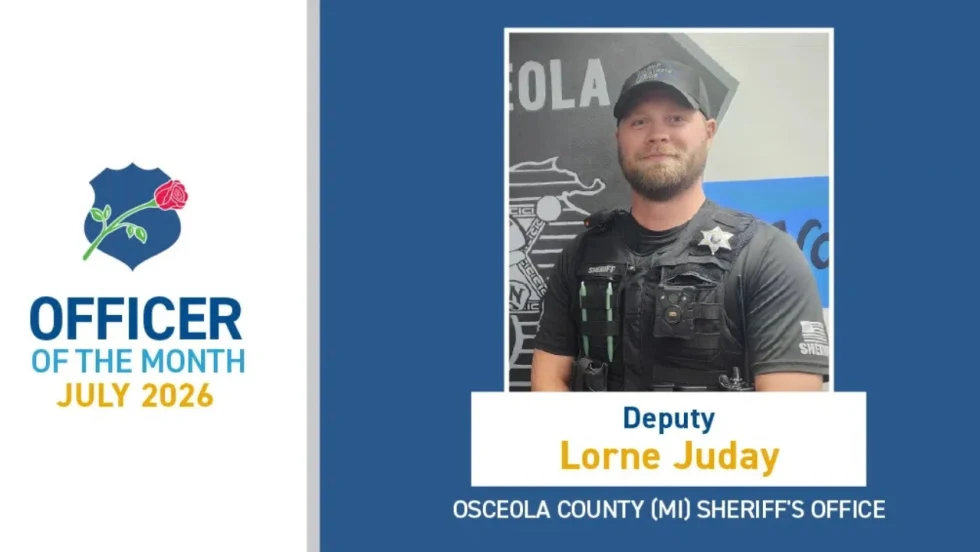
NLEOMF Announces July 2026 Officer of the Month
NLEOMF honored a Michigan deputy sheriff as the July 2026 Officer of the Month for rescuing a trapped driver from a burning vehicle following a Fourth of July crash.
Read More →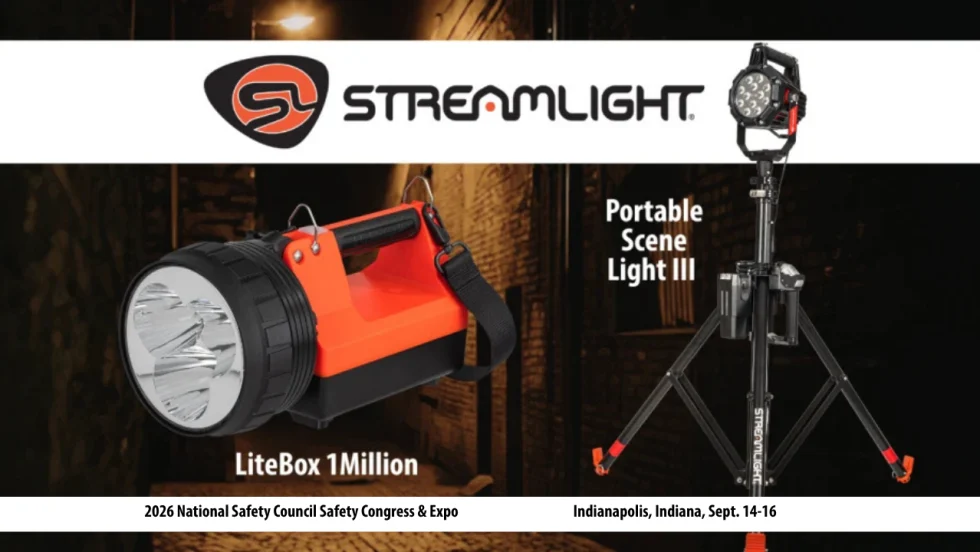
Streamlight to Showcase Newest Lighting Products at National Safety Council’s Safety Congress & Expo 2026
Streamlight will showcase its latest lights, including the Portable Scene Light III and the LiteBox 1Million, at the 2026 National Safety Council (NSC) Safety Congress & Expo.
Read More →
The 2027 World Police & Fire Games Set for Perth, Australia
The 2027 World Police & Fire Games (WPFG) will take place in Perth, Western Australia, from Friday, March 12 through Sunday, March 21, 2027.
Read More →
5.11 Partners with National Fallen Firefighters Foundation to Support #ForThe343
5.11 has joined the nationwide movement honoring the 343 New York City Fire Department firefighters lost on Sept. 11, 2001.
Read More →
Team Wendy Announces Title Sponsorship of the Jorge Pastore Foundation
Team Wendy’s 3-year partnership with the Jorge Pastore Foundation expands access to programs that strengthen those who serve.
Read More →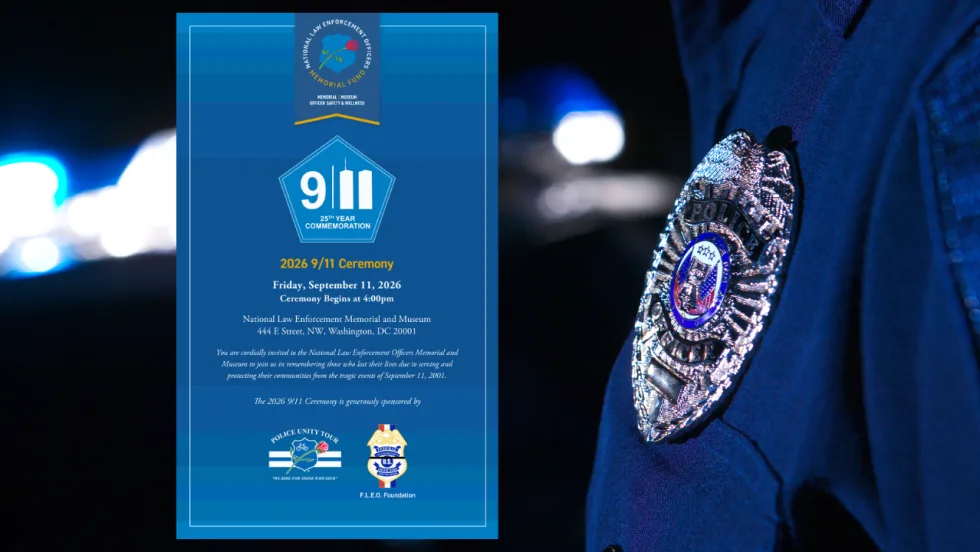
National Law Enforcement Memorial and Museum Hosting 9/11 25th-Year Commemoration Ceremony
The National Law Enforcement Memorial and Museum is hosting a 9/11 25th Year Commemoration Ceremony on Sept. 11 at 4 p.m.
Read More →
National Law Enforcement Officers Memorial Fund Announces June 2026 Officers of the Month
The National Law Enforcement Officers Memorial Fund (NLEOMF) named 15 officers of the Chico Police Department (California) as the Officers of the Month for June 2026 for their roles in responding to an active-shooter incident at a public library.
Read More →
Team Wendy App Creates New Digital Hub for Helmet Owners
The Team Wendy Community App provides one location for warranty registration, size-fit tools, product updates, and community connection. For helmet owners, the new app creates a simpler path to the information and tools that matter most.
Read More →