



Borderless Concealed Carry
What if local laws forbid you to carry a concealed weapon?

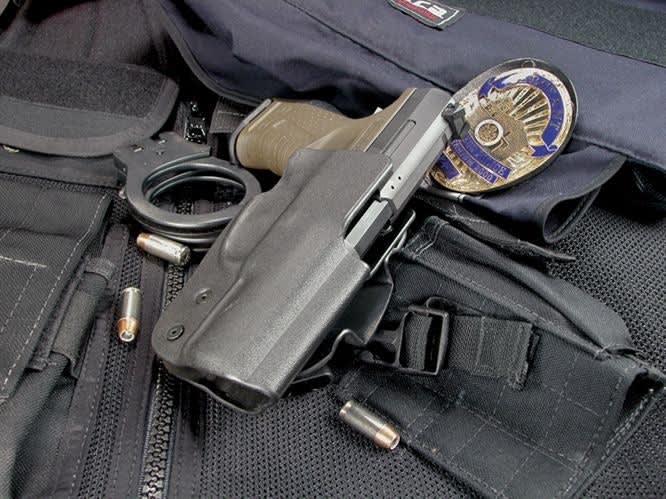
In most jurisdictions, peace officers are authorized by state or local law to carry concealed firearms, even when off duty. The reasons are obvious: Even off duty, you're normally expected to do more than just be a good witness to a robbery or a kidnapping that takes place right before your eyes; and should you bump into someone you arrested and sent to prison, you don't need to be at a disadvantage if he decides to get even.
But what happens when you leave your jurisdiction? Some officers reside beyond the city or county limits, or may travel outside the state to pursue an investigation or pick up a prisoner, or may be vacationing in another jurisdiction when a need arises to be armed. What if local laws forbid you to carry a concealed weapon?
Congress recently considered these problems, in light of the national interest in having law enforcement officers everywhere armed and ready to defend against both individual criminals and organized terrorists. The result was passage of Public Law 108-277, also known as H.R. 218, also known as the Law Enforcement Officers Safety Act (LEOSA) of 2004. The measure, which was signed into law by President George W. Bush and became effective on July 22, 2004, enacted two new sections to Title 18 of the United States Code.
The first section, 926B, deals with the circumstances under which active-duty officers may carry concealed weapons; 926C applies to retired officers. Some of the provisions of both sections are identical, while others are different. Subject to certain limitations and requirements, these statutes override most state and local restrictions on the authority of officers to carry concealed weapons anywhere in the United States.
Common Limitations
Because Congress had to find some law-making authority in the Constitution to supplant local laws relating to firearms possession, it looked to the Commerce Clause (Article I, section 8), which gives the federal government the power to regulate foreign and interstate commerce. The first significant restriction on the national CCW law for officers, therefore, is that it does not apply to weapons that have not "been shipped or transported in interstate or foreign commerce." So you might have difficulty carrying a concealed weapon that was manufactured in your state.
For example, if you are a Massachusetts officer carrying a Smith & Wesson, or a Connecticut officer with a Colt, or a Georgia officer carrying a Glock, you may want to acquire a different off-duty weapon to carry outside your local jurisdiction (though most, if not all, of these weapons will have moved in interstate commerce).To determine whether the new federal law applies to your weapon, the first step is to establish whether or not your particular weapon has moved in foreign or interstate commerce. Your dealer (personally owned weapons) or armorer (departmental issue) should be able to tell you, or you may verify the place of manufacture with the gunmaker.
Both sections also place restrictions on the kinds of weapons excluded from their coverage. These statutes do not apply to machine guns (as defined in section 5845 of the National Firearms Act) or silencers or destructive devices (as defined in 18 USC § 921).
Neither 926B nor 926C supercedes any state or local law that either (1) permits private property owners to restrict the possession of concealed firearms on their property or (2) prohibits or restricts the possession of firearms on any state or local government property, installation, building, base, or park.[PAGEBREAK]
Active-Duty Officers
Officers who are currently employed by a governmental agency must meet seven requirements to come within the allowance of 926B to carry concealed weapons in any state:
1. You must have statutory arrest powers and be authorized by law to engage in or supervise the prevention, detection, investigation, or prosecution of-or the incarceration of any person for-any violation of law.
2. Your employing agency must have authorized you to carry a firearm.
3. You must not be subject to any disciplinary action.
4. You must meet departmental standards of firearms qualification.
5. You must not be under the influence of drugs or alcohol.
6. You must not be prohibited by federal law from receiving a firearm.
7. You must carry a photo ID issued by your department.
As long as you meet these conditions, and subject to the common limitations discussed above, no state or local laws can prohibit your carrying a concealed weapon nationwide.
Retired Officers
Retired officers who are not currently employed by a governmental agency must meet eight requirements to come within the allowance of 926C to carry concealed weapons in any state:
1. You must be retired in good standing from service with a public agency as a law enforcement officer, other than for reasons of mental instability.
2. Before your retirement, you must have had statutory arrest powers, with authority to engage in or supervise the prevention, detection, investigation, or prosecution of-or the incarceration of any person for-any violation of law.
3. You must have had a total law enforcement employment of at least 15 years, or must have retired with a service-connected disability after any probationary period of employment.
4. You must have a non-forfeitable right to retirement benefits.
5. You must maintain annual firearms qualification, at your own expense, to the same standards required of active officers.
6. You must not be under the influence of drugs or alcohol.
7. You must not be prohibited by federal law from receiving a firearm.
8. You must carry a photo ID issued by your department that certifies your current compliance with qualification standards, or a departmental photo ID plus a state-issued certificate of current qualification compliance.
Federal Restrictions Still Apply
As the law is written, qualified officers are exempted from most restrictions imposed by state or local laws. Federal laws affecting possession of firearms will still apply, however. For example, firearms are restricted on the grounds of federal prisons, military installations, courthouses, and other government buildings. Neither 926B nor 926C affects applicability of such restrictions.
And even though your possession of a concealed weapon may be permitted in your home state and other states where you travel, this act does not allow you to possess a firearm at an airport screening area or aboard a commercial aircraft.
When traveling by air, your firearm must be packed, unloaded, in a locked, hard container to which you have the key. It must be sent by checked baggage and must be declared at check-in. Ammunition must also be shipped only in checked baggage, packed in fiber, wood, or metal containers that prevent movement of cartridges, and the amount is limited to 11 pounds. Airlines may impose additional restrictions that you can usually determine from their Websites.
Before shipping or taking your weapon on any common carrier, you may want to check restrictions by calling or visiting the Website of the Transportation Security Agency, www.tsa.gov.
Dual Effects of the Law
There are two significant consequences of the Law Enforcement Officers Safety Act. One is that it substantially enlarges your authority to carry a concealed weapon throughout the country. The other is that you must consider federal law before making a decision to arrest any active or retired officer for carrying a concealed weapon in your jurisdiction.
Attorney Devallis Rutledge, a former police officer and prosecutor, defends officers and agencies at Manning & Marder, Kass, Ellrod, Ramirez.
More Patrol

Team Wendy Introduces the EXFIL Endurance Ballistic Helmet, Engineered to Reduce the Burden of Extended Wear
Team Wendy has launched its EXFIL Endurance, a new lightweight ballistic helmet engineered to deliver protection, comfort, and fit during demanding, extended operations.
Read More →
The First Responders Children’s Foundation National First Responders Day Roll Call of Heroes Ceremony Returns to Times Square, NYC
First Responders Children’s Foundation (FRCF), in collaboration with T-Mobile, will host the Roll Call of Heroes ceremony in Times Square to commemorate National First Responders Day on Wednesday, Oct. 28. During the event, FRCF will present 18 Hero Awards.
Read More →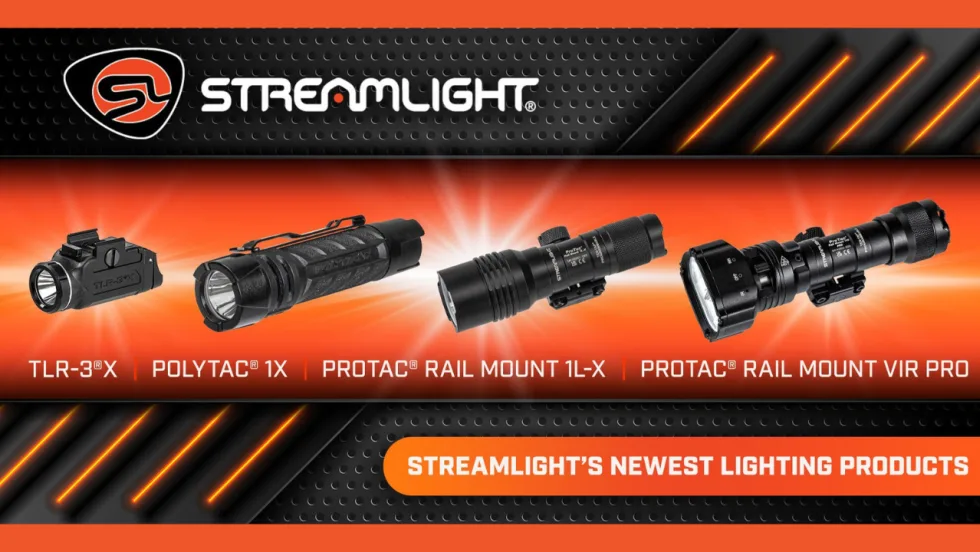
Streamlight to Showcase Newest Lighting Products for Law Enforcement Professionals at IACP 2026
Streamlight will showcase its newest lights for law enforcement at the International Association of Chiefs of Police Annual Conference & Expo. Featured lights will include the TLR-3 X, the PolyTac 1X, and more.
Read More →
Streamlight Portable Scene Light III Wins 2026 OH&S New Product of the Year Award
Streamlight’s Portable Scene Light III has won the 2026 Occupational Health & Safety (OH&S) New Product of the Year Award in the Lighting category.
Read More →
Adept Armor Introduces Two New Rifle Plates
Adept Armor has launched two new Level IV ballistic plates, the Emperor and the Archon Mark 2, which brings Adept Armor’s new Quatroid ceramic to the high-threat, performance-value center of the range at 5.2 pounds.
Read More →
POLICE Product Test: Benchmade Bailout
The Benchmade Bailout is a slim, lightweight carry knife with a deep-ride pocket clip and comes in a variety of blade steels and scales. Here is a detailed review of the Taiga Green Bailout, released earlier this year.
Read More →
NLEOMF Announces July 2026 Officer of the Month
NLEOMF honored a Michigan deputy sheriff as the July 2026 Officer of the Month for rescuing a trapped driver from a burning vehicle following a Fourth of July crash.
Read More →
Streamlight to Showcase Newest Lighting Products at National Safety Council’s Safety Congress & Expo 2026
Streamlight will showcase its latest lights, including the Portable Scene Light III and the LiteBox 1Million, at the 2026 National Safety Council (NSC) Safety Congress & Expo.
Read More →
The 2027 World Police & Fire Games Set for Perth, Australia
The 2027 World Police & Fire Games (WPFG) will take place in Perth, Western Australia, from Friday, March 12 through Sunday, March 21, 2027.
Read More →
5.11 Partners with National Fallen Firefighters Foundation to Support #ForThe343
5.11 has joined the nationwide movement honoring the 343 New York City Fire Department firefighters lost on Sept. 11, 2001.
Read More →