



Managing Conflict: Bridging the Gap
Police officers deal with conflicts every day--not just with suspects or the public, but between fellow officers.

"To be alive is to be in conflict. To be effective is to be in conflict." - Tjosvold and Johnson
Our recent national election was the inspiration for this month's column. I had been thinking about the political pundits commenting on the divisiveness in our nation between the political parties and their ideologies. If they are right, I wondered, are we heading toward a violent confrontation between Americans over politics? I watched President Bush and Senator Kerry carefully after the election to see if they would address this issue. I was glad they did, and it made me respect each of them a little bit more for taking a proactive leadership approach. I hope they continue to work toward bridging that gap, because Americans attacking each other worries me more than terrorists attacking our great nation.
All this started me thinking about the conflicts we have as police officers every day. Not with suspects or the public, but between fellow officers in stations, offices, locker rooms, roll calls, and patrol cars. Some of the disputes are petty, some of them are too serious, but many might be important to our growth as officers and law enforcement organizations.
Here is the rest of the quote from Dean Tjosvold and David Johnson: "Organizations cannot function without conflict and members of an organization cannot interact without conflict. If organizations are to be effective, and if members of an organization are to be competent, they must be able to manage and resolve conflict constructively."
In my experience, many of our internal conflicts in law enforcement stem from disagreements over policy, procedure, or tactics. Unfortunately, what happens is that officers and supervisors personalize these issues, and suddenly what should be a learning experience and an opportunity to improve becomes a rift that takes on a life of its own.
A friend of mine recently related to me a story about an argument she had with a fellow officer over the proper training of police recruits. After a heated debate, in which voices were raised and harsh words exchanged, both stomped off in different directions. Their officer-in-charge had overheard the exchange, but failed to correctly act on the situation. The two officers, who worked the same unit, rarely spoke to each other for years after. What could have been a constructive exchange of ideas became a personal attack that resulted in hurt egos. Worse, the leadership did not properly handle the situation. The officers' supervisor could have turned the incident into an opportunity to learn and to adjust policy if it needed to be changed.
There are probably a million variables here, but this is where an organization's leadership determines whether conflict will be constructive or destructive. I contend that through their tone, actions, and support, leaders can set the conditions for positive conflict resolution.
Leaders should set a positive tone throughout their command by focusing on how to achieve inter-organizational communication. The use of open forums in all roll calls, training days, meetings, and debriefings is essential. Anyone should be allowed to say or ask anything on any subject. Leaders should also encourage creative problem solving and enforce the use of constructive criticism throughout the organization.
The following actions can be taken to resolve disputes and clear up misunderstandings. After serious incidents or training exercises, holding debriefs immediately afterward for all involved personnel is important. Major incidents should be formally debriefed and written copies of lessons learned should be disseminated throughout the organization. If you're in a position of leadership, demand after-action reports and insist that your organization not repeatedly need to learn the same lessons over and over because they were not properly recorded and acted on the first time. When commanders and officers-in-charge move to new positions, turnover files should be mandatory for the same reason.
Finally, support your subordinates by setting a good example in providing encouragement and guidance. Maintain an open door policy that is respectful of the chain of command, but responsive to the individual. Reward innovative solutions to problems. Recognize the achievement of organizational objectives, the extraordinary accomplishments of a team or group, and any outstanding personal performances. Most importantly, mediate disputes in a professional and positive way. Protecting the respect and personal dignity of all parties is essential to resolving conflicts to the benefit of the organization and its officers.
More Patrol

Streamlight Portable Scene Light III Wins 2026 OH&S New Product of the Year Award
Streamlight’s Portable Scene Light III has won the 2026 Occupational Health & Safety (OH&S) New Product of the Year Award in the Lighting category.
Read More →
Adept Armor Introduces Two New Rifle Plates
Adept Armor has launched two new Level IV ballistic plates, the Emperor and the Archon Mark 2, which brings Adept Armor’s new Quatroid ceramic to the high-threat, performance-value center of the range at 5.2 pounds.
Read More →
POLICE Product Test: Benchmade Bailout
The Benchmade Bailout is a slim, lightweight carry knife with a deep-ride pocket clip and comes in a variety of blade steels and scales. Here is a detailed review of the Taiga Green Bailout, released earlier this year.
Read More →
NLEOMF Announces July 2026 Officer of the Month
NLEOMF honored a Michigan deputy sheriff as the July 2026 Officer of the Month for rescuing a trapped driver from a burning vehicle following a Fourth of July crash.
Read More →
Streamlight to Showcase Newest Lighting Products at National Safety Council’s Safety Congress & Expo 2026
Streamlight will showcase its latest lights, including the Portable Scene Light III and the LiteBox 1Million, at the 2026 National Safety Council (NSC) Safety Congress & Expo.
Read More →
The 2027 World Police & Fire Games Set for Perth, Australia
The 2027 World Police & Fire Games (WPFG) will take place in Perth, Western Australia, from Friday, March 12 through Sunday, March 21, 2027.
Read More →
5.11 Partners with National Fallen Firefighters Foundation to Support #ForThe343
5.11 has joined the nationwide movement honoring the 343 New York City Fire Department firefighters lost on Sept. 11, 2001.
Read More →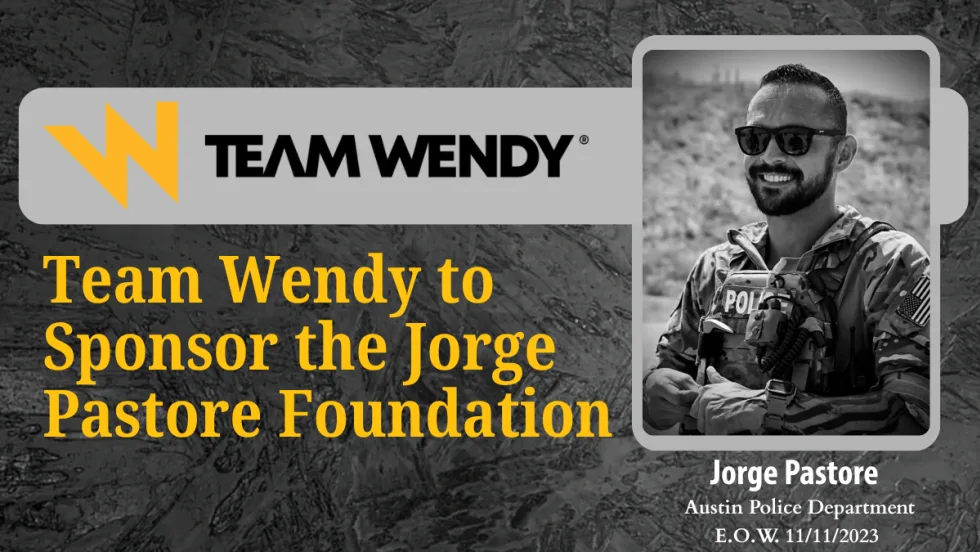
Team Wendy Announces Title Sponsorship of the Jorge Pastore Foundation
Team Wendy’s 3-year partnership with the Jorge Pastore Foundation expands access to programs that strengthen those who serve.
Read More →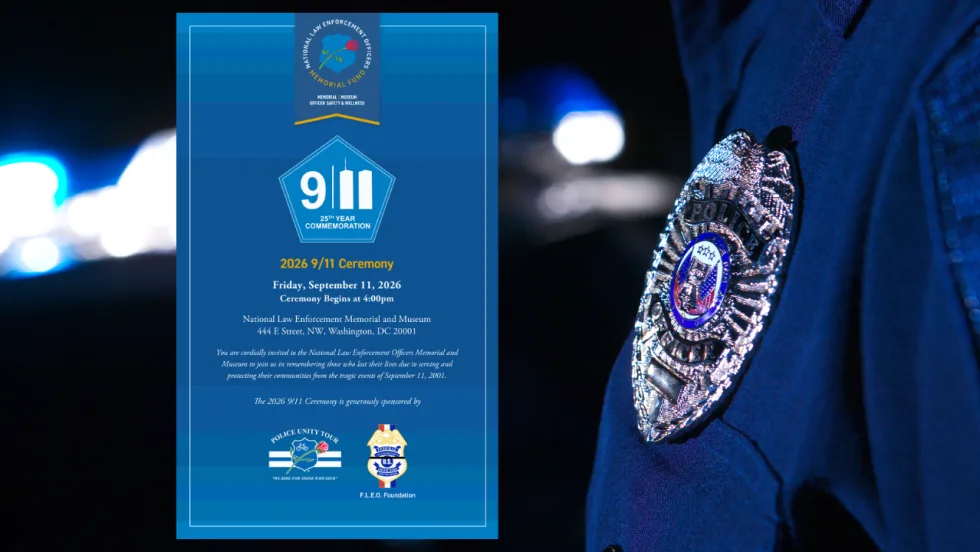
National Law Enforcement Memorial and Museum Hosting 9/11 25th-Year Commemoration Ceremony
The National Law Enforcement Memorial and Museum is hosting a 9/11 25th Year Commemoration Ceremony on Sept. 11 at 4 p.m.
Read More →
National Law Enforcement Officers Memorial Fund Announces June 2026 Officers of the Month
The National Law Enforcement Officers Memorial Fund (NLEOMF) named 15 officers of the Chico Police Department (California) as the Officers of the Month for June 2026 for their roles in responding to an active-shooter incident at a public library.
Read More →