



Timing is Everything
The court has now ruled that the timing and other circumstances of an interrogation may undermine the effectiveness of the warning; if the warning is not "effective," the statement is still not admissible, even if the suspect waived and confessed.

In Miranda v. Arizona, the Supreme Court ruled that the prosecution must show an "effective" warning and waiver of rights to allow admissibility of a criminal defendant's statement given during a custodial interrogation. The court has now ruled that the timing and other circumstances of an interrogation may undermine the effectiveness of the warning; if the warning is not "effective," the statement is still not admissible, even if the suspect waived and confessed.
The problem, in a nutshell, is a technique the court refers to as "question first." Using this technique, an officer first questions the custodial suspect without giving Miranda warnings and gets incriminating statements. The officer then follows procedure and gives the warning, gets a waiver, and repeats the interrogation to obtain a duplicate statement.
The theory behind "question first" is that even though a person's unwarned first statement would be suppressed, his or her post-waiver second statement could be used to convict. A majority of the court has rejected this theory on the grounds that the technique eliminates the effectiveness of the warning. (Missouri v. Seibert.)
The Starting Point: Oregon V. Elstad
In 1981, Michael Elstad was involved in a residential burglary in Polk County, Oregon. Sheriff's deputies got an arrest warrant and went to his home, where he was taken into custody. Before leaving the house, one deputy asked Elstad two simple questions (did he know why he was being arrested, and did he know the victims?), and made one accusatory statement (that Elstad was involved in the crime). Elstad said, "Yes, I was there."
At the station an hour later, deputies Mirandized Elstad, took a waiver, and obtained a written confession. At trial, Elstad wanted to suppress both his initial statement (because he had not been Mirandized) and the post-waiver statement (because it was the "fruit" of the earlier statement).
In 1985, the Supreme Court decided Elstad's Miranda issues, holding that the unwarned statement was properly suppressed, but ruling that the written confession could be used in evidence because it was preceded by a warning and waiver. The court rejected the "fruit of the poison tree" analogy drawn from Fourth Amendment cases. (See Police, Sept. 2004, Point of Law, explaining why the "fruit of the poison tree" doctrine does not apply to Miranda error.)
The court held the post-waiver statement admissible after reviewing the circumstances of the case. They considered Elstad's single incriminating response to brief, limited questioning at the time of arrest; a change in location; passage of an hour; and that he was given full Miranda warnings before the more comprehensive interrogation that produced the written statement. "In these circumstances, a careful and thorough administration of Miranda warnings serves to cure the condition that rendered the unwarned statement inadmissible." (Oregon v. Elstad.)
In 2004, the Supreme Court considered the issue of the extent to which the Elstad ruling would allow unwarned questioning before affecting the admissibility of a post-waiver statement.
Missouri V. Seibert
Patrice Seibert was implicated in the arson of her mobile home, which also killed a sleeping teenager and incinerated the body of her 12-year-old son, who had recently died. She was taken into custody and interrogated for 30 to 40 minutes without Miranda warnings. She made incriminating statements. After a 20-minute break, the same interrogator Mirandized Seibert, took a waiver, and repeated the full interrogation, sometimes referring to the first statement to get Seibert to reaffirm incriminating details.
Convicted of murder with use of the post-waiver statement, Seibert appealed, successfully arguing before the Missouri Supreme Court that Elstad did not allow the kind of "question first" technique used against her. The State appealed, and the U.S. Supreme Court agreed with Seibert that her confession was inadmissible under Miranda.
Four members of the court issued the lead opinion (called a "plurality" opinion, because it was not fully joined by a majority of the court, although one other justice concurred in the suppression ruling). The court said that the circumstances of Seibert's interrogation essentially nullified the effectiveness of the warning, thereby making her statements inadmissible.
The court explained that where a person has been thoroughly interrogated before being told that she could have remained silent and had the assistance of an attorney, and without realizing that what she had already said could not be used against her, simply hearing the warnings "midstream" through an almost-continuous and redundant interrogation could not effectively help her understand her rights and the evidentiary consequences of her waiver.
Said the court: "It is likely that if the interrogators employ the technique of withholding warnings until after interrogation succeeds in eliciting a confession, the warnings will be ineffective in preparing the suspect for successive interrogation, close in time and similar in content."
Comparing Seibert and Elstad
The Seibert opinion does not overrule Elstad. Rather, it places limits on the kinds of circumstances to which Elstad applies.
To guide lower courts in deciding the admissibility of statements in cases falling in between the fact patterns evaluated in Seibert and Elstad, the court listed six factors to be examined in deciding whether to apply Elstad and admit a post-waiver statement despite earlier unwarned questioning, or whether to apply Seibert and suppress such a statement. These factors should also guide law enforcement officers in taking curative steps to enhance the admissibility of a subsequent statement where earlier unMirandized interrogation may have occurred:
1. Was the unwarned questioning brief, or thorough and detailed?
2. To what extent did the post-waiver questioning repeat and overlap with the unMirandized questioning?
3. How much time elapsed between interrogation sessions?
4. Was there a change in locations between interrogations?
5. Was there a change in interrogators?
6. Did the second interrogation appear to be continuous with the first, such as by making references to the subject's earlier admissions?
Officers' Intent Irrelevant
Although the two concurring justices thought the outcome of Elstad-Seibert determinations should take into account the interrogating officers' good or bad faith in conducting the unwarned questioning, the other seven justices-in both the plurality and the dissent-rejected any such test. The plurality said that because of the difficulty in learning an officer's subjective intent, "the focus is on facts apart from intent" to assess the effectiveness of the subsequent waiver.
The four dissenting justices agreed: "The plurality correctly declines to focus its analysis on the subjective intent of the interrogating officer." Therefore, whether or not the ruling of Seibert applies to any particular case does not depend on whether the unwarned questioning occurred deliberately or inadvertently, but on an assessment of the six objective factors listed by the court, to determine "whether in the circumstances the Miranda warnings given could reasonably be found effective." (Missouri v. Seibert.)
Elstad and Seibert In Practice
Officers may not always be able to tell precisely when a suspect is in Miranda "custody," or whether a particular comment or question amounts to "interrogation." Where unwarned custodial interrogation may have occurred-for whatever reasons-officers seeking to obtain an admissible statement would be well-advised to give the suspect a break for an hour or two; change locations and interrogators, if possible; give full warnings and obtain a waiver; and make no references back to any previous statements the suspect may have made.
Attorney Devallis Rutledge, a former police officer and prosecutor, defends officers and agencies at Manning & Marder, Kass, Ellrod, Ramirez.
More Patrol

Team Wendy Introduces the EXFIL Endurance Ballistic Helmet, Engineered to Reduce the Burden of Extended Wear
Team Wendy has launched its EXFIL Endurance, a new lightweight ballistic helmet engineered to deliver protection, comfort, and fit during demanding, extended operations.
Read More →
The First Responders Children’s Foundation National First Responders Day Roll Call of Heroes Ceremony Returns to Times Square, NYC
First Responders Children’s Foundation (FRCF), in collaboration with T-Mobile, will host the Roll Call of Heroes ceremony in Times Square to commemorate National First Responders Day on Wednesday, Oct. 28. During the event, FRCF will present 18 Hero Awards.
Read More →
Streamlight to Showcase Newest Lighting Products for Law Enforcement Professionals at IACP 2026
Streamlight will showcase its newest lights for law enforcement at the International Association of Chiefs of Police Annual Conference & Expo. Featured lights will include the TLR-3 X, the PolyTac 1X, and more.
Read More →
Streamlight Portable Scene Light III Wins 2026 OH&S New Product of the Year Award
Streamlight’s Portable Scene Light III has won the 2026 Occupational Health & Safety (OH&S) New Product of the Year Award in the Lighting category.
Read More →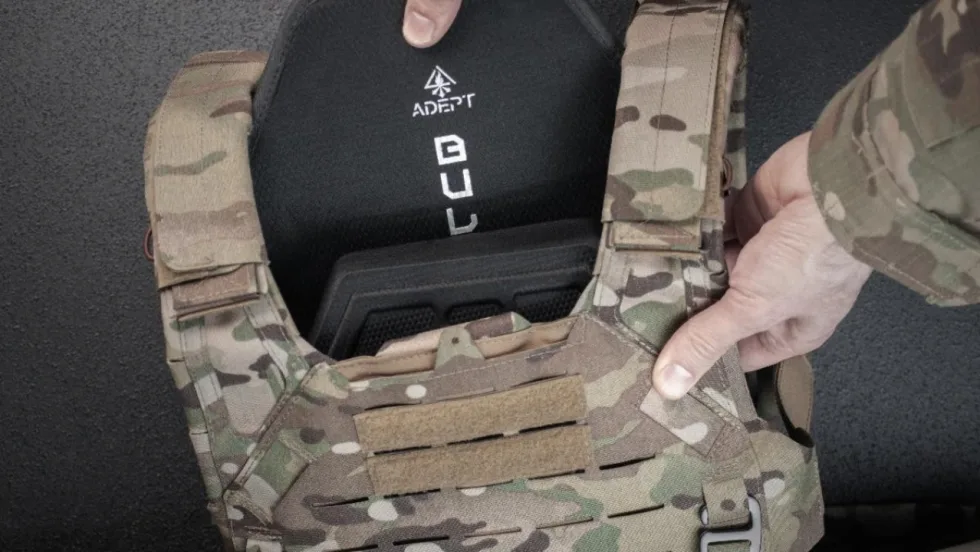
Adept Armor Introduces Two New Rifle Plates
Adept Armor has launched two new Level IV ballistic plates, the Emperor and the Archon Mark 2, which brings Adept Armor’s new Quatroid ceramic to the high-threat, performance-value center of the range at 5.2 pounds.
Read More →
POLICE Product Test: Benchmade Bailout
The Benchmade Bailout is a slim, lightweight carry knife with a deep-ride pocket clip and comes in a variety of blade steels and scales. Here is a detailed review of the Taiga Green Bailout, released earlier this year.
Read More →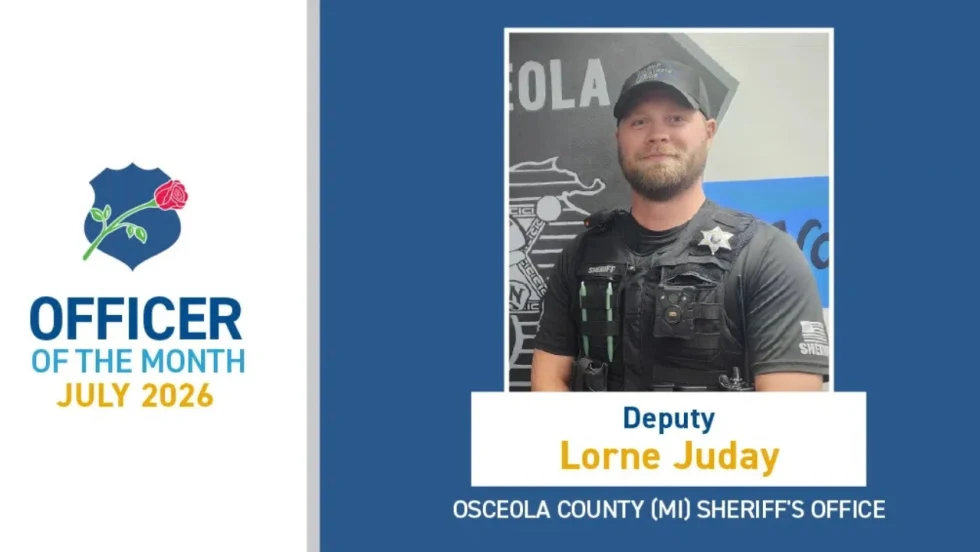
NLEOMF Announces July 2026 Officer of the Month
NLEOMF honored a Michigan deputy sheriff as the July 2026 Officer of the Month for rescuing a trapped driver from a burning vehicle following a Fourth of July crash.
Read More →
Streamlight to Showcase Newest Lighting Products at National Safety Council’s Safety Congress & Expo 2026
Streamlight will showcase its latest lights, including the Portable Scene Light III and the LiteBox 1Million, at the 2026 National Safety Council (NSC) Safety Congress & Expo.
Read More →
The 2027 World Police & Fire Games Set for Perth, Australia
The 2027 World Police & Fire Games (WPFG) will take place in Perth, Western Australia, from Friday, March 12 through Sunday, March 21, 2027.
Read More →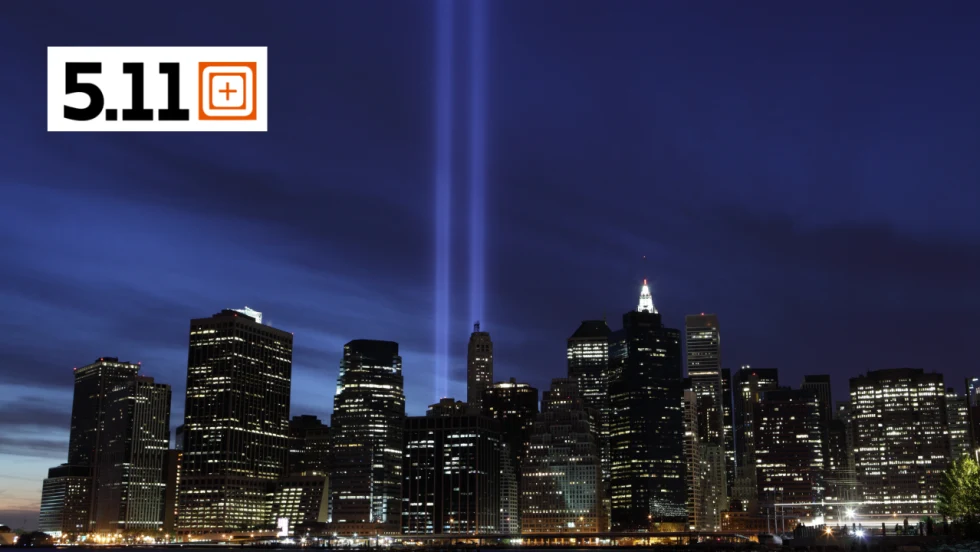
5.11 Partners with National Fallen Firefighters Foundation to Support #ForThe343
5.11 has joined the nationwide movement honoring the 343 New York City Fire Department firefighters lost on Sept. 11, 2001.
Read More →