



Occupational Hazards: Bloodborne Pathogens
The bloodborne pathogens that you are most likely to come into contact with are the hepatitis B virus (HBV), the hepatitis C virus (HCV), and the human immunodeficiency virus (HIV). This exposure can result in you becoming infected with one or more of these viruses. As such, it is important that you understand the medical implications of this serious occupational hazard.

It’s the nature of your job that you will come into contact with some really nasty stuff. Any officer on the streets, any officer transporting prisoners, and any corrections officer working in a jail or prison faces the possibility of something happening on the job that could expose him or her to infectious body fluids.
On the street, you can be stuck with needles while performing searches, exposed to viruses in the blood of trauma victims, get body fluids on your hands at a crime scene, and you can even be spit on by angry perps. If you work in corrections, you face additional hazards such as prisoners mixing up a cocktail of feces, urine, blood, and semen and throwing it in your face.
To make matters worse, the people you deal with tend to be the most likely to have some terrible bloodborne disease. You work every day with convicts, intravenous drug users, prostitutes, and other people who are at high risk for diseases that are transmitted via infected body fluids.
The bloodborne pathogens that you are most likely to come into contact with are the hepatitis B virus (HBV), the hepatitis C virus (HCV), and the human immunodeficiency virus (HIV). This exposure can result in you becoming infected with one or more of these viruses. As such, it is important that you understand the medical implications of this serious occupational hazard.
Risk Factors
Let’s hope that you never get exposed to bloodborne pathogens. But if you do, don’t panic.
First, understand that despite your exposure to potentially infectious body fluids, you still have a very good chance of remaining healthy. Your risk of being infected if you are exposed to contaminated body fluids depends both on how you are exposed and on the virus(es) to which you are exposed.
Of the three most common bloodborne viruses, HBV is the most infectious, followed by HCV, and then HIV. So your chance of actually getting sick depends on the type of virus that you have been exposed to.
The other factor is the type of exposure. Your risk of being infected is greater if your skin is punctured by a contaminated needle or other sharp instrument than if your mucosa (eyes and mouth) or compromised skin (scraped or cut) are splashed by contaminated blood or body fluid.
Prevention and Precaution
There are, of course, physical and tactical precautions that you can take on the job that can go a long way toward protecting you from bloodborne pathogens. For example, you can wear puncture-resistant gloves when searching a suspect, and you can wear rubber gloves and disposable shoe covers at a crime scene.
In addition, there are medical precautions that you can take that may improve your odds in case of an exposure.
HBV vaccine is greater than 90 percent effective in providing protection against the hepatitis B virus. And by law because your job involves contact with potentially contaminated blood or body fluids, this vaccine must be provided free of charge to you by your employer.
Inoculation with HBV vaccine is the simplest way to protect yourself from becoming infected with HBV. All cops should get this vaccine soon after employment.
The HBV vaccination is given in a three-part series. The second dose is given one month after the first dose, and the third dose is given six months after the first dose.
Unfortunately, the vaccine doesn’t always take. So one month after receiving the third dose, your doctor will test your blood to determine if you have developed protection against the virus. A small percentage of people (less than five percent) may not be fully protected after receiving the first series of the vaccine and may be asked to return for a second series.
That may seem like an awful lot of shots. But don’t worry. The vaccine is generally safe, certainly much safer than working the streets without its protection.
Unfortunately, the news is not so good about HCV and HIV. There are still no vaccines that can protect you from these viruses.
If You Are Exposed
As we’ve discussed, you are at risk for exposure. Bad things happen on the job, and you need to know what to do if you are unfortunate enough to be stuck with some junkie’s needle or splashed with some murder victim’s blood.
The first thing that you should do if you become exposed to body fluids is to immediately wash the area with soap and water. If you experience a splash to the nose, mouth, or to non-intact skin (abraded or chafed), you should immediately flush these areas with water for 15 minutes or more.
Once you’ve cleansed the area of exposure, inform your supervisor. He or she can direct you as to where to go to receive medical care. This post-exposure medical care should be provided to you at no cost.
Seeing A Doctor
During the post-exposure evaluation, a doctor will obtain information from you that will help to determine your level of risk of developing HIV, hepatitis B, or hepatitis C. He or she will need information on how you were exposed and to whom you were exposed.
After taking this information from you, the doctor will make every attempt to have the source person tested for bloodborne virus. The doctor may also test your blood for evidence of previous infection with these viruses.
Depending on the results of the evaluation, you may be given medication or, in the case of HBV exposure, vaccine. If the blood or body fluid to which you were exposed is contaminated with HIV, you will be offered medication for four weeks. You will also be asked to return for evaluation and serial blood testing over the next six months in order to ensure that you do not develop HIV infection. Before the medication is started, standard blood tests will be done. These tests will be repeated during the course of your therapy.
If the testing of the source person shows that the blood or body fluid to which you were exposed was not contaminated with HIV, any antiretroviral medication initiated while waiting for the source results will be discontinued.
Should the testing of the source person show that his or her blood or body fluid is positive for HCV, you will continue to follow up with your doctor for six months. During this time, your blood will be monitored to ensure that you do not develop infection. If you develop infection you will be referred to a liver specialist (hepatologist) for treatment and follow-up care.
In the event that no one is able to find the source person for the blood or body fluid to which you were exposed or if they are not available for testing, you may be required to take HIV post-exposure medicine for four weeks. In addition, you may be given post-exposure medicine for hepatitis B if you are not immune to the virus.
You may be tested for a six-month period after your exposure to ensure that you do not develop infection. While you are undergoing testing for HIV, HBV, and HCV, you should adhere to safe sex practices, using barrier methods to prevent possible transmission to your partner. Also, refrain from blood or organ donation.
Stopping the Infection
In the event you become exposed to potentially HBV-contaminated blood or body fluid and you are not protected, either because the vaccine did not fully protect you or because you never got the vaccine, you can be given hepatitis B immune globulin (HBIG), which will decrease your chance of developing infection.
If you lack protection because you never received the vaccine, you will be given HBIG as well as the first dose of the vaccine series. You will also be told to return for the other two doses in accordance with the vaccine schedule.
As we’ve discussed, you can be inoculated against hepatitis B, but not immunized. If you received the vaccine series, but your blood test shows that the vaccine did not provide protection, you may be given HBIG and a new vaccine series.
It’s very important that you receive HBIG as soon as possible after exposure to hepatitis B. The effectiveness of HBIG beyond seven days after an exposure is not known. So don’t delay. Seek medical care immediately.
In contrast to HBV, there is no vaccine for HIV. However, there are actions that your doctor can take that may decrease your risk of becoming infected following an exposure to HIV-contaminated body fluids.
Your doctor will likely recommend what physicians refer to as post-exposure prophylaxis. That means he or she will give you drugs, most likely combivir or a combination of combivir and nelfinivir, that are known to retard HIV infection.
Again, report your exposure immediately. These post-exposure medications work best if you receive them within a few hours of contact with HIV-contaminated fluids. The longer you wait, the less effective they will be.
Depending on the risk assessment conducted by your health care provider, you may have to take the post-exposure medication for as little as one day or for as long as 28 days. However, only your physician can determine this, and you should be aware that post-exposure medication is not recommended for all.
As with all medications, there are some side effects to HIV antiretroviral drugs. Likely side effects of combivir, nelfinivir, and similar antiretroviral medications include: nausea, vomiting, headache, fatigue, and, rarely, inflammation of the pancreas, and kidney stones. However, most people tolerate these medications for the entire recommended treatment duration with no major side effects.
Treatment for HCV exposure is not as favorable. There is no medication that can be taken post exposure to help prevent the disease. However, if you are exposed to HCV-contaminated blood or body fluid it is still important that you follow up with a doctor as soon as possible.
Once you tell your health care provider that you have been exposed to the hepatitis C virus, he or she will monitor you over the next few weeks and months (up to six months) for evidence of HCV infection. Studies show that if HCV infection is diagnosed early, it may be possible for you to be treated with interferon.
Interferon treatment has been associated with a higher rate of resolved hepatitis Cinfection if it is started soon after an individual has been infected with the virus. Interferon is not indicated in all cases, and each patient’s treatment may differ depending on his or her physician’s assessment.
Some Good News
It is important to remember that the great majority of body fluid exposures do not result in infection. You need to reduce your risk as much as possible but, for the most part, if you follow safe work practices as outlined by the policies of your agency, receive your HBV vaccine, and go to see your designated health care provider within hours after you are exposed, your outlook is good.
In the event that you develop hepatitis B or hepatitis C despite post-exposure treatment, you will be referred to a hepatologist for treatment and follow-up care. If you develop HIV you will be referred to a health care provider who is experienced in taking care of people with HIV disease. Your health care provider will decide the appropriate treatment regimen for you. Many people with hepatitis and/or HIV disease live long, relatively healthy lives.
As a law enforcement officer, you are at substantial risk of exposure to bloodborne viruses. It is best to avoid these exposures. However, exposures do occur. As such, it is important that you seek treatment as soon as possible in order to improve your chances of remaining disease free.
The hepatitis B vaccine is provided free of charge and is protective against HBV. If you have not already received this vaccine, you should try to obtain it as soon as possible. Although there is no vaccine for HIV or HCV, timely post-exposure evaluation and follow-up can help to decrease your risk of becoming infected with these viruses.
Judith Green-McKenzie is an assistant professor of occupational medicine at the University of Pennsylvania. One of her areas of expertise is occupational exposure to body fluids.
Marilyn Watkins is a certified occupational health nurse practitioner-specialist at the University of Pennsylvania. Much of her practice involves caring for individuals who present with body fluid exposures.
The Odds Are with You
HIV infection after needlestick with HIV-contaminated blood
0.3 percent
HIV infection after face splash with HIV-contaminated body fluids
0.09 percent
HIV infection after HIV-contaminated body fluid splash on open cut or abrasion
Unknown*
HIV infection after bite from HIV patient
Unknown**
Hepatitis B infection after needlestick with HBV-contaminated blood
6 to 30 percent
Hepatitis C infection after needlestick with HCV-contaminated blood
1.8 percent
Source: Mortality and Morbidity Weekly Report 2001
* Thought to be less than a face splash.
** Both biter and officer should be tested.
More Patrol

Adept Armor Introduces Two New Rifle Plates
Adept Armor has launched two new Level IV ballistic plates, the Emperor and the Archon Mark 2, which brings Adept Armor’s new Quatroid ceramic to the high-threat, performance-value center of the range at 5.2 pounds.
Read More →
POLICE Product Test: Benchmade Bailout
The Benchmade Bailout is a slim, lightweight carry knife with a deep-ride pocket clip and comes in a variety of blade steels and scales. Here is a detailed review of the Taiga Green Bailout, released earlier this year.
Read More →
NLEOMF Announces July 2026 Officer of the Month
NLEOMF honored a Michigan deputy sheriff as the July 2026 Officer of the Month for rescuing a trapped driver from a burning vehicle following a Fourth of July crash.
Read More →
Streamlight to Showcase Newest Lighting Products at National Safety Council’s Safety Congress & Expo 2026
Streamlight will showcase its latest lights, including the Portable Scene Light III and the LiteBox 1Million, at the 2026 National Safety Council (NSC) Safety Congress & Expo.
Read More →
The 2027 World Police & Fire Games Set for Perth, Australia
The 2027 World Police & Fire Games (WPFG) will take place in Perth, Western Australia, from Friday, March 12 through Sunday, March 21, 2027.
Read More →
5.11 Partners with National Fallen Firefighters Foundation to Support #ForThe343
5.11 has joined the nationwide movement honoring the 343 New York City Fire Department firefighters lost on Sept. 11, 2001.
Read More →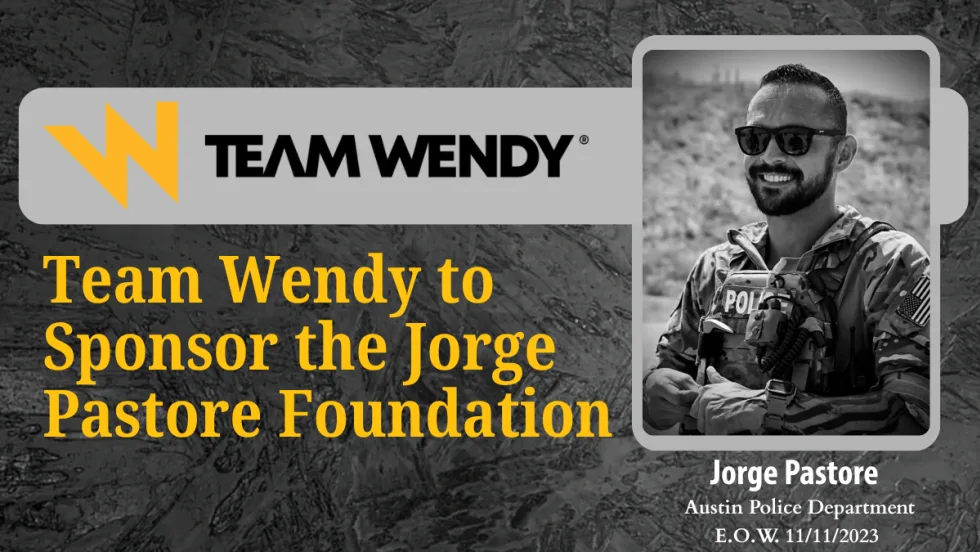
Team Wendy Announces Title Sponsorship of the Jorge Pastore Foundation
Team Wendy’s 3-year partnership with the Jorge Pastore Foundation expands access to programs that strengthen those who serve.
Read More →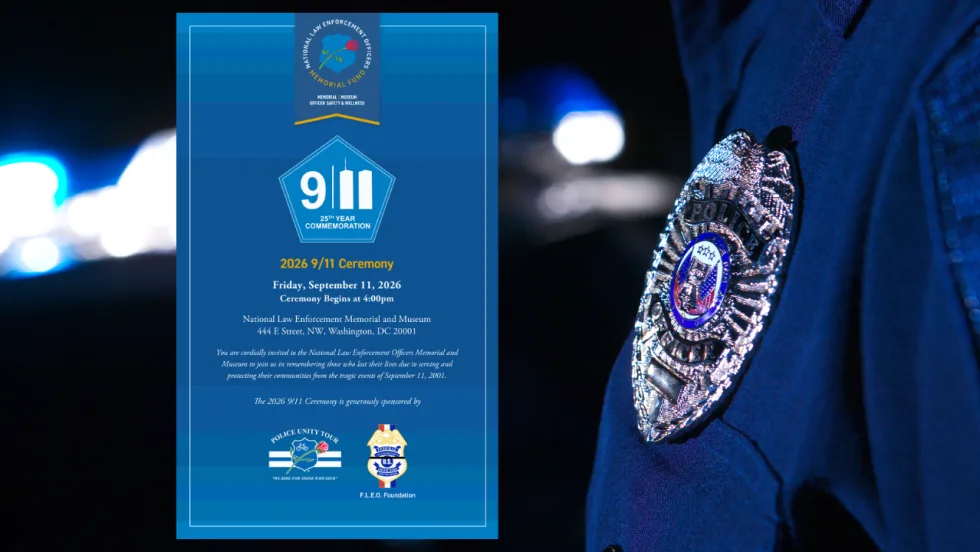
National Law Enforcement Memorial and Museum Hosting 9/11 25th-Year Commemoration Ceremony
The National Law Enforcement Memorial and Museum is hosting a 9/11 25th Year Commemoration Ceremony on Sept. 11 at 4 p.m.
Read More →
National Law Enforcement Officers Memorial Fund Announces June 2026 Officers of the Month
The National Law Enforcement Officers Memorial Fund (NLEOMF) named 15 officers of the Chico Police Department (California) as the Officers of the Month for June 2026 for their roles in responding to an active-shooter incident at a public library.
Read More →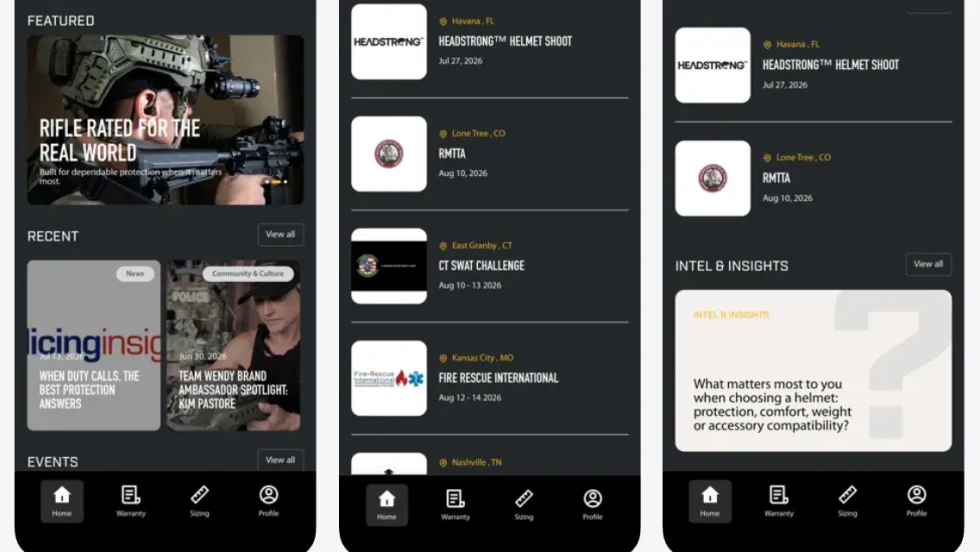
Team Wendy App Creates New Digital Hub for Helmet Owners
The Team Wendy Community App provides one location for warranty registration, size-fit tools, product updates, and community connection. For helmet owners, the new app creates a simpler path to the information and tools that matter most.
Read More →