



Shots Fired: Grand Prairie, Texas 01/04/2005
Possessing a rough-hewn face and a rawboned build, Richard Johnson, 31, of Grand Prairie, Texas, was already wanted for a series of aggravated robberies in Ft. Worth by the time he took up a gun and fired a couple of shots at his mother. She escaped unharmed. But then Johnson turned things up a notch, stabbing himself in the stomach and setting fire to the converted mobile home they shared.

Possessing a rough-hewn face and a rawboned build, Richard Johnson, 31, of Grand Prairie, Texas, was already wanted for a series of aggravated robberies in Ft. Worth by the time he took up a gun and fired a couple of shots at his mother. She escaped unharmed. But then Johnson turned things up a notch, stabbing himself in the stomach and setting fire to the converted mobile home they shared.
Flames spread through the trailer, and Johnson stalked the driveway taking slugs from a bottle of Jack Daniels, a 9mm Ruger pistol in hand and angry words on his lips. His profane challenges to anyone within hearing range left no doubt of his intentions. Tonight, his life would end in fire and blood.
The Long Ride
Only 15 minutes into his overtime shift, Officer Richard Gambino of the Grand Prairie Police Department answered the call for backup.
Gambino, who was trained to use a patrol rifle, was at the station when dispatch told him to roll Code 3 to Johnson’s mobile home park. The incident location was on the other side of town, and it wouldn’t be an easy drive.
As his fellow officers set up a containment of the location and began to evacuate nearby residences, Gambino champed at the bit, knowing he was needed at the scene. He wanted to tear down the road. But he fought that urge, striving to maintain a speed that would get him to the location in one piece. You’re not much good if you don’t get there, he reminded himself.
Getting there proved to be a formidable task. A combination of nighttime commuters and rain-slicked roads conspired against Johnson. At times, it seemed as if every one of Grand Prairie’s 140,000 residents was on the road. An abiding sense of frustration set in, one which lingered even after the traffic thinned and road conditions improved.
The closer he got to the scene, the more Gambino pushed the envelope. Finally, he was almost there. And that’s when he made a mistake.
Gambino suddenly felt the tires of his patrol car lose traction. He counter-steered, braked, and prayed for some sort of divine intervention. It came in the form of a drop-off on the wrong side of the curve. Gambino suddenly found himself and his patrol car stuck in three feet of muddy water.
Cursing, Gambino grabbed his Colt AR-15A3 carbine and its magazines from the trunk of his patrol car, then climbed back onto the roadway where a passing fire engine en route to the scene had slowed down at the curious sight of the upended patrol car. The fire engine stopped and a firefighter started to climb down.
Gambino pushed him back into the truck. “I’m OK. Just get me there. Let’s go.”
The fire engine stopped 200 yards from the Johnsons’ mobile home and Gambino jumped off. The jarring impact of his landing caused two .223 caliber rounds to fall out of their magazine onto the damp pavement. He slapped the magazine hard against his leg to reset the remaining rounds.
Murphy was an optimist, Gambino thought before setting off on foot to cover the remaining distance.
On the Scene
Finding various means of cover and concealment, Gambino zigzagged his way to an offset retaining wall near the mobile home. It seemed an ideal spot to set up surveillance on the suspect. The slightly elevated terrain gave Gambino a good view of the scene and a drop on the gunman; the area to his back was dark with zero backlighting.
Gambino committed himself to a long vigil.
Minutes passed. All around Gambino’s position, officers carried out a variety of missions, evacuating affected homes and scoping out their own vantage points.
Gambino watched as the fire in the Johnsons’ mobile home grew into an inferno.
Ka-boom!
Heat from the fire caused the mobile home’s windows to explode, sending shards of hot glass flying into the night. Smoke and soot migrated into Gambino’s field of vision, blinding him.
Gambino now needed a better vantage point. He ran around the back of the suspect’s home, looking for a better tactical position, and found himself on the same driveway as the gunman.
Soothing Words
Taking cover behind a parked car, Gambino realized that nobody appeared to be engaging Johnson in an effort to talk him down. Grand Prairie PD’s crisis negotiator was committed elsewhere, so Gambino decided it was up to him.
He’d done it before. On several occasions, Gambino and other officers had successfully talked down violently agitated suspects. Only a few months before, he and several other officers had talked a murder suspect into dropping his weapon.
Something in that murder suspect’s eyes had conveyed to Gambino that he didn’t want to die and might be susceptible to suggestion. Johnson’s eyes did not have that look. Still, Gambino felt obligated to try and talk to him.
Illuminating Johnson with his flashlight, Gambino asked the gunman to drop his stainless-steel pistol so they could talk.
“I told him numerous times to drop the gun,” recalls Gambino. “But all he would say was that his mother had been beaten by her husband and the police did nothing. As far as he was concerned, the police had done nothing for him or his family. He said he wanted to die, and that if he had to, he would shoot one of us so we would have to shoot him.”
Fearing that Johnson might make good on his threat, Gambino looked around for cover. There wasn’t any and, between the bright street lights and the fire, concealment was clearly out of the question.
A few feet to his left and in plain sight of the gunman, Gambino noticed a 500-gallon propane tank. He shuddered at the thought of what would happen if Johnson started shooting at the gas. This could get real bad, real fast, he thought.
No Time to Lose
Normally during a critical incident, Gambino liked to think that time was on his side. But this time, as the seconds passed, the situation grew more desperate. Other homes would soon be in jeopardy if the fire department wasn’t allowed in. And they couldn’t come in until Johnson put down his gun.
Gambino tried every way he knew to calm down Johnson enough so that the gunman could reconsider what he was doing. He reminded Johnson that he needed treatment for his injuries and even offered to help mitigate the criminal charges that Johnson would face because of this incident.
But Johnson wouldn’t have any of it. He was determined to finish what he had set in motion. His agitated pacing up and down the driveway quickened, and he moved into the street.
Standing in the middle of the street, Johnson raised his gun and waved it in the air. There was no way for Gambino to see where Johnson was pointing the weapon, so he had to take another officer’s advisement over the radio that Johnson was just waving it aimlessly.
Gambino’s lieutenant instructed him to change positions if Johnson walked further down the street. Johnson did just that, and when the lieutenant barked “Go!” Gambino ran across the driveway as flames fully engulfed Johnson’s mobile home.
Gambino ran to the corner of the next door neighbor’s home where he crouched as low as he could. Then he remembered that the home to the rear of the suspect hadn’t been evacuated.
That was a problem. If Gambino shot Johnson center mass with a .223 round from his Colt, the round might go straight into the home behind the suspect. Worse, the round would enter the home at the same height as anyone standing inside.
Gambino needed to change his position. An upward angle shot from ground level in the driveway would hopefully keep rounds within a foot above the front door of the neighbor’s home. That was high enough that the shot wouldn’t hit people inside. Also, from a prone position, Gambino would present less of a target to the gunman.
Fateful Decision
Over the course of 20 minutes, Gambino engaged Johnson in a series of aborted conversations, each initiated in the hopes of establishing some rapport. It didn’t work.
Johnson placed the barrel of the gun beneath his chin and appeared to deliberate. He seemed to reach a conclusion. Then he raised the bottle of Jack Daniels, downed it, and turned and stared directly at Gambino.
This was the first time during the incident that Johnson had devoted his full attention to Gambino. His eyes seemed to acquire a new intensity, a new dimension of clarity and focus…and resolve. These were not the eyes of a distraught murderer that Gambino had seen a few months before. These were the eyes of a man who had made one final decision, a decision that revolved around Gambino.
Johnson began to walk toward Gambino at a fast clip.
Gambino made one last plea for Johnson to drop the gun. Instead, Johnson started to level the gun in Gambino’s direction. Gambino refocused his sight alignment, braced.
Johnson’s gun went off and Gambino felt the recoil of his Colt rifle, as he fired on the suspect.
The .223 round struck Johnson in the upper torso. The gun fell slack in his hand as his body recoiled and twisted before crumbling straight down. Gambino maintained his aim with the Colt as Johnson’s left hand attempted to re-grip the weapon.
Gambino held his aim and prepared to squeeze off a second round. Then his field of fire was compromised by other officers running up on the suspect.
The officers approached the suspect and disarmed him. Waiting emergency services personnel immediately began to render first aid.
But Johnson’s death wish had come true. He expired of the single bullet wound sustained in his exchange of gunfire with Gambino.
Beyond Our Control
In the months following the shooting, Gambino Monday morning quarterbacked the events of that night more than anyone. Getting to the scene had been a challenge in itself. But as volatile as the situation had been, Gambino felt that he had reached a point of equilibrium within himself. He knew he had to do something, and he did it.
“Things happen beyond our control,” Gambino says. “That’s what happened with Mr. Johnson. He held the cards that night. He dictated what happened. The fact that he was [wanted for other crimes] has helped me deal with the shooting.”
Gambino pauses.
“That, and the fact the man took a shot at me.”
Dean Scoville is a patrol supervisor and investigator with the Los Angeles County Sheriff's Department and Associate Editor of POLICE.
More Patrol
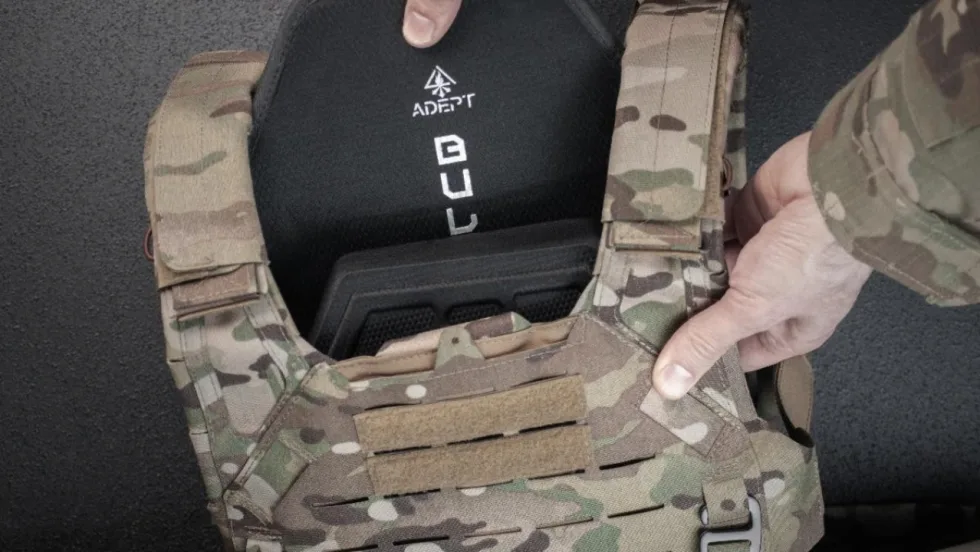
Adept Armor Introduces Two New Rifle Plates
Adept Armor has launched two new Level IV ballistic plates, the Emperor and the Archon Mark 2, which brings Adept Armor’s new Quatroid ceramic to the high-threat, performance-value center of the range at 5.2 pounds.
Read More →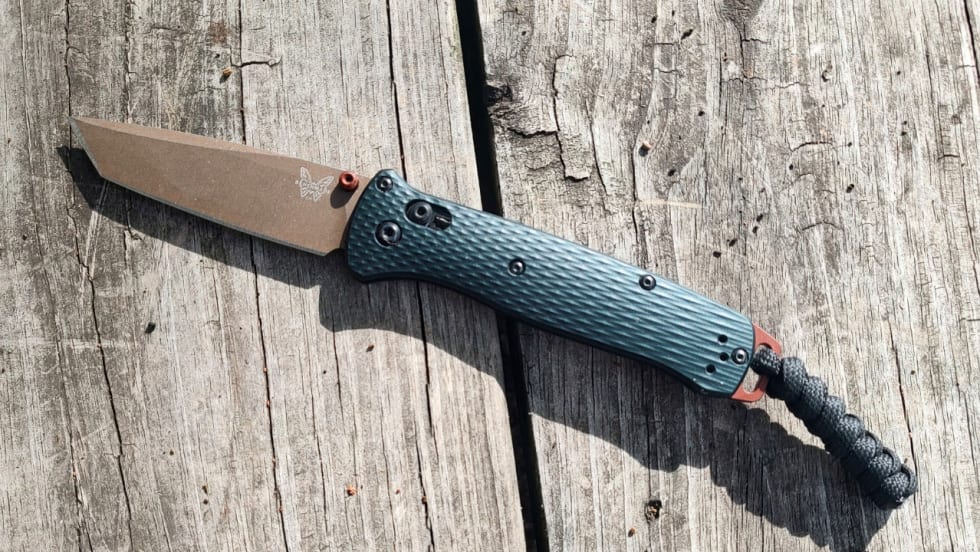
POLICE Product Test: Benchmade Bailout
The Benchmade Bailout is a slim, lightweight carry knife with a deep-ride pocket clip and comes in a variety of blade steels and scales. Here is a detailed review of the Taiga Green Bailout, released earlier this year.
Read More →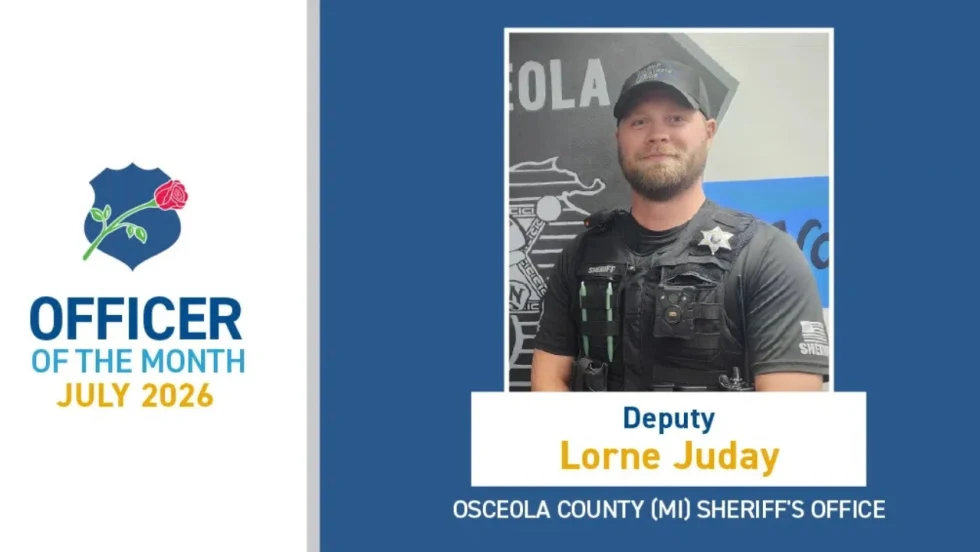
NLEOMF Announces July 2026 Officer of the Month
NLEOMF honored a Michigan deputy sheriff as the July 2026 Officer of the Month for rescuing a trapped driver from a burning vehicle following a Fourth of July crash.
Read More →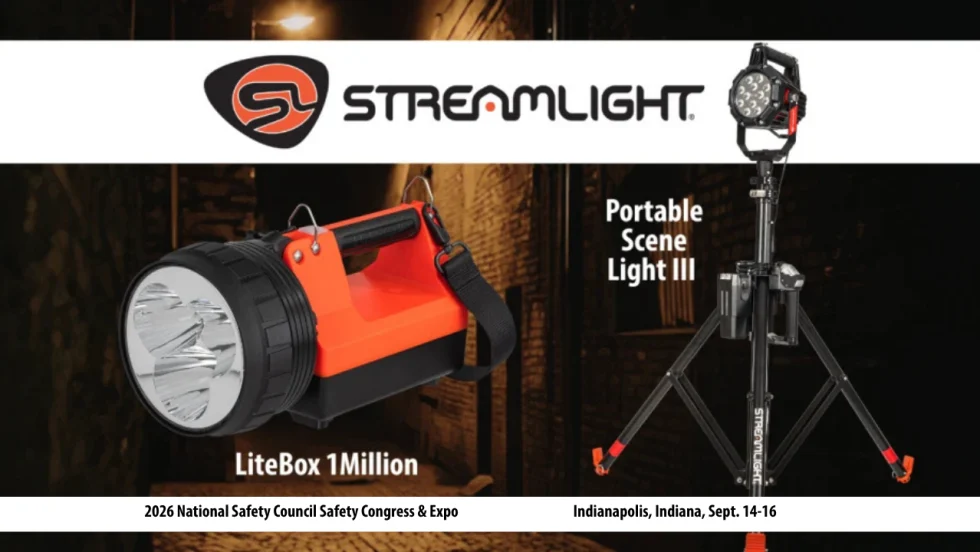
Streamlight to Showcase Newest Lighting Products at National Safety Council’s Safety Congress & Expo 2026
Streamlight will showcase its latest lights, including the Portable Scene Light III and the LiteBox 1Million, at the 2026 National Safety Council (NSC) Safety Congress & Expo.
Read More →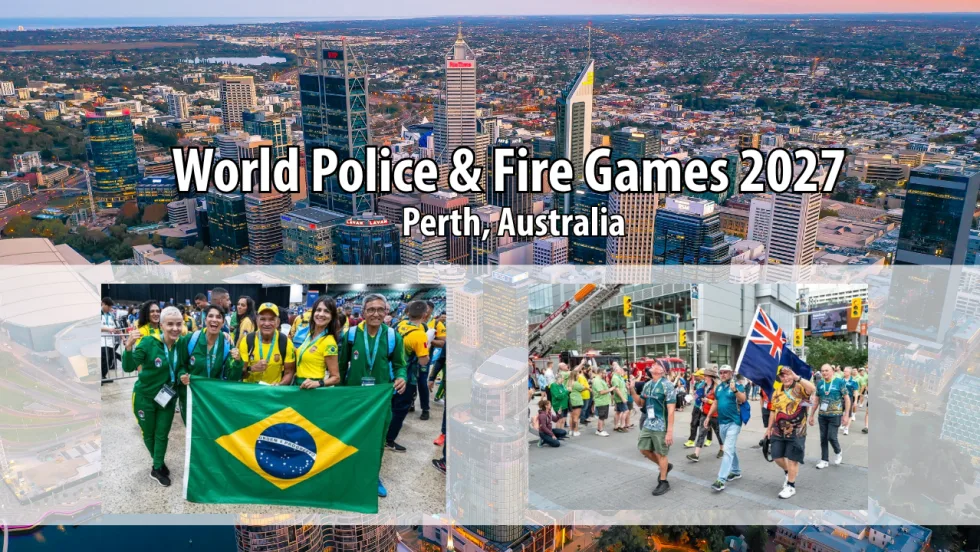
The 2027 World Police & Fire Games Set for Perth, Australia
The 2027 World Police & Fire Games (WPFG) will take place in Perth, Western Australia, from Friday, March 12 through Sunday, March 21, 2027.
Read More →
5.11 Partners with National Fallen Firefighters Foundation to Support #ForThe343
5.11 has joined the nationwide movement honoring the 343 New York City Fire Department firefighters lost on Sept. 11, 2001.
Read More →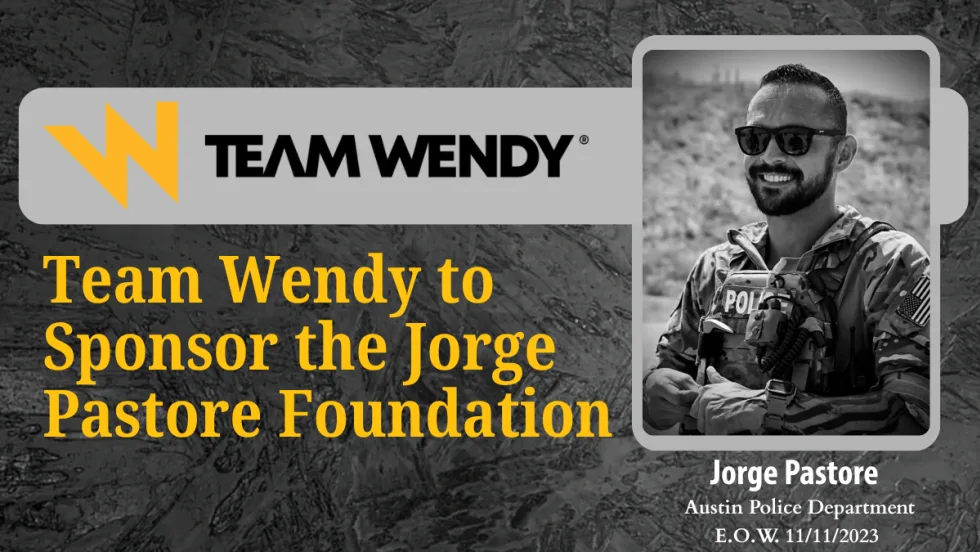
Team Wendy Announces Title Sponsorship of the Jorge Pastore Foundation
Team Wendy’s 3-year partnership with the Jorge Pastore Foundation expands access to programs that strengthen those who serve.
Read More →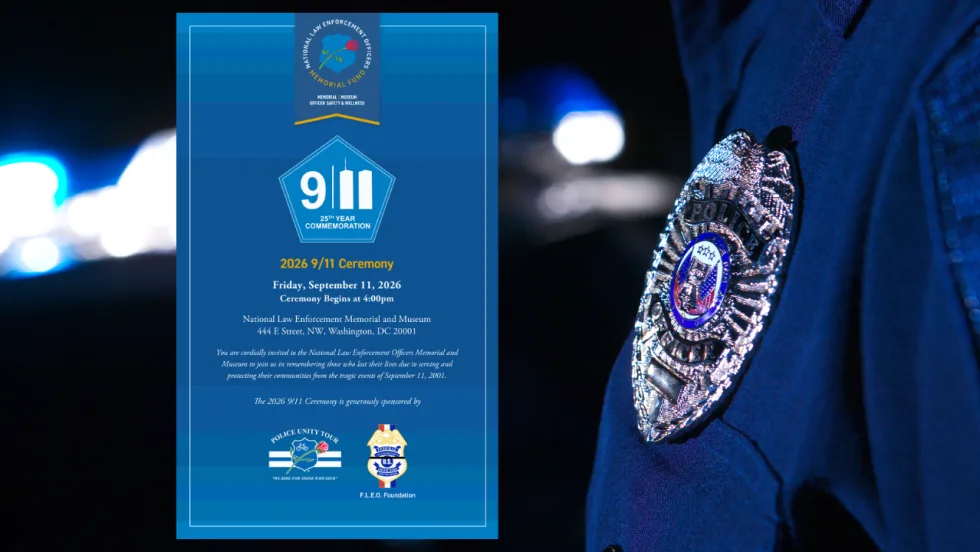
National Law Enforcement Memorial and Museum Hosting 9/11 25th-Year Commemoration Ceremony
The National Law Enforcement Memorial and Museum is hosting a 9/11 25th Year Commemoration Ceremony on Sept. 11 at 4 p.m.
Read More →
National Law Enforcement Officers Memorial Fund Announces June 2026 Officers of the Month
The National Law Enforcement Officers Memorial Fund (NLEOMF) named 15 officers of the Chico Police Department (California) as the Officers of the Month for June 2026 for their roles in responding to an active-shooter incident at a public library.
Read More →
Team Wendy App Creates New Digital Hub for Helmet Owners
The Team Wendy Community App provides one location for warranty registration, size-fit tools, product updates, and community connection. For helmet owners, the new app creates a simpler path to the information and tools that matter most.
Read More →