



Handling People Under the Influence
For the law enforcement officer confronting a person who is intoxicated or "under the influence" of alcoholic beverages or drugs, licit or illicit, one thing remains certain: Anytime a diminished capacity human being is involved, the potential for real danger is inevitably present.

For the law enforcement officer confronting a person who is intoxicated or "under the influence" of alcoholic beverages or drugs, licit or illicit, one thing remains certain: Anytime a diminished capacity human being is involved, the potential for real danger is inevitably present.
As any veteran officer can tell you, the person who has had his judgment scrambled and his inhibitions weakened by alcohol or drug ingestion is capable of doing things-including attacking a police officer-that he might never even consider while straight or sober. With her judgment impaired by the effects of drugs or booze, a 90-pound woman may take on three burly officers; a normally shy and retiring man may elect to shoot it out with deputies. Be aware of these dangers so you'll be able to react accordingly when the time comes.
Danger of Unpredictability
If you remember nothing else about drunk or drugged people, remember this: They are absolutely unpredictable. And because you can never know for sure exactly how they will react in a given situation now that their judgment and inhibitions are shot, each and every one of these people must be viewed as a potential threat to you. Experience has proven that all too many of them are that dangerous. Never forget that a drunk who is 100-percent cooperative one moment can be a spitting, clawing, punching monster trying to kill you the next. It can and does happen all the time.
Also realize that a drunk or drugged person's promise to do or refrain from doing anything is meaningless and must be viewed by you as such. Taking at face value the statements of a diminished capacity person can get you into a great deal of trouble. It additionally can result in a great deal of bloodshed for you or some other innocent party.
Unpredictability also may surround an apparently intoxicated person's condition-and how he got that way. It is important that you know that a number of illnesses, medical conditions, and injuries can produce symptoms that closely resemble intoxicated behavior in a human being. Insulin reactions, diabetic conditions, stroke, mental illnesses, and closed head wounds, among other things, all can result in behavior that mimics intoxication. Diagnosing the problem can become even more difficult for you if the person you are observing has been drinking or taking drugs in addition to suffering from one of these maladies.
If you have any thought at all that something besides booze or drugs may be causing the problematical behavior, keep the subject under close observation and get him or her to medical attention. Never, never simply lock up an unconscious or violently ill subject. Seek emergency medical attention for him before you do anything else.
An alcoholic individual who has been deprived of alcohol for some time also may exhibit bouts of uncontrollable shaking, trembling, and wild hallucinations-symptoms of delirium tremens, or "DTs." Such a person is dangerous to you because in his tortured mind you may be among the threats he feels he must destroy in order to survive.
Any person you contact who appears to be exhibiting the symptoms of delirium tremens is experiencing a medical emergency. He must be secured, kept under surveillance, and transported to medical aid without delay. Observe carefully and act promptly.
You can always resume processing your party for the appropriate charges and handling after he has been cleared by a medical professional. Take no chances with your prisoner's life and your own peace of mind and future.
Altering Your Tactics
Reason and logic may not work on someone whose judgment has been destroyed by drugs or alcohol. You may be justly proud of your ability to reason with the "clients" you encounter on your rounds and thereby achieve compliance with your requests and orders.
Realize, however, that reason and logic may have very little influence on the drunk or stoned individual you meet. When that happens you must remain patient and repeat your instructions as many times as you feel necessary, but you also must have alternative strategies ready to go if words fail you.
You will have to decide based on your training, observations, and experience when it is time to abandon one approach for another. But it's almost always worth trying the least coercive route first. It not only makes for fewer injured cops and inebriates, it also looks better in court when you can honestly testify to everything you tried before you resorted to more forceful methods.
An individual whose senses have been dulled by chemicals may fail to react as expected to a pain compliance hold or "comealong." Defensive aerosol sprays may also fail to have much effect on someone who is deeply "under the influence." The important thing is that you do not panic when normally successful subject control tools or techniques fail for you.
Instead, go on to the next option, which in many cases means that you and one or more backups must wrestle the subject into custody by overcoming his resistance with minimal force. But remember to stay alert throughout the contact.
Also watch the suspect for evidence that the load of chemicals he has on board may be interfering with his respiration and heartbeat. If he evidences difficulty in breathing or goes unconscious, emergency medical assistance is needed. Don't delay getting him to professional help. That often will mean calling paramedics to your location.
A final and important note about drunk or drugged people who refuse to go along with the program for you: "Under the influence" people can be especially adept at discovering how to "get your goat" and exploit your vulnerabilities through obscene, threatening, or simply belittling and demeaning comments directed at you. Don't waste your energy on pointless verbal sparring. Just deal with verbally uncooperative individuals as quickly and professionally as possible and get them out of your hair.
Naturally, you must never respond with physical violence except to defend yourself or someone else. If you slip and react to a verbal attack with a physical assault, you risk an end to your career, and criminal charges, to boot. Career survival is a part of your total survival package. Keeping your cool around "under the influence" people helps you protect yourself in more ways than one.
Drunk Drivers
One particular variety of "under the influence" person represents a special threat to you. As the slogan goes, drunk drivers kill. Sometimes law enforcement officers are among their victims, intentionally or otherwise.
Protect yourself from the drinking, drunk, or drugged motorist by watching for red flag indicators that one is nearby, possibly on a collision course with you. These telltale warning signs include vehicles out of pace with other traffic, vehicles swerving or weaving, and vehicle windows open in inclement weather (the driver may be trying to sober up in the onrushing air).
You must utilize excellent officer safety tactics around all known or suspected "under the influence" motorists. They may attack you because their judgment is impaired or because they're just plain mean when they're drunk and don't like cops anyway. Or they could hurt you accidentally because they have such poor control of the potentially deadly machinery they are operating.
Use extra caution from the moment you pull in behind a suspected drunk driver and activate your emergency equipment. Don't get too close. He may engage in all sorts of bizarre driving behavior, ranging from a sudden swerve across the centerline, to a panic stop, to slamming it into reverse to fleeing at high speed. Be ready for just about anything.
And don't forget to follow the same safety precautions with a suspected drunk driver that you would apply to any other traffic-related contact. Keep an eye on passing traffic. Keep yourself and the subject off of the roadway.
Look out for weapons and other surprise threats. Maintain a healthy reactionary gap between you and the subject and maintain secure control of your sidearm. Keep a wary eye on passengers. Get emergency help on the way if they disobey you or otherwise appear about to get involved. Back off, if need be, and be prepared to defend yourself.
Don't place yourself at a tactical disadvantage by demonstrating field sobriety tests until you have a backup officer there to cover you.
Be sure there's a backup on-scene before you make an arrest. When you do arrest, always hand-cuff and carefully search your alcohol or drug-involved offender. Even after he or she is secured, remain alert for new threats to your safety. One drunk driver managed to shoot and kill two state troopers inside their own testing facility after they had searched him for weapons, locked up their own handguns, and removed his cuffs. Don't let a drunk or drugged driver add you to a growing roster of law enforcement victims of "under the influence" persons.
Lessening the Threat
The safe and humane handling of "under the influence" persons can prove a serious challenge for the most experienced, skilled, compassionate, and safety-conscious law enforcement officer. In a society that presents a steady flow of these sometimes sad, always unpredictable and not infrequently dangerous people, you are destined to face that challenge on a regular basis whether your work environment is urban, rural or somewhere in between.
Become sloppy in your tactics or apathetic in your demeanor and any one of these encounters could end badly for you. Via constant vigilance and the regular application of basic officer survival practices, you can drastically reduce the threat. That's how best to go about surviving a career full of "under the influence" people.
Handling "Under the Influence" People
1. Remember above all that intoxicated or "under the influence" people are unpredictable. Any one of them can prove dangerous to you.
2. Learn to recognize the symptoms of intoxication or "under the influence" behavior brought about by either drugs or alcohol. These signs can serve as red flags of danger.
3. Always get a backup for dealing with an intoxicated or diminished capacity person. Doing so could save both you and the suspect from injury.
4. Realize that the demeanor and actions of an "under the influence" person can change quickly and radically without apparent cause or warning.
5. Handcuff and search any intoxicated or impaired individual you take
into custody.
6. Closely and continuously monitor the physical condition and actions of an apparently "under the influence" person you have taken into custody. Realize that some injuries and illnesses can mimic intoxication and that any hint of such a condition requires that the subject receive immediate medical attention.
7. Never ridicule or needlessly antagonize an intoxicated person. You could provoke an unnecessary fight.
8. Take nothing for granted and carefully watch an "under the influence" person for assaultive as well as self-destructive behavior. Be prepared to intervene promptly.
9. Realize that legal prescriptions and lawful drugs taken in combination with alcohol also can produce symptoms that look like intoxication: Inquire further and get medical advice, if indicated.
10. Never assume that an "under the influence" person is capable of making rational decisions.
Recognizing Intoxication
As life experience as well as your training and on-the-job encounters have taught you, the presence of an "under the influence" or drunken condition may be signaled by a wide variety of symptoms. If you are to spot potential danger in time to protect yourself from it, you must be able to detect the inebriated or drugged individual with the help of possible indicators. Although they can vary widely from one person to the next and may appear very differently displayed on the same person on different occasions, the signs of being "under the influence" of alcohol or drugs include the following:
Loud, boisterous, perhaps profane language
Clothing disarranged and soiled
Watery, bloodshot eyes
Either dilated or pinpoint pupils of the eyes
Strong smell of alcohol on the breath and person
Needlessly belligerent attitude, mannerisms, or speech
Poor motor skills and balance
Slurred, hard to understand speech
Visible needle tracks on the body
Alcohol, drugs, or drug paraphernalia in the subject's possession
Presence of empty containers of drugs or alcoholic beverages
Display of emotional extremes such as laughing or crying without apparent reason
Abnormally passive or aggressive behavior
Staggering, stumbling, lurching walk
Hallucinations or delusions; bizarre actions
Swaying or nodding when trying to stand still
Difficulty performing "fine" tasks with the fingers such as extracting a driver's license from a wallet
Difficulty in understanding or following instructions or explanations
Gerald W. Garner is chief of the Greeley (Colo.) Police Department and a member of the Police Advisory Board. His book "Surviving the Streets" is available through Charles C Thomas Publisher at www.
ccthomas.com.
More Patrol

Adept Armor Introduces Two New Rifle Plates
Adept Armor has launched two new Level IV ballistic plates, the Emperor and the Archon Mark 2, which brings Adept Armor’s new Quatroid ceramic to the high-threat, performance-value center of the range at 5.2 pounds.
Read More →
POLICE Product Test: Benchmade Bailout
The Benchmade Bailout is a slim, lightweight carry knife with a deep-ride pocket clip and comes in a variety of blade steels and scales. Here is a detailed review of the Taiga Green Bailout, released earlier this year.
Read More →
NLEOMF Announces July 2026 Officer of the Month
NLEOMF honored a Michigan deputy sheriff as the July 2026 Officer of the Month for rescuing a trapped driver from a burning vehicle following a Fourth of July crash.
Read More →
Streamlight to Showcase Newest Lighting Products at National Safety Council’s Safety Congress & Expo 2026
Streamlight will showcase its latest lights, including the Portable Scene Light III and the LiteBox 1Million, at the 2026 National Safety Council (NSC) Safety Congress & Expo.
Read More →
The 2027 World Police & Fire Games Set for Perth, Australia
The 2027 World Police & Fire Games (WPFG) will take place in Perth, Western Australia, from Friday, March 12 through Sunday, March 21, 2027.
Read More →
5.11 Partners with National Fallen Firefighters Foundation to Support #ForThe343
5.11 has joined the nationwide movement honoring the 343 New York City Fire Department firefighters lost on Sept. 11, 2001.
Read More →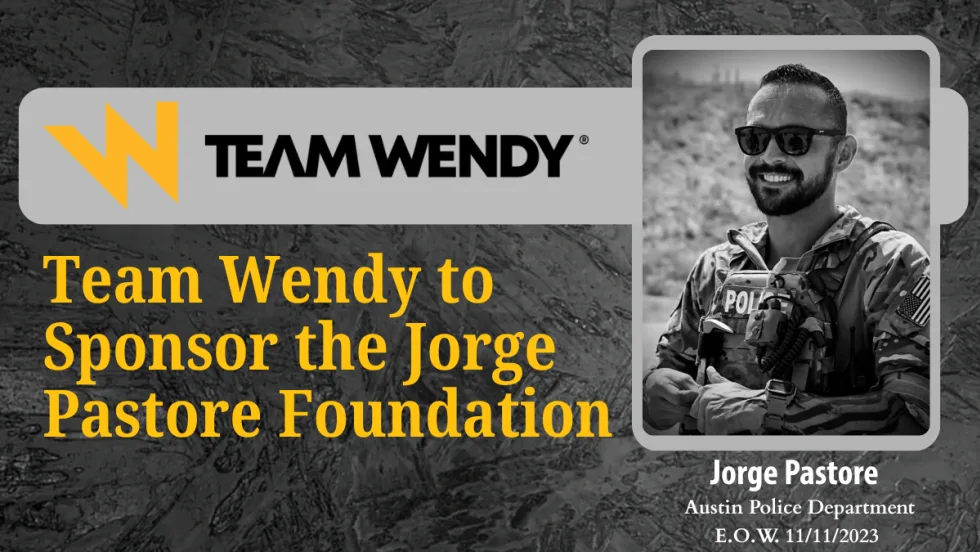
Team Wendy Announces Title Sponsorship of the Jorge Pastore Foundation
Team Wendy’s 3-year partnership with the Jorge Pastore Foundation expands access to programs that strengthen those who serve.
Read More →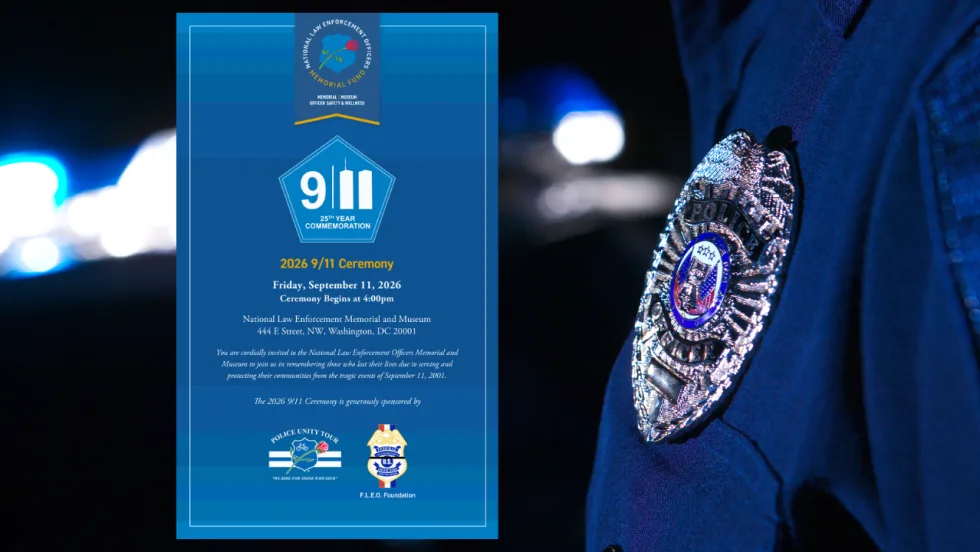
National Law Enforcement Memorial and Museum Hosting 9/11 25th-Year Commemoration Ceremony
The National Law Enforcement Memorial and Museum is hosting a 9/11 25th Year Commemoration Ceremony on Sept. 11 at 4 p.m.
Read More →
National Law Enforcement Officers Memorial Fund Announces June 2026 Officers of the Month
The National Law Enforcement Officers Memorial Fund (NLEOMF) named 15 officers of the Chico Police Department (California) as the Officers of the Month for June 2026 for their roles in responding to an active-shooter incident at a public library.
Read More →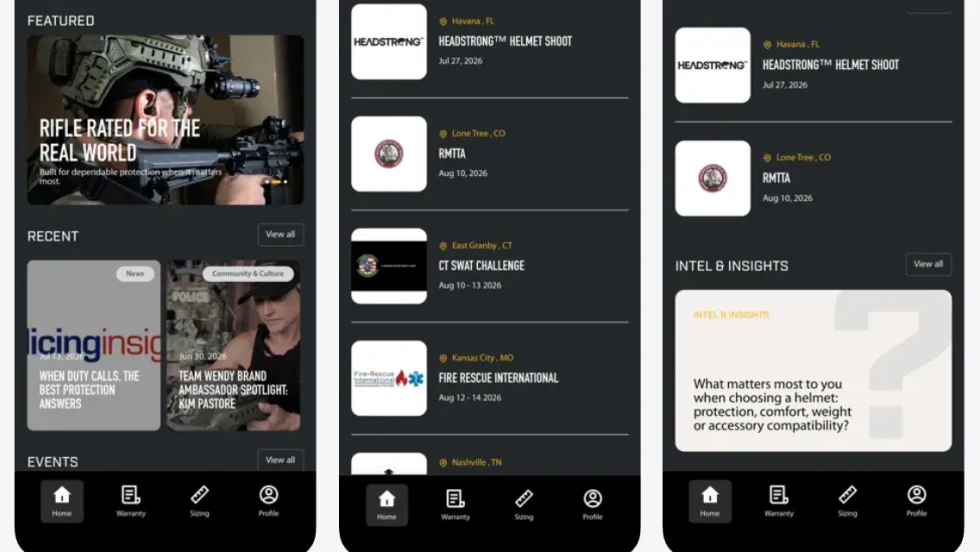
Team Wendy App Creates New Digital Hub for Helmet Owners
The Team Wendy Community App provides one location for warranty registration, size-fit tools, product updates, and community connection. For helmet owners, the new app creates a simpler path to the information and tools that matter most.
Read More →