



Professional Courtesy
There are a lot of really good docs out there who think the medical academics who authored the EMJ report have their heads in their posteriors.

It was kind of the coal in the Christmas stocking of every American police officer. During the holidays, a story broke in newspapers around the country that 98 percent of American emergency room doctors suspect patients have been "victims of excessive force by police."
These reports were triggered by a survey of 315 ER physicians published in the January edition of Emergency Medicine Journal (EMJ). The survey conducted in 2002 and helmed by Dr. H. Range Hutson of Harvard asked the docs whether they had treated a patient with injuries that they suspected were caused by police excessive force. It also asked if the respondents had received training in managing such cases.
The purpose of the EMJ study is to not only deliver some righteous liberal criticism of cops but also to establish another layer of bureaucracy that ER docs have to cope with. That's what that whole management of cases thing is about. The authors apparently want hospitals to establish suspected excessive force reporting like the suspected domestic abuse reporting they already have in place. Docs will love that. It's just what they need, more social work.
And there are so many problems with this survey that I don't even know where to begin.
First and foremost, how can an emergency room doctor unilaterally decide after the fact that a cop used excessive force? "Excessive force" is a legal concept based on numerous Supreme Court rulings on civil rights cases. Key among these is Graham v. Connor, which establishes that police have the right to use objectively reasonable force to counter a threat or even a perceived threat. That term objectively reasonable is tricky; it can only be determined in a court of law whether an act is objectively "reasonable."
Jim Pasco, executive director of the Fraternal Order of Police, summed up this concern when he told USA Today that ER doctors "have no way of knowing what amount of force was required" in encounters with suspects.
Another major problem with the paper is that the authors are really making an apple and orange argument. There's a reason why doctors are asked to step in when they suspect domestic abuse, elderly abuse, child abuse: The victims are known to be cowed into silence by their abusers. The same cannot be said of subjects arrested by police. The first words out of their mouths are "excessive force." The next words are: "I'm gonna sue." And there are plenty of attorneys to take their cases. So there's no reason for doctors to be asked to play social worker in such cases.
Last month our associate editor Dean Scoville shot back at the EMJ study with an article titled "Medical Diagnosis: We Suck!" on the Patrol Channel at PoliceMag.com. Dean's article was also picked up by a blog called GruntDoc.com, established by a Texas-based emergency room physician and former Marine combat surgeon. And the response of GruntDoc's audience revealed two things that I urge you to remember about this topic:
One, there are a lot of really good docs out there who think the medical academics who authored the EMJ report have their heads in their posteriors. Two, there's no reason for you to think ill of them. They know that you are the good guys and that you're both on the same team.
But why don't I let them speak for themselves:
Whitecoat wrote: "Just so you know, this article does not reflect the feelings of most emergency physicians. I bet that if you asked just about any healthcare provider to define what "excessive force" even means, they couldn't do it. If you are protecting your life or the lives of others, you do what you need to do. We put drunk patients into four-point leather restraints in the emergency department; would those same physicians answering the survey consider that treatment as "excessive" as well? I'm sure the study was worded in such a way that the researchers were able to get the answers they wanted. Emergency workers have no idea what you guys go through in the field…Peace."
DocV wrote: "Please know that not all of us feel this way. My father was a LEO and I have a tremendous amount of respect for the "Thin Blue Line" and all that you do. Please go out and read the discussion of this on some of the emergency medicine blogs. You'll find many more docs that are on your side. Thank you for your service."
More Patrol

Team Wendy Introduces the EXFIL Endurance Ballistic Helmet, Engineered to Reduce the Burden of Extended Wear
Team Wendy has launched its EXFIL Endurance, a new lightweight ballistic helmet engineered to deliver protection, comfort, and fit during demanding, extended operations.
Read More →
The First Responders Children’s Foundation National First Responders Day Roll Call of Heroes Ceremony Returns to Times Square, NYC
First Responders Children’s Foundation (FRCF), in collaboration with T-Mobile, will host the Roll Call of Heroes ceremony in Times Square to commemorate National First Responders Day on Wednesday, Oct. 28. During the event, FRCF will present 18 Hero Awards.
Read More →
Streamlight to Showcase Newest Lighting Products for Law Enforcement Professionals at IACP 2026
Streamlight will showcase its newest lights for law enforcement at the International Association of Chiefs of Police Annual Conference & Expo. Featured lights will include the TLR-3 X, the PolyTac 1X, and more.
Read More →
Streamlight Portable Scene Light III Wins 2026 OH&S New Product of the Year Award
Streamlight’s Portable Scene Light III has won the 2026 Occupational Health & Safety (OH&S) New Product of the Year Award in the Lighting category.
Read More →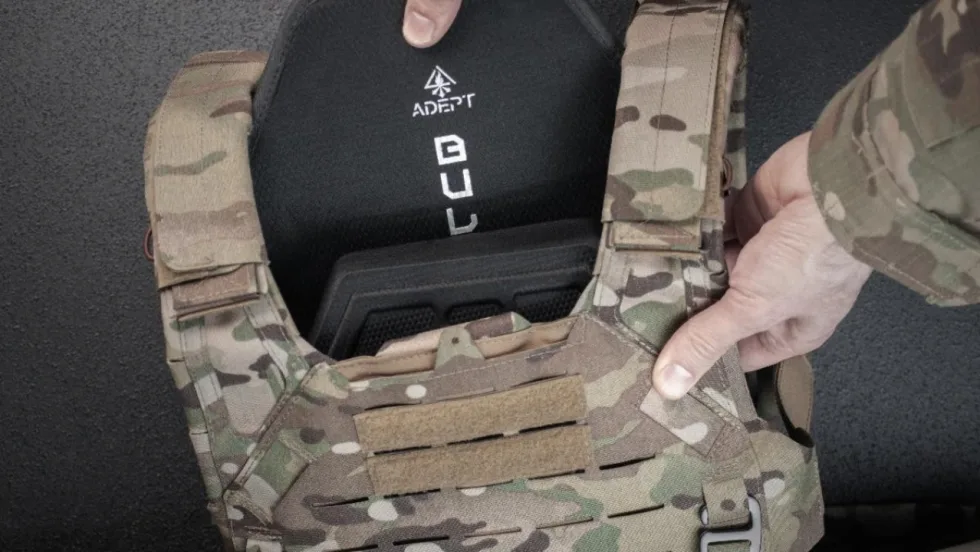
Adept Armor Introduces Two New Rifle Plates
Adept Armor has launched two new Level IV ballistic plates, the Emperor and the Archon Mark 2, which brings Adept Armor’s new Quatroid ceramic to the high-threat, performance-value center of the range at 5.2 pounds.
Read More →
POLICE Product Test: Benchmade Bailout
The Benchmade Bailout is a slim, lightweight carry knife with a deep-ride pocket clip and comes in a variety of blade steels and scales. Here is a detailed review of the Taiga Green Bailout, released earlier this year.
Read More →
NLEOMF Announces July 2026 Officer of the Month
NLEOMF honored a Michigan deputy sheriff as the July 2026 Officer of the Month for rescuing a trapped driver from a burning vehicle following a Fourth of July crash.
Read More →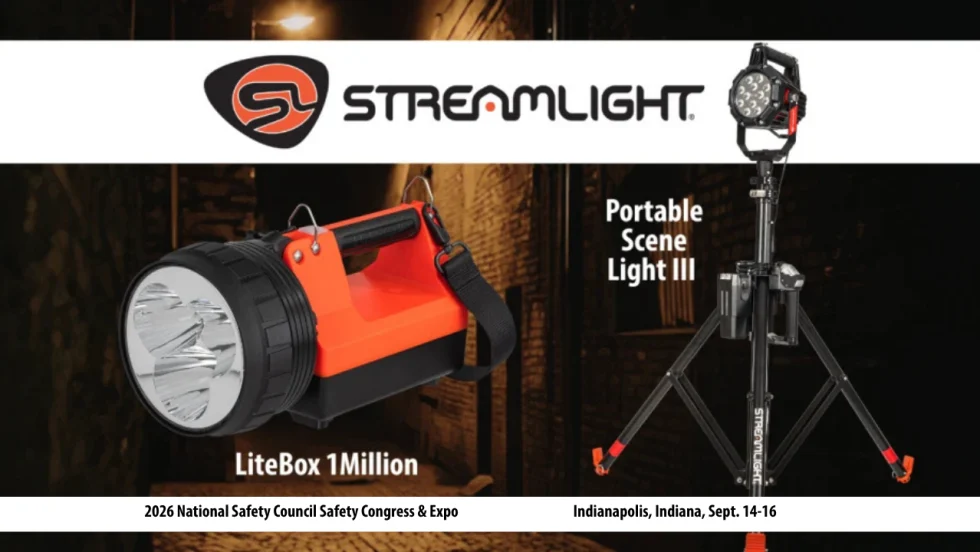
Streamlight to Showcase Newest Lighting Products at National Safety Council’s Safety Congress & Expo 2026
Streamlight will showcase its latest lights, including the Portable Scene Light III and the LiteBox 1Million, at the 2026 National Safety Council (NSC) Safety Congress & Expo.
Read More →
The 2027 World Police & Fire Games Set for Perth, Australia
The 2027 World Police & Fire Games (WPFG) will take place in Perth, Western Australia, from Friday, March 12 through Sunday, March 21, 2027.
Read More →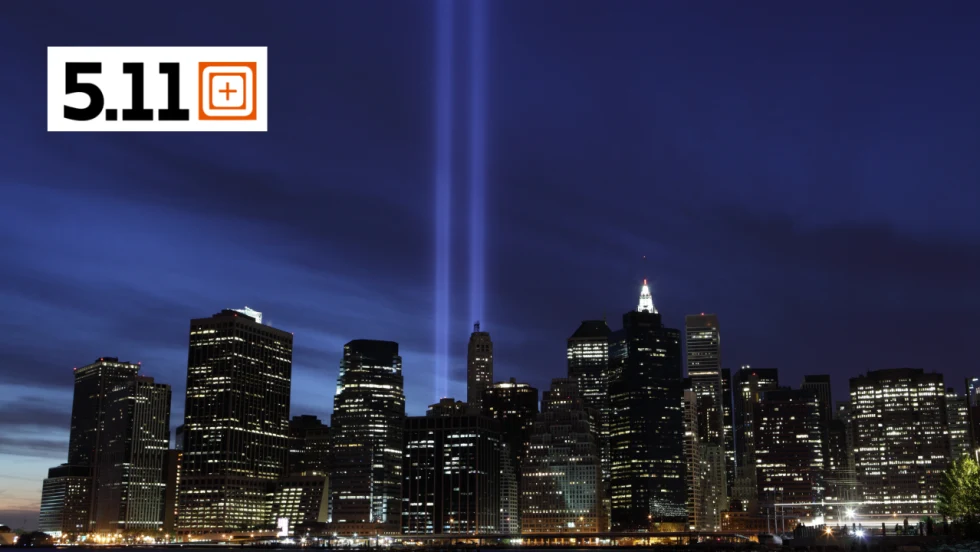
5.11 Partners with National Fallen Firefighters Foundation to Support #ForThe343
5.11 has joined the nationwide movement honoring the 343 New York City Fire Department firefighters lost on Sept. 11, 2001.
Read More →