



Washington Turns on the Money Tap
With tax revenues declining and budgets under water, many agencies are feeling the strain. But help is on the way.


Photo courtesy of AgnosticPreachersKid (Wikimedia Commons).
On Feb. 25, the 32 recruits graduating from the Worcester (Mass.) Police Academy walked across the stage at a local high school and received their shiny new badges and a congratulatory handshake. They then walked off stage and became a symbol of the fiscal problems facing some of the nation's law enforcement agencies when they were asked to return the badges and were laid off before hitting the streets.
With tax revenues declining and budgets under water, many agencies are feeling the strain. But help is on the way. The American Recovery and Reinvestment Act of 2009 (known to most people as "the Stimulus") specifies about $4 billion in law enforcement funding for federal, state, local, and tribal agencies.
The biggest chunk of change coming from Washington is in two programs: Community Oriented Policing Services (COPS) and the Edward Byrne Memorial Justice Assistance Grants Program (Byrne-JAG).
COPS, which dates to the 1990s when President Bill Clinton proposed adding 100,000 cops to the "Thin Blue Line," has $1 billion to distribute to agencies that need to hire new officers and rehire laid-off officers.
Byrne-JAG has two pots of money totaling $2.225 billion that have to be spent within rather loose parameters for crime prevention and drug enforcement. More about that in a minute.
Hiring Cops
Under the COPS program, agencies can apply directly to the COPS office at www.cops.usdoj.gov/. Agencies that receive COPS grants will get three years' worth of salary and benefits per new officer or rehire of a laid-off officer. They must also agree to keep that officer on duty for the fourth year. And it would be unwise for an applicant to indicate that it can't keep the new officers past that fourth year. "Those agencies that can bring us a plan to incorporate these officers into their budgets and to maintain these positions will have a better shot than the rest," says COPS spokesperson Corey Ray.
COPS says the $1 billion in grants is expected to fund 5,500 officers with average salary and benefits of $60,000 per annum per officer. But unlike previous COPS grants for hiring, the Stimulus grants do not require agencies to make a local match, nor is there a salary cap.
"Taking away the local match requirement helps agencies dealing with the tough economy," says Ray. "There is still a local buy-in because of the fourth year requirement, but we wanted to make it easier for more agencies to compete for these dollars."
The COPS application process opened on the program's Website on March 16. Within 24 hours, 846 agencies had applied for the funds. And there's a reason for their quick response: The application deadline is April 14. Ray says the grants will likely be awarded as early as July.
Byrne-JAG Grab Bag
Guidelines for the $2.225 billion in Stimulus money for Byrne grants are considerably more vague.
The largest pot is $2 billion for Byrne-JAG grants. According to Susan Oliver, spokesperson for the Bureau of Justice Assistance, Byrne-JAG grants can be spent on "state and local initiatives, technical assistance, training, personnel, equipment, supplies, contractual support, information systems, research and evaluation activities, and improved or enhanced law enforcement programs." That pretty much means that these grants can be used for anything in the realm of crime prevention and drug enforcement except for hiring new officers and constructing new buildings.
So if an agency needs a car for patrolling or new laptops for that car or TASERs or new radios, it may be able to fund the purchase with a Byrne-JAG grant. The only rub is that a chief or sheriff can't apply directly for these funds. The funds are being allocated directly to local governments according to a formula based partly on population served and FBI violent crime statistics.
Here's the way it works: Each local government and state has a certain allocation of funding for law enforcement set aside in the Stimulus portion of the Byrne-JAG program. In order to get that funding, each law enforcement agency must make the case with its local government and then the local government has to make a specific grant application to the BJA to receive some of its allocated funds for that purpose such as buying new computers or retaining veteran officers.
Most agencies have already decided how they want to spend their Byrne-JAG Stimulus funds. And with good reason; the purpose of the Stimulus is to get the economy moving now, not later, so deadlines are tight. Applications for Byrne-JAG grants have to be submitted by May 18. That's why some companies that make law enforcement equipment such as TASER International are offering their customers assistance in writing grant applications.
Byrne-JAG accounts for the lion's share of the BJA stimulus funds, but there is another Byrne grant program included in the Stimulus. A total of $225 million has been set aside for Byrne Competitive Grants. Agencies can apply directly for this money. The deadline for this program had not been set at presstime, but it's a good bet that it will be soon.
[PAGEBREAK]
Praise and Criticism
Police support organizations and police equipment manufacturers are thrilled with the law enforcement funding contained in the Stimulus. "We pushed for significant Stimulus funding to go to Byrne-JAG and the COPS hiring program, and we are very pleased with the number," says Andy Mournighan, director of Government Affairs for the National Association of Police Organizations.
"Law enforcement has taken a hit for funding in the past eight years, and Byrne-JAG and COPS hiring grants are the two biggest programs that benefit our members. So we are very happy," Mournighan adds.
One group that's not happy about the stimulus funding, in general, and federal funding of local law enforcement in particular is the Heritage Foundation. Senior Policy Analyst David Mulhausen says that while the conservative think tank supports law enforcement, it believes that the federal government should not be funding local law enforcement.
"There's really no net gain," Mulhausen says. "States and cities know that they can lay off officers they think are necessary and then the federal government will make up the difference. They are gaming the system."
Despite all of the layoffs and furloughs in recent months, Mulhausen says states and cities can find the money to keep their officers on the job without federal funds. "If you look at the budgets of cities and states line item by line item, you will find that their money is going to fund operations that are a lot less important than public safety." Asked for examples of such line items that can be cut to shift money to law enforcement, Mulhausen cited parks and Medicaid.
Unlike Mulhausen, those 32 officers laid off after graduating from the Worcester, Mass., academy probably don't care whether the funds come from the Stimulus or from cuts in Medicaid: They just want their badges back.
More Patrol

Team Wendy Introduces the EXFIL Endurance Ballistic Helmet, Engineered to Reduce the Burden of Extended Wear
Team Wendy has launched its EXFIL Endurance, a new lightweight ballistic helmet engineered to deliver protection, comfort, and fit during demanding, extended operations.
Read More →
The First Responders Children’s Foundation National First Responders Day Roll Call of Heroes Ceremony Returns to Times Square, NYC
First Responders Children’s Foundation (FRCF), in collaboration with T-Mobile, will host the Roll Call of Heroes ceremony in Times Square to commemorate National First Responders Day on Wednesday, Oct. 28. During the event, FRCF will present 18 Hero Awards.
Read More →
Streamlight to Showcase Newest Lighting Products for Law Enforcement Professionals at IACP 2026
Streamlight will showcase its newest lights for law enforcement at the International Association of Chiefs of Police Annual Conference & Expo. Featured lights will include the TLR-3 X, the PolyTac 1X, and more.
Read More →
Streamlight Portable Scene Light III Wins 2026 OH&S New Product of the Year Award
Streamlight’s Portable Scene Light III has won the 2026 Occupational Health & Safety (OH&S) New Product of the Year Award in the Lighting category.
Read More →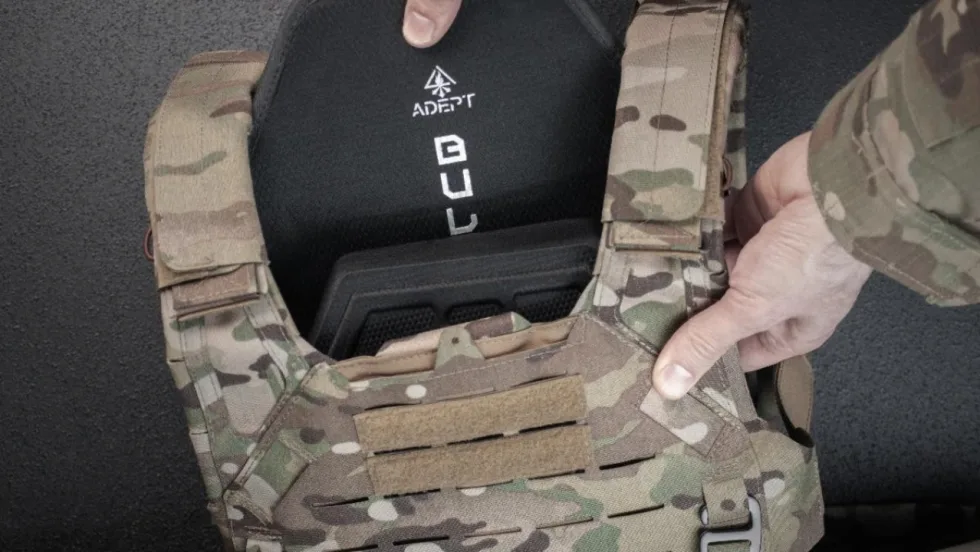
Adept Armor Introduces Two New Rifle Plates
Adept Armor has launched two new Level IV ballistic plates, the Emperor and the Archon Mark 2, which brings Adept Armor’s new Quatroid ceramic to the high-threat, performance-value center of the range at 5.2 pounds.
Read More →
POLICE Product Test: Benchmade Bailout
The Benchmade Bailout is a slim, lightweight carry knife with a deep-ride pocket clip and comes in a variety of blade steels and scales. Here is a detailed review of the Taiga Green Bailout, released earlier this year.
Read More →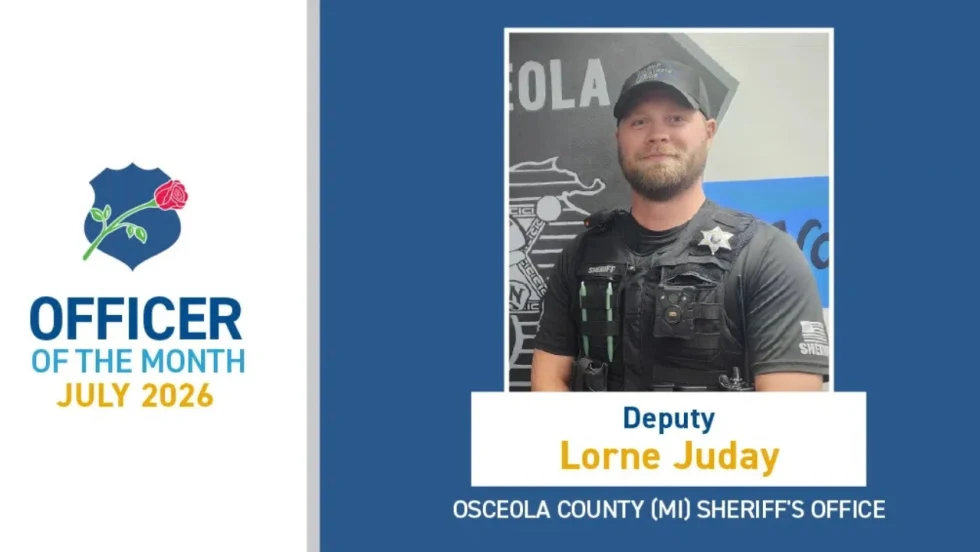
NLEOMF Announces July 2026 Officer of the Month
NLEOMF honored a Michigan deputy sheriff as the July 2026 Officer of the Month for rescuing a trapped driver from a burning vehicle following a Fourth of July crash.
Read More →
Streamlight to Showcase Newest Lighting Products at National Safety Council’s Safety Congress & Expo 2026
Streamlight will showcase its latest lights, including the Portable Scene Light III and the LiteBox 1Million, at the 2026 National Safety Council (NSC) Safety Congress & Expo.
Read More →
The 2027 World Police & Fire Games Set for Perth, Australia
The 2027 World Police & Fire Games (WPFG) will take place in Perth, Western Australia, from Friday, March 12 through Sunday, March 21, 2027.
Read More →
5.11 Partners with National Fallen Firefighters Foundation to Support #ForThe343
5.11 has joined the nationwide movement honoring the 343 New York City Fire Department firefighters lost on Sept. 11, 2001.
Read More →