



Citizens’ Complaints about Speeding
This article is constructed to give patrol officers options in dealing with citizen complaints about speeding cars.


Some of the most common complaints police departments receive from citizens involve passing motor vehicles. Usually it is about a car traveling too fast. And when police receive these complaints, the people they serve expect them to do something about it.
This article is constructed to give patrol officers options in dealing with citizen complaints about speeding cars.
Dangers of Speeding
Speeders zipping through residential areas can put citizens in fear for their safety, especially if they are pedestrians trying to cross the street or bicyclists sharing the road with cars. Citizens also fear for the safety of their children and for damage to their property because speeding increases the risk of a crash.
Many of these fears are based on fact. Research by the National Highway Traffic Safety Administration shows that the force of impact on the human body is more than one-third greater at 35 mph than at 30 mph. Each reduction in speed by one mile per hour equates to a five percent reduction in car crashes. Speed is a contributing factor in about one-eighth of all crashes and in about 33 percent of fatal crashes.
Getting drivers to reduce their speed is one way you as a patrol officer can truly save lives. Getting a driver to reduce his or her speed not only makes that driver safer, it also makes all the other motorists and pedestrians who share the road safer. And every other driver who passes a motor vehicle stop is likely to slow down.
Taking Stock
With the dangerous consequences of speeding well documented, it's prudent for you to take every citizen complaint about speeding seriously.
When a complaint is received, first study the number of crashes that have occurred in the area. For any crashes related to excessive speed, note speed-related causes such as:
driving off the road
drifting out of lane on a curve
rear ending another car
striking a car crossing an intersection
This background information will help you determine the hazards of the area.
In some cases you may find that the complaints about speeding are not substantiated. Which means you have to convince the complainant that speeding is not a major problem in the neighborhood. To convince the complainant, you may want to monitor speed with him or her present to show how most drivers are complying with speed laws. This will show the citizen that the department took the complaint seriously and researched the matter.
The next step is to ascertain at what time most of the speeders are observed. This will help in developing a profile of the offender, which will help you formulate a targeted response. Are the offenders commuters who are rushing to get to work between 8:30 a.m. and 9 a.m.? Are the speeders teenagers who speed when school lets out at 3 p.m.? Contact the complainant to determine when the speeding is occurring.
This research will help you determine your response.
Developing an Action Plan
The first step is to reduce the community's general acceptance of speeding. This can be done through an education campaign where citizens are shown the correlation between speeding and crashes. Use the campaign to debunk myths about speeding while presenting empirical information about why speeding is dangerous. Next, you could conduct a survey as to what speed the community finds acceptable. Your police department may encounter a negative backlash if it goes from very limited enforcement to a strict enforcement policy. The results of the survey can be released along with what the police department feels is a reasonable threshold and at what speed citizens can expect enforcement to commence.
A speed display board can be erected on the troublesome stretch of roadway to make motorists aware of their speed. After a reasonable amount of time, a department may want to station an officer with a handheld speed measuring tool near the speed display board. Initial enforcement can include verbal warnings. You may also want to deliver written warnings along with pamphlets outlining the dangers of speeding and the fact that you and your fellow officers will be enforcing speed laws more proactively.
Unfortunately, a constant police presence is expensive and not realistic. So to keep motorists in line, conduct speed enforcement at random times so speeders won't know when to expect the police.
Sending a Message
Initial intensive speed enforcement will reduce the average speeds on the roadway. Soon enough there will be fewer offenders and fewer violations to be enforced.
When this occurs the natural tendency is to move to another "hot spot" and work on the problem at that location; a better response is to keep at least a limited presence in the area. Otherwise speeds will return to the pre-enforcement level.
If the violations are occurring at a specific time such as rush hour or after school, you can physically alter the roadway to "relax" speeds. One method is to use cones to narrow the roadway and naturally slow the flow of traffic. Another method is the use of temporary speed bumps that can be easily placed or removed depending on need. Permanent speed bumps can be recommended in areas of dangerous, repetitive speeders.
In dealing with repeat offenders or egregious offenders, you may want to have a plan in place so an arrest can be made in lieu of a summons at the scene. Arresting the worst offenders sends a strong message to the community that speeding is a serious matter, not a minor infraction.
If you are dealing with teenagers who are speeding, a system can be devised where a warning is sent to the owner of the vehicle (usually the parent). This will allow the family to handle the matter of speeding at their level, hopefully reducing the need for enforcement by police.
Speeding complaints will continue to be fielded by your department. You need to have a plan to reduce speeds and keep the streets safe.
Det. Joseph Petrocelli is a 20-year veteran of New Jersey law enforcement. You can comment on this article, suggest other topics, or reach the author by e-mailing the editor at David.Griffith@PoliceMag.com.
More Patrol

Team Wendy Introduces the EXFIL Endurance Ballistic Helmet, Engineered to Reduce the Burden of Extended Wear
Team Wendy has launched its EXFIL Endurance, a new lightweight ballistic helmet engineered to deliver protection, comfort, and fit during demanding, extended operations.
Read More →
The First Responders Children’s Foundation National First Responders Day Roll Call of Heroes Ceremony Returns to Times Square, NYC
First Responders Children’s Foundation (FRCF), in collaboration with T-Mobile, will host the Roll Call of Heroes ceremony in Times Square to commemorate National First Responders Day on Wednesday, Oct. 28. During the event, FRCF will present 18 Hero Awards.
Read More →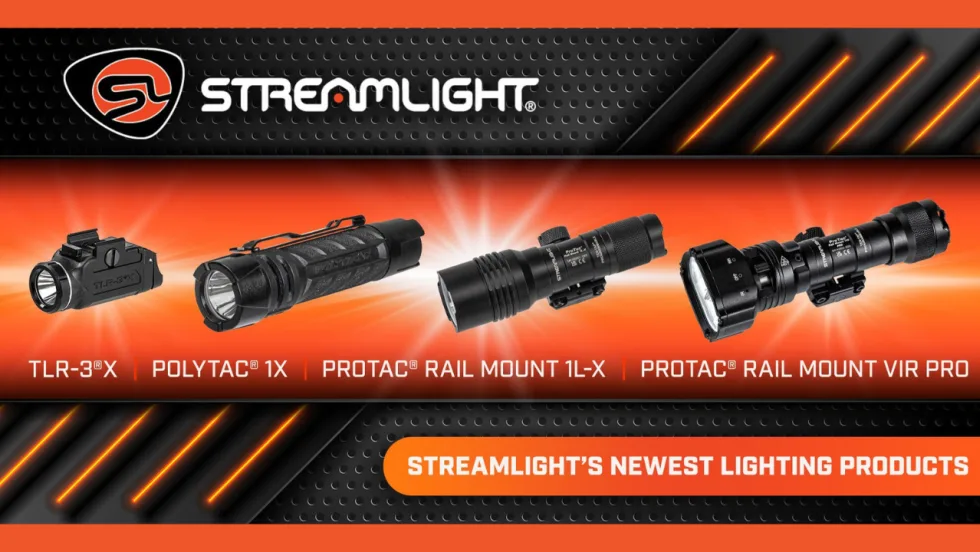
Streamlight to Showcase Newest Lighting Products for Law Enforcement Professionals at IACP 2026
Streamlight will showcase its newest lights for law enforcement at the International Association of Chiefs of Police Annual Conference & Expo. Featured lights will include the TLR-3 X, the PolyTac 1X, and more.
Read More →
Streamlight Portable Scene Light III Wins 2026 OH&S New Product of the Year Award
Streamlight’s Portable Scene Light III has won the 2026 Occupational Health & Safety (OH&S) New Product of the Year Award in the Lighting category.
Read More →
Adept Armor Introduces Two New Rifle Plates
Adept Armor has launched two new Level IV ballistic plates, the Emperor and the Archon Mark 2, which brings Adept Armor’s new Quatroid ceramic to the high-threat, performance-value center of the range at 5.2 pounds.
Read More →
POLICE Product Test: Benchmade Bailout
The Benchmade Bailout is a slim, lightweight carry knife with a deep-ride pocket clip and comes in a variety of blade steels and scales. Here is a detailed review of the Taiga Green Bailout, released earlier this year.
Read More →
NLEOMF Announces July 2026 Officer of the Month
NLEOMF honored a Michigan deputy sheriff as the July 2026 Officer of the Month for rescuing a trapped driver from a burning vehicle following a Fourth of July crash.
Read More →
Streamlight to Showcase Newest Lighting Products at National Safety Council’s Safety Congress & Expo 2026
Streamlight will showcase its latest lights, including the Portable Scene Light III and the LiteBox 1Million, at the 2026 National Safety Council (NSC) Safety Congress & Expo.
Read More →
The 2027 World Police & Fire Games Set for Perth, Australia
The 2027 World Police & Fire Games (WPFG) will take place in Perth, Western Australia, from Friday, March 12 through Sunday, March 21, 2027.
Read More →
5.11 Partners with National Fallen Firefighters Foundation to Support #ForThe343
5.11 has joined the nationwide movement honoring the 343 New York City Fire Department firefighters lost on Sept. 11, 2001.
Read More →