



Training Terminology
To promote the right mindset, we should use words like pre-attack indicators, offensive strategies, and response to aggressive and violent resistance. That's closer to what we really do.

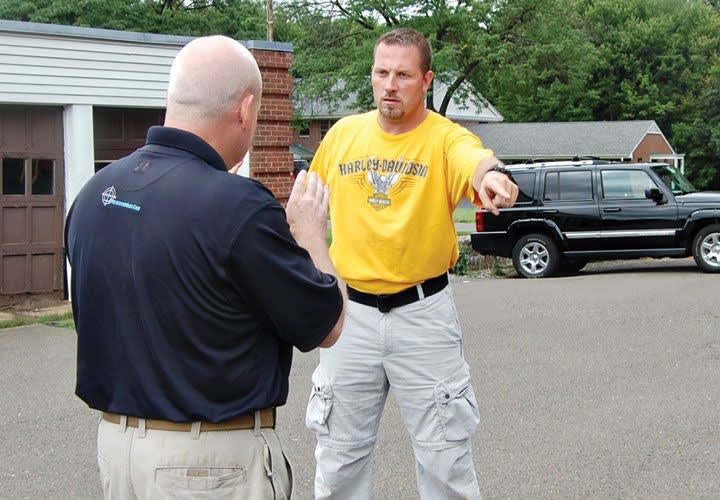
There's a concept in psychology called "priming." It means the implicit memory effect in which exposure to a stimulus influences a response to a subsequent stimulus.
In other words, memory and experiences are important to the way we see the world and how we act in it. I first learned of it while reading "Blink" by Malcolm Gladwell. And it really applies to law enforcement training.
Priming Experiments
In an evaluation devised by psychologist John Bargh, groups of students were given scrambled letter tests that incorporated specific types of words. Because of how the brain works certain outcomes emerged.
One group of students had words scrambled throughout the test such as "worried," "Florida," "old," "bingo," and "wrinkle." After completing the test, students from this group then walked out of the testing site more slowly than they first walked in. Their brains were using their adaptive unconscious and having thoughts about being old. Because they had subconscious thoughts about being old, the students became more "elderly" in their behavior, even if for just a few moments.
In another Bargh-designed test, two groups of students were subjected to priming experiments. The first group was given scrambled word tests that included words like "aggressively," "bold," "rude," "bother," and "disturb." The second group was given similar tests but incorporating words like "appreciate," "patiently," "yield," "polite," and "courteous."
After completing each test, the participants were given individual instructions to go see the person running the experiment in order to get the next assignment. The students were unaware that as a condition of the test, there would be an associate of the experiment's director blocking the doorway while engaged in conversation with the director.
You can guess what happened. The students primed to be rude waited for an average of five minutes before interrupting the conversation. Out of the students that were primed to be polite, however, 82 percent never interrupted at all.
Let me give you an even simpler example that I tested around my office. I want you to picture shoes or sneakers equipped with Velcro fasteners across the top. What was the first thing that popped up in your mind? How many of you reading this just thought of something along the lines of old people shoes? Did any of you think: "Oh, shoes for anyone that suffers from arthritis and can't use lace-ups anymore?" That's the effects of priming, an association that produces another without conscious thought.
So why then is priming so important to us in law enforcement? I'm glad you asked...
Priming for Combatives
One of the things I pondered while reading "Blink" was this statement: "...we are simply operating on automatic pilot, and the way we think and act-and how well we think and act on the spur of the moment-are a lot more susceptible to outside influences than we realize." If that's true, then maybe we need to look at how we think in general.
We have been primed to fight since being little children. If you don't believe so, then ask yourself these questions:
Why is it that when we are mad enough we clench a fist?
Why is it that when we get into a fight, we have a propensity to throw a punch or try to grab someone and wrestle?
Why do people punch the face and head area when they know it's the strongest and boniest part of the body to hit?
Perhaps because they have watched someone else do it thousands of times on TV or in the movies. What would a good fight scene be without the good guy getting beaten nearly to death but only to rally with a flurry of strikes to the face of his antagonists and win the day?
The Wrong Words
I attended a police combatives instructor course last year where the founder of the system spoke about priming and its effects. During the course, he asked two simple questions: "Why do we call our efforts to obtain control while dealing with violence and aggression "defensive tactics?" And, "Why do we prime ourselves and the public to think that what we do is defensive?" Since we are the responsible party mandated to take control in a violent situation, how exactly is that accomplished "defensively?"
Because the words we use are backward, the six o'clock news is filled with stories of officers who beat the suspects they have arrested. When an officer acts, he is offensive by nature. We have to maintain the high ground. It's very hard to convince people we are doing our jobs when the very terms we use make it sound otherwise.
In a typical law enforcement combatives program, terms like "defend," "block," "countermeasure," and "redirect," are used. This instruction is priming our subconscious with the idea that we must wait for the suspect to attack before we can act. Since action is faster than reaction if we hesitate, we lose. By default a higher level of force is used because we fail to act sooner.
We are never in a fully defensive posture because at some point we have to move in and obtain control. You can't do that with Jedi mind tricks and tell the suspect to handcuff himself. As suggested in the course I attended, we should use words like pre-attack indicators, offensive strategies, immediate control techniques, threat assessments, and response to aggressive and violent resistance. To me, that sounds a lot closer to what we actually do.
Legal Consequences
Let's say you confront a suspect, he runs from you, and you give chase. You catch up to him, command him to stop but he keeps running. You tackle him to the ground, which starts a fight. His goal is to escape or hurt you or both. He goes for your gun because in his mind he is not going to jail, and it's you that stands between him and his freedom. You quickly apply a weapons retention technique while simultaneously pulling out your backup folding knife from your opposite pocket. You cut the suspect several times until he stops fighting, gain control, and handcuff him. Once he is medically cleared, you take him to central booking, and then go back to the office to finish your paperwork.
At some point in the process you will have to justify your actions. This is where we make another mistake. How many agencies use a form that is labeled, "Use of Force Report?" By doing so, we are priming the watchdogs that come after us. A jury is automatically primed to believe the officer has used force in a negative way; otherwise, why would they be hearing the case?
In an effort to help them understand what we actually do, why not label the form, "Response to Aggression and Violence" or "Suspect Aggression Resistance Report?"
An argument can be made that there is only a subtle difference in comparing the two terminologies and therefore it's not significant. That subtle difference however is not so subtle to someone outside of law enforcement, especially while serving on a jury.
Policy Manual Priming
I attended a Florida Department of Law Enforcement training workshop three years ago that included talking about priming but in a different context. This instructor talked about the negative effects of large policy manuals.
We fill pages upon pages with instructions on what we can and can't do. Why not simplify the process and focus on what we can do instead? There is less to remember and it's positive priming. Have you ever been on a call and an officer hesitates to engage? Ever wonder why? Maybe it's because he is going through the litany of things he can't do and becomes afraid of doing the things he can. He is so worried about being sued, suspended, or worse, fired, that he tries to do everything other than what the situation calls for. He is primed by his policy and procedures to believe he is in a bad spot to begin with.
There are a significant number of officers in any agency that are more afraid of being suspended than being hurt by the bad guy. The officer doesn't create this; the priming from his or her agency does.
Positive Priming
Don't get me wrong. Not all priming is bad. Priming can be used in many positive ways as well.
We can use visualization, self-talk, and other known positive reinforcement techniques to prime ourselves to understand the offensive nature of our business and that our primary functions include obtaining control.
But we should choose and use terms that are better at portraying our mission. In doing so, we can facilitate other people's understanding of the violent nature of our business from the four percent of society they don't want to deal with. By using the right terms, we can teach each other and find middle ground.
Amaury Murgado is the Special Operations Lieutenant with the Osceola County (Fla.) Sheriff's Office. He is a retired Master Sergeant from the Army Reserve, has 23 years of law enforcement experience, and has been involved with martial arts for 37 years.
More Patrol
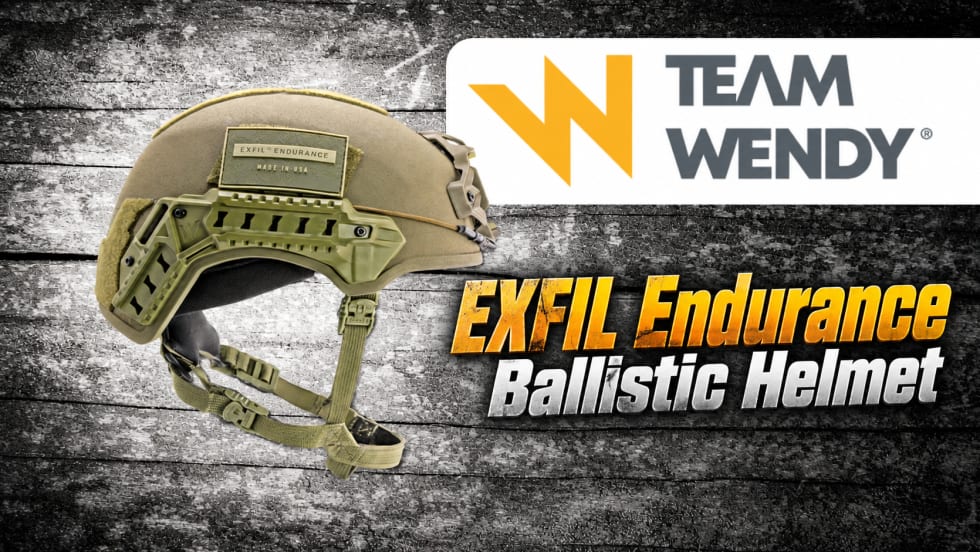
Team Wendy Introduces the EXFIL Endurance Ballistic Helmet, Engineered to Reduce the Burden of Extended Wear
Team Wendy has launched its EXFIL Endurance, a new lightweight ballistic helmet engineered to deliver protection, comfort, and fit during demanding, extended operations.
Read More →
The First Responders Children’s Foundation National First Responders Day Roll Call of Heroes Ceremony Returns to Times Square, NYC
First Responders Children’s Foundation (FRCF), in collaboration with T-Mobile, will host the Roll Call of Heroes ceremony in Times Square to commemorate National First Responders Day on Wednesday, Oct. 28. During the event, FRCF will present 18 Hero Awards.
Read More →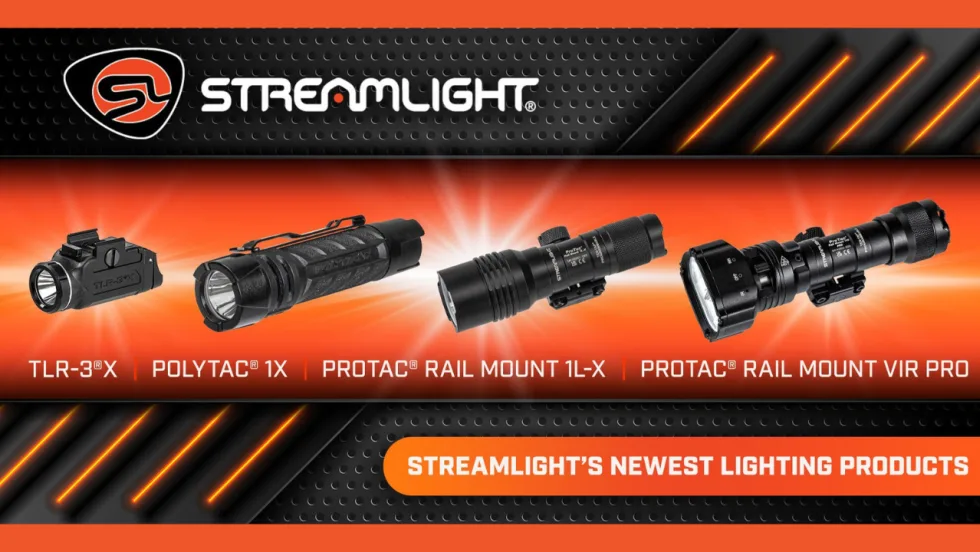
Streamlight to Showcase Newest Lighting Products for Law Enforcement Professionals at IACP 2026
Streamlight will showcase its newest lights for law enforcement at the International Association of Chiefs of Police Annual Conference & Expo. Featured lights will include the TLR-3 X, the PolyTac 1X, and more.
Read More →
Streamlight Portable Scene Light III Wins 2026 OH&S New Product of the Year Award
Streamlight’s Portable Scene Light III has won the 2026 Occupational Health & Safety (OH&S) New Product of the Year Award in the Lighting category.
Read More →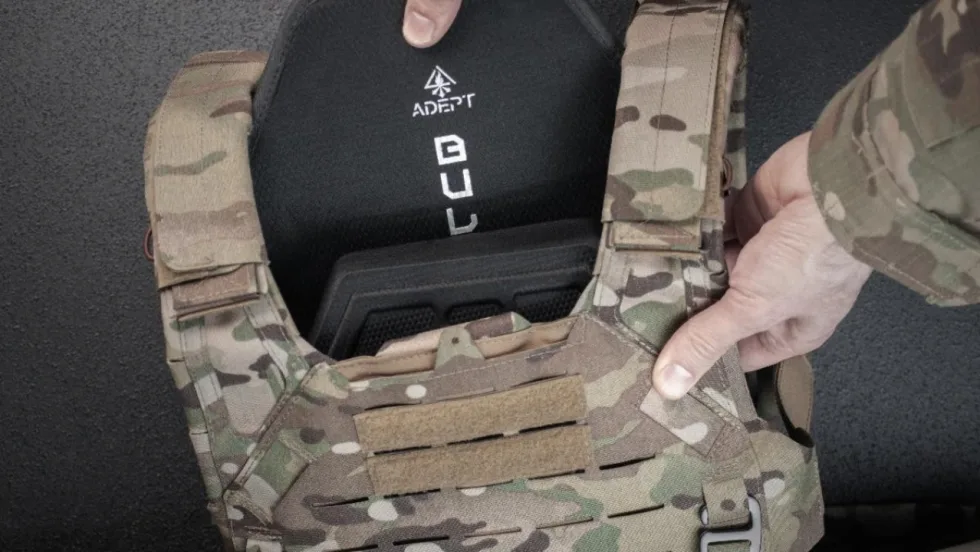
Adept Armor Introduces Two New Rifle Plates
Adept Armor has launched two new Level IV ballistic plates, the Emperor and the Archon Mark 2, which brings Adept Armor’s new Quatroid ceramic to the high-threat, performance-value center of the range at 5.2 pounds.
Read More →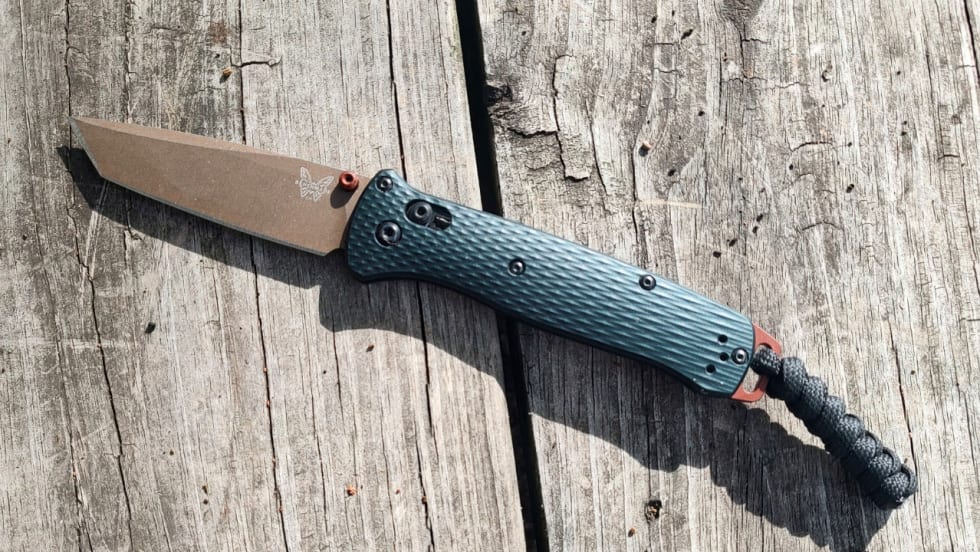
POLICE Product Test: Benchmade Bailout
The Benchmade Bailout is a slim, lightweight carry knife with a deep-ride pocket clip and comes in a variety of blade steels and scales. Here is a detailed review of the Taiga Green Bailout, released earlier this year.
Read More →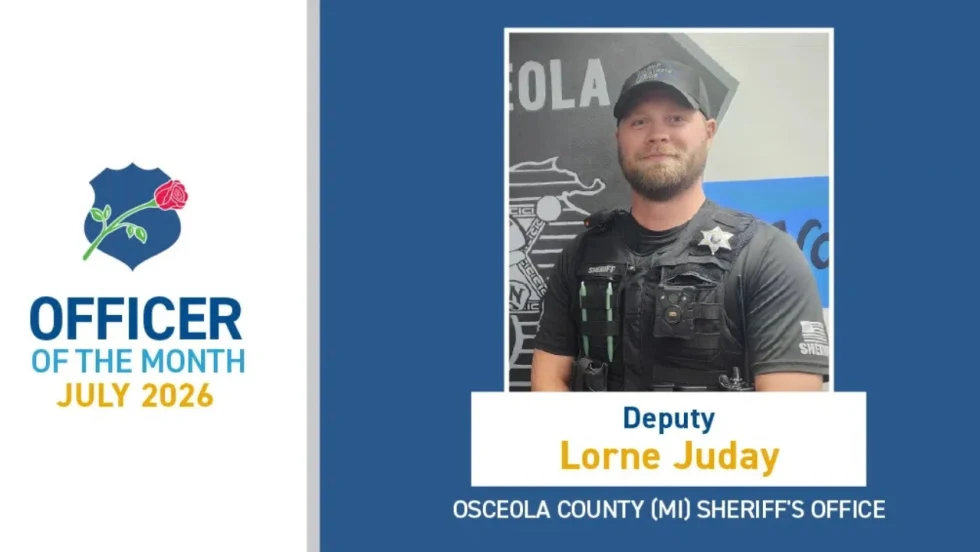
NLEOMF Announces July 2026 Officer of the Month
NLEOMF honored a Michigan deputy sheriff as the July 2026 Officer of the Month for rescuing a trapped driver from a burning vehicle following a Fourth of July crash.
Read More →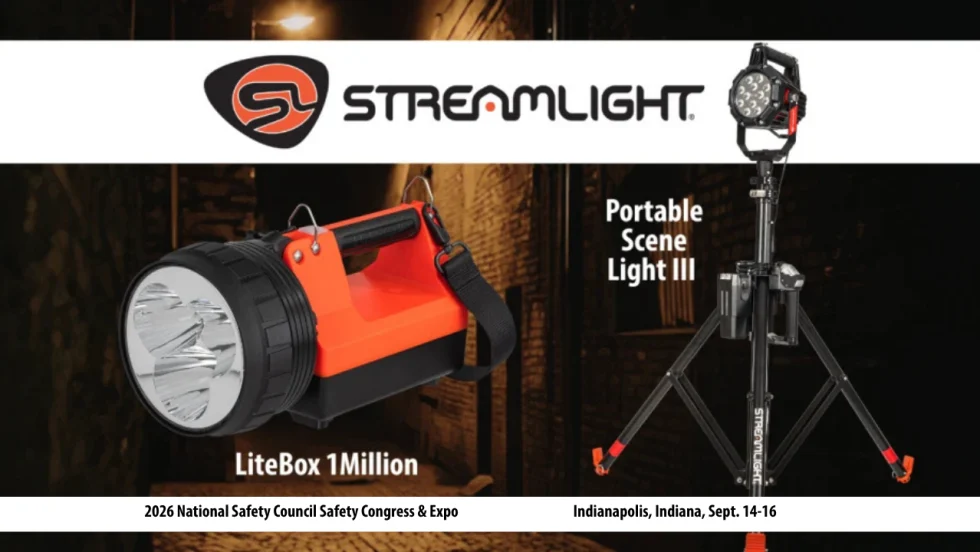
Streamlight to Showcase Newest Lighting Products at National Safety Council’s Safety Congress & Expo 2026
Streamlight will showcase its latest lights, including the Portable Scene Light III and the LiteBox 1Million, at the 2026 National Safety Council (NSC) Safety Congress & Expo.
Read More →
The 2027 World Police & Fire Games Set for Perth, Australia
The 2027 World Police & Fire Games (WPFG) will take place in Perth, Western Australia, from Friday, March 12 through Sunday, March 21, 2027.
Read More →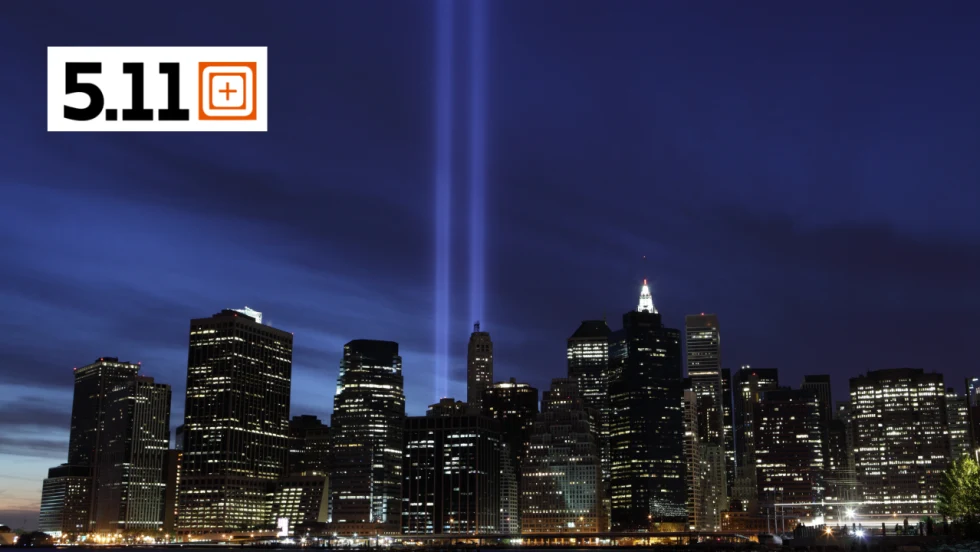
5.11 Partners with National Fallen Firefighters Foundation to Support #ForThe343
5.11 has joined the nationwide movement honoring the 343 New York City Fire Department firefighters lost on Sept. 11, 2001.
Read More →