



Lawyers and Miranda Warnings: Either/Or?
It sometimes happens that a suspect's lawyer offers to surrender him for arrest and agrees to let his or her client be questioned, provided the lawyer is present during the interrogation.

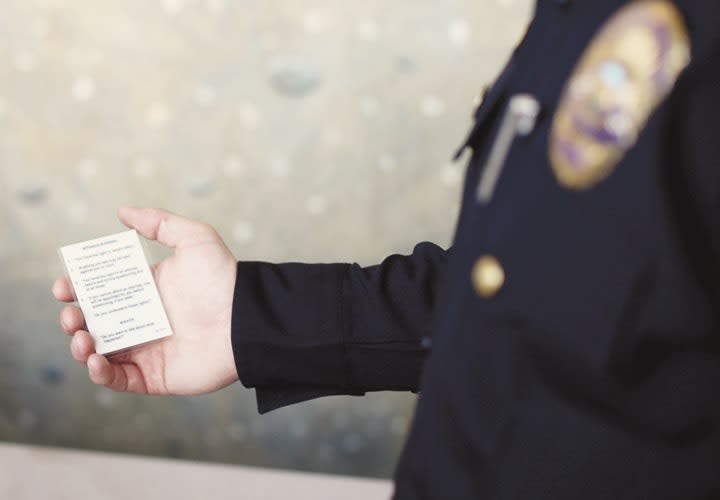
Photo: iStockphoto.com
It sometimes happens that a suspect's lawyer offers to surrender him for arrest and agrees to let his or her client be questioned, provided the lawyer is present during the interrogation. In such cases, would it be necessary for you to give the suspect Miranda warnings prior to custodial interrogation during which the lawyer is present?
Secret Passages
Carlsbad Caverns, in southern New Mexico, is believed to contain about 35 miles of tunnels and caves. Although it was discovered in 1898, an estimated 30% of its passages still remain largely unexplored and unknown.
The decision in Miranda v. Arizona contains 60 pages of conclusions and reasons. Although it was written in 1966, some of its passages still remain largely unexplored and unknown.
One of those passages says this: "Unless adequate protective devices are employed to dispel the compulsion inherent in custodial surroundings, no statement obtained from the defendant can truly be the product of his free choice." The Supreme Court then went on to devise its own protective device—the four-part warning, which the court considered adequate to neutralize the compulsion presumed to be inherent during any custodial interrogation.
But the court did not say that reciting the warning was the only way to dispel compulsion. "We cannot say that the Constitution necessarily requires any particular solution." Another little-noticed passage states that an alternative device that would also be an adequate compulsion-neutralizer is the presence of the suspect’s attorney: "The presence of counsel would be the adequate protective device necessary to make the process of police interrogation conform to the dictates of the privilege. His presence would ensure that statements made in the government-established atmosphere are not the product of compulsion."
The warnings are simply an alternative to having the lawyer in the interrogation room. "The warnings protect persons who, exposed to custodial interrogation without the assistance of counsel, otherwise might be unable to make a free and informed choice to remain silent." (Roberts v. U.S.) Miranda did not hold "that the possibly coercive atmosphere of the police station could not be counteracted by the presence of counsel or other safeguards" (such as giving the warnings). (Brady v. U.S.)
As the court explained in a subsequent decision, "The rule in Miranda was based on this Court’s perception that the lawyer occupies a critical position in our legal system because of his unique ability to protect the Fifth Amendment rights of a client undergoing custodial interrogation. A lawyer is able to protect his client's rights by learning the extent, if any, of the client's involvement in the crime under investigation, and advising his client accordingly. An attorney might well advise his client to remain silent in the face of interrogation by the police." (Fare v. Michael C.)
It may be that a ritualistic reading of a suspect's "Miranda rights" is automatically required in every Hollywood crime drama, but it isn't actually required in every real-world custodial interrogation. "The prophylactic Miranda warnings are not themselves rights protected by the Constitution." (Duckworth v. Eagan) "The Constitution does not require police to administer the particular Miranda warnings." (Dickerson v. U.S.) "Quite the contrary, Miranda itself indicated that no talismanic incantation was required to satisfy its strictures. The warnings and waiver are, in the absence of a fully effective equivalent, prerequisites to the admissibility of certain statements. We have noted that Miranda announced procedural safeguards including the now familiar warnings or their equivalent." (California v. Prysock)
Lower Court Rulings
The U.S. Supreme Court has not yet reviewed any case where police dispensed with warnings because counsel was present during a custodial interrogation; in fact, the court has declined to hear appeals from several lower court rulings that have held that warnings are not required when counsel is present for interrogation. Lower courts in most jurisdictions (except Hawaii) that have ruled on the issue have upheld the admissibility of statements obtained without warnings in the presence of counsel. Examples of state and federal decisions (not all of which are officially published authority) include the following:
People v. Mounts (Colorado): "When the defendant and his chosen defense counsel are given adequate time for consultation prior to any police interrogation, and counsel is actually present at the police interview, the warnings are rendered superfluous."
Collins v. State (Delaware): "Miranda warnings are also rendered unnecessary and superfluous where counsel for defendant is present and defendant has been given an adequate opportunity to consult with counsel prior to the giving of any statement."
Baxter v. State (Georgia): "We hold that the presence of appellant’s attorney provided an ‘adequate protective device' in this case."
Commonwealth v. Simon (Massachusetts): "In the Miranda decision, the Court recognized that warnings are not the only permissible way to protect a suspect's right against self-incrimination in the custodial setting. The majority of courts that have reached the issue have held that Miranda warnings are not necessary when an attorney is present during questioning and the suspect had an opportunity to consult with the attorney prior thereto."
State v. Bethel (Ohio): "There is substantial authority for the proposition that Miranda warnings are not necessary when counsel is present."
Government v. Ruiz (USDC Virgin Islands): "The presence of Ruiz's lawyer rendered it unnecessary to warn him that any statements that he made could and would be used against him. The underlying premise of Miranda appears to be that the presence of counsel during a confession is the preferred and sufficient answer to questions of voluntariness."
U.S. v. Armstrong (USDC Pennsylvania): "The fact that counsel was present and that the defendant had an opportunity to consult with him prior to any discussions with the agents is sufficient to safeguard the defendant's Fifth Amendment rights even in the absence of Miranda warnings."
U.S. v. Vos (USDC Utah): "We hold that there is no need for Miranda warnings prior to a custodial interrogation when an accused person has had the meaningful opportunity to consult with counsel and counsel is actually present during questioning. Counsel's presence at a custodial interrogation substitutes for the warnings as a means of protecting the accused's privilege against self-incrimination." (My comment: Actually, the warnings substitute for the preferred safeguard—the presence of counsel—per Roberts v. U.S., quoted above.)
U.S. v. Guariglia (USDC New York): "Guariglia had a lawyer present, and that is all the law requires. Miranda warnings are not necessary when counsel is present."
U.S. v. Mueller (USDC Missouri): “The presence of counsel serves as the 'adequate protective device.' Because counsel was present, there was no Miranda violation."
U.S. v. Ardito (USDC Minnesota): "Counsel's presence assured that the defendant’s statement would not be the product of compulsion."
U.S. v. Thevis (USDC Connecticut): "This statement was made in the presence of two attorneys who were representing him. As the court in Miranda recognized, 'the presence of counsel would be the adequate protective device.'"
Final Thought
As a leading legal author has said, "It is generally accepted that if the attorney was actually present during the interrogation, then this obviates the need for the warnings." (2 W.R. LaFave, Criminal Procedure § 6.8(a), p. 800, 3rd ed. 2007) Always check with local advisors for the rule in your jurisdiction.
Devallis Rutledge is a former police officer and veteran prosecutor who currently serves as special counsel to the Los Angeles County district attorney. He is the author of 12 books, including "Investigative Constitutional Law."
More Patrol
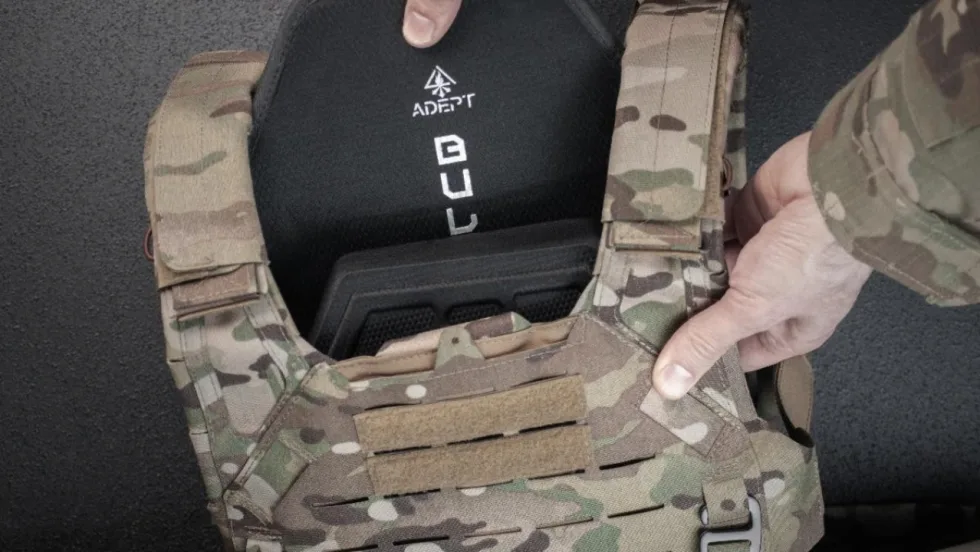
Adept Armor Introduces Two New Rifle Plates
Adept Armor has launched two new Level IV ballistic plates, the Emperor and the Archon Mark 2, which brings Adept Armor’s new Quatroid ceramic to the high-threat, performance-value center of the range at 5.2 pounds.
Read More →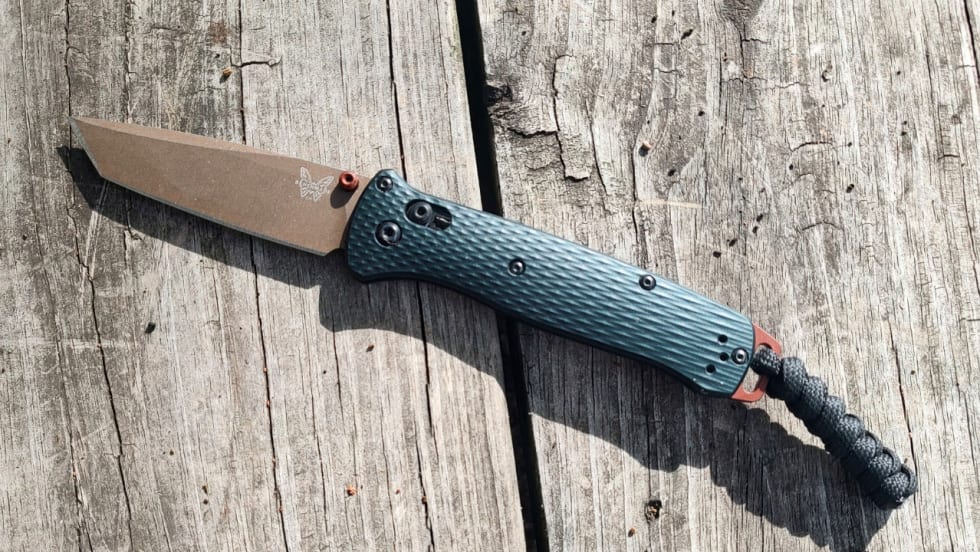
POLICE Product Test: Benchmade Bailout
The Benchmade Bailout is a slim, lightweight carry knife with a deep-ride pocket clip and comes in a variety of blade steels and scales. Here is a detailed review of the Taiga Green Bailout, released earlier this year.
Read More →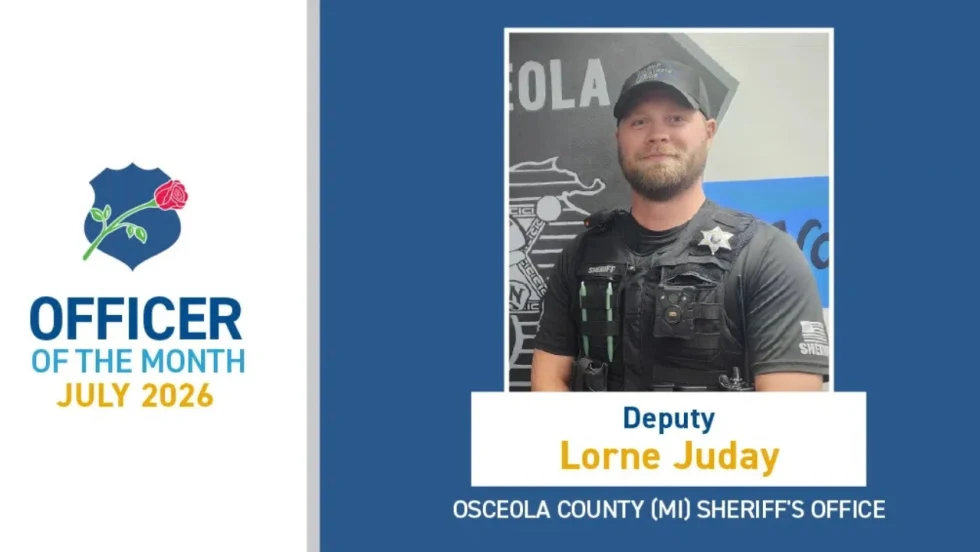
NLEOMF Announces July 2026 Officer of the Month
NLEOMF honored a Michigan deputy sheriff as the July 2026 Officer of the Month for rescuing a trapped driver from a burning vehicle following a Fourth of July crash.
Read More →
Streamlight to Showcase Newest Lighting Products at National Safety Council’s Safety Congress & Expo 2026
Streamlight will showcase its latest lights, including the Portable Scene Light III and the LiteBox 1Million, at the 2026 National Safety Council (NSC) Safety Congress & Expo.
Read More →
The 2027 World Police & Fire Games Set for Perth, Australia
The 2027 World Police & Fire Games (WPFG) will take place in Perth, Western Australia, from Friday, March 12 through Sunday, March 21, 2027.
Read More →
5.11 Partners with National Fallen Firefighters Foundation to Support #ForThe343
5.11 has joined the nationwide movement honoring the 343 New York City Fire Department firefighters lost on Sept. 11, 2001.
Read More →
Team Wendy Announces Title Sponsorship of the Jorge Pastore Foundation
Team Wendy’s 3-year partnership with the Jorge Pastore Foundation expands access to programs that strengthen those who serve.
Read More →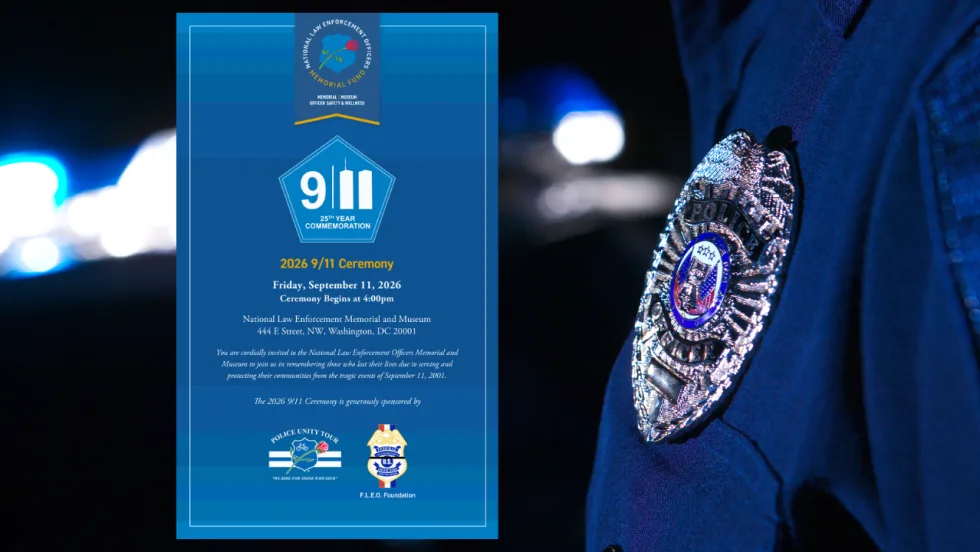
National Law Enforcement Memorial and Museum Hosting 9/11 25th-Year Commemoration Ceremony
The National Law Enforcement Memorial and Museum is hosting a 9/11 25th Year Commemoration Ceremony on Sept. 11 at 4 p.m.
Read More →
National Law Enforcement Officers Memorial Fund Announces June 2026 Officers of the Month
The National Law Enforcement Officers Memorial Fund (NLEOMF) named 15 officers of the Chico Police Department (California) as the Officers of the Month for June 2026 for their roles in responding to an active-shooter incident at a public library.
Read More →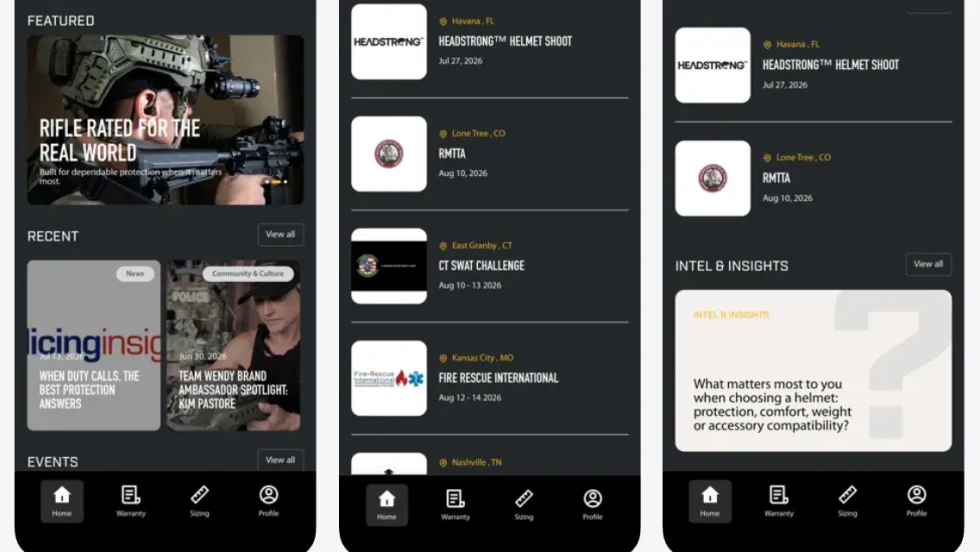
Team Wendy App Creates New Digital Hub for Helmet Owners
The Team Wendy Community App provides one location for warranty registration, size-fit tools, product updates, and community connection. For helmet owners, the new app creates a simpler path to the information and tools that matter most.
Read More →