



Searching “Fleeting Targets”
A fleeting targets search may be made at any time and any place where you have lawful access and PC.

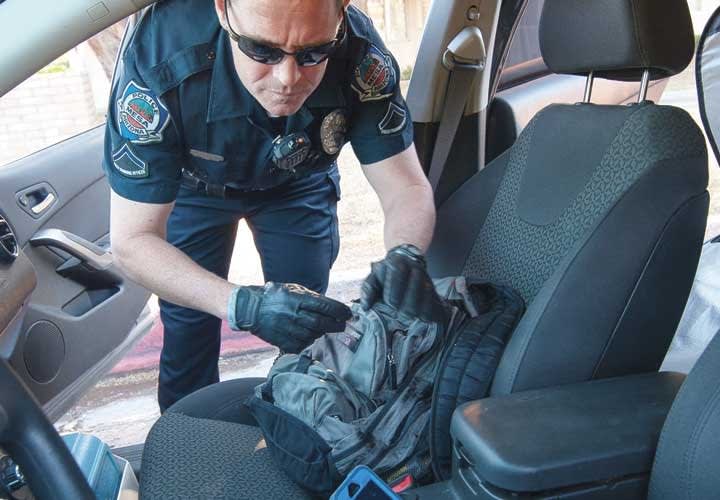
Photo: Mark W. Clark
Contrary to popular belief, the Fourth Amendment doesn't say that people have a right to be free from warrantless searches and seizures. It says they have a right to be free from "unreasonable" searches and seizures. The Supreme Court has interpreted this to mean that searches and seizures must be justified by either a warrant or an established exception.
Warrantless searches may be justified under recognized exceptions based on consent, officer safety, probation and parole, incident to arrest, instrumentality, border crossings, inmate status, the "special needs" doctrine, and what has come to be called the "automobile exception." (Inventories are considered to be administrative caretaking procedures, rather than investigative searches.)
The problem with the term "automobile exception" is that it's too narrow. Although the exception is typically applied to passenger cars, cases have also applied it to buses, trains, motorcycles, RVs, tractors, trucks, boats, and airplanes (collectively, "vehicles"). In Chambers v. Maroney, the Supreme Court said that a warrantless search of an inherently mobile conveyance could sometimes be made because such a vehicle is "a fleeting target for a search." This term more accurately describes both the rationale and the applicability of a vehicle search.
Two Requirements
You may make a warrantless search of a fleeting target when you have two things: (1) lawful access to the vehicle and (2) probable cause to believe it contains something seizable, including contraband or the fruits, instrumentalities, or evidence of a crime. (U.S. v. Ross)
You will generally have lawful access if the vehicle is not parked inside a garage, such as when it is stopped on the street (Chambers v. Maroney), parked in a lot or driveway (Pennsylvania v. Kilgore), at the police station (Texas v. White), or in an impound lot. (Florida v. Meyers)
The probable cause standard is the same as you would need to meet in order to get a search warrant: Do the facts and circumstances, viewed from the perspective of your training and experience, establish a fair probability that the vehicle contains seizable items? "A [fleeting targets] search is not unreasonable if based on facts that would justify the issuance of a warrant." (U.S. v. Ross)
With both lawful police access and probable cause, the search of a fleeting target is reasonable without a warrant. "The prior approval of the magistrate is waived; the search otherwise is as the magistrate could authorize." (U.S. v. Ross)
Where and When
As you know, each of the various search warrant exceptions has its own rules as to where and when a search may occur, and the precise scope of search. For example, searches of vehicles incident to arrest must be made contemporaneously with the arrest (Dyke v. Taylor), are limited to the passenger compartment (New York v. Belton), and cannot be made after the suspect is secured, unless there is reason to believe evidence of the arrest offense may be inside. (Arizona v. Gant) By contrast, a fleeting targets search may be made at any time and any place where you have lawful access and PC.
• No exigency. Some lower courts have sought to impose as a third requirement for fleeting targets searches that there must be some kind of urgent necessity for searching. The Supreme Court has rejected any such requirement. "There is no requirement of exigent circumstances to justify such a warrantless search." (U.S. v. Johns)
• Time to get a warrant. Whenever you have time to apply for a search warrant, it's advisable to do so. Warrants provide greater protection against both suppression of evidence and civil liability. "In choosing to search without a warrant on their own assessment of probable cause, police officers lose the protection that a warrant would provide to them in an action for damages claiming that the search was unconstitutional." (U.S. v. Ross) The rule-of-thumb for all non-emergency searches remains the same: Get a warrant whenever possible.
However, there is no Fourth Amendment requirement that you seek a warrant for a fleeting targets search when you have lawful access and PC. "If a car is readily mobile and probable cause exists to believe it contains contraband, the Fourth Amendment permits police to search the vehicle without more." (Pennsylvania v. Labron)
• Vehicle is in exclusive police custody. Once a vehicle has been removed to the station or the impound lot and the suspect is locked up, the existence of PC and lawful access still permits a search. "The justification to conduct a warrantless search does not vanish once the car has been immobilized." (Michigan v. Thomas)
• Delayed search. As long as the passage of time has not eliminated the PC or lawful access, the fact that hours or days have intervened since the vehicle was taken into police custody does not invalidate a fleeting targets search. "Where police officers continue to have probable cause, we do not think that delay in the execution of the warrantless search is necessarily unreasonable" (U.S. v. Johns, upholding a search by DEA agents three days after impounding the suspect's vehicle).
• Taking a second look. Even though a vehicle may already have been searched, it may be searched again with continuing or additional PC. For example, in Florida v. Meyers, the suspect car had been searched by one officer in a locked area of the impound lot. Some eight hours later, another officer decided to search for additional evidence that the first officer had not found. This second search yielded more evidence, and the Supreme Court (reversing the Florida appeals court) upheld the second search on the basis of prior rulings to the effect that PC and lawful access justifies a search, regardless of the fact that a prior search has occurred.
• Closed containers. If during the course of a lawful fleeting targets search you encounter a closed compartment or container that could possibly conceal the object of your search, you may open and search the container. "Nice distinctions between glove compartments, upholstered seats, trunks and wrapped packages must give way to the interest in the prompt and efficient completion of the task at hand. If probable cause justifies the search of a lawfully stopped vehicle, it justifies the search of every part of the vehicle and its contents that may conceal the object of the search. This rule applies equally to all containers." (U.S. v. Ross)
And even if containers in the vehicle appear to belong to a passenger who is not a suspect, "Police officers with probable cause to search a car may inspect passengers' belongings found in the car that are capable of holding the object of the search." (Wyoming v. Houghton)
• Removal and disassembly. Since the scope of a fleeting targets search is the same as a magistrate could authorize by warrant, and since a warrant would allow necessary removal and disassembly of component parts of the vehicle, a lawful fleeting targets search can be equally probing. "Destroying the interior of an automobile is not unreasonable," if necessary to find concealed contraband or evidence. (California v. Acevedo)
Backup Justifications
Don't forget that it's always good to have a backup. A fleeting targets search might also be justified by consent, inventory, or incident to arrest.
Devallis Rutledge is a former police officer and veteran prosecutor who currently serves as special counsel to the Los Angeles County district attorney. He is the author of 12 books, including "Investigative Constitutional Law."
More Patrol
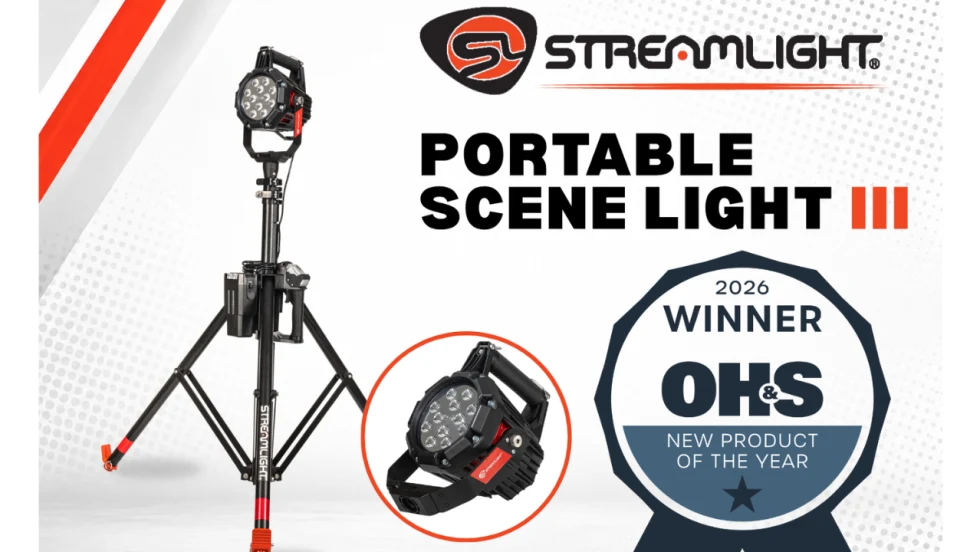
Streamlight Portable Scene Light III Wins 2026 OH&S New Product of the Year Award
Streamlight’s Portable Scene Light III has won the 2026 Occupational Health & Safety (OH&S) New Product of the Year Award in the Lighting category.
Read More →
Adept Armor Introduces Two New Rifle Plates
Adept Armor has launched two new Level IV ballistic plates, the Emperor and the Archon Mark 2, which brings Adept Armor’s new Quatroid ceramic to the high-threat, performance-value center of the range at 5.2 pounds.
Read More →
POLICE Product Test: Benchmade Bailout
The Benchmade Bailout is a slim, lightweight carry knife with a deep-ride pocket clip and comes in a variety of blade steels and scales. Here is a detailed review of the Taiga Green Bailout, released earlier this year.
Read More →
NLEOMF Announces July 2026 Officer of the Month
NLEOMF honored a Michigan deputy sheriff as the July 2026 Officer of the Month for rescuing a trapped driver from a burning vehicle following a Fourth of July crash.
Read More →
Streamlight to Showcase Newest Lighting Products at National Safety Council’s Safety Congress & Expo 2026
Streamlight will showcase its latest lights, including the Portable Scene Light III and the LiteBox 1Million, at the 2026 National Safety Council (NSC) Safety Congress & Expo.
Read More →
The 2027 World Police & Fire Games Set for Perth, Australia
The 2027 World Police & Fire Games (WPFG) will take place in Perth, Western Australia, from Friday, March 12 through Sunday, March 21, 2027.
Read More →
5.11 Partners with National Fallen Firefighters Foundation to Support #ForThe343
5.11 has joined the nationwide movement honoring the 343 New York City Fire Department firefighters lost on Sept. 11, 2001.
Read More →
Team Wendy Announces Title Sponsorship of the Jorge Pastore Foundation
Team Wendy’s 3-year partnership with the Jorge Pastore Foundation expands access to programs that strengthen those who serve.
Read More →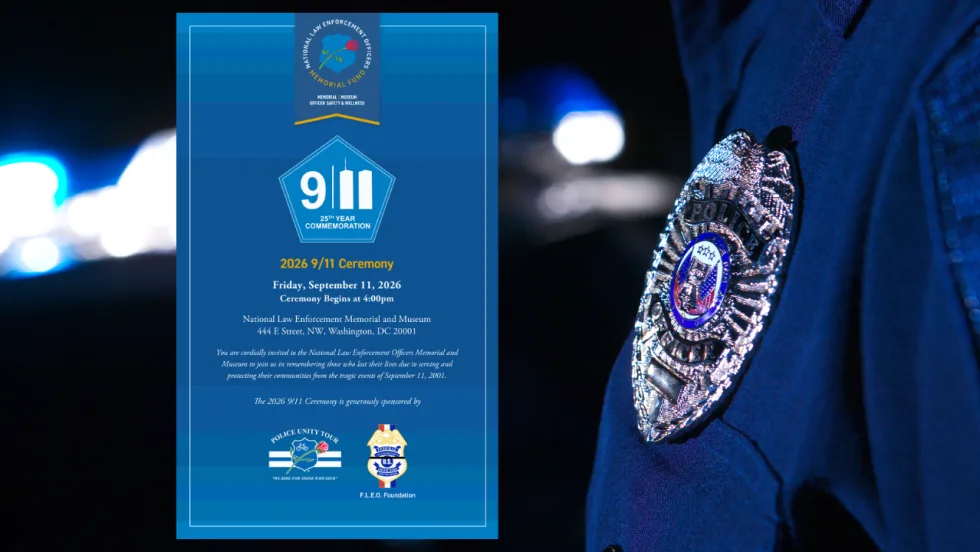
National Law Enforcement Memorial and Museum Hosting 9/11 25th-Year Commemoration Ceremony
The National Law Enforcement Memorial and Museum is hosting a 9/11 25th Year Commemoration Ceremony on Sept. 11 at 4 p.m.
Read More →
National Law Enforcement Officers Memorial Fund Announces June 2026 Officers of the Month
The National Law Enforcement Officers Memorial Fund (NLEOMF) named 15 officers of the Chico Police Department (California) as the Officers of the Month for June 2026 for their roles in responding to an active-shooter incident at a public library.
Read More →