



Missing 4-Year-old Boy
It's 03:50 in the morning when dispatch advises you to respond to a remotely located residence in reference to a missing 4-year-old boy. The mother had gotten up to go to the bathroom and noticed her son was not in his room and the front door was unlocked and open. She immediately called the police.


Photo: Amaury Murgado
In every call for service, you should think things through before you begin your response. Each call can be broken down into three phases: pre-response, response, and post response.
Situation
It's 03:50 in the morning when dispatch advises you to respond to a remotely located residence in reference to a missing 4-year-old boy. The mother had gotten up to go to the bathroom, decided to swing by her child's room to make a quick check, and noticed her son was not in his room. After a quick check of the home, she noticed that the front door was unlocked and open. She immediately called the police.
Initial Thoughts
We know from Web-based information on lost person behaviors that 4- to 6-year-olds travel farther than younger children, are attracted to familiar things, and have a concept of being lost. Realizing they are lost, they will try to head back to a familiar place. But they may panic and become further lost as they don't understand about turning around and just continuing to go in one direction.
Children of this age can also be drawn away by animals or through just plain exploring. When they get tired or are caught in bad weather, they will seek shelter (thick brush, overhang, picnic table, etc.). They will avoid strangers, to include not responding when they hear their name called. They tend to follow tracks, trails, and shortcuts not readily noticeable to adults. Statistics suggest they are usually found within a two-mile radius.
Pre-Response
Think It Through questions:
1. Is there anything dispatch has now that can help me make my decisions?
2. Is there anything I have to do by policy?
3. What can I do to help myself get organized quickly?
4. Does my supervisor know about the call?
Check with dispatch for any injunctions, ask for any call history, and check for any useful patterns. Ask for backup early so they can help you with your initial search and in obtaining information. Make sure your supervisor is aware of the call. Start thinking about the questions you will ask. Are you going to do an all-out search from the beginning or are you going to ease into it by checking the immediate area first? Keep in mind that you might be heading into a possible crime scene. Pay close attention as you drive to the location in case you spot the boy.
Response
Think it Through questions:
1. Is there any negative domestic situation in the home that would affect the boy’s disappearance?
2. Is there anything exigent in nature attached to the child (health, mental, medications, etc.)?
3. Do I conduct a hasty search first or start all out?
4. What search pattern will I use?
5. At what point should I call for a bloodhound and aviation support?
6. At what point do I call for a detective/outside investigator?
7. How do I document my actions so that I don’t duplicate my efforts?
8. Who else can I call to help me with my search?
9. What types of off-road vehicles are available?
Meet with the mother and anyone else who is in the house. Ask some initial questions to establish your baseline. For example, ask if the boy is afraid of the dark, what his feelings are toward strangers/adults, if he has been coached in what to do when lost, and the best way to get him to respond (real name, nickname, reference to a cartoon character, etc.). Ask if the missing boy has any playmates or favorite play areas, or if he has paid attention to anything lately that would draw his attention outside the home. Get an updated description of the boy to include what he was last wearing, his current health status, and anything useful to those looking, and put it all of this information out over the radio.
More likely than not, the mother is going to tell you she has already searched the house for her child. You need to search the house yourself anyway. I have cleared many a missing juvenile by finding him or her hiding in the house. They usually don't come out because they think they are in trouble.
If you haven't found him in the house, you need to expand your search. Start with the yard of the house and move out from there. Establish a command post and document your efforts. If possible, appoint a scribe so you can focus on other critical tasks. This will also help you maximize your time by not duplicating efforts. If the child is in distress, wasting time could cost him dearly.
Continue to ask questions of everyone there. Is there an estranged father involved? Is there a custody battle going on? Are there jealous grandparents? Your goal with this line of questioning is to rule out any outside influences that could be responsible for the child's disappearance. As that's being established, you continue to grow your search.
As more units arrive to help, you must get organized. You need to assign specific areas for them to search. As they search, they need to document every address and every person they speak with. If you can, you should assign a few roving patrols to go check specific roads, trails, parks, or other points of interest based on your interviews. If your initial search doesn't find him, you will have to reach out for other resources. If it gets really big, you'll have to think of some staging areas.
At some point you will have to consider K-9 and aviation support. If you don't have any, ask another agency to help you. Depending on where you are located, you may need some additional volunteers. Don't discount the Civil Air Patrol (which has a built-in search-and-rescue function), civilian search-and-rescue organizations, and even police academy cadets. Think outside of the box when it comes to using force multipliers.
Depending on how your agency is organized, at some point you will have to notify your Missing Persons Crime detectives or an outside agency's investigative unit. As a first responder you have certain duties and limited resources at your disposal. Once other investigators get involved, they can go beyond a first responders' capability and use additional resources.
Moving forward, you have either established that a crime has occurred (negligence, child abuse, etc.) or not. As things start to wind down for you, you eventually clear the call. You have either found the child or not.
Post-Response
Think it Through questions:
1. What needs to be included in my report?
2. If I note a problem with the family environment, how can I help them?
3. What information do I need to include in the pass-off to the next shift?
4. What information can I give dispatch for next time?
If you found the child, write a detailed report. If you made an arrest, be very specific as to why. Depending on what you observed regarding the conditions of the home, you may have to get other support agencies involved. Realize that sometimes, the follow-up is more extensive than the original call.
If you didn't find the child, the search continues. How long will depend in part on what part of the country you live in and your chain of command. A sparsely populated neighborhood near Atlanta will be handled differently than open woods in Colorado. Make sure that when you are relieved (by investigators or another shift) that it's indicated in your report and with dispatch as to when and by whom.
Final Thoughts
Assuming it's a true lost child, having some knowledge of how lost persons behave is invaluable. The book "Lost Person Behavior: a search-and-rescue guide on where to look- for land, air and water" by Robert J. Koester is a great reference. Reading up on case studies, methods, and procedures on the Internet will also help. Having knowledge of the area you work in is also a must. I have found more than my fair share of missing kids fast asleep in parks, culverts, or playhouses. Organization is critical so you can conduct a thorough investigation and search.
It's impossible to write everything one can do in this allotted space. Still, by reviewing these main points, if you run into a similar situation, I hope it will help you think it through.
Amaury Murgado is a special operations lieutenant with the Osceola County (Fla.) Sheriff's Office. He is a retired master sergeant from the Army Reserve, has over 27 years of law enforcement experience, and has been a lifelong student of martial arts.
More Patrol

Why Tennessee’s New Deadly Force Law Matters Beyond Tennessee
Tennessee’s new deadly force law is more limited than many may realize. Effective July 1, 2026, the law applies to a person who is not engaged in conduct that would constitute a felony or a Class A misdemeanor and who is in a place where the person lawfully resides. But it could have far-reaching influence.
Read More →
When Do You Transport a Wounded Officer by Police Vehicle?
Time-sensitive injuries like penetrating trauma mean a wounded officer needs to reach a trauma center as soon as possible, and in some cases, that means transporting by police vehicle rather than waiting for EMS. What are the factors to consider in making that transport decision?
Read More →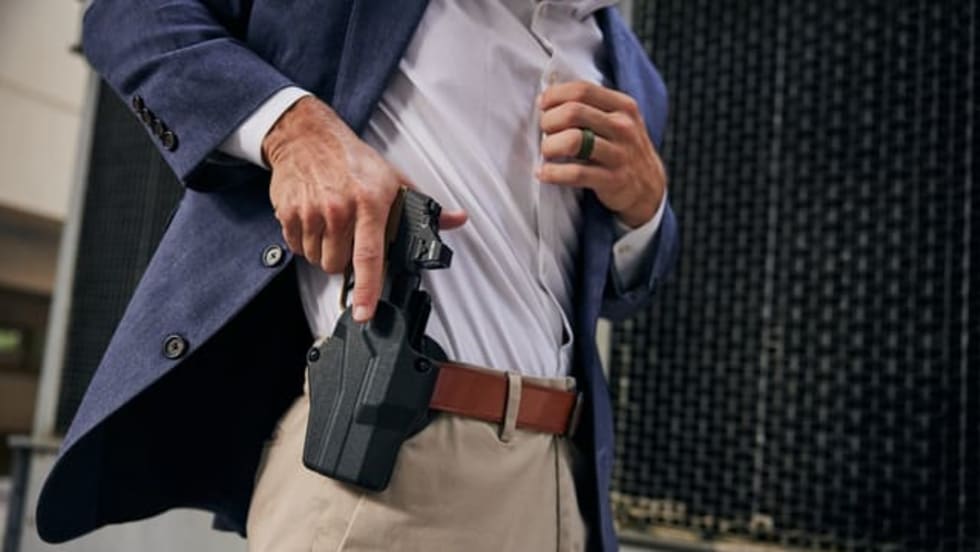
Safariland Solis Rethinks Concealable Duty
What if Level I retention didn’t require a full duty rig? Safariland’s Solis delivers trusted ALS security in a streamlined OWB platform built for administrative and plainclothes professionals who need protection without the bulk.
Read More →

5 Things to Know When Buying Backup Lights for Patrol Use
What is the value of a backup light, and what do you need to consider when selecting one? These smaller lights are invaluable as a secondary or special-purpose light and can be easily carried in a pocket or clipped to MOLLE gear, a key chain, shirt, or a vest.
Read More →
363 Fallen Officers Honored During National Police Week
In case you missed NELOMF’s annual Candlelight Vigil, here are all 363 names of the fallen officers whose names were added to the National Law Enforcement Officers Memorial this year.
Read More →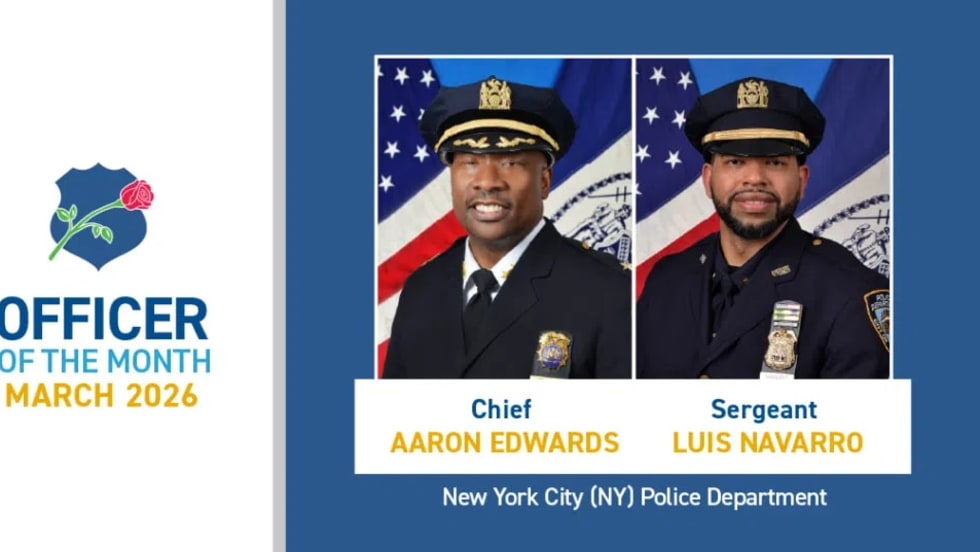
NYPD Officers Who Responded Quickly During IED Incident Recognized as NLEOMF Officers of the Month
Chief Aaron Edwards and Sgt. Luis Navarro were recognized by NLEOMF as Officers of the Month for their response during an IED incident and their actions that helped prevent harm to the public.
Read More →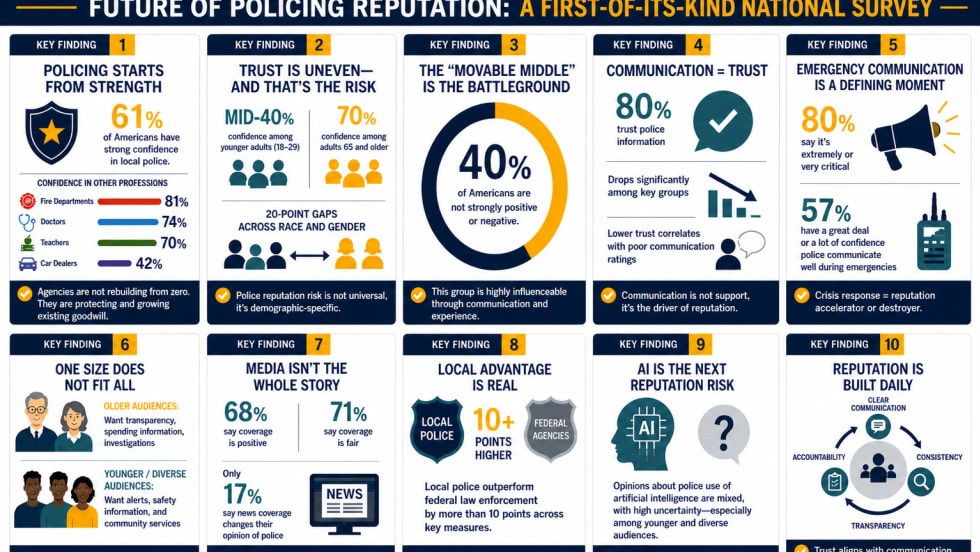
National Police Survey Reveals How Americans View Policing Today
A new national survey offers a comprehensive look at how Americans view policing. The study uncovers public sentiment toward local vs. federal police, communications, crisis response, the use of AI in policing, and more.
Read More →
Streamlight TLR-7 X Selected as Standard Issue Pistol Light by Canadian Federal Police
The Canadian Federal Police will be adding a new duty pistol system, which will include Streamlight’s TLR-7 X and a Glock 45 MOS 7 pistol with a red dot sight.
Read More →
Fallen Law Enforcement Officers from Across the Country to be Honored During 38th Annual Candlelight Vigil on May 13th in Washington, D.C.
The National Law Enforcement Officers Memorial Fund (NLEOMF) will honor 363 fallen officers who have died in the line of duty as their names are added to the National Law Enforcement Officers Memorial during the annual Candlelight Vigil on May 13.
Read More →
What Should Be in Your IFAK?
What should every officer include in an IFAK? Sydney Vail, M.D., a veteran trauma surgeon and former SWAT surgeon, explains which components are needed and which are not, and stresses training.
Read More →