



Do Police Have to be Perfect?
If we start punishing officers for every mistake, just because an encounter ended in the justified shooting of a suspect, then officers will surely minimize their contact with suspects.

Last month the civilian Board of Los Angeles Police Commissioners ruled that one officer out of two involved in the shooting of Ezell Ford last August acted out of policy. The commission has no power to discipline the officer, but its actions are part of the growing activism by politicians and political bodies against American law enforcement officers. The effects of this activism are a dangerous drop in officer morale, a fear among officers that any action they take to proactively reduce crime will be second-guessed to the point they may be prosecuted, and an explosion of violent crime in the affected cities as officers hesitate to take action.
On Aug. 11, 2014, Ezell Ford, 25, was killed in an encounter with two LAPD gang officers in an area of the city known for high crime and gang activity. The officers were on patrol shortly after 8 p.m. when they spotted Ford, a known gang member according to the Los Angeles Police Protective League (LAPPL), walking in a direction away from a gathering of gang members. From Ford's demeanor, the officers believed he was either carrying drugs or a weapon.
The officers stopped the car, got out, and assumed contact and cover roles. After verbal command to stop failed, the contact officer went hands-on with Ford. Ford, who according to his family suffered from schizophrenia and paranoia, reacted to the contact officer's action by turning and taking the officer to the ground. Physical evidence, including scratches on the contact officer's holster and Ford's DNA on the gun and the holster, show that during the struggle, Ford tried to take away the officer's gun. Ford was shot three times, once by the contact officer and twice by the cover officer. He died of his wounds. No drugs or weapons were found on him after the shooting.
The Ezell Ford shooting is one of the most controversial LAPD use-of-force incidents since Rodney King, and its repercussions will persist for years. His family is suing the LAPD and the two involved officers for $75 million. Since Ford was African-American, the shooting has also become a cause for Black Lives Matter activists who have demanded the LAPD fire the officers and that both be prosecuted for murder.
LAPD officer-involved shootings are investigated internally by the Force Investigation Division and the department's Inspector General. The chief and the police commission then rule if they are in policy. Legally, of course, all LAPD shootings of suspects are also investigated by the district attorney's office.
What has happened so far in the Ezell Ford shooting is that Chief Charlie Beck has ruled both the initial contact on the officers' reasonable suspicion with Ford and the shooting as in policy. However, he has criticized the tactics of the contact officer. The inspector general's report partially concurred with the chief, saying the shooting was within policy, the officers did not have reasonable suspicion, and the contact officer's tactics were poor. And the Police Commission gave its opinion, which blamed the contact officer's tactics for causing the shooting.
The police commission used a ruling of the California Supreme Court in the case of Hayes v. San Diego as the basis of its decision. In that case, the court decided that the actions taken by an officer before a use-of-force incident "can" be taken into account in determining the legality of the force. The commissioners have interpreted that "can" as "will."
The commissioners' decision elicited angry response from LAPPL and even a video address by Chief Beck that attempts to boost morale and expresses support for his troops. In that video the diplomatically cool chief is clearly seething at the police commission under the surface.
Beck has reason to worry about officer morale at the LAPD. The commission's ruling says essentially that officers have to perform their jobs without any error prior to a use of force or face discipline or possibly even prosecution.
That's a very high standard to require of law enforcement officers who face fluid situations that require immediate response. Police officers are going to make mistakes when encountering the public because there is no set formula they can follow for all encounters. If we start punishing officers for every mistake, just because an encounter ended in the justified shooting of a suspect, then officers will surely minimize their contact with suspects. And that's the recipe for the criminal bloodbath that is now happening in Baltimore.
More Patrol

Team Wendy Introduces the EXFIL Endurance Ballistic Helmet, Engineered to Reduce the Burden of Extended Wear
Team Wendy has launched its EXFIL Endurance, a new lightweight ballistic helmet engineered to deliver protection, comfort, and fit during demanding, extended operations.
Read More →
The First Responders Children’s Foundation National First Responders Day Roll Call of Heroes Ceremony Returns to Times Square, NYC
First Responders Children’s Foundation (FRCF), in collaboration with T-Mobile, will host the Roll Call of Heroes ceremony in Times Square to commemorate National First Responders Day on Wednesday, Oct. 28. During the event, FRCF will present 18 Hero Awards.
Read More →
Streamlight to Showcase Newest Lighting Products for Law Enforcement Professionals at IACP 2026
Streamlight will showcase its newest lights for law enforcement at the International Association of Chiefs of Police Annual Conference & Expo. Featured lights will include the TLR-3 X, the PolyTac 1X, and more.
Read More →
Streamlight Portable Scene Light III Wins 2026 OH&S New Product of the Year Award
Streamlight’s Portable Scene Light III has won the 2026 Occupational Health & Safety (OH&S) New Product of the Year Award in the Lighting category.
Read More →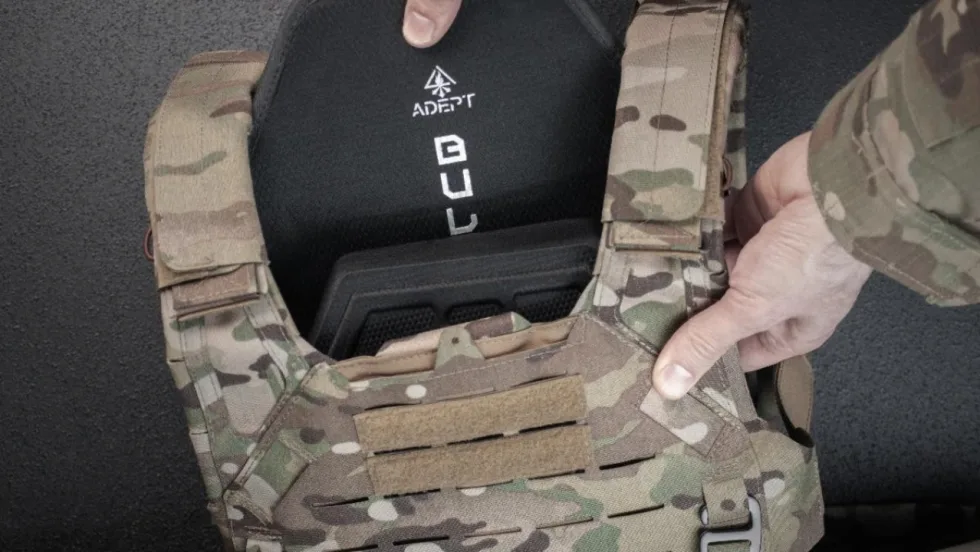
Adept Armor Introduces Two New Rifle Plates
Adept Armor has launched two new Level IV ballistic plates, the Emperor and the Archon Mark 2, which brings Adept Armor’s new Quatroid ceramic to the high-threat, performance-value center of the range at 5.2 pounds.
Read More →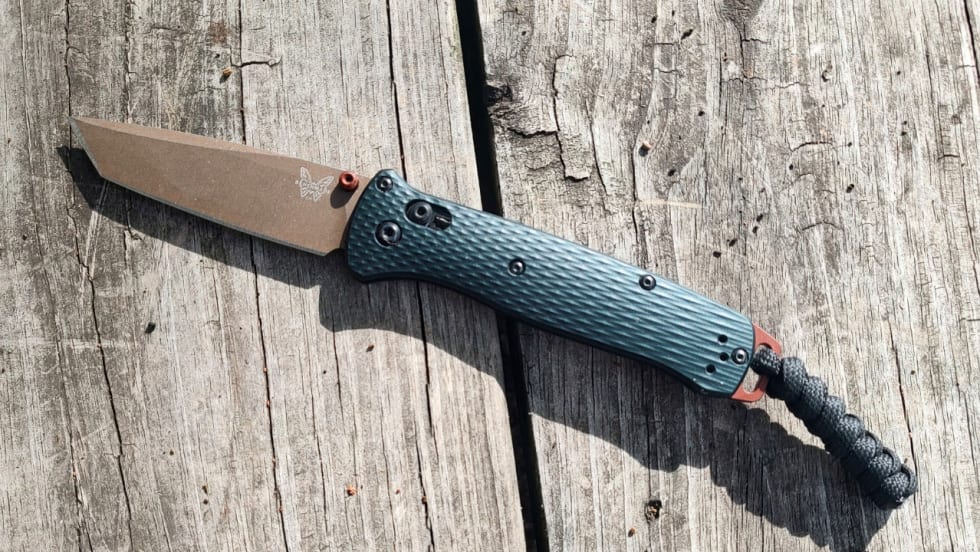
POLICE Product Test: Benchmade Bailout
The Benchmade Bailout is a slim, lightweight carry knife with a deep-ride pocket clip and comes in a variety of blade steels and scales. Here is a detailed review of the Taiga Green Bailout, released earlier this year.
Read More →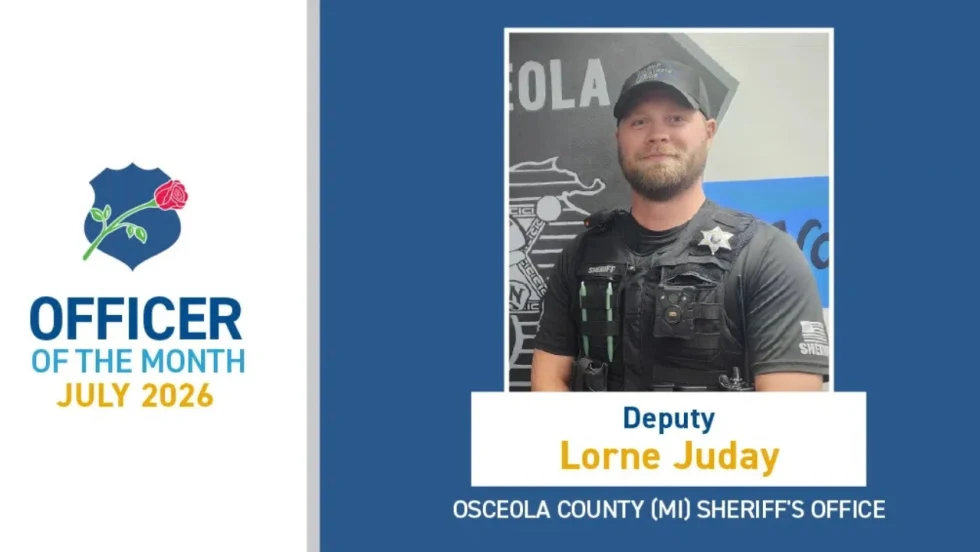
NLEOMF Announces July 2026 Officer of the Month
NLEOMF honored a Michigan deputy sheriff as the July 2026 Officer of the Month for rescuing a trapped driver from a burning vehicle following a Fourth of July crash.
Read More →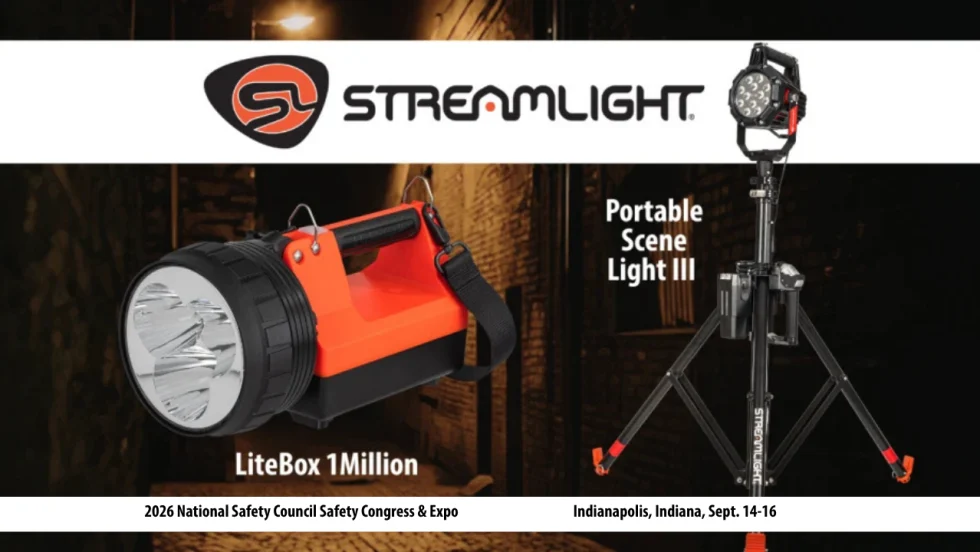
Streamlight to Showcase Newest Lighting Products at National Safety Council’s Safety Congress & Expo 2026
Streamlight will showcase its latest lights, including the Portable Scene Light III and the LiteBox 1Million, at the 2026 National Safety Council (NSC) Safety Congress & Expo.
Read More →
The 2027 World Police & Fire Games Set for Perth, Australia
The 2027 World Police & Fire Games (WPFG) will take place in Perth, Western Australia, from Friday, March 12 through Sunday, March 21, 2027.
Read More →
5.11 Partners with National Fallen Firefighters Foundation to Support #ForThe343
5.11 has joined the nationwide movement honoring the 343 New York City Fire Department firefighters lost on Sept. 11, 2001.
Read More →