



Reasonable Suspicion
In some cases, the U.S. Supreme Court has ruled that particular searches and seizures need only "reasonable suspicion" to be constitutional—not the higher justification level of probable cause. What's the difference, and when is reasonable suspicion sufficient?

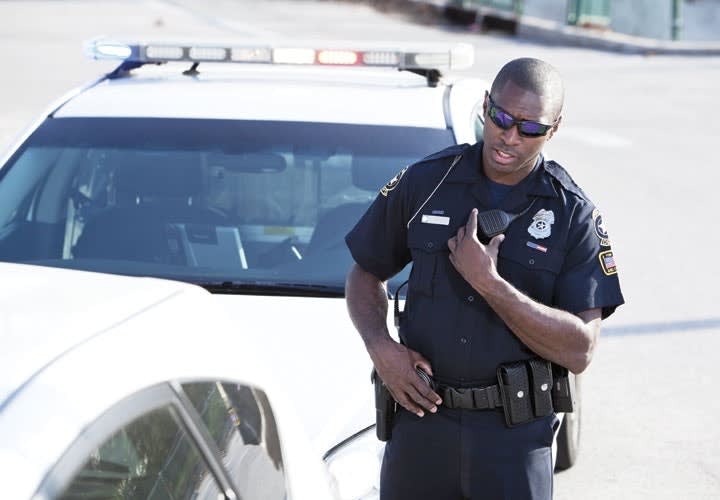
Photo: iStockphoto.com
You're accustomed to thinking in terms of justifying your search-and-seizure activities with "probable cause." But not every search or seizure has to be supported by PC. In some cases, the U.S. Supreme Court has ruled that particular searches and seizures need only "reasonable suspicion" to be constitutional—not the higher justification level of probable cause. What's the difference, and when is reasonable suspicion sufficient?
In Ornelas v. U.S., the court said this: "Articulating precisely what 'reasonable suspicion' and 'probable cause' mean is not possible. They are commonsense, nontechnical conceptions that deal with the factual and practical considerations of everyday life on which reasonable and prudent men, not legal technicians, act."
And explaining how these two concepts differ, the court added in Alabama v. White, "Reasonable suspicion is a less demanding standard than probable cause not only in the sense that reasonable suspicion can arise from information that is different in quantity or content than that required to establish probable cause, but also in the sense that reasonable suspicion can arise from information that is less reliable than that required to show probable cause."
In other words, you can establish reasonable suspicion with less information, and less-reliable information, than you would need to show PC. The court has said, "This showing is not high." (Richards v. Wisconsin) The terms "reasonable suspicion," "reason to believe," "articulable suspicion," "founded suspicion," and "individualized suspicion" refer to the same standard. Detentions and certain searches are justifiable at this lower level.
Detentions
Although it's common to hear criminal justice officials erroneously use the phrase "PC for the stop," this mistake reflects a basic misunderstanding of Fourth Amendment law. A "stop" being a detention, PC is not the correct level of justification; detentions need be supported only by the lower level of reasonable suspicion.
Pedestrian detentions. A ped stop is lawful "where a police officer observes unusual conduct which leads him reasonably to conclude in light of his experience that criminal activity may be afoot." (Terry v. Ohio)
Vehicle stops. Reasonable suspicion that occupants of a vehicle may be involved in criminal activity justifies a vehicle stop. (Navarette v. California) Likewise, reasonable suspicion of a traffic violation justifies a stop. (Rodriguez v. U.S.)
Secondary checkpoint inspection. At a sobriety checkpoint, all vehicles may be stopped for brief inquiry and observation, without any suspicion at all. However, "Detention of particular motorists for more extensive field sobriety testing may require satisfaction of an individualized suspicion standard." (Michigan v. Sitz) This requirement is generally satisfied by observed indications that the stopped driver may be impaired.
Field fingerprinting. "The Fourth Amendment would permit detentions for the purpose of fingerprinting, if there is reasonable suspicion that the suspect has committed a criminal act, if there is a reasonable basis for believing that fingerprinting will establish or negate the suspect's connection with that crime, and if the procedure is carried out with dispatch." (Hayes v. Florida)
Field ID. Where a victim or witness can be brought to the location where police with reasonable suspicion have detained a suspect for a recently committed crime, a prompt field show-up ID can be sought. "If there are articulable facts supporting a reasonable suspicion that a person has committed a criminal offense, that person may be stopped in order to identify him." (Hayes v. Florida)
Border detention of suspected smugglers. With reasonable suspicion, border and customs agents may detain suspected drug smugglers until contents of their digestive systems have passed. "We hold that the detention of a traveler at the border, beyond the scope of a routine customs search and inspection, is justified if agents reasonably suspect that the traveler is smuggling contraband in her alimentary canal." (U.S. v. Montoya-Hernandez)
Detention of luggage and parcels. Reasonable suspicion that contraband may be concealed in a traveler's luggage or in a parcel shipped by common carrier allows a brief detention for K-9 sniff and application for a search warrant. (U.S. v. Place—luggage; U.S. v. Van Leeuwen—parcel)
Safety Searches
Cursory searches to dispel potential threats may often be made with only reasonable suspicion of danger.
Weapons frisk. During a lawful detention, an officer may conduct a pat-down search of the detainee's outer clothing for weapons, "where he has reason to believe that he is dealing with an armed and dangerous individual." (Terry v. Ohio)
Vehicle pat-down. At a vehicle stop, "the search of the passenger compartment of an automobile, limited to those areas in which a weapon may be placed or hidden, is permissible if the police officer possesses a reasonable belief that the suspect is dangerous and the suspect may gain immediate control of weapons." (Michigan v. Long)
Safety sweep. Once lawfully inside premises, officers may look in places that could conceal a potential assailant, if they have "articulable facts that would reasonably warrant a prudent officer in believing that the area to be swept harbors an individual posing a danger to those on the arrest scene." (Maryland v. Buie)
Special Cases
The court has also applied the reasonable suspicion standard in two particular circumstances—entry to serve a warrant, and vehicle search incident to arrest.
No-knock entry. When serving a search warrant, officers may enter without knocking and announcing if they have "a reasonable suspicion that knocking and announcing their presence would be dangerous or futile, or that it would inhibit the effective investigation of the crime by, for example, allowing the destruction of evidence." (Richards v. Wisconsin)
Vehicle search incident to arrest. Unless the arrestee is unsecured and within reaching distance of the passenger compartment during the search, a vehicle search may only be justified incident to an occupant's arrest if "it is reasonable to believe the vehicle contains evidence of the arrest offense." (Arizona v. Gant)
Non-Police Searches
The Fourth Amendment does not apply to actions by private individuals not acting in an official capacity (U.S. v. Jacobsen); however, it does apply to non-police employees of public entities. The court has relaxed the rules in two official settings.
Public school search. "A search of a student by a teacher or other school official will be justified when there are reasonable grounds for suspecting that the search will turn up evidence that the student has violated or is violating either the law or the rules of the school." (New Jersey v. T.L.O.)
Government workplace search. "A search of an employee's office by a supervisor will be justified when there are reasonable grounds for suspecting that the search will turn up evidence that the employee is guilty of work-related misconduct." (O'Connor v. Ortega)
The Right Words
It's important for officers to match the level of Fourth Amendment activity with the correct level of required justification. Carelessly talking, reporting, or testifying about your "PC" to do whatever you did can mislead the prosecutor, defense attorney, and judge into measuring your conduct against a higher standard than is legally required, and in some cases, that may mean losing on an issue where you should have won—and would have won—if the correct legal standard had been applied. If all you needed was reasonable suspicion, not PC, say so.
Devallis Rutledge is a former police officer and veteran prosecutor who currently serves as special counsel to the Los Angeles County district attorney. He is the author of 12 books, including "Investigative Constitutional Law."
More Patrol

Team Wendy Introduces the EXFIL Endurance Ballistic Helmet, Engineered to Reduce the Burden of Extended Wear
Team Wendy has launched its EXFIL Endurance, a new lightweight ballistic helmet engineered to deliver protection, comfort, and fit during demanding, extended operations.
Read More →
The First Responders Children’s Foundation National First Responders Day Roll Call of Heroes Ceremony Returns to Times Square, NYC
First Responders Children’s Foundation (FRCF), in collaboration with T-Mobile, will host the Roll Call of Heroes ceremony in Times Square to commemorate National First Responders Day on Wednesday, Oct. 28. During the event, FRCF will present 18 Hero Awards.
Read More →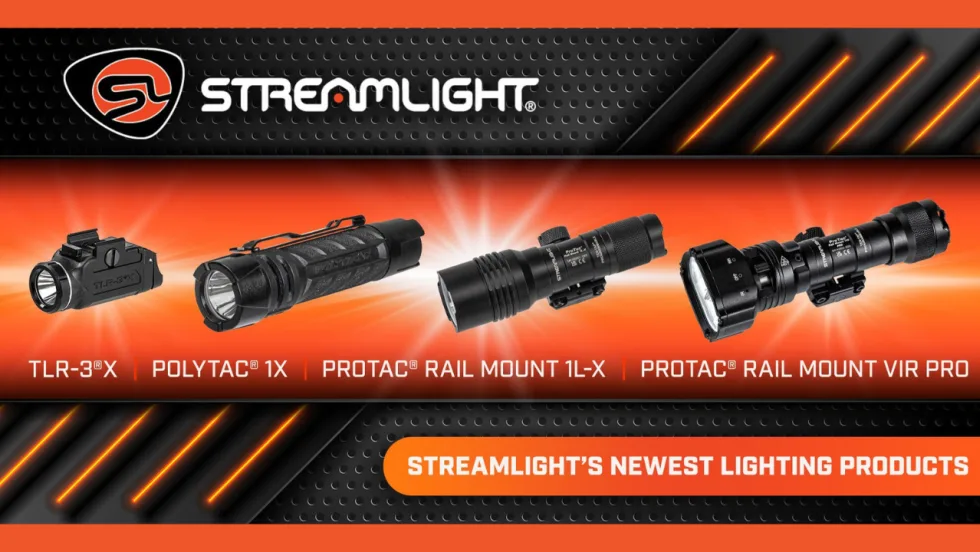
Streamlight to Showcase Newest Lighting Products for Law Enforcement Professionals at IACP 2026
Streamlight will showcase its newest lights for law enforcement at the International Association of Chiefs of Police Annual Conference & Expo. Featured lights will include the TLR-3 X, the PolyTac 1X, and more.
Read More →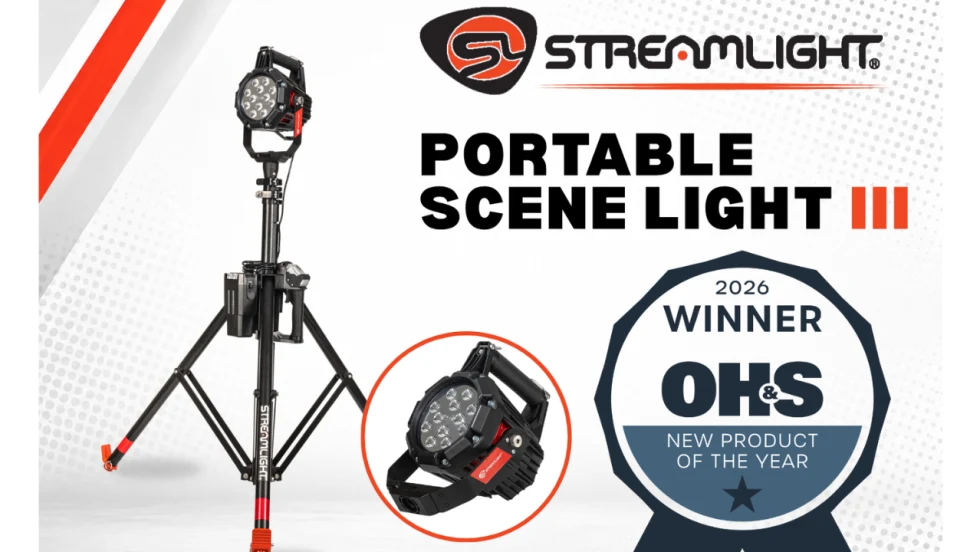
Streamlight Portable Scene Light III Wins 2026 OH&S New Product of the Year Award
Streamlight’s Portable Scene Light III has won the 2026 Occupational Health & Safety (OH&S) New Product of the Year Award in the Lighting category.
Read More →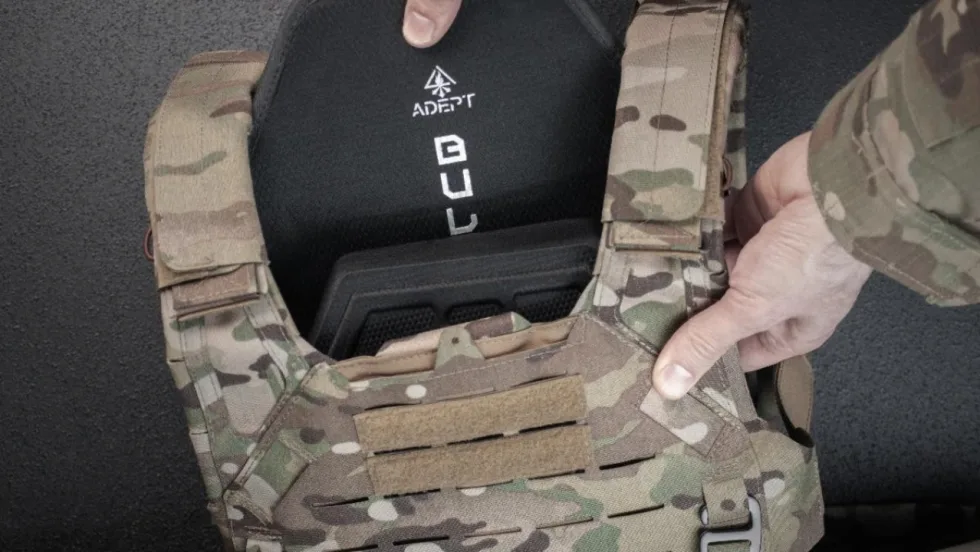
Adept Armor Introduces Two New Rifle Plates
Adept Armor has launched two new Level IV ballistic plates, the Emperor and the Archon Mark 2, which brings Adept Armor’s new Quatroid ceramic to the high-threat, performance-value center of the range at 5.2 pounds.
Read More →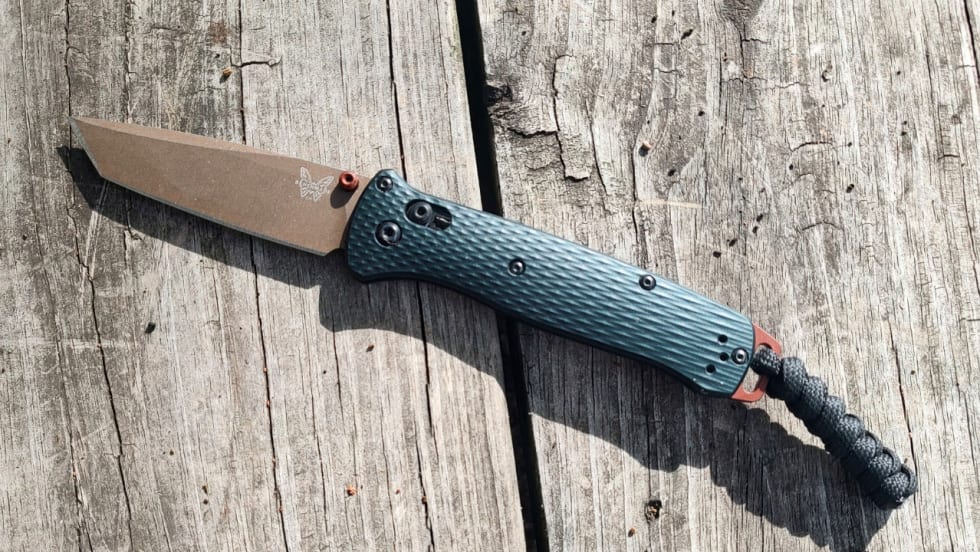
POLICE Product Test: Benchmade Bailout
The Benchmade Bailout is a slim, lightweight carry knife with a deep-ride pocket clip and comes in a variety of blade steels and scales. Here is a detailed review of the Taiga Green Bailout, released earlier this year.
Read More →
NLEOMF Announces July 2026 Officer of the Month
NLEOMF honored a Michigan deputy sheriff as the July 2026 Officer of the Month for rescuing a trapped driver from a burning vehicle following a Fourth of July crash.
Read More →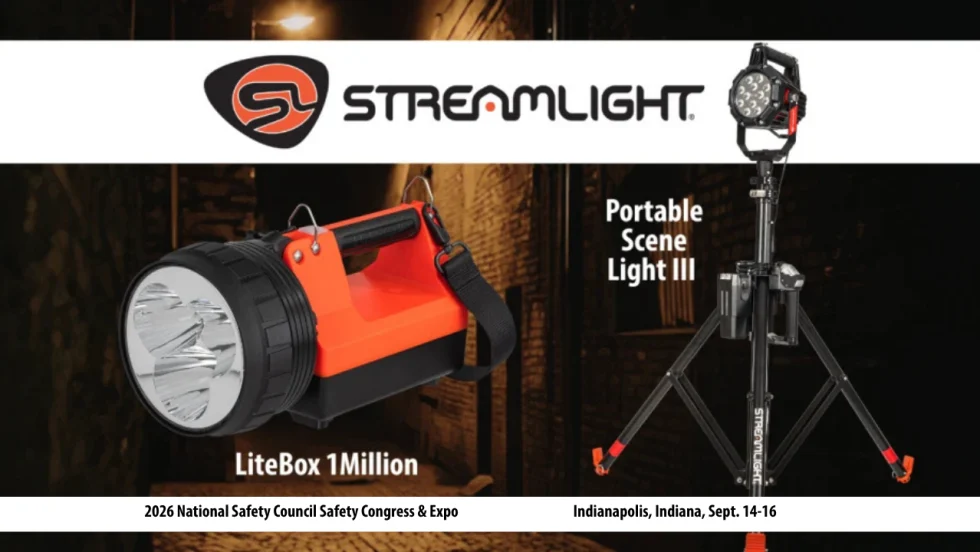
Streamlight to Showcase Newest Lighting Products at National Safety Council’s Safety Congress & Expo 2026
Streamlight will showcase its latest lights, including the Portable Scene Light III and the LiteBox 1Million, at the 2026 National Safety Council (NSC) Safety Congress & Expo.
Read More →
The 2027 World Police & Fire Games Set for Perth, Australia
The 2027 World Police & Fire Games (WPFG) will take place in Perth, Western Australia, from Friday, March 12 through Sunday, March 21, 2027.
Read More →
5.11 Partners with National Fallen Firefighters Foundation to Support #ForThe343
5.11 has joined the nationwide movement honoring the 343 New York City Fire Department firefighters lost on Sept. 11, 2001.
Read More →