



Hypocrisy in Congress
Many who believe the anti-Trump bias of an FBI agent didn't affect his investigation also believe every officer is biased against minorities.

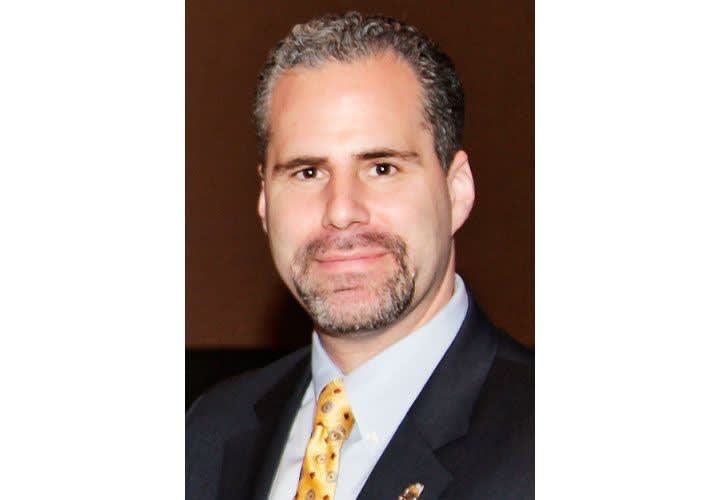
Jon Adler
Last month a senior member of the FBI appeared before two House congressional committees and stated that his animus toward then presidential candidate Donald Trump had no impact on his investigation of opposing candidate Hillary Clinton. Half the room believed him. Interestingly, many among this half also believe that police officers need implicit bias training to teach them about their allegedly latent racist views and how they impact an officer's behavior. Which sounds intellectually inconsistent to me.
It is not my intent here to render a judgment on the value of implicit bias training. I'm a career law enforcement trainer, and I'd rather spend limited resources on tactical scenario-based training. But my focus here is the apparent hypocrisy of those who champion one law enforcement officer's explicit bias while condemning every other officer's alleged implicit racial bias.
According to former New York homicide prosecutor Paul Callan, the referenced senior FBI special agent's ill feelings toward Trump might have impacted his investigative conduct. Callan references the agent's alleged role in changing the former FBI director's conclusion that Hillary Clinton was "extremely careless" with her e-mail oversight vs. the original wording that she was "gross(ly) negligent." Callan added that, "If (the FBI agent) were subpoenaed to testify today before a jury in an ordinary criminal case, his actions would doom the case. Objective jurors would be stunned by such an obviously biased investigator being employed by the FBI in such a lofty investigative position." It remains troubling that certain members of Congress opted to applaud the performance of this agent.
A colleague described this agent's performance as "worthy of a Shakespearean actor or sociopath." He stated that only the best of actors or a sociopath could convince people that their feelings and beliefs would not impact their performance. Which is what this agent did. And then he attempted to corroborate his assertion by referencing the inspector general's report, and said it didn't prove his explicit bias impacted his investigative performance. What he didn't volunteer for context is that there are numerous ways an investigator can impact an investigation that would go undetected.
For example, the decision as to when to interview a subject can impact the outcome. If you interview a high-profile subject on the Friday of a three-day weekend, there is less of a chance of media interest.
Ultimately, how an interview is planned and executed will also impact the outcome. Unless an expert were observing the interview from a closed-circuit monitor, it would be difficult for them after the fact to ascertain the impact of an interviewer's alleged bias.
If an investigator conducts what I call an "apologist interview," the advantage shifts to the subject. If an investigator intentionally leads the subject with soft questions, ignores follow-up opportunities, establishes no rhythm to the question flow, interrupts the subject when they're on the verge of lying, exudes weak body language and an uncertain tone of voice, or delivers questions in a robotic scripted manner, they're discreetly titling the advantage to the subject. Again, it's difficult to assess this unless you're present for the interview.
In a recent New York Times article titled, "Confronting Implicit Bias in the New York Police Department," the reporter discusses how training can motivate officers to recognize how their unconscious views may impact their judgment and behavior. The reporter supports the need for this training by stating, "In policing, the consequences of such bias can be dire." So we're left wondering why certain congressional members who advocate for officer implicit bias training somehow condone the senior FBI agent's admitted explicit bias. Is conscious bias an acceptable law enforcement tool, while subconscious bias is not?
According to Dr. Jean Kanocogi, a recognized expert in use of force and law enforcement interview tactics, "The brain ultimately drives a person's judgment and actions. You can extract bias from a person's brain as easily as you can extract stench from a bucket of excrement." Kanocogi maintains a person may attempt to suppress, ignore, or deny their biased views, but either on a conscious or subconscious level, it impacts their behavior.
I agree with Kanocogi. A healthy dose of self-reflection can benefit both those who serve, and those who criticize those who serve for political gain. But one person's bias shouldn't get a pass because it's politically expedient for a particular party.
Jon Adler is the president of the Federal Law Enforcement Officers Association Foundation.
More Patrol

Team Wendy Introduces the EXFIL Endurance Ballistic Helmet, Engineered to Reduce the Burden of Extended Wear
Team Wendy has launched its EXFIL Endurance, a new lightweight ballistic helmet engineered to deliver protection, comfort, and fit during demanding, extended operations.
Read More →
The First Responders Children’s Foundation National First Responders Day Roll Call of Heroes Ceremony Returns to Times Square, NYC
First Responders Children’s Foundation (FRCF), in collaboration with T-Mobile, will host the Roll Call of Heroes ceremony in Times Square to commemorate National First Responders Day on Wednesday, Oct. 28. During the event, FRCF will present 18 Hero Awards.
Read More →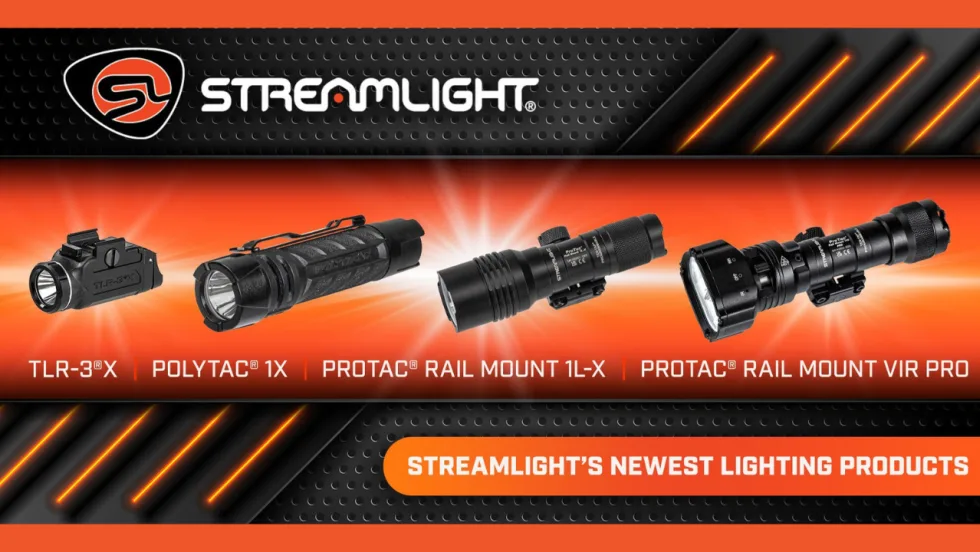
Streamlight to Showcase Newest Lighting Products for Law Enforcement Professionals at IACP 2026
Streamlight will showcase its newest lights for law enforcement at the International Association of Chiefs of Police Annual Conference & Expo. Featured lights will include the TLR-3 X, the PolyTac 1X, and more.
Read More →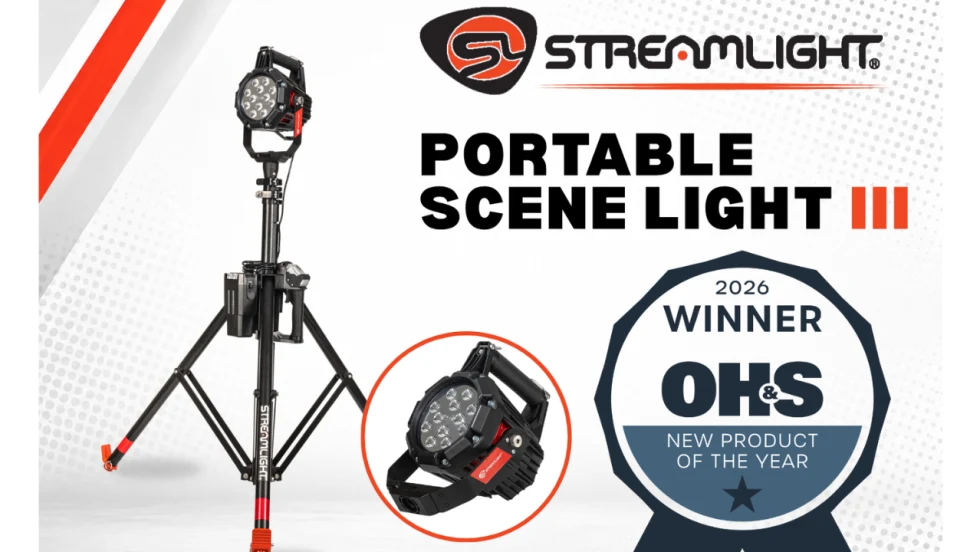
Streamlight Portable Scene Light III Wins 2026 OH&S New Product of the Year Award
Streamlight’s Portable Scene Light III has won the 2026 Occupational Health & Safety (OH&S) New Product of the Year Award in the Lighting category.
Read More →
Adept Armor Introduces Two New Rifle Plates
Adept Armor has launched two new Level IV ballistic plates, the Emperor and the Archon Mark 2, which brings Adept Armor’s new Quatroid ceramic to the high-threat, performance-value center of the range at 5.2 pounds.
Read More →
POLICE Product Test: Benchmade Bailout
The Benchmade Bailout is a slim, lightweight carry knife with a deep-ride pocket clip and comes in a variety of blade steels and scales. Here is a detailed review of the Taiga Green Bailout, released earlier this year.
Read More →
NLEOMF Announces July 2026 Officer of the Month
NLEOMF honored a Michigan deputy sheriff as the July 2026 Officer of the Month for rescuing a trapped driver from a burning vehicle following a Fourth of July crash.
Read More →
Streamlight to Showcase Newest Lighting Products at National Safety Council’s Safety Congress & Expo 2026
Streamlight will showcase its latest lights, including the Portable Scene Light III and the LiteBox 1Million, at the 2026 National Safety Council (NSC) Safety Congress & Expo.
Read More →
The 2027 World Police & Fire Games Set for Perth, Australia
The 2027 World Police & Fire Games (WPFG) will take place in Perth, Western Australia, from Friday, March 12 through Sunday, March 21, 2027.
Read More →
5.11 Partners with National Fallen Firefighters Foundation to Support #ForThe343
5.11 has joined the nationwide movement honoring the 343 New York City Fire Department firefighters lost on Sept. 11, 2001.
Read More →