



Looking Back: Barack Obama, AEDs, and AIDS
In past January issues, POLICE covered law enforcement officers’ fears as a Democrat was entering the White House, tools for rendering aid to heart attack victims, and tips for communicable disease protection.

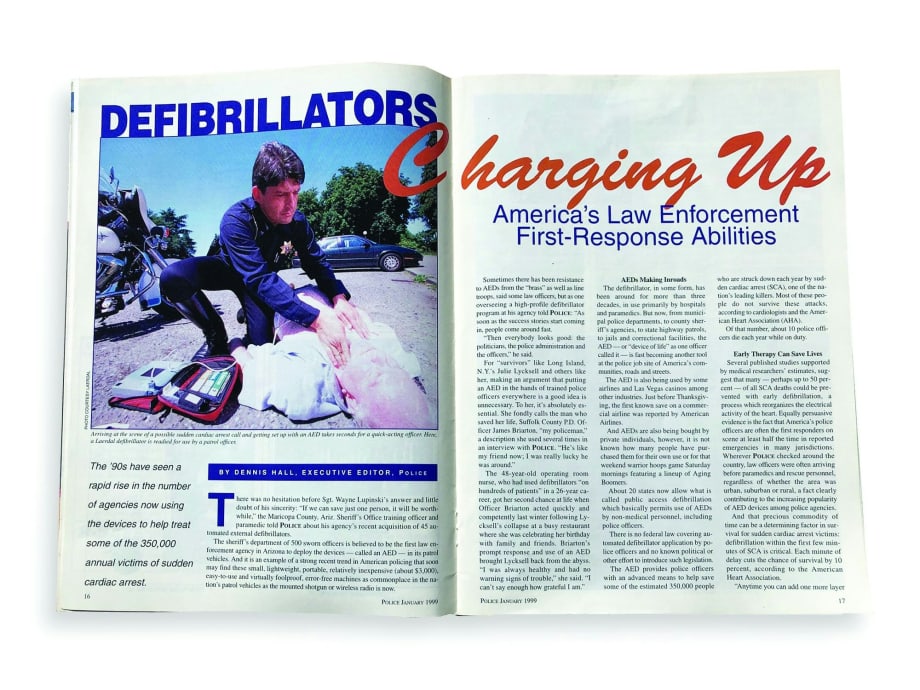
The cover story for January 1999 discussed law enforcement agencies beginning to acquire, and train officers to use, automated external defibrillators (AEDs).
photo of magazine
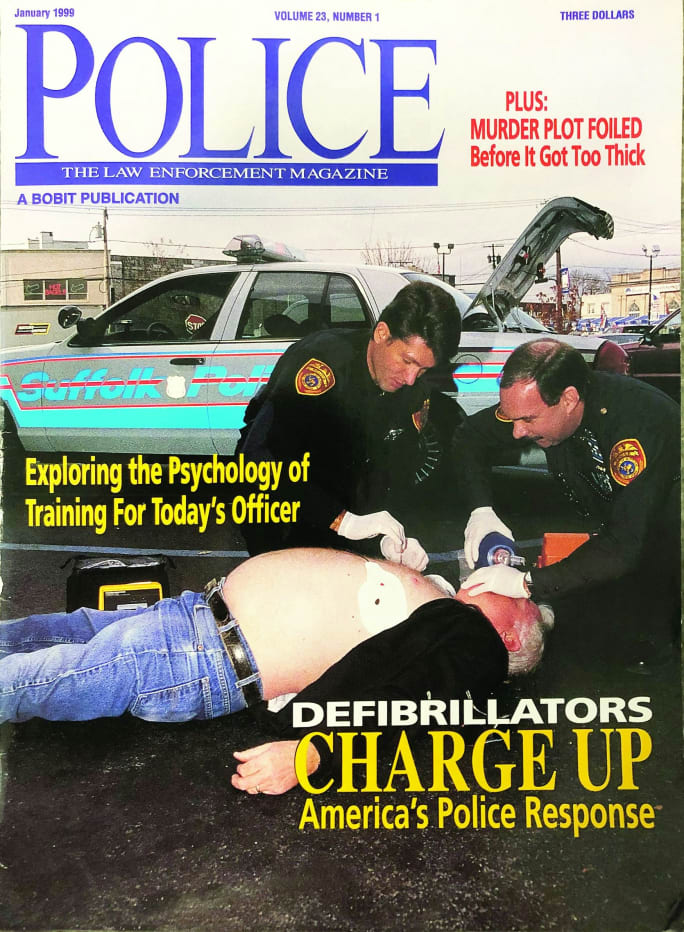
January 1999 cover of POLICE Magazine
photo of magazine
This month we’re launching a new section of the magazine aptly called “Looking Back” dedicated to looking back at POLICE Magazine’s long history. The publication started in 1976, and needless to say much has changed in law enforcement since then. This month, we’ll look at January issues from 10, 20, and 30 years ago.
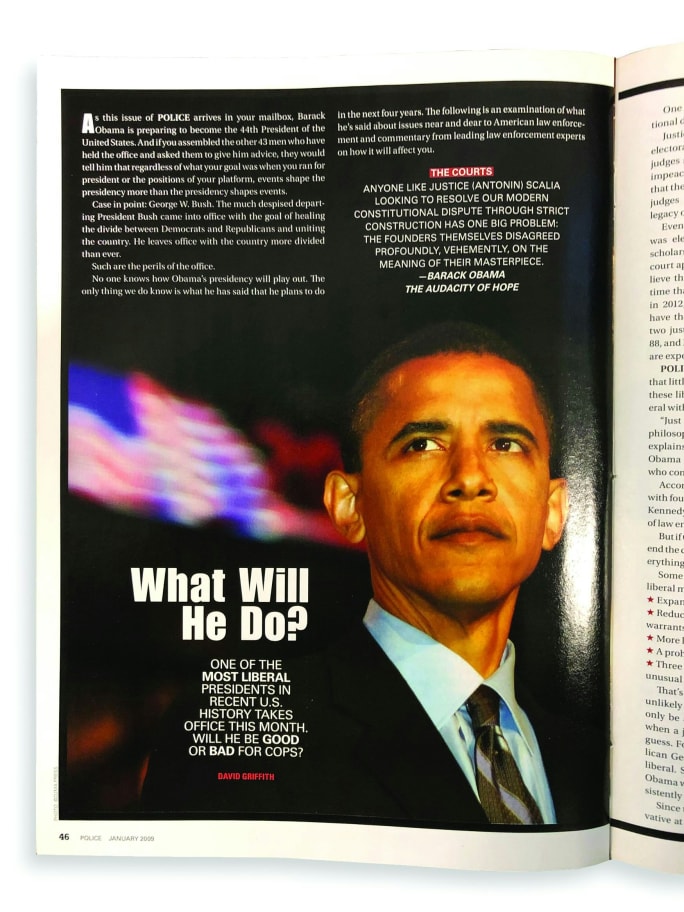
Long before calls to drain the swamp, law enforcement officers were apprehensive about President-elect Barack Obama's plans.
photo of magazine
2009: What Will He Do?
Long before calls to drain the swamp, law enforcement officers were apprehensive about President-elect Barack Obama’s plans. Worries included Obama putting liberal justices on the Supreme Court; being soft on crime; and instituting gun control, counter-terrorism, and immigration policies that would adversely affect law enforcement officers. We now know how all of that played out.
1999: Defibrillators Charging Up America’s Law Enforcement First-Response Abilities
The cover story for January 1999 discussed law enforcement agencies beginning to acquire, and train officers to use, automated external defibrillators (AEDs). Before then the devices used to jumpstart a heart had been mostly relegated to use by hospitals and paramedics (not yet referred to as EMTs). The article cites the Maricopa County (AZ) Sheriff’s Office as the first known law enforcement agency in Arizona to deploy AEDs in its patrol vehicles.
Today, AEDs are available in many public places, and newer models are made to be much easier for even someone with no training to use. But they are not everywhere, and law enforcement officers are still often the first on scene when someone suffers a sudden cardiac arrest. Many agencies still struggle to pay for enough devices to equip all their patrol vehicles, as well as replacing outdated models.
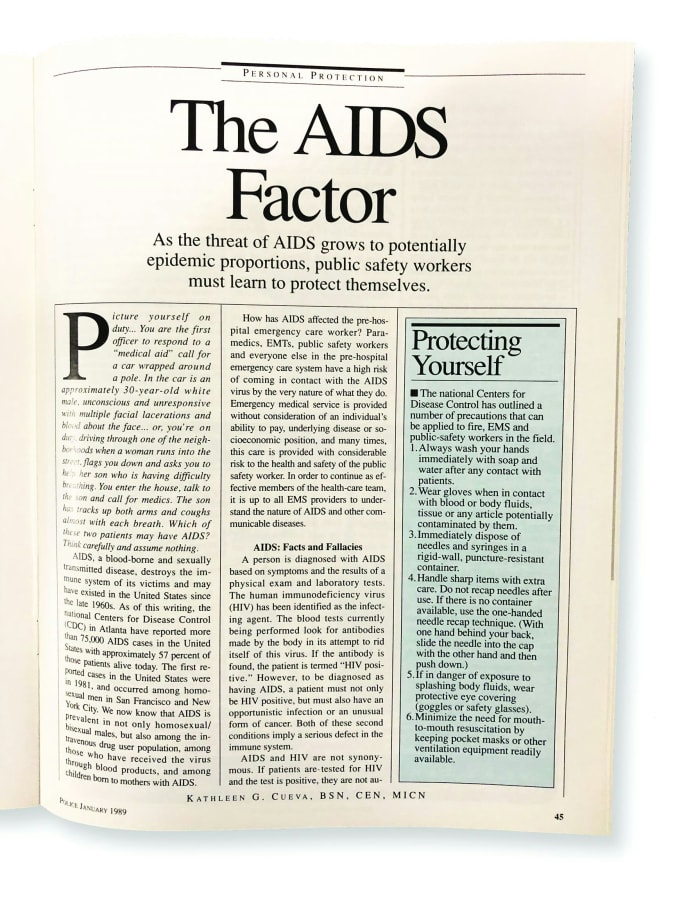
The article discusses the reality that you can't know by looking at someone if they have AIDS, so it's important for officers to wear gloves and other protection on calls when coming into contact with any bodily fluids or rendering medical aid through resuscitation.
photo of magazine
1989: The AIDS Factor
Back in January 1989, it had only been eight years since the first reported cases of AIDS in the United States. Coming in contact with people who had AIDS or were HIV positive was a relatively new and growing concern. The deck reads, “As the threat of AIDS grows to potentially epidemic proportions, public safety workers must learn to protect themselves.” The article discusses the reality that you can’t know by looking at someone if they have AIDS, so it’s important to wear gloves and other protection when coming into contact with any bodily fluids or rendering medical aid through resuscitation. And of course needles are to be handled with care.
While certainly not the same, it’s easy to draw parallels with the current opioid epidemic and the precautions that law enforcement officers must take to protect themselves from exposure through contact with these substances. Officers may not know when they arrive at a call if the people they interact with are drug users, dealers, or transporters who may have opioids on their person or in their vehicles.
More Patrol

Team Wendy Introduces the EXFIL Endurance Ballistic Helmet, Engineered to Reduce the Burden of Extended Wear
Team Wendy has launched its EXFIL Endurance, a new lightweight ballistic helmet engineered to deliver protection, comfort, and fit during demanding, extended operations.
Read More →
The First Responders Children’s Foundation National First Responders Day Roll Call of Heroes Ceremony Returns to Times Square, NYC
First Responders Children’s Foundation (FRCF), in collaboration with T-Mobile, will host the Roll Call of Heroes ceremony in Times Square to commemorate National First Responders Day on Wednesday, Oct. 28. During the event, FRCF will present 18 Hero Awards.
Read More →
Streamlight to Showcase Newest Lighting Products for Law Enforcement Professionals at IACP 2026
Streamlight will showcase its newest lights for law enforcement at the International Association of Chiefs of Police Annual Conference & Expo. Featured lights will include the TLR-3 X, the PolyTac 1X, and more.
Read More →
Streamlight Portable Scene Light III Wins 2026 OH&S New Product of the Year Award
Streamlight’s Portable Scene Light III has won the 2026 Occupational Health & Safety (OH&S) New Product of the Year Award in the Lighting category.
Read More →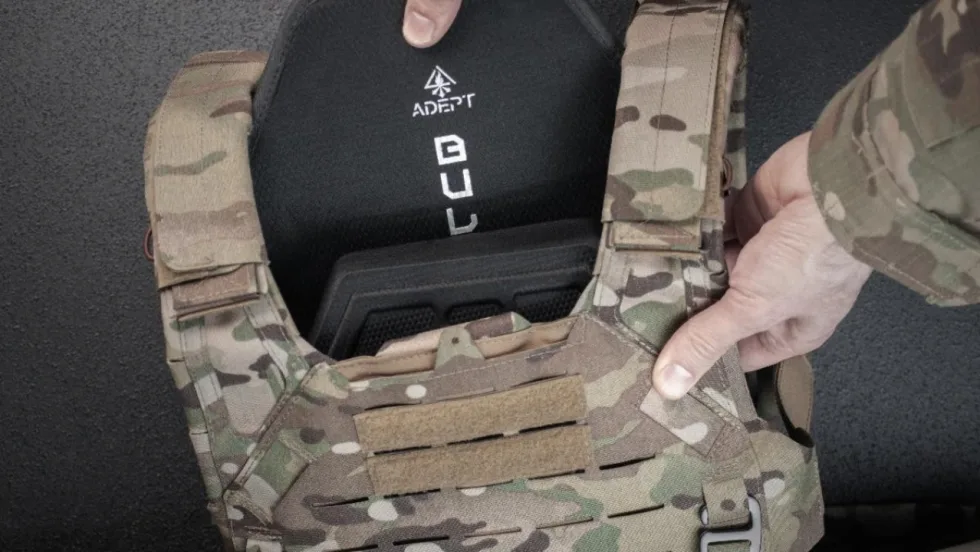
Adept Armor Introduces Two New Rifle Plates
Adept Armor has launched two new Level IV ballistic plates, the Emperor and the Archon Mark 2, which brings Adept Armor’s new Quatroid ceramic to the high-threat, performance-value center of the range at 5.2 pounds.
Read More →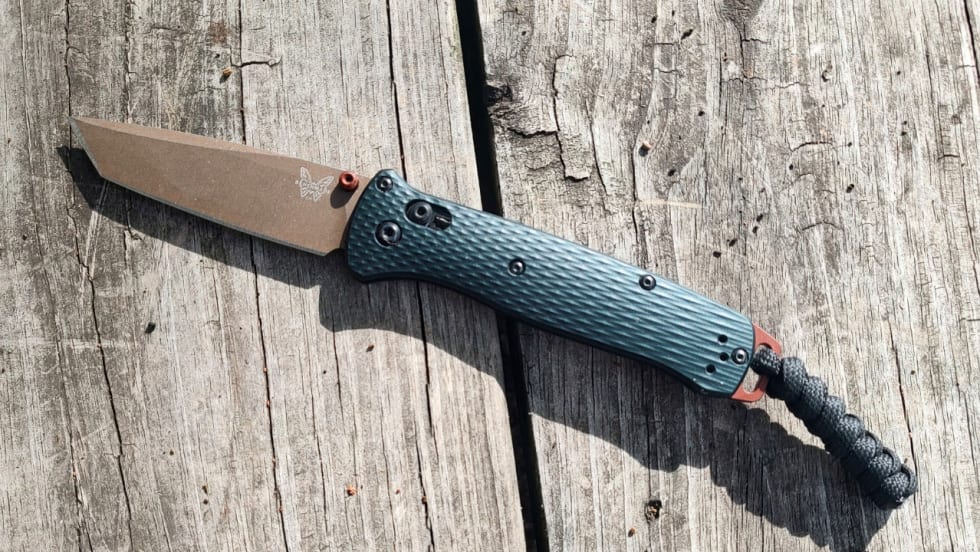
POLICE Product Test: Benchmade Bailout
The Benchmade Bailout is a slim, lightweight carry knife with a deep-ride pocket clip and comes in a variety of blade steels and scales. Here is a detailed review of the Taiga Green Bailout, released earlier this year.
Read More →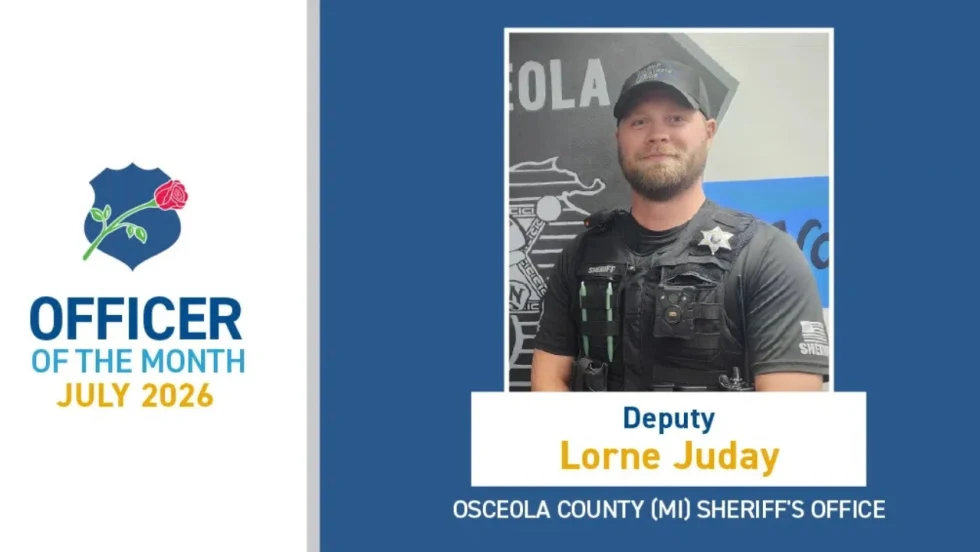
NLEOMF Announces July 2026 Officer of the Month
NLEOMF honored a Michigan deputy sheriff as the July 2026 Officer of the Month for rescuing a trapped driver from a burning vehicle following a Fourth of July crash.
Read More →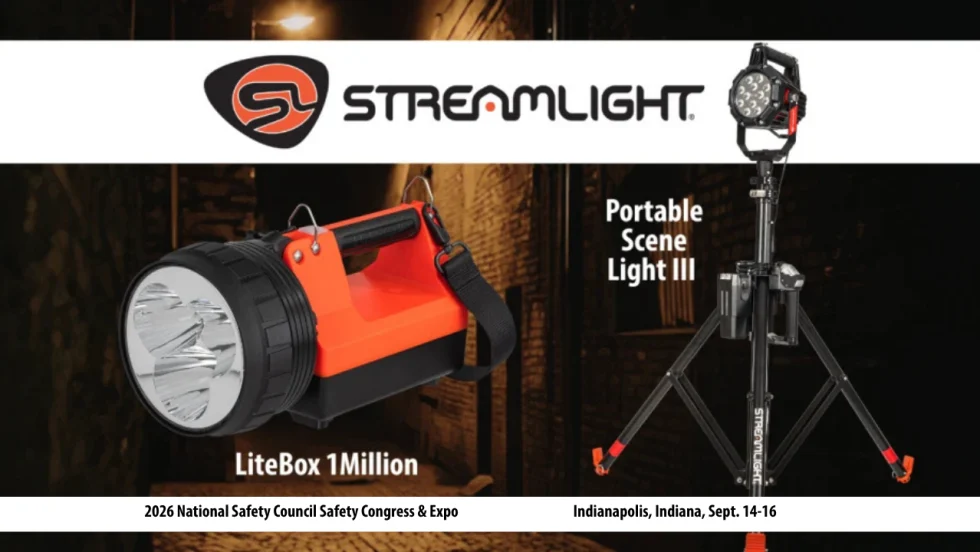
Streamlight to Showcase Newest Lighting Products at National Safety Council’s Safety Congress & Expo 2026
Streamlight will showcase its latest lights, including the Portable Scene Light III and the LiteBox 1Million, at the 2026 National Safety Council (NSC) Safety Congress & Expo.
Read More →
The 2027 World Police & Fire Games Set for Perth, Australia
The 2027 World Police & Fire Games (WPFG) will take place in Perth, Western Australia, from Friday, March 12 through Sunday, March 21, 2027.
Read More →
5.11 Partners with National Fallen Firefighters Foundation to Support #ForThe343
5.11 has joined the nationwide movement honoring the 343 New York City Fire Department firefighters lost on Sept. 11, 2001.
Read More →