



In My Sights: What, Exactly, Is the Problem?
You can’t address society’s fundamental ills until you identify what they are.

There is a constant mantra demanding changes to law enforcement reverberating throughout the intellectual, political, media, and activist crowds. The only place I have heard more obstinate demand for change was on the sidewalks of Seattle, by the homeless residents last time I was there. So often the reflexive responses to these demands lead to wasted funds and the creation of unintended problems, leaving the root issues that instigated the original demand unchanged. By ignoring long held procedures for planning and implementing change, governmental leaders—especially law enforcement leaders—have wasted time, resources, and goodwill, creating programs that chased the wrong issue, focusing on symptoms and not on the root problem.
Too often, the average high school research paper has more solid analysis behind it than the typical law enforcement program implemented or adopted by major agencies. The first step in planning by law enforcement leaders should be the formulation of a coherent problem statement. What is the challenge that the change, project, or program will address? Is the identified difficulty the true heart of the issue or is it simply one of many symptoms of a greater, more systemic or vital, question? Is the problem even within the purview of the law enforcement function? A program that fails to identify and address the root problem but assumes the mantle of a police initiative, and then utterly miscarries, is easily perceived to be a failure of law enforcement and, worse, is often used to imply malice on the part of police by activists.
A case in point is the recent condemnation of the 1994 Crime Bill, which has been cited as an example of the racist nature of America and especially the law enforcement establishment. As someone who reported on the passage of this legislation for the Law Enforcement Training Network, I interviewed sociologists, politicians, and police leaders about the crisis facing the black community back then and what to do about it.
Crack and crime were rampant in the major urban centers and sociologist John DiIulio had developed his theory about the “super predators” being raised in the ghettos. The pressure to pass a law and have law enforcement solve a social problem that had roots far out of the control the police became overwhelming, and the only implication of racism back then was that it would be racist to NOT pass the bill.
According to a Gallup poll at the time, the black community backed the bill by 54% and the Congressional Black Caucus voted for it with a few notable exceptions. And so the bill was passed and the rest is history. The prisons filled up with young black men and the crime rate went down, but by 2010 activists and politicians were finding malice in the law and in those tasked to enforce it. I offer this to say that, had a little research been done to gather data about the problem, maybe we could have addressed the real issue—one that was identified as far back as 1967.
More than 50 years ago, President Lyndon B. Johnson’s Commission on Law Enforcement and Administration of Justice sought to change law enforcement. The conclusions of this commission were published so long ago that absolutely no one seems to remember them. But they should. Page 17 says: “To speak to controlling crime only in terms of the work of the police, the courts, and the correctional apparatus is to refuse to face the fact that widespread crime implies a widespread failure of society as a whole.”
In 2020 the same evils that Johnson’s Commission tried to address are still with us and loudly lamented. But before we jump through hoops already transited without effect by prior generations of leaders, we need to have a plan, do our research, establish goals and objectives, compare alternatives, and then build in a feedback system to make sure we are “learning” and not just “doing.” The most cursory look at our history reveals that we constantly fail to identify and address our real and fundamental social problems, treating only symptoms and not root causes, and often leaving the crime-fighting community holding the bag. At some point, law enforcement leaders need to simply say, “We can’t do that.” and “We can’t truly fix that because that is not a criminal justice function.” Quite honestly the political class needs to put on their adult pants and face and address real problems, not symptoms, and do their own planning and research.
Finally, go and read just the first couple of pages of Johnson’s 1967 Commission Report titled, “The Challenge of Crime in a Free Society,” and consider whether we have actually asked ourselves, “What, exactly, is the problem?”
Dave Smith is an internationally recognized law enforcement trainer and is the creator of “JD Buck Savage.” You can follow Buck on Twitter at @thebucksavage.
More Patrol

Streamlight Portable Scene Light III Wins 2026 OH&S New Product of the Year Award
Streamlight’s Portable Scene Light III has won the 2026 Occupational Health & Safety (OH&S) New Product of the Year Award in the Lighting category.
Read More →
Adept Armor Introduces Two New Rifle Plates
Adept Armor has launched two new Level IV ballistic plates, the Emperor and the Archon Mark 2, which brings Adept Armor’s new Quatroid ceramic to the high-threat, performance-value center of the range at 5.2 pounds.
Read More →
POLICE Product Test: Benchmade Bailout
The Benchmade Bailout is a slim, lightweight carry knife with a deep-ride pocket clip and comes in a variety of blade steels and scales. Here is a detailed review of the Taiga Green Bailout, released earlier this year.
Read More →
NLEOMF Announces July 2026 Officer of the Month
NLEOMF honored a Michigan deputy sheriff as the July 2026 Officer of the Month for rescuing a trapped driver from a burning vehicle following a Fourth of July crash.
Read More →
Streamlight to Showcase Newest Lighting Products at National Safety Council’s Safety Congress & Expo 2026
Streamlight will showcase its latest lights, including the Portable Scene Light III and the LiteBox 1Million, at the 2026 National Safety Council (NSC) Safety Congress & Expo.
Read More →
The 2027 World Police & Fire Games Set for Perth, Australia
The 2027 World Police & Fire Games (WPFG) will take place in Perth, Western Australia, from Friday, March 12 through Sunday, March 21, 2027.
Read More →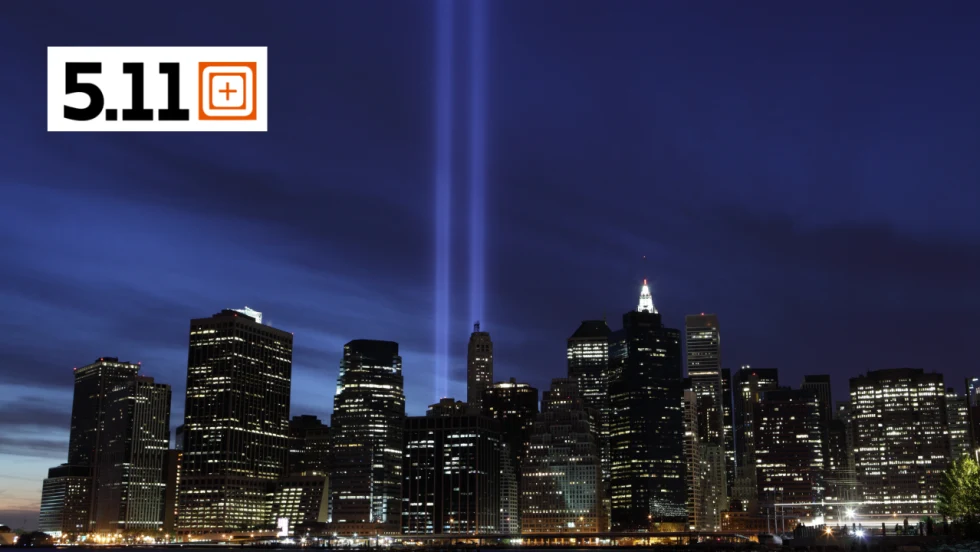
5.11 Partners with National Fallen Firefighters Foundation to Support #ForThe343
5.11 has joined the nationwide movement honoring the 343 New York City Fire Department firefighters lost on Sept. 11, 2001.
Read More →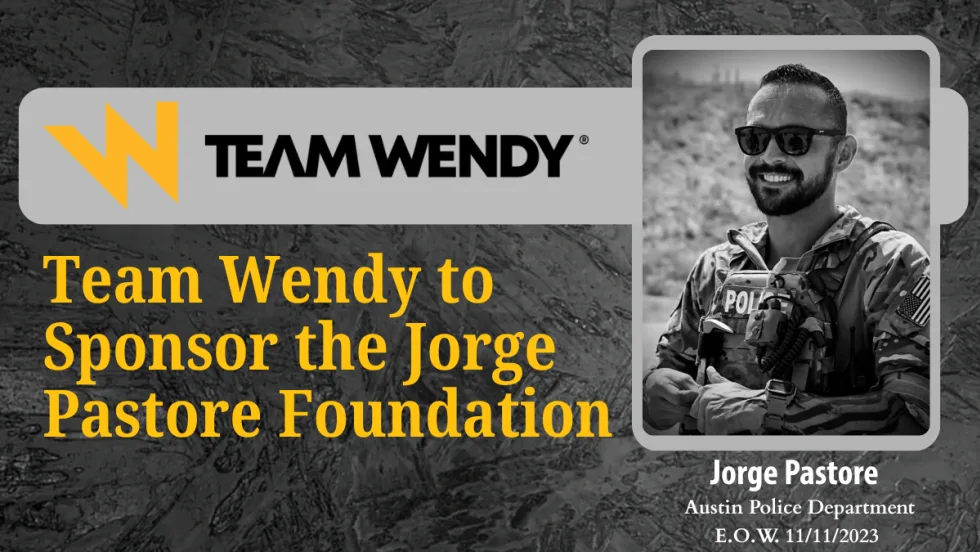
Team Wendy Announces Title Sponsorship of the Jorge Pastore Foundation
Team Wendy’s 3-year partnership with the Jorge Pastore Foundation expands access to programs that strengthen those who serve.
Read More →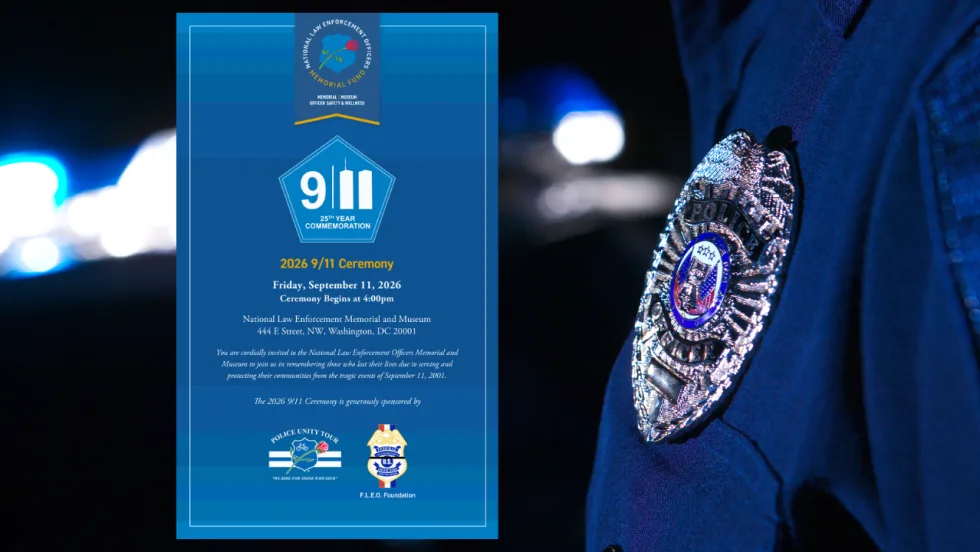
National Law Enforcement Memorial and Museum Hosting 9/11 25th-Year Commemoration Ceremony
The National Law Enforcement Memorial and Museum is hosting a 9/11 25th Year Commemoration Ceremony on Sept. 11 at 4 p.m.
Read More →
National Law Enforcement Officers Memorial Fund Announces June 2026 Officers of the Month
The National Law Enforcement Officers Memorial Fund (NLEOMF) named 15 officers of the Chico Police Department (California) as the Officers of the Month for June 2026 for their roles in responding to an active-shooter incident at a public library.
Read More →