



IACP 2011: Texas Detectives Honored for Solving Murder Cases
The College Station (Texas) Police Department's detectives were honored with the Excellence in Criminal Investigations award at the 2011 International Association of Chiefs of Police (IACP). The detectives solved three capital murder cases in 2010, apprehending the suspect in each case within 14 hours of the crime being committed.

The College Station (Texas) Police Department's detectives were honored with the Excellence in Criminal Investigations award at the 2011 International Association of Chiefs of Police (IACP).
The detectives solved three capital murder cases in 2010, apprehending the suspect in each case within 14 hours of the crime being committed.
The award is sponsored by the Risk, Fraud and Investigations business of Thomson Reuters, whose solutions include CLEAR, a powerful public and proprietary records platform that helps thousands of law enforcement and government agencies find essential information on people and businesses.
"Despite being chronically understaffed and having a caseload that exceeded 1,900 in 2010, the detectives in College Station pursued these cases with dogged persistence, using the new technology procured by their department in tandem with solid, exhaustive police work," said Chief Mark A. Marshall, IACP president. "When faced with challenges, such as how to preserve a crime scene that needed to be transported over a long distance, these detectives proved why they're the best of the best in investigative innovation. IACP is proud to recognize the College Station, Texas, Police Department's Criminal Investigation Division for its industry-leading example of law enforcement excellence."
After they were tasked with solving three grisly murders, the College Station CID used time-honored detective work such as canvassing neighborhoods and interviewing witnesses, as well as state-of-the-art technology such as video enhancement equipment and a device that allows investigators to capture images of microscopic evidence, which are compatible with iPad and iPhone devices carried by officers across the department.
In one particular case, officers were tasked with moving a vehicle that was part of a crime scene and full of important evidence back to College Station for processing from where it had been recovered. The distance was about four hours of travel time. Concerned that vital evidence would be contaminated or destroyed in transit, the officers decided to shrink-wrap the vehicle to protect it from the elements. This novel idea was successful and evidence later recovered from the vehicle proved to be vital to the case.
"The Criminal Investigative Division of the College Station, Texas, Police Department showed remarkable ingenuity in the ways in which they merged traditional investigative tactics with technological devices which had only recently become available to them," said Steve Rubley, vice president and general manager, Risk and Fraud at Thomson Reuters. "Their quick thinking and creative problem-solving skills enabled them to use every resource at hand to make sure no stone went unturned in the task of bringing murderers to justice and restoring a sense of safety within their community. The Thomson Reuters Risk, Fraud and Investigations business is thrilled to partner with the IACP in lauding such innovation and excellence. The outstanding investigatory techniques modeled by the department in College Station can serve as a model for law enforcement agencies across the nation."
The first runner-up, the Immigration and Customs Enforcement-Homeland Security Investigations division in Washington, D.C., was honored for conducting a campaign to seize Internet domain names used for selling counterfeit goods. From June 2010 through March 2011, this effort, which occurred in four separate phases, resulted in the seizure or freezing of 169 domain names, as well as the seizure of 16 bank, advertising and brokerage accounts. In addition, a large amount of pirated movies, music, sporting event and television show content was seized as well.
The second runner-up, the Los Angeles County Sheriff's Department Special Problems Unit, Transit Services Bureau, was recognized for fighting graffiti and vandalism throughout Los Angeles County by deploying several novel investigative tactics, among them the database TAGRS (Tracking and Automated Graffiti Reporting System) that is the first of its kind. These efforts led to a total of 183 felony and 173 misdemeanor arrests in 2010.
The IACP Award for Excellence in Criminal Investigations is given to a law enforcement agency, law enforcement unit, task force or inter- agency task force in recognition of exceptional innovation and excellence in the area of criminal investigations. Judging focuses on contributions to the advancement of the art or science of criminal investigations, and innovations in the development or enhancement of investigative techniques.
More Patrol

The First Responders Children’s Foundation National First Responders Day Roll Call of Heroes Ceremony Returns to Times Square, NYC
First Responders Children’s Foundation (FRCF), in collaboration with T-Mobile, will host the Roll Call of Heroes ceremony in Times Square to commemorate National First Responders Day on Wednesday, Oct. 28. During the event, FRCF will present 18 Hero Awards.
Read More →
Streamlight to Showcase Newest Lighting Products for Law Enforcement Professionals at IACP 2026
Streamlight will showcase its newest lights for law enforcement at the International Association of Chiefs of Police Annual Conference & Expo. Featured lights will include the TLR-3 X, the PolyTac 1X, and more.
Read More →
Streamlight Portable Scene Light III Wins 2026 OH&S New Product of the Year Award
Streamlight’s Portable Scene Light III has won the 2026 Occupational Health & Safety (OH&S) New Product of the Year Award in the Lighting category.
Read More →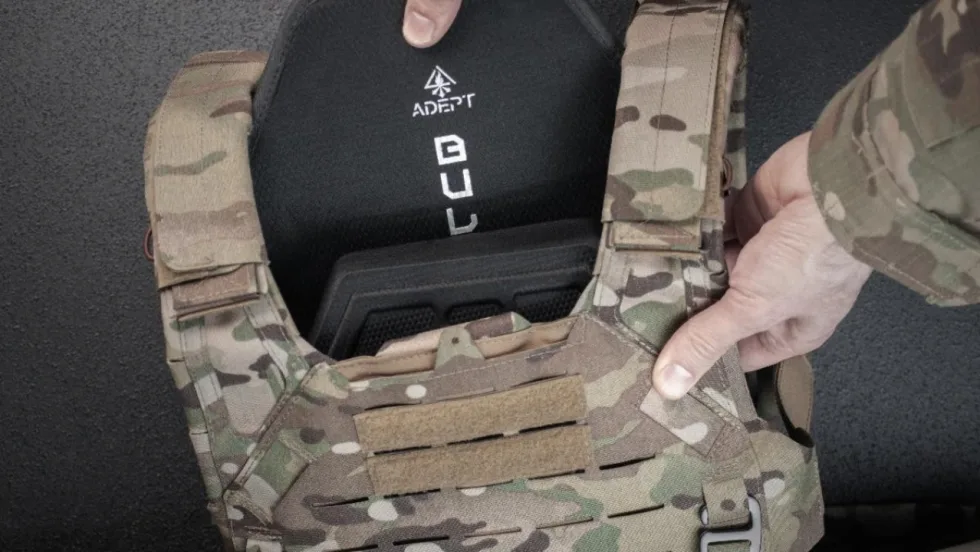
Adept Armor Introduces Two New Rifle Plates
Adept Armor has launched two new Level IV ballistic plates, the Emperor and the Archon Mark 2, which brings Adept Armor’s new Quatroid ceramic to the high-threat, performance-value center of the range at 5.2 pounds.
Read More →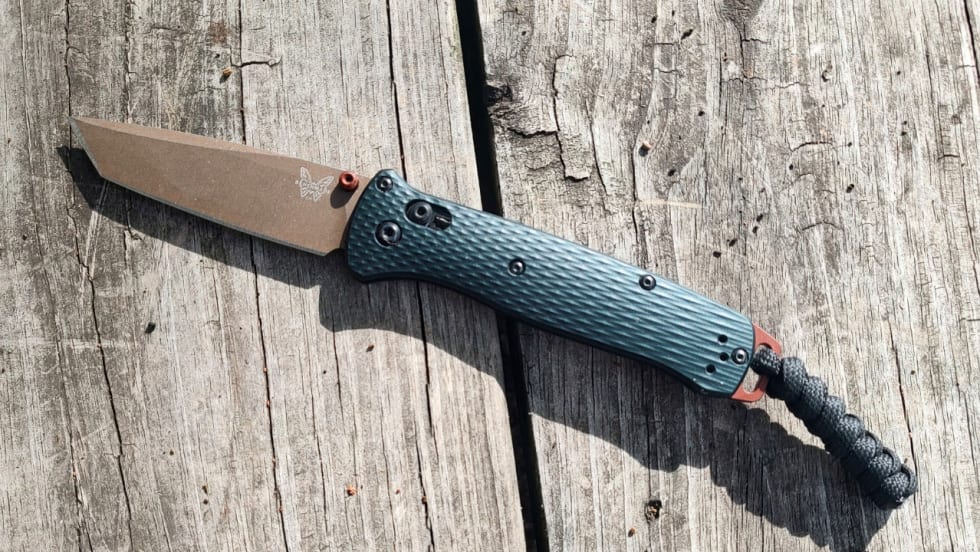
POLICE Product Test: Benchmade Bailout
The Benchmade Bailout is a slim, lightweight carry knife with a deep-ride pocket clip and comes in a variety of blade steels and scales. Here is a detailed review of the Taiga Green Bailout, released earlier this year.
Read More →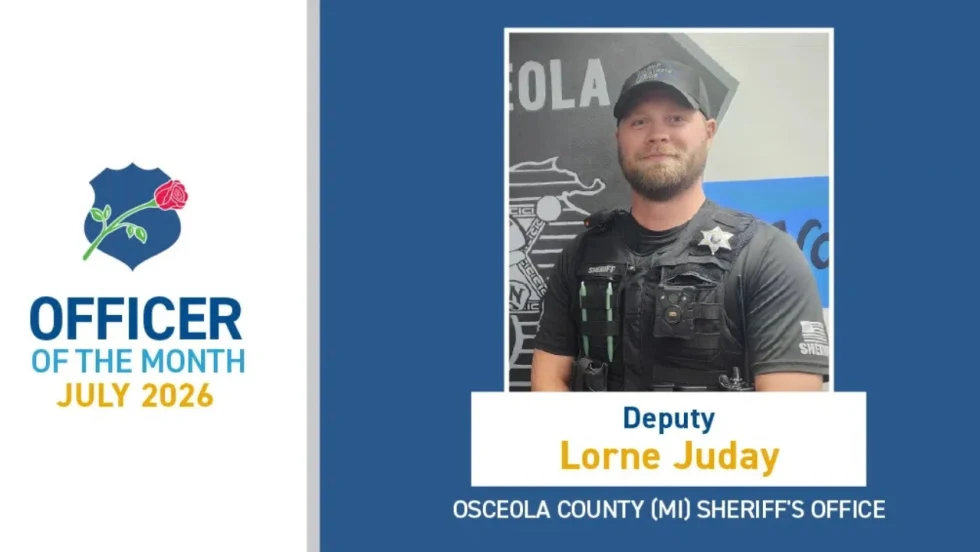
NLEOMF Announces July 2026 Officer of the Month
NLEOMF honored a Michigan deputy sheriff as the July 2026 Officer of the Month for rescuing a trapped driver from a burning vehicle following a Fourth of July crash.
Read More →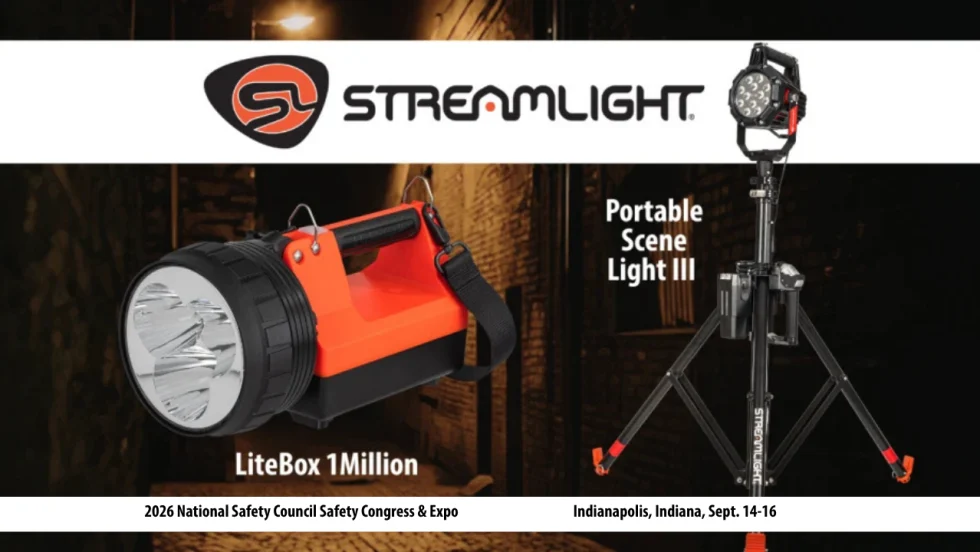
Streamlight to Showcase Newest Lighting Products at National Safety Council’s Safety Congress & Expo 2026
Streamlight will showcase its latest lights, including the Portable Scene Light III and the LiteBox 1Million, at the 2026 National Safety Council (NSC) Safety Congress & Expo.
Read More →
The 2027 World Police & Fire Games Set for Perth, Australia
The 2027 World Police & Fire Games (WPFG) will take place in Perth, Western Australia, from Friday, March 12 through Sunday, March 21, 2027.
Read More →
5.11 Partners with National Fallen Firefighters Foundation to Support #ForThe343
5.11 has joined the nationwide movement honoring the 343 New York City Fire Department firefighters lost on Sept. 11, 2001.
Read More →
Team Wendy Announces Title Sponsorship of the Jorge Pastore Foundation
Team Wendy’s 3-year partnership with the Jorge Pastore Foundation expands access to programs that strengthen those who serve.
Read More →