



FBI Releases 2016 Hate Crime Statistics
The FBI has released Hate Crime Statistics, 2016, the Uniform Crime Reporting (UCR) Program’s latest compilation about bias-motivated incidents throughout the nation.

Photo: FBI/Facebook
The FBI has releasedHate Crime Statistics, 2016, the Uniform Crime Reporting (UCR) Program’s latest compilation about bias-motivated incidents throughout the nation. Submitted by 15,254 law enforcement agencies, the 2016 data provide information about the offenses, victims, offenders, and locations of hate crimes.
Law enforcement agencies submitted incident reports involving 6,121 criminal incidents and 7,321 related offenses as being motivated by bias toward race, ethnicity, ancestry, religion, sexual orientation, disability, gender, and gender identity. Please note the UCR Program does not estimate offenses for the jurisdictions of agencies that do not submit reports. Highlights of Hate Crime Statistics, 2016, follow.
Victims of Hate Crime Incidents
There were 6,063 single-bias incidents involving 7,509 victims. A percent distribution of victims by bias type showed that 58.9 percent of victims were targeted because of the offenders’ race/ethnicity/ancestry bias; 21.1 percent were targeted because of the offenders’ religious bias; 16.7 percent were victimized because of the offenders’ sexual-orientation bias; 1.7 percent were targeted because of the offenders’ gender identity bias; 1.0 percent were victimized because of the offenders’ disability bias; and 0.5 percent were victimized because of the offenders’ gender bias. (Due to rounding, percentage breakdowns may not add to 100.0 percent.)
Fifty-eight multiple-bias hate crime incidents involved 106 victims.
Offenses by Crime Category
Of the 4,720 hate crime offenses classified as crimes against persons in 2016, 44.7 percent were for intimidation, 35.7 percent were for simple assault, and 18.5 percent were for aggravated assault. Nine murders and 24 rapes (all from agencies that collected data using the revised definition of rape) were reported as hate crimes. The remaining 18 hate crime offenses were reported in the category of other.
There were 2,519 hate crime offenses classified as crimes against property. The majority of these (75.9 percent) were acts of destruction/damage/vandalism. Robbery, burglary, larceny-theft, motor vehicle theft, arson, and other offenses accounted for the remaining 24.1 percent of crimes against property.
Eighty-two (82) additional offenses were classified as crimes against society. This crime category represents society’s prohibition against engaging in certain types of activity such as gambling, prostitution, and drug violations. These are typically victimless crimes in which property is not the object.
Known Offenders
In the UCR Program, the term known offender does not imply that the suspect’s identity is known; rather, the term indicates that some aspect of the suspect was identified, thus distinguishing the suspect from an unknown offender. Law enforcement agencies specify the number of offenders and, when possible, the race of the offender or offenders as a group. Beginning in 2013, law enforcement officers could also report whether suspects were juveniles or adults, as well as the suspect’s ethnicity when possible.
Of the 5,770 known offenders, 46.3 percent were White, and 26.1 percent were Black or African American. Other races accounted for the remaining known offenders: 0.8 percent were Asian; 0.8 percent were American Indian or Alaska Native; 0.1 percent were Native Hawaiian or Other Pacific Islander; and 7.7 percent were of a group of multiple races. The race was unknown for 18.1 percent.
Of the 4,222 known offenders for whom ethnicity was reported, 26.1 percent were Not Hispanic or Latino, 8.0 percent were Hispanic or Latino, and 2.3 percent were in a group of multiple ethnicities. Ethnicity was unknown for 63.6 percent of these offenders.
Of the 4,100 known offenders for whom ages were known, 83.8 percent were 18 years of age or older.
Locations of Hate Crimes
Law enforcement agencies may specify the location of an offense within a hate crime incident as 1 of 46 location designations. In 2016, most hate crime incidents (27.3 percent) occurred in or near residences/homes. More than 18 percent (18.4) occurred on highways/roads/alleys/streets/sidewalks; 9.9 percent occurred at schools/colleges; 5.7 percent happened at parking/drop lots/garages; and 3.9 percent took place in churches/synagogues/temples/mosques. The location was reported as other/unknown for 12.7 percent of hate crime incidents. The remaining 22.1 percent of hate crime incidents took place at other or multiple locations.
Hate Crime Statistics, 2016, is available exclusively on the FBI’s website at https://ucr.fbi.gov/hate-crime/2016.
More Patrol

Streamlight Portable Scene Light III Wins 2026 OH&S New Product of the Year Award
Streamlight’s Portable Scene Light III has won the 2026 Occupational Health & Safety (OH&S) New Product of the Year Award in the Lighting category.
Read More →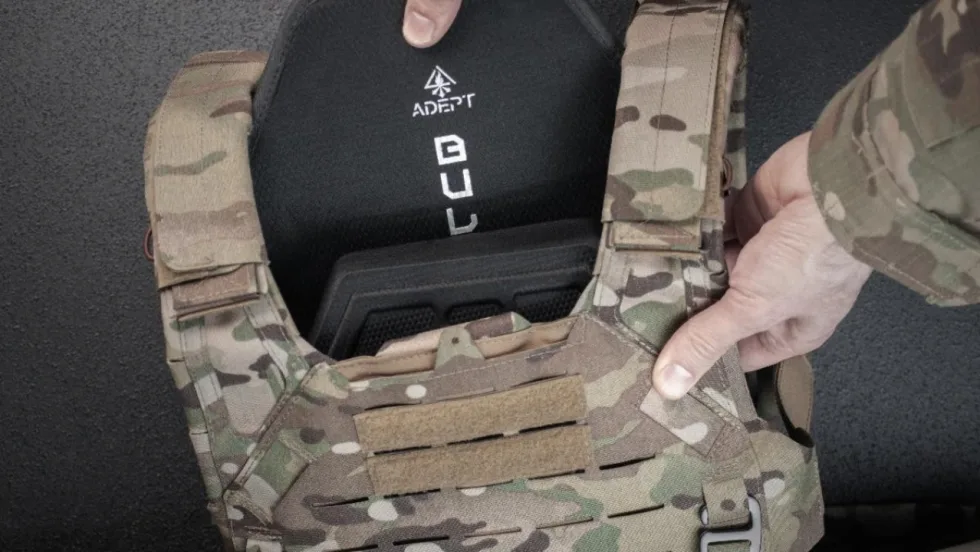
Adept Armor Introduces Two New Rifle Plates
Adept Armor has launched two new Level IV ballistic plates, the Emperor and the Archon Mark 2, which brings Adept Armor’s new Quatroid ceramic to the high-threat, performance-value center of the range at 5.2 pounds.
Read More →
POLICE Product Test: Benchmade Bailout
The Benchmade Bailout is a slim, lightweight carry knife with a deep-ride pocket clip and comes in a variety of blade steels and scales. Here is a detailed review of the Taiga Green Bailout, released earlier this year.
Read More →
NLEOMF Announces July 2026 Officer of the Month
NLEOMF honored a Michigan deputy sheriff as the July 2026 Officer of the Month for rescuing a trapped driver from a burning vehicle following a Fourth of July crash.
Read More →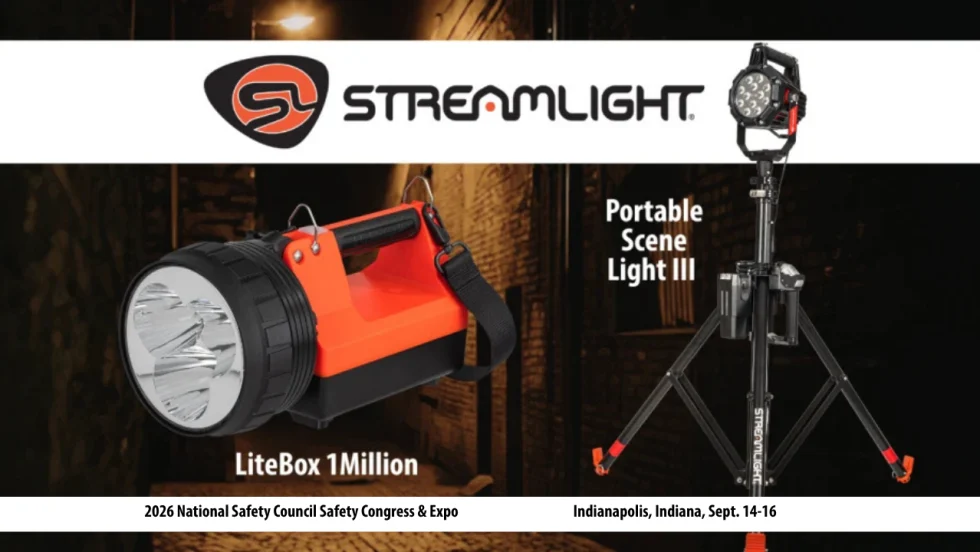
Streamlight to Showcase Newest Lighting Products at National Safety Council’s Safety Congress & Expo 2026
Streamlight will showcase its latest lights, including the Portable Scene Light III and the LiteBox 1Million, at the 2026 National Safety Council (NSC) Safety Congress & Expo.
Read More →
The 2027 World Police & Fire Games Set for Perth, Australia
The 2027 World Police & Fire Games (WPFG) will take place in Perth, Western Australia, from Friday, March 12 through Sunday, March 21, 2027.
Read More →
5.11 Partners with National Fallen Firefighters Foundation to Support #ForThe343
5.11 has joined the nationwide movement honoring the 343 New York City Fire Department firefighters lost on Sept. 11, 2001.
Read More →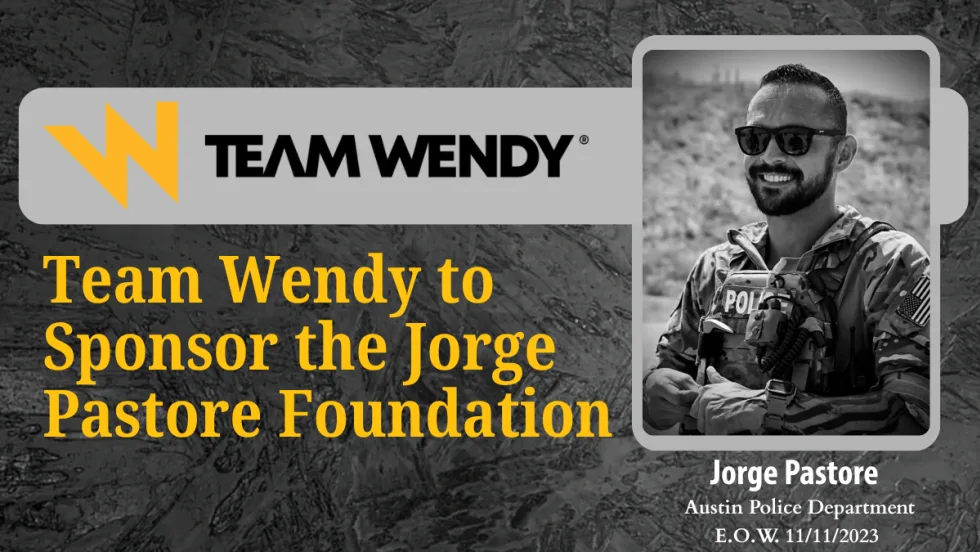
Team Wendy Announces Title Sponsorship of the Jorge Pastore Foundation
Team Wendy’s 3-year partnership with the Jorge Pastore Foundation expands access to programs that strengthen those who serve.
Read More →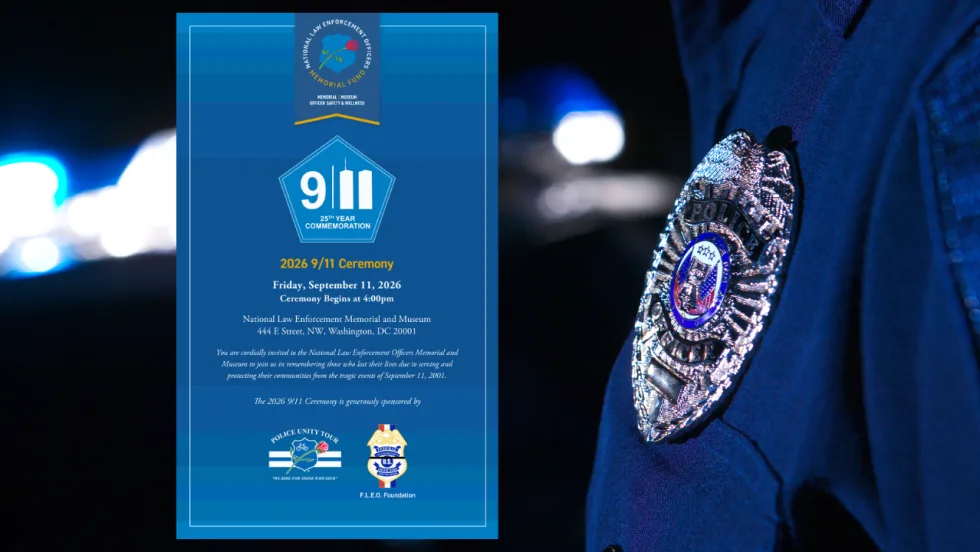
National Law Enforcement Memorial and Museum Hosting 9/11 25th-Year Commemoration Ceremony
The National Law Enforcement Memorial and Museum is hosting a 9/11 25th Year Commemoration Ceremony on Sept. 11 at 4 p.m.
Read More →
National Law Enforcement Officers Memorial Fund Announces June 2026 Officers of the Month
The National Law Enforcement Officers Memorial Fund (NLEOMF) named 15 officers of the Chico Police Department (California) as the Officers of the Month for June 2026 for their roles in responding to an active-shooter incident at a public library.
Read More →