



DEA's 'Take Back' Initiative Collects Prescription Meds
Many Americans are not aware that medicines that languish in home cabinets are highly susceptible to diversion, misuse, and abuse. Rates of prescription drug abuse are increasing at alarming rates, as are the number of accidental poisonings and overdoses due to these drugs, according to the DEA.

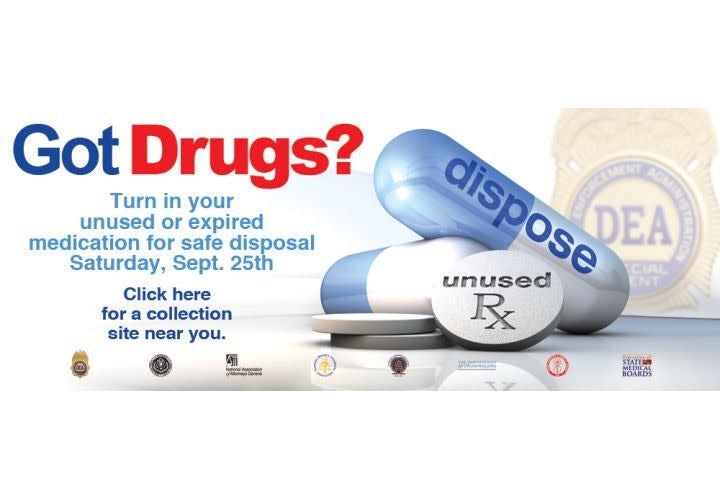
In a coordinated effort with local law enforcement agencies, the Drug Enforcement Administration will collect prescriptioon medications nationwide on Saturday as part of its "Take Back" initiative.
During the initiative, citizens are encouraged to drop off their medications. The drop-offs are anonymous and without cost.
"We are launching a first-ever National Prescription Drug Take-Back campaign that will provide a safe way for Americans to dispose of their unwanted prescription drugs," said Michele Leonhart, Acting DEA Administrator. "This effort symbolizes DEA's commitment to halting the disturbing rise in addiction caused by their misuse and abuse."
Many Americans are not aware that medicines that languish in home cabinets are highly susceptible to diversion, misuse, and abuse. Rates of prescription drug abuse in the U.S. are increasing at alarming rates, as are the number of accidental poisonings and overdoses due to these drugs, according to the DEA.
Recent studies have shown that a majority of abused prescription drugs are obtained from family and friends, including from the home medicine cabinet.
In 17 states, deaths from drugs - both prescription and illegal - now exceed those from motor vehicle accidents, with opiate painkillers playing a leading role, according to the New York Times.
The number of people seeking treatment for painkiller addiction jumped 400 percent from 1998 to 2008, according to the federal Substance Abuse and Mental Health Services Administration.
Many Americans don't properly dispose of their unused medicine, often flushing them down the toilet or throwing them away, which are potential safety and health hazards.
"Prescription drug abuse is the Nation's fastest-growing drug problem, and take-back events like this one are an indispensable tool for reducing the threat that the diversion and abuse of these drugs pose to public health," said Gil Kerlikowske, National Drug Control Policy director and former Seattle police chief. "The federal, state and local collaboration represented in this initiative is key in our national efforts to reduce pharmaceutical drug diversion and abuse."
The DEA will collect potentially dangerous expired, unused, and unwanted prescription drugs for destruction at sites nationwide from 10 a.m. to 2 p.m. local time. Collection sites in every local community can be found at the DEA website.
Other participants in this initiative include the White House Office of National Drug Control Policy; the Partnership for a Drug-Free America; the International Association of Chiefs of Police; the National Association of Attorneys General; the National Association of Boards of Pharmacy; the Federation of State Medical Boards; and the National District Attorneys Association.
More Patrol

Streamlight Portable Scene Light III Wins 2026 OH&S New Product of the Year Award
Streamlight’s Portable Scene Light III has won the 2026 Occupational Health & Safety (OH&S) New Product of the Year Award in the Lighting category.
Read More →
Adept Armor Introduces Two New Rifle Plates
Adept Armor has launched two new Level IV ballistic plates, the Emperor and the Archon Mark 2, which brings Adept Armor’s new Quatroid ceramic to the high-threat, performance-value center of the range at 5.2 pounds.
Read More →
POLICE Product Test: Benchmade Bailout
The Benchmade Bailout is a slim, lightweight carry knife with a deep-ride pocket clip and comes in a variety of blade steels and scales. Here is a detailed review of the Taiga Green Bailout, released earlier this year.
Read More →
NLEOMF Announces July 2026 Officer of the Month
NLEOMF honored a Michigan deputy sheriff as the July 2026 Officer of the Month for rescuing a trapped driver from a burning vehicle following a Fourth of July crash.
Read More →
Streamlight to Showcase Newest Lighting Products at National Safety Council’s Safety Congress & Expo 2026
Streamlight will showcase its latest lights, including the Portable Scene Light III and the LiteBox 1Million, at the 2026 National Safety Council (NSC) Safety Congress & Expo.
Read More →
The 2027 World Police & Fire Games Set for Perth, Australia
The 2027 World Police & Fire Games (WPFG) will take place in Perth, Western Australia, from Friday, March 12 through Sunday, March 21, 2027.
Read More →
5.11 Partners with National Fallen Firefighters Foundation to Support #ForThe343
5.11 has joined the nationwide movement honoring the 343 New York City Fire Department firefighters lost on Sept. 11, 2001.
Read More →
Team Wendy Announces Title Sponsorship of the Jorge Pastore Foundation
Team Wendy’s 3-year partnership with the Jorge Pastore Foundation expands access to programs that strengthen those who serve.
Read More →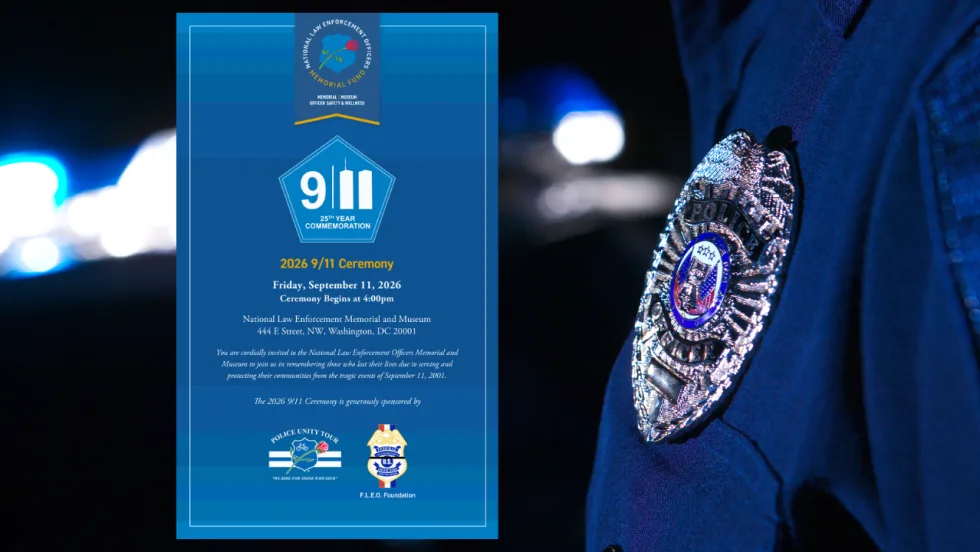
National Law Enforcement Memorial and Museum Hosting 9/11 25th-Year Commemoration Ceremony
The National Law Enforcement Memorial and Museum is hosting a 9/11 25th Year Commemoration Ceremony on Sept. 11 at 4 p.m.
Read More →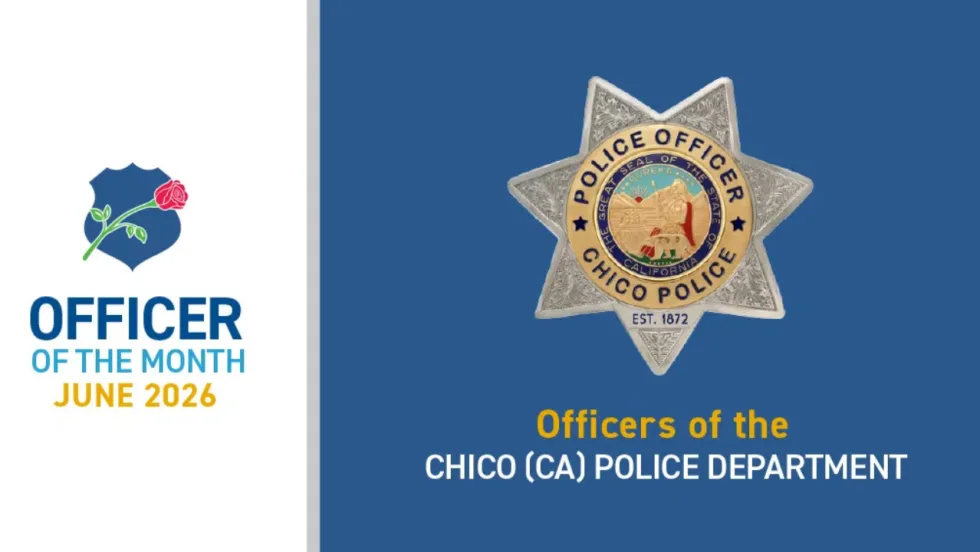
National Law Enforcement Officers Memorial Fund Announces June 2026 Officers of the Month
The National Law Enforcement Officers Memorial Fund (NLEOMF) named 15 officers of the Chico Police Department (California) as the Officers of the Month for June 2026 for their roles in responding to an active-shooter incident at a public library.
Read More →