



Building Your Agency’s Counter Ambush Program
When an officer is ambushed and under the threat of being killed, what would he or she do to survive? Retired Lt. Pete Ebel shares ways trainers can teach the proper mindset for officers to survive ambushes.

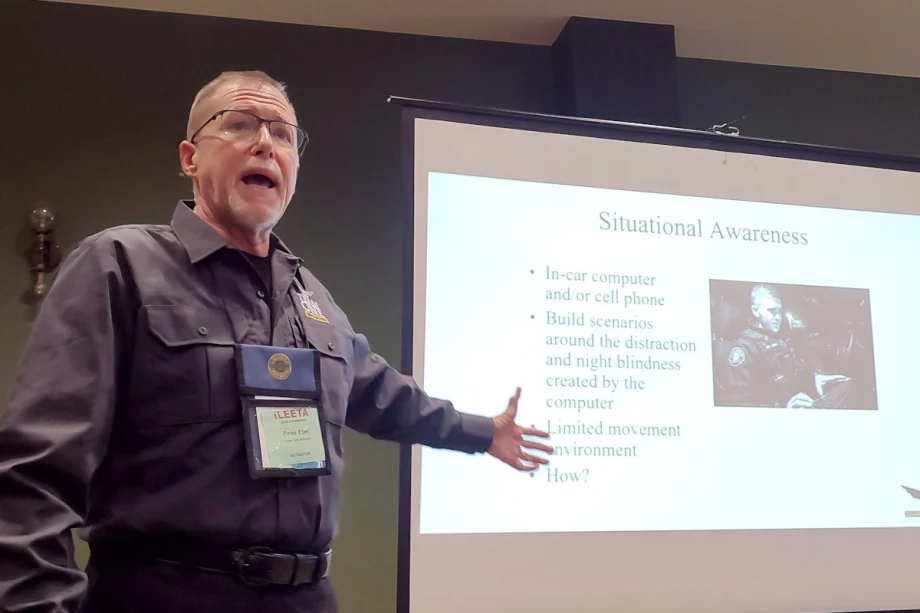
Retired Lt. Pete Ebel talks about how to train officers to be prepared for an ambush while leading a session at ILEETA’s annual conference in St. Louis, Missouri.
Wayne Parham
When an officer is ambushed and under the threat of being killed, what would he or she do to survive?
That was a question posed by Retired Lt. Pete Ebel while teaching “Building Your Agency’s Counter-Ambush Program” during the 2024 International Association of Law Enforcement Educators and Trainers Association’s annual conference in St. Louis, Missouri.
“To me, honestly, one of the things that we ought to be doing is incorporating counter ambush training in our in-service and yearly training,” said Ebel, who served 19 years with the Lake Worth Police Department and then 14 years with the Palm Beach County Sheriff’s Office. “You don't have to do a special counter-ambush class and name it that, we ought to be creating a mindset in the agency.”
Ebel defined an ambush as “An attack in which the aggressor, or aggressors, take advantage of concealment and the element of surprise to engage an unsuspecting opponent.”
He pointed out that the International Association of Chiefs of Police breaks ambushes into two types:
Deliberate or entrapment ambushes
Impromptu ambushes
Citing more IACP data, Ebel said from 1990 to 2012, 68% of ambushes were spontaneous and only 32% were entrapment.
Ebel shared that most studies and reports about ambushes on officers are older, typically written between 2010 and 2015. However, the National Fraternal Order of Police compiles data on the number of officers shot. Within that report, updated monthly, ambush attacks are noted.
According to the FOP report detailing shootings of officers in 2023, 378 officers were shot. That was the highest number ever reported by the FOP in a single year. The same report said there were 115 ambush-style attacks on officers in 2023, resulting in 138 officers being shot and 20 killed.
4 Factors of an Ambush
The veteran lawman and trainer detailed four factors for an ambush, starting with the element of surprise. He explained the element of surprise is the most important component of an attacker’s success.
Why? Because it puts officers off balance and can leave them confused plus it keeps the officers guessing and can force them to make mistakes, he said.
Another key element is concealment. With that, Ebel means concealment of the assailant, their intentions, and any weapons.
The third factor is the suddenness of the attack because Ebel said that destroys officer morale and a smaller number of assailants can succeed.
The final factor, according to Ebel, is lack of provocation.
What else, according to Ebel, will get officers killed in an ambush?
Complacency
Hesitancy
Lack of Situational Awareness
Lack of proper training – dynamic scenarios are needed.
Duty of Instructors to Teach the Proper Mindset
Ebel pointed out how instructors, and experienced officers as well, have to take the lead in teaching the proper mindset to fellow officers, in particular ones from the younger generations.
Officers must understand that anything is fair during a fight for their lives, so trainers must teach officers how to have the will to win at any cost.
“No matter what, I tell people all the time when I start talking about mindset, a battle to live is never pretty,” he added.
Ebel suggests a key question for trainers to use.
“What are you willing to do to win?”
In recent years the profession has focused training and attention on de-escalation, but once an officer is under threat of serious harm or death, it is time to fight.
“Some of these kids, you start talking about the warrior mentality to them, what happens? The wall goes up. ‘Well, you know, they told us in the academy warrior is a dirty word.’ I'm here to tell you, some maniac’s killing kids in a classroom somewhere you want a warrior, or you want a security guard?” said Ebel.
He also noted that many of the younger generation cops have never been in a fight in their life, until they hit the streets. They need to be prepared and learn the tenacity to survive. They need to be taught the mindset.
Ebel also suggested visualization as a tool to prepare officers to withstand an ambush.
“Visualization works. I've been doing it since I played high school sports,” said Ebel. “I was taught by a really good wrestling coach.”
That coach impressed upon a young Ebel to take 10 minutes to practice visualization before walking out and hitting the mat. That time was spent visualizing a difficult predicament and what he would have to do to work out of it.
“We chase people, we fight people,” added Ebel, translating the concept to the law enforcement world.
Teaching officers how to visualize that in advance and plan how they will react, what they will do, and how they will survive and overcome, are all important, he explained.
“We’ve got to get them to perform under those circumstances. The body won't go where the mind doesn’t,” he explained. “Visualization will help overcome fear.”
Situational Awareness
Ebel suggests that if an officer encounters a situation that doesn’t feel right, it likely is not.
Scan the area and formulate a tactical response to an attack. Know an escape route and recognize ambush points.
Look for pre-attack indicators. Watch the body language, eye contact, and verbal cues.
Trainers also need to ensure that officers are taught to look for concealed weapons, particularly when making traffic stops.
Indicators of an armed person presented by Ebel included:
Bulges
Security pats and adjustments
Pulling up the pants
Swinging pocket in jacket
Shoulder dips in a vehicle
Looking around before stopping
The veteran lawman shared ample examples of how officers do not always have the needed situational awareness and do not constantly scan the 5-foot and 25-foot range.
Even with his previous agencies, he sometimes would walk into an establishment, stand in place, and not even be spotted by lower-ranking officers who should have kept an eye on the door and recognized him. He drove home the point that anyone, even armed bad guys, could have walked up on the officers who were not constantly scanning their environment.
Watch: Tactics for Surviving an Ambush Attack
Officer Survivability in the Kill Zone
Officer Greg Thudium, lead training officer at the Chandler Police Department, answers a few questions after leading “Officer Survivability in the Kill Zone,” one of many sessions at ILEETA 2024.Wayne Parham
In a separate training session, Officer Greg Thudium, lead training officer at the Chandler Police Department (AZ), taught “Officer Survivability in the Kill Zone.” He has 15 years of SWAT service and is the SWAT instructor. The ultimate goal of the course was to help officers win a violent encounter.
Thudium reviewed the data for officer shootings and critical incidents in five or six major cities. He spotted patterns that provided insight into what happens during these shootings, regardless of the size of the agency or location.
From that, he found key things that were in common across all the shootings that helped increase officer survivability. Some of those are:
Properly using cover and proper movement
Getting your gun into the fight
Wearing the proper equipment, including a ballistic vest
Interpreting threat cues
Thudium said he wanted the attendees to think of ways they could modify training based on this knowledge. A good example is when it comes time to head to the range.
“Why are we shooting at 25 yards when we're literally getting in gunfights at 12 feet, that's the majority of them across the country,” Thudium explained. “So, we need to be training cops to be shooting at close distance. We need to train them to move. We need to be training them to understand distances and conflict resolution tactics and things that we know are actually going to help them in the fight.”
Learn More: Tourniquet Application Under Threat
More Patrol

Adept Armor Introduces Two New Rifle Plates
Adept Armor has launched two new Level IV ballistic plates, the Emperor and the Archon Mark 2, which brings Adept Armor’s new Quatroid ceramic to the high-threat, performance-value center of the range at 5.2 pounds.
Read More →
POLICE Product Test: Benchmade Bailout
The Benchmade Bailout is a slim, lightweight carry knife with a deep-ride pocket clip and comes in a variety of blade steels and scales. Here is a detailed review of the Taiga Green Bailout, released earlier this year.
Read More →
NLEOMF Announces July 2026 Officer of the Month
NLEOMF honored a Michigan deputy sheriff as the July 2026 Officer of the Month for rescuing a trapped driver from a burning vehicle following a Fourth of July crash.
Read More →
Streamlight to Showcase Newest Lighting Products at National Safety Council’s Safety Congress & Expo 2026
Streamlight will showcase its latest lights, including the Portable Scene Light III and the LiteBox 1Million, at the 2026 National Safety Council (NSC) Safety Congress & Expo.
Read More →
The 2027 World Police & Fire Games Set for Perth, Australia
The 2027 World Police & Fire Games (WPFG) will take place in Perth, Western Australia, from Friday, March 12 through Sunday, March 21, 2027.
Read More →
5.11 Partners with National Fallen Firefighters Foundation to Support #ForThe343
5.11 has joined the nationwide movement honoring the 343 New York City Fire Department firefighters lost on Sept. 11, 2001.
Read More →
Team Wendy Announces Title Sponsorship of the Jorge Pastore Foundation
Team Wendy’s 3-year partnership with the Jorge Pastore Foundation expands access to programs that strengthen those who serve.
Read More →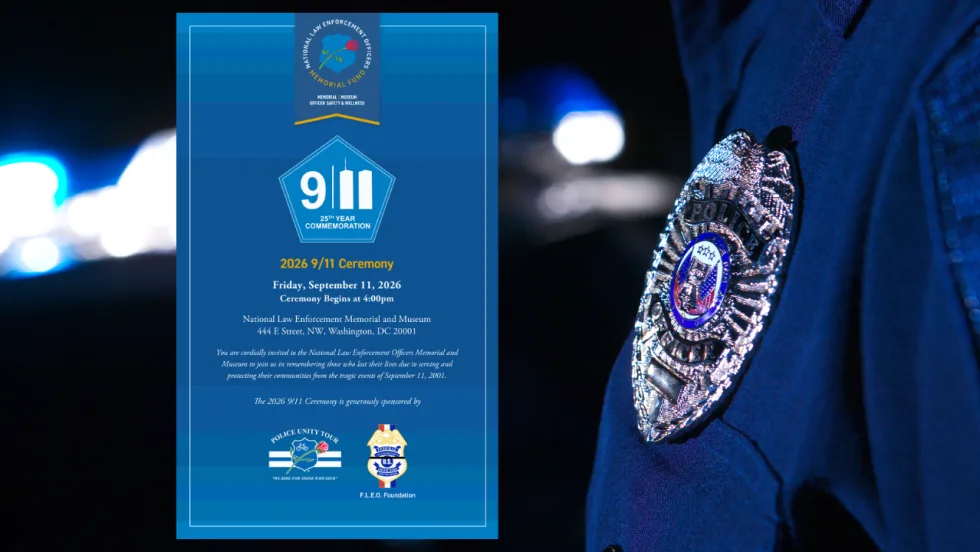
National Law Enforcement Memorial and Museum Hosting 9/11 25th-Year Commemoration Ceremony
The National Law Enforcement Memorial and Museum is hosting a 9/11 25th Year Commemoration Ceremony on Sept. 11 at 4 p.m.
Read More →
National Law Enforcement Officers Memorial Fund Announces June 2026 Officers of the Month
The National Law Enforcement Officers Memorial Fund (NLEOMF) named 15 officers of the Chico Police Department (California) as the Officers of the Month for June 2026 for their roles in responding to an active-shooter incident at a public library.
Read More →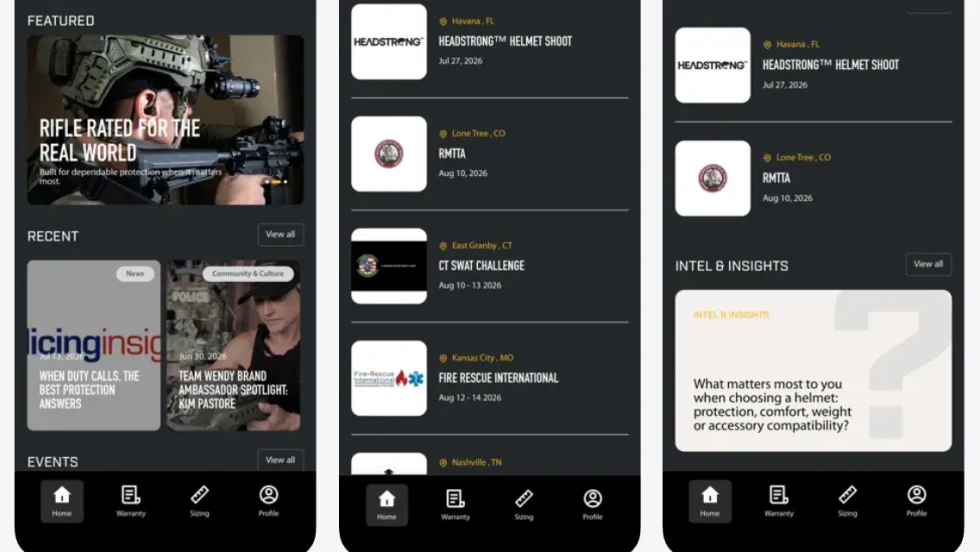
Team Wendy App Creates New Digital Hub for Helmet Owners
The Team Wendy Community App provides one location for warranty registration, size-fit tools, product updates, and community connection. For helmet owners, the new app creates a simpler path to the information and tools that matter most.
Read More →