



ACLU Attacks License Plate Readers
License-plate readers give law enforcement a location tracking tool that may violate constitutional privacy rights, the American Civil Liberties Union argues in a new report released today.


Photo: POLICE file
License-plate readers give law enforcement a location tracking tool that may violate constitutional privacy rights, the American Civil Liberties Union argues in a new report released today.
The new attack on LPR technology comes after an ACLU review of agency policies about how long data is stored and how it's used in investigations. Agency policies governing those areas vary widely, according to the group.
"The spread of these scanners is creating what are, in effect, government location tracking systems recording the movements of many millions of innocent Americans in huge databases," said ACLU Staff Attorney Catherine Crump, the report's lead author. "We don't object to the use of these systems to flag cars that are stolen or belong to fugitives, but these documents show a dire need for rules to make sure that this technology isn't used for unbridled government surveillance."
The Los Angeles Police Protective League that represents LAPD officers refuted the argument that LPR data violates privacy in a guest blog post ("LPR Protects Officers and the Public") on PoliceMag.com. LPR technology does "nothing more than what officers have been doing manually since the creation of the license place: writing down license plate numbers, or radioing license plates in for checks against criminal databases," the LAPPL wrote in the post.
For its study, the ACLU collected data from agencies in 38 states that revealed a range of records management policies. Some departments delete records within days or weeks, some keep them for years, while others have no deletion policy.
"The fact that some jurisdictions delete the records quickly shows that it is a completely reasonable and workable policy," said Allie Bohm, ACLU advocacy and policy strategist. "The police should not be storing data about people who are not even suspected of doing anything wrong."
By Paul Clinton
More Technology

A police agency's guide to data-driven fleet management
Costs are rising and the public expects more transparency into how their tax dollars are spent. This e-book shows how police agencies can use fleet data to take control of fleet expenses while improving officer safety and demonstrating fiscal responsibility to the communities they serve.
Read More →
AI and analytics for law enforcement: Turning data into insights
Law enforcement agencies are managing more video, sensor data and digital evidence than ever before. Discover how AI and analytics can help turn that data into actionable insights that strengthen situational awareness, accelerate investigations and support more informed decisions.
Read More →
Vasco Electronics Adds Automatic Language Detection to Vasco Translator Q1
Vasco Electronics’ software update introduces hands-free language switching and expanded offline translation across 45 language pairs, empowering law enforcement, healthcare, and front-office enterprise teams
Read More →

North Miami Police Department Deploys Mark43
The North Miami Police Department has deployed Mark43 as part of its Five-Year Strategic Plan that represents its collective vision and goals for a more proactive police department, anchored by a core commitment to leveraging modern technology to enhance efficiency and public safety.
Read More →
Cellebrite Genesis for Enterprise Now Generally Available
Made available to the public sector in June, Cellebrite Genesis is serving a growing mix of national, regional, and local agencies worldwide, including some of the largest regional and metropolitan police departments. It is now available for enterprise organizations.
Read More →
2026 Vision FirstNet Users Summit to Host Emerging Leaders Training on Grassroots Advocacy for Public Safety
“Emerging Leaders Training: Understanding the Importance of Grassroots Advocacy for Public Safety," a session during the 2026 Vision FirstNet Users Summit, will offer a roadmap for unified advocacy at the federal level.
Read More →
Motorola Solutions Completes Acquisition of D-Fend Solutions
Motorola Solutions has acquired D-Fend Solutions, an industry leader in counter-drone technology. This deal provides public safety and enterprise customers with access to advanced counter-unmanned aerial systems.
Read More →
ZeroEyes, Advantech & Camden Police Partner to Bring AI Gun Detection Technology to Delaware School District
ZeroEyes has partnered with Advantech and the Camden Police Department to deploy ZeroEyes’ AI gun detection and intelligent situational awareness platform at Delaware’s Caesar Rodney School District (CRSD).
Read More →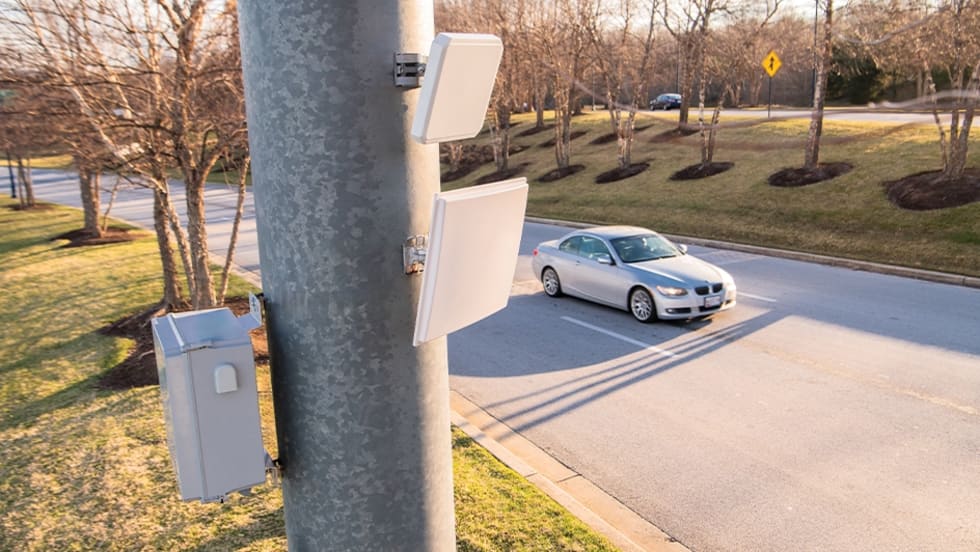
Leonardo U.S. Cyber & Security Solutions Introduces SignalTrace, the Next Evolution in Electronic Signature Detection Technology
SignalTrace reflects years of product refinement and a clearer expression of the technology’s purpose of recognizing and correlating electronic signatures in publicly broadcast wireless signals to reveal patterns, relationships, and trends that might otherwise go undetected.
Read More →
Pimloc Launches Secure File Sharing to Streamline Release of Redacted Video
Pimloc’s Secure File Sharing lets organizations deliver redacted video, audio, and documents through expiring, passcode-protected links, accelerating delivery while reducing security, compliance, and chain-of-custody risks.
Read More →