



Why You Should Talk to the Bad Guys
There is something discomforting in hearing a convicted cop killer say, "He got careless, so I wasted him." But how often can a mere six words leave such an indelible imprint on our mind and help get us through our shifts?

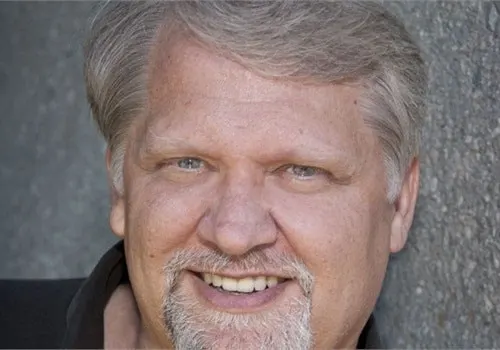
Photo by Kelly Bracken.
When Japan wanted to improve its military competence a few generations back, it dropped France as its consultant and went with Germany. Whatever long term success this mustered for Japan is subject to debate, but the fact remains that France went on to enjoy the distinction as being regarded the Susan Lucci of the military arena (although Cracked would have you believe otherwise: https://www.cracked.com/article_18409_the-5-most-statistically-full-shit-national-stereotypes.html).
So when it comes to having some say on getting one's ass kicked both on the field and in the geopolitical arena, it should enjoy some credibility. And the fact remains that America might have been better served if it'd listened to France when it warned America against going into Vietnam and later against invading Iraq.
But as Max Paul Friedman, author of "Rethinking Anti-Americanism", notes, our unwillingness to listen to advice because we don't trust the motivations behind it can be at our own peril.
Cops come in contact with a variety of human beings and with them an even greater variety of back stories and credibility issues. Within the context of a detention or call-initiated contact, it is reasonably prudent for officers to continually evaluate the credibility and agendas of these people. Such prudence has allowed many an officer to finish his or her shift safely.
But it is also true that, sooner or later, people have a wonderful capacity to do something wholly unexpected of them. Storytellers exploit such turns for dramatic effect such as when "bad guy" Merle does the right thing and gets killed for it on "The Walking Dead" or when "straight arrow" Henry Fonda takes the money and runs at the end of "There Was a Crooked Man."
Real life affords us examples, as well, and so it is that one day you may find people you have arrested that you know are guilty in a contrite mood and confessional spirit. The catalyst for this change in demeanor may be the death of a mother or some unforeseen misadventure for which they hold themselves responsible. In any event, they will be uncharacteristically candid and in the mood to talk about everything and anything under the sun, even to you.
What will you do on that day? Will you arbitrarily dismiss this person with a reciprocating hostility for all the times he fought you physically or verbally? Or will you take the time to essay the father confessor role and listen to what he has to say? Might you even encourage and escalate the dialogue?
If your answer is "no," then I won't get pious on the matter. Being sullen and resentful by nature, I can't say I always maximized such opportunities. And I believe I may have deprived myself of a great opportunity each time I clammed up and indulged myself a smile instead of an empathetic glance. I also reflect on those other occasions when I was operating at full capacity and took the time to listen to their stories and gained peculiar insights into worlds previously foreign to me.
Of these subcultures that operated by their own rules, codes, and protocols, the most intriguing to me were the heroin addicts. In part, this was because we had so damn many hypes in my Temple Station jurisdiction when I was on the job.
But there were a couple of other factors at play, too. For one, their brains weren't as fried as meth heads, and their paranoia was more transitory, inclined to dissipate when the gig was up and they were in custody.
Also, that same sensitivity that would work against me elsewhere played to my advantage here, allowing me a degree of empathy for these pathetic souls and so long as they hadn't sufficiently alienated themselves from my marginal affections, it was in my nature to talk with them.
To be honest, I not only better understood their psyche but felt a genuine compassion for them. Unlike the desire for some elevated sensory perception common among stimulant abusers, heroin addicts always wanted to diminish reality, to somehow dull the omnipresent physical or psychic pains that plagued them. Generally scornful of violence, they gravitated towards property crimes to support their habits. If they were better liars in some areas, it was only because their frequent contacts with cops obliged them to be. If they were more creative in their hiding places, it was because their contemplative natures allowed them to be.
Now much of whatever I gleaned from hypes took place in environs far away from the usual adversarial setting. In jail cells or interview rooms and away from the high stakes game of evasion that they'd play in the field, they found it easier to talk. Little facilitators such as a timely cigarette or soda could work big miracles.
But invariably, I found them to be at least more forthright as to how they acquired their vices, and how they supported them. They also tended to be more candid as to their modus operandi, whether it be in how they shuttled about their own supplies, or how they used booster bags to engineer their thefts. True, their generally weak natures made them susceptible to selling out anyone, but again this proved more often than not to my benefit. And of all the dopers they were most apt to do a reverse buy bust, if it meant their somehow getting back on the street again.
Among drug abusers, there has always been an "anything goes" demographic that's up for uppers, downers, speedballs, what have you. But back in the day, there was generally a clear dividing line among tastes, and I found personality types tended to drift towards different addictions.
I don't know if this holds true today. Between today's designer drugs, transitory night clubs and raves, and my retirement, I really have no idea what addicts and abusers are gravitating to these days, or why. Not sure I want to know, either. But if I was working patrol or was a university cop, I think I'd put a priority on knowing this information and would try to strike up an opportune conversation now and then.
Of course, some eggs are harder to crack than others. With gang members, for example, the longer their tenure and the higher their standing, the more difficult it is to get them to roll over on anything. Still, most of the gang investigators I knew went out of their way to develop as much of a rapport with gang members as possible; failing that, with their girlfriends and mothers.
I could go on about the different types of criminals, for example, white collar crooks exhibited the broadest spectrum of human emotions, running from guilt-ridden effluviums of info to the tight-lipped, all-too-aware-of-his-ill-deserved-rights perp.
My point is that it makes sense to try and pick the minds of the people that we find ourselves routinely dealing with. It's the kind of thing that make forensic psychologists and FBI profilers thrive.
It won't always be easy. I always wondered how it was that some sex crimes investigators were able to win the confidence of those they were investigating. I suppose more than a few could have taught Olivier a thing or two about acting.
Indeed, as I type these words I am left to wonder how the men and women who may be dealing with the suspect taken into custody for Monday's Boston Marathon bombing will approach his interrogations. What will they make of him? What manner of intel might they acquire? Might they actually find themselves in some manner able to save lives in the future? I certainly hope so. And while I do not envy them their task in speaking with such a man, I respect their ability to do so.
A cornerstone belief of our profession is that it is in our best interests to learn from than those who have "been there and done that," particularly as it relates to officer safety matters. This is why so many of us gravitate to officer survival seminars, and listen to people like Lt. Col. Dave Grossman.
But I wish that I saw more cops being active listeners to those that have historically been a bane to them. True, there is something discomforting in hearing a convicted cop killer say, "He got careless, so I wasted him." But how often can a mere six words leave such an indelible imprint on our mind and help get us through our shifts? And when we see someone whose path eerily evokes that of another that we have dealt with, might we not have greater chance in getting them off that path than we might otherwise?
I am not suggesting that you join a hand-holding campaign or try to build bridges as some Israelis and Palestinians are attempting with the Compassionate Listening Project. Rather, I am suggesting that you think twice about ignoring possible sources merely because they come from the other side of the fence.
Talking to the bad guys will make you better at what you do. Consider that shortly after the establishment of their sovereign state, Israeli leaders studied German commandos and their tactics in designing their own Israeli Defense Force and special forces units. In doing so, they exploited the legacy of a regime that had been hell-bent toward their genocide. And that must have been extremely difficult to do. But the dividends of this initiative have figured significantly in the Israelis having prevented their extermination for generations onward.
And so I ask: Who will you listen to today? And what will you hear?
More Blog Posts

Preventing Heat Injury in Police K-9s
In the relentless heat of summer and even early fall in some parts of the country, officers face the important task of protecting their K-9 partners while working in sweltering temperatures. Recognizing changes in a dog’s behavior is the key.
Read More →
Why Your Agency Needs to Attend the ILEETA Conference
ILEETA is a complete resource for trainers to address trainers' needs. Its mission is to enhance the skills and safety of criminal justice practitioners while fostering stronger and safer communities.
Read More →
IACP 2023: New Training Products
Technologies for improving law enforcement training and training management were some of the highlights at this year's show.
Read More →
Initial Results Released from MSP 2024 Police Vehicle Testing
The 2024 pursuit-rated vehicles--all pickup trucks or SUVs, including two battery electric models the Chevrolet Blazer EV AWD and Ford Mustang Mach-E--were put through their paces.
Read More →
Officer Safety Considerations Related to Alternative-Fuel Vehicles
As more alternative-fuel and hybrid vehicles hit the road, police and other first responders need to understand that they are no more dangerous than conventional vehicles. However, there are certain safety considerations every cop should know.
Read More →
Garmont Working to Grow LE Market Presence
Garmont Tactical has found wide acceptance by military boot buyers, but now the company is trying to better respond to the needs of police officers. Many cops now are not fans of 8-inch boots, so Garmont is adapting.
Read More →
Publisher’s Note: Our Commitment to You
Through our magazine and website and our Police Technology eXchange event, we promise to provide you with information and access to resources to help you do your job safer and better.
Read More →
10 Tips for Responding to Mental Health Crisis Calls
The Harris County Sheriff's Office is a model for other agencies that want to learn about crisis intervention and mental health crisis response. Sgt. Jose Gomez shares the story of their programs and provides 10 tips for mental health crisis call response
Read More →
5 Things to Know When Buying Concealed-Carry or Off-Duty Holsters
Mike Barham, of Galco Holsters, shares five important considerations to keep in mind when you buy off-duty concealed or plain-clothes carry holsters.
Read More →
10 Tips for Reviewing Use-of-Force Reports
While the burden of accurately reporting use-of-force situations is on an individual deputy or officer, the person reviewing those reports shares in the responsibility of making sure the reporting is done properly, with clear details included.
Read More →