



Training Reminders from Florida Deputies' Vehicle Fire Rescue
Every year, vehicle fires—almost always caused by collisions and crashes—kill hundreds of motorists and their passengers. In almost every instance of a vehicle fire, the first arriving public safety personnel are not firefighters—they're police officers.

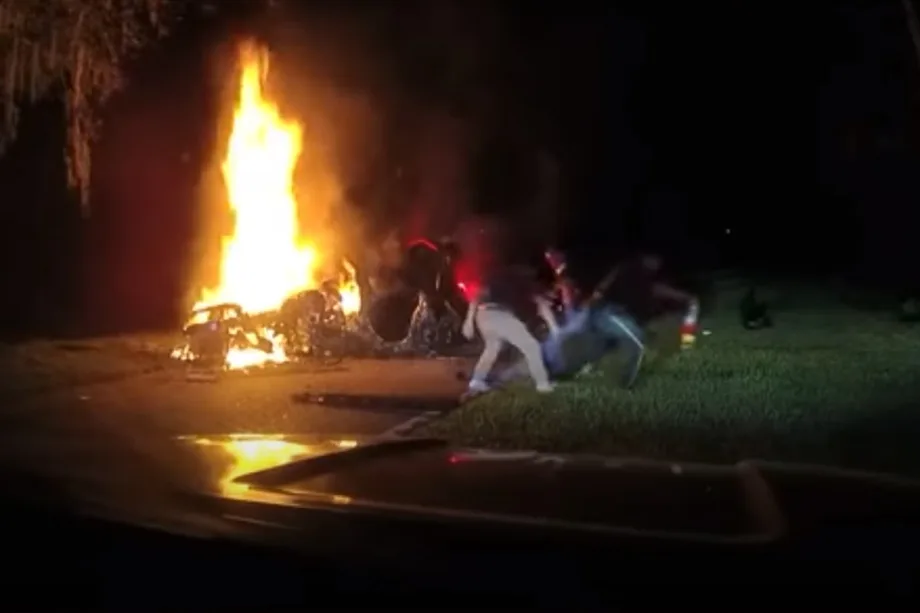
Deputies Garrett Parrish and DFC Bryant Ovalles Vasquez of the Charlotte County (FL) Sheriff's Office recently came upon the scene of a vehicle fire and are now credited with saving the life of a man trapped inside.
(Screen Grab of Dash-Cam Footage)
Earlier this month, two deputies with the Charlotte County (FL) Sheriff's Office who came upon the scene of a vehicle fire were credited with saving the life of a man trapped inside.
According to the agency's blog, Deputies Garrett Parrish and DFC Bryant Ovalles Vasquez had to battle through flames that witnesses described as "unbearable." Partially extinguishing the five-foot-tall flames long enough to get to the man, the deputies used a knife to cut the man's seatbelt—which was wrapped around his neck and shoulders—and with the help of a Good Samaritan pulled him to safety.
Sheriff Bill Prummell said, "The job of a deputy is to act bravely in the face of danger, regardless of what lies ahead. These young men did just that. I couldn't be prouder."
The driver of the vehicle—whose name has not been released and listed at present to be in critical condition—is expected to survive.
This incident—caught on dramatic dash-cam video—offers an opportunity for training reminders about police response to burning vehicles.
Explosive Hazards
Gas tanks really can blow up—though not usually like a bomb. The bigger the vehicle, the bigger the gas tank, and the more danger from an explosion. Also keep in mind that large commercial vehicles may contain hazardous materials—in addition to fuelwhich when set alight can emit toxic fumes.
Shock absorbers—many of which contain pressurized nitrogen gas as well as hydraulic fluid—can violently detonate when they reach critically hot temperatures, sending shards of shrapnel in all directions. Similar dangers are presented by shocks built into some vehicle bumpers. Tires can also "explode" and send chunks of burning rubber flying.
Electric Vehicles
Roughly 1% of all vehicles on American roadways are electric, and the belief that they tend to catch on fire more easily than a gas-powered car is mostly myth, but fires in "environmentally friendly" cars do happen, and when they do, they're not particularly friendly.
First and foremost, lithium-ion battery fires in electric cars are significantly harder to put out than gas fires. In fact, EV batteries can burn for hours and even suddenly reignite after being extinguished. In addition, EV fires are typically too hot and too tenacious to be put under control with the typical ABC type extinguisher in the trunk of a squad car.
Further, the National Transportation Safety Board said in a 2020 report that "fires in electric vehicles powered by high-voltage lithium-ion batteries pose the risk of electric shock to emergency responders from exposure to the high-voltage components of a damaged lithium-ion battery."
NTSB issued recommendations in early 2021 calling for EV manufacturers to write vehicle-specific response guides for fighting battery fires, but those recommendations have not yet been turned into actions.
Ring of Fire
Every year, vehicle fires—almost always caused by collisions and crashes—kill hundreds of motorists and their passengers. In almost every instance of a vehicle fire, the first arriving public safety personnel are not firefighters—they're police officers.
When an officer arrives at the scene of a vehicle engulfed in flames, several sometimes competing priorities are immediately presented.
Are there people trapped inside the burning vehicle?
Will the fire spread to nearby vehicles and/or structures?
Can approaching and/or passing vehicles become somehow involved?
If no one is in immediate peril, how and where can a perimeter be established?
Vehicle fires cause over a billion dollars of property damage losses every year. Police should help keep those property losses to a minimum, but not at the risk of officer safety.
More Blog Posts
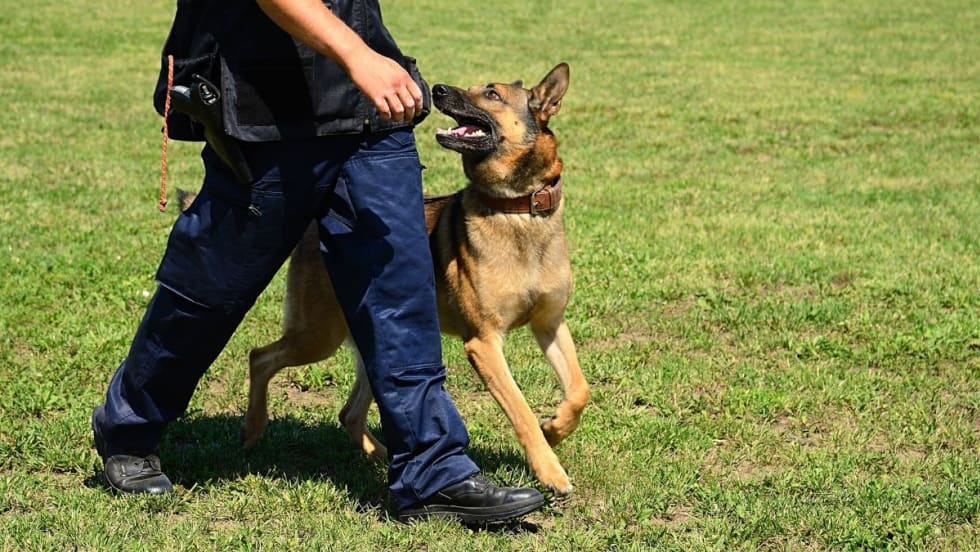
Preventing Heat Injury in Police K-9s
In the relentless heat of summer and even early fall in some parts of the country, officers face the important task of protecting their K-9 partners while working in sweltering temperatures. Recognizing changes in a dog’s behavior is the key.
Read More →
Why Your Agency Needs to Attend the ILEETA Conference
ILEETA is a complete resource for trainers to address trainers' needs. Its mission is to enhance the skills and safety of criminal justice practitioners while fostering stronger and safer communities.
Read More →
IACP 2023: New Training Products
Technologies for improving law enforcement training and training management were some of the highlights at this year's show.
Read More →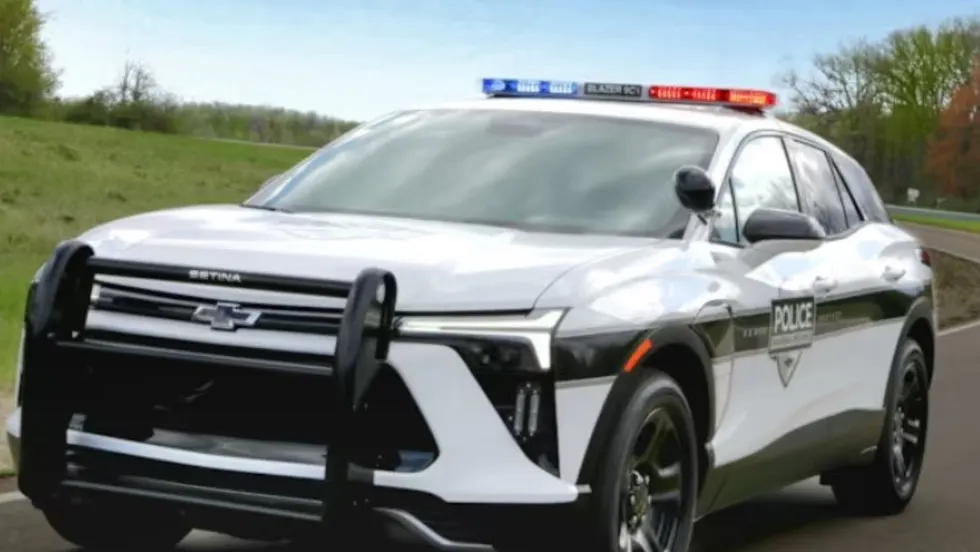
Initial Results Released from MSP 2024 Police Vehicle Testing
The 2024 pursuit-rated vehicles--all pickup trucks or SUVs, including two battery electric models the Chevrolet Blazer EV AWD and Ford Mustang Mach-E--were put through their paces.
Read More →
Officer Safety Considerations Related to Alternative-Fuel Vehicles
As more alternative-fuel and hybrid vehicles hit the road, police and other first responders need to understand that they are no more dangerous than conventional vehicles. However, there are certain safety considerations every cop should know.
Read More →
Garmont Working to Grow LE Market Presence
Garmont Tactical has found wide acceptance by military boot buyers, but now the company is trying to better respond to the needs of police officers. Many cops now are not fans of 8-inch boots, so Garmont is adapting.
Read More →
Publisher’s Note: Our Commitment to You
Through our magazine and website and our Police Technology eXchange event, we promise to provide you with information and access to resources to help you do your job safer and better.
Read More →
10 Tips for Responding to Mental Health Crisis Calls
The Harris County Sheriff's Office is a model for other agencies that want to learn about crisis intervention and mental health crisis response. Sgt. Jose Gomez shares the story of their programs and provides 10 tips for mental health crisis call response
Read More →
5 Things to Know When Buying Concealed-Carry or Off-Duty Holsters
Mike Barham, of Galco Holsters, shares five important considerations to keep in mind when you buy off-duty concealed or plain-clothes carry holsters.
Read More →
10 Tips for Reviewing Use-of-Force Reports
While the burden of accurately reporting use-of-force situations is on an individual deputy or officer, the person reviewing those reports shares in the responsibility of making sure the reporting is done properly, with clear details included.
Read More →