



The Constantly Evolving Technological Needs in Community-Police Relations
Pulling data from law enforcement records can be difficult, which is why an analytics software platform could be key to promoting relationships with the community. With a map-based tool, agencies can analyze their crime and calls-for-service data to create geographical profiles to see where crimes are being committed and reported. With these profiles, agencies can better see where officers need to be more visible and to interact with the community as a crime prevention tactic.

Community policing, and the idea of law enforcement building strong ties and positive relationships with communities, is not a new practice. Since its inception and growth in popularity, it has evolved from the simple notion of increased officer visibility in a community and has begun trending toward accountability through intelligence to the point that an agency’s credibility is only as good as the data it can provide. The creation of data-driven policies and building relationships by sharing information with community members is now of the utmost importance.
In January, the International Association of Chiefs of Police (IACP) released a report, IACP National Policy Summit on Community-Police Relations: Advancing a Culture of Cohesion and Community Trust, based on the findings of a summit concerned with police and community relations. In the news release announcing the report, IACP President Richard Beary said, “The report stresses that law enforcement leaders should strive daily to build strong, trusting community-police relationships and recognizes that, in many areas, more can be done.” A major point of emphasis throughout the summit report, released in response to current community-police relation issues in Missouri, New York, and Ohio, is how community-policing efforts can be advanced with better, more efficient technological tools.
The section titled, “Capturing data to promote community-police relationships,” summarizes the history, benefits, and shortcomings of various crime, criminality, and law enforcement reporting systems like the Uniform Crime Reporting (UCR) programs, which are implemented nationally. It mentions that new initiatives, such as the Crime Indicators Working Group (CIWG), will “explore the use of new and emerging data sources and analytic modules that can contribute to the development of a robust series of national indicators of crime, criminality, victimization, and law enforcement performance.” While this is one of several national initiatives, local agencies can start to use analytics tools now and work to eliminate perceived bias through data-driven policing. Pulling data from law enforcement records can be difficult, which is why an analytics software platform could be key to promoting relationships with the community. With a map-based tool, agencies can analyze their crime and calls-for-service data to create geographical profiles to see where crimes are being committed and reported. With these profiles, agencies can better see where officers need to be more visible and to interact with the community as a crime prevention tactic.
In addition to using analytics tools in the field to determine hot spots and allocate resources where they are most needed, an agency’s management team can gain valuable high-level insights through the use of a CompStat program. With an innovative CompStat Management Dashboard, agency management can use their data to calculate crime trends and patterns, then present the information in an easy-to-analyze format so they can make informed decisions and compare statistics over time to improve public safety. CompStat reports can also be disseminated during publicly held meetings to promote accountability and improving relationships with the community. A good dashboard also acts as a management tool to help agencies to monitor the health of their organizations and track employee performance.
Another way to use analytics data to build trust within the community is to make information readily available to the public, within the bounds of the law and current investigations. A community crime monitoring product gives the public a way to provide feedback or submit tips on open cases, as well as sign up for community crime alerts by email. Additionally, a public-facing, map-based analytics tool can help community members see where crime is happening within their community.
As national and local law enforcement agencies place a renewed emphasis on community-police relations with the use of analytics and data-driven information sharing, the key is having the right tools in place to help agencies increase transparency and community trust. For additional ideas and resources about police and community relations, read the full IACP report and visit the Community Oriented Policing Services (COPS) website established by the Department of Justice.
Originally published by Spillman Technologies.
More Blog Posts

Preventing Heat Injury in Police K-9s
In the relentless heat of summer and even early fall in some parts of the country, officers face the important task of protecting their K-9 partners while working in sweltering temperatures. Recognizing changes in a dog’s behavior is the key.
Read More →
Why Your Agency Needs to Attend the ILEETA Conference
ILEETA is a complete resource for trainers to address trainers' needs. Its mission is to enhance the skills and safety of criminal justice practitioners while fostering stronger and safer communities.
Read More →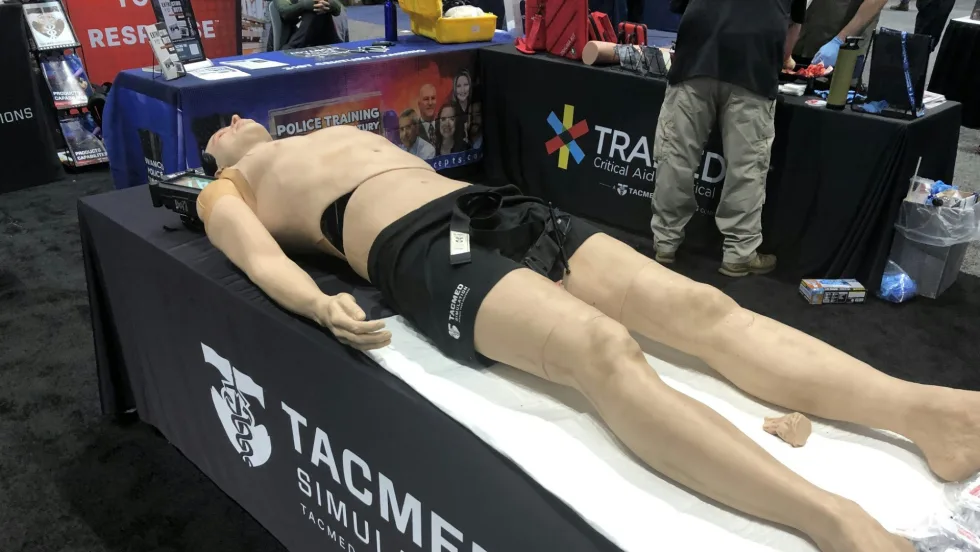
IACP 2023: New Training Products
Technologies for improving law enforcement training and training management were some of the highlights at this year's show.
Read More →
Initial Results Released from MSP 2024 Police Vehicle Testing
The 2024 pursuit-rated vehicles--all pickup trucks or SUVs, including two battery electric models the Chevrolet Blazer EV AWD and Ford Mustang Mach-E--were put through their paces.
Read More →
Officer Safety Considerations Related to Alternative-Fuel Vehicles
As more alternative-fuel and hybrid vehicles hit the road, police and other first responders need to understand that they are no more dangerous than conventional vehicles. However, there are certain safety considerations every cop should know.
Read More →
Garmont Working to Grow LE Market Presence
Garmont Tactical has found wide acceptance by military boot buyers, but now the company is trying to better respond to the needs of police officers. Many cops now are not fans of 8-inch boots, so Garmont is adapting.
Read More →
Publisher’s Note: Our Commitment to You
Through our magazine and website and our Police Technology eXchange event, we promise to provide you with information and access to resources to help you do your job safer and better.
Read More →
10 Tips for Responding to Mental Health Crisis Calls
The Harris County Sheriff's Office is a model for other agencies that want to learn about crisis intervention and mental health crisis response. Sgt. Jose Gomez shares the story of their programs and provides 10 tips for mental health crisis call response
Read More →
5 Things to Know When Buying Concealed-Carry or Off-Duty Holsters
Mike Barham, of Galco Holsters, shares five important considerations to keep in mind when you buy off-duty concealed or plain-clothes carry holsters.
Read More →
10 Tips for Reviewing Use-of-Force Reports
While the burden of accurately reporting use-of-force situations is on an individual deputy or officer, the person reviewing those reports shares in the responsibility of making sure the reporting is done properly, with clear details included.
Read More →