



How a California Conservation Officer Took On Illegal Cartel Grow Operations
After two encounters with illegal marijuana grow operations maintained by the cartels—one of which turned dangerously violent as responding LEOs came under ambush attack—Lieutenant John Nores decided to stand up a team of special operators.

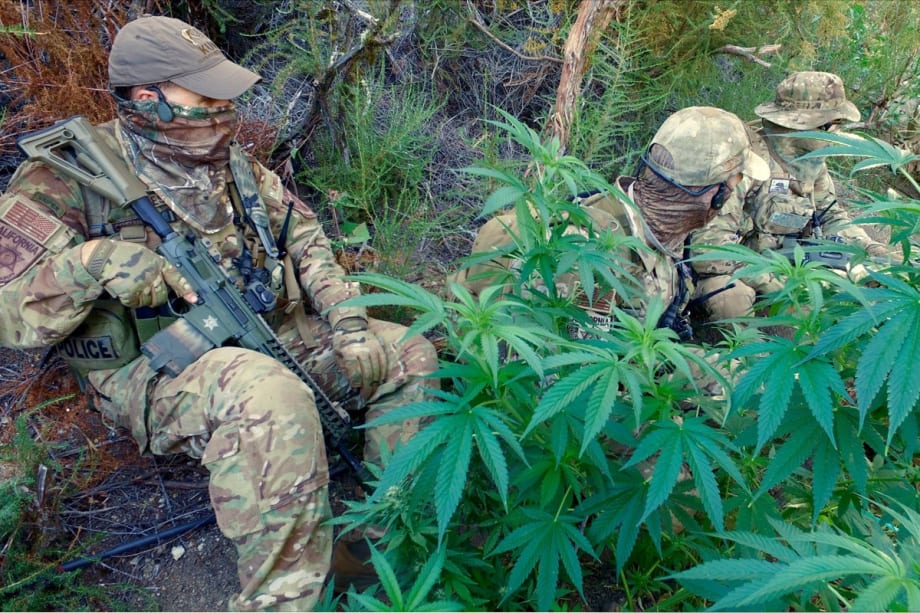
Lieutenant John Nores (left) sits with fellow operators with the California Department of Fish and Wildlife's Marijuana Enforcement Team (MET) among some pot plants grown illegally on public lands by members of the Mexican drug cartels.
Image courtesy of John Nores.
John Nores knows a lot about pot. More specifically, he knows a lot about large-scale illegal marijuana grow operations that exist on public lands such as state and national parks and wildlife preserves.
Nores has written two books on the subject—War in the Woods: Combating Marijuana Cartels on America's Public Lands and Hidden War: How Special Operations Game Wardens Are Reclaiming America's Wildlands from the Drug Cartels.
In 1992, Nores began his career as a game warden with the California Department of Fish and Wildlife, doing the things one would imagine a game warden does—arresting poachers, enforcing hunting and fishing licenses, and generally protecting wildlife and the environment. He'd also occasionally arrest drunk drivers or drug addicts hiding out in the woods.
He did this initially in Southern California before moving back to the San Francisco Bay Area, where he was born and raised in a small rural community south of San Jose.
His mission took a dramatic turn in 2004 when he stumbled upon an illegal marijuana grow operation manned by heavily armed men with ties to a Mexican drug cartel. He was able to move out of the area without making contact with the bad guys and was able to safely return to the area later on to conduct an enforcement operation.
One year later, three wardens and three deputies with the Santa Clara Sheriff's Office came under ambush attack with one law enforcer—Nores' partner at the time—suffering gunshot wounds to both legs.
These two events alerted Nores to a massive problem of dangerous and environmentally destructive criminal activity taking place on public lands just a few miles from the hustle and bustle of Silicon Valley.
"We came out of that with a new awareness of how dangerous these guys were—they weren't your typical poacher," Nores says. "They weren't from here—they were all embedded cartel members from Mexico. They were not legitimate immigrants trying to chase the American Dream. They were on watch lists internationally for their criminal activity south of the border."
Nores decided that the landscape had dramatically changed, and that wardens—and other law enforcement agencies—needed to their adapt strategies and tactics in order to deal with a problem that was rapidly getting worse.
Standing Up the Team
Nores recognized that wardens wandering in the woods were significantly out gunned and in many instances outmanned when coming upon such massive trespass grow operations. He suggested to agency leadership that a team be formed that was specifically dedicated to marijuana enforcement that was properly trained and equipped.
Ultimately, he was able to help form the California Department of Fish and Wildlife Marijuana Enforcement Team (MET) to protect those public lands and stop the international drug cartels from decimating wildlife, waterways, and wild lands.
Nores recognized that wardens have a set of skills that other law enforcement officers may not necessarily possess such as tracking as well as a vivid awareness of the terrain and environment. He also recognized that he needed more manpower than his agency could handle—there are only about 400 wardens in the state of California, with thousands of square miles to patrol—so the team is also manned by local law enforcement agencies such as the sheriff's departments in the counties he patrolled.
Nores stresses that they gave careful consideration to the name of the team, with the emphasis on enforcement not eradication. He notes that legitimate marijuana harvesters—those who get all the necessary permits and licenses, abide by environmental regulations, pay the appropriate taxes, and sell to legitimate dispensary businesses and not black market operators—are not the targets.
"It's not an anti-cannabis team. It's an anti-environmental crime, an anti-threat-to-public-safety team, because cannabis is now regulated and legitimized for medicinal and recreational use when done properly here in California," he says.
The members of the team are highly trained in special operations tactics and are well equipped with the tools of the trade—ballistic protection, camouflage uniforms, long guns, and other gear common to SWAT and ERT units.
Changing the Game
Nores says that environmental impact of these large-scale, trespass grow operations have a tremendously negative environmental effect locally and economic impact across the country.
Many of the cartels utilize deadly pesticides—some of them long since banned by the FDA from use in the United States—that wreak havoc on the land, the waterways, and the wildlife that live there. Carbofuran is the most common but other trade names like Furdan, Metaphos, and Furadan are in use. Some of these substances can kill on contact birds, animals, and even people.
With regard to the economy, Nores says that a substantial amount of marijuana grown on California's public lands is actually shipped to the various states where the use of the drug remains illegal and is only available for purchase on the black market. This leads to increases in criminal activity in those communities, as well as the spread of the reach and capabilities of the cartels.
He points to the failure of the prohibition of alcohol and the resultant rise of organized crime and the almost instantaneous rise of illegal "speakeasy" establishments as a cautionary tale apropos of the current problem.
"I'm sure this statistic is changing, but last I checked, over 40 million Americans are cannabis consumers—whether they're getting black market product or legitimate product," Nores says. "We're not legal in every state. We're not even medicinally legal in every state—we're far from that. Looking at this objectively—not taking a side one way or the other—obviously just as with a prohibition with alcohol, there is a demand and that demand is going to be matched in a black market regardless of regulated legal market."
Nores makes a notable point in his argument.
"If cherry tomatoes were yielding four thousand dollars a pound there would probably be cherry tomatoes on the black market and we'd be having gunfights over that," he says. "Take cannabis out of the equation. It's a black market product that's in high demand for whatever reason, and it's causing a lot of damage."
Retired—Not Quit
Nores retired from California's Department of Fish and Wildlife last December—but he continues to fight against the spread of illegal marijuana grows on public land.
In addition to making himself available to media outlets, bloggers, podcasters, and the like, he continues public speaking outreach and delivering presentations to state legislatures, policy forums, law enforcement agencies, environmental groups, wildlife preservation groups, animal rights groups, high school assemblies, and even groups of legitimate marijuana growers—those who do the harvesting the right way by documenting their plants, ensuring the use of safe and legal pesticides, selling only to licensed vendors, and whatnot.
Further, Nores also remains in contact with his former team, speaking with them regularly about what they're doing, and remains involved in training other agencies in the capabilities of such operations to positively impact the environment and public safety.
Nores knows these criminals pose a significant threat to United States public lands and the American public who enjoy them
For him, this war remains ongoing. And just because he's retired doesn't mean he's done.
More Blog Posts
Preventing Heat Injury in Police K-9s
In the relentless heat of summer and even early fall in some parts of the country, officers face the important task of protecting their K-9 partners while working in sweltering temperatures. Recognizing changes in a dog’s behavior is the key.
Read More →
Why Your Agency Needs to Attend the ILEETA Conference
ILEETA is a complete resource for trainers to address trainers' needs. Its mission is to enhance the skills and safety of criminal justice practitioners while fostering stronger and safer communities.
Read More →
IACP 2023: New Training Products
Technologies for improving law enforcement training and training management were some of the highlights at this year's show.
Read More →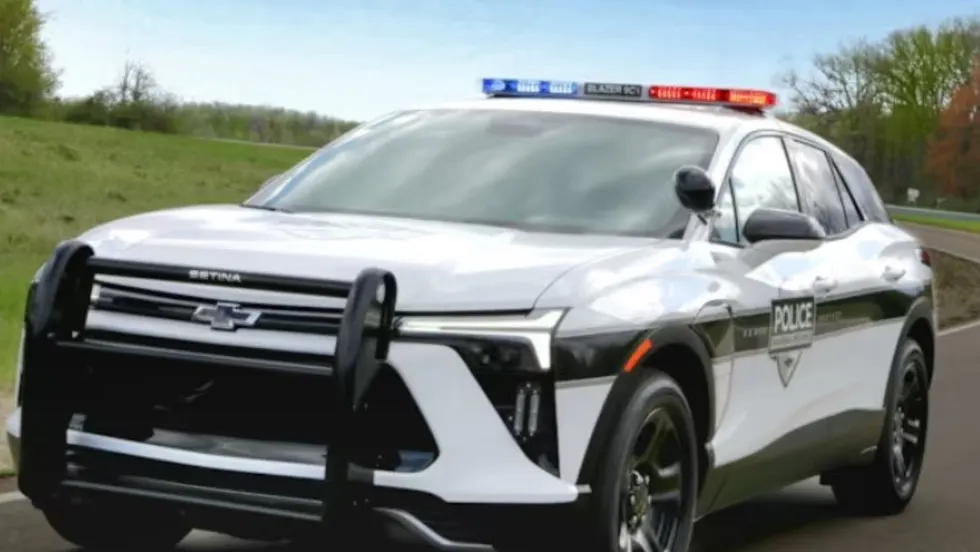
Initial Results Released from MSP 2024 Police Vehicle Testing
The 2024 pursuit-rated vehicles--all pickup trucks or SUVs, including two battery electric models the Chevrolet Blazer EV AWD and Ford Mustang Mach-E--were put through their paces.
Read More →
Officer Safety Considerations Related to Alternative-Fuel Vehicles
As more alternative-fuel and hybrid vehicles hit the road, police and other first responders need to understand that they are no more dangerous than conventional vehicles. However, there are certain safety considerations every cop should know.
Read More →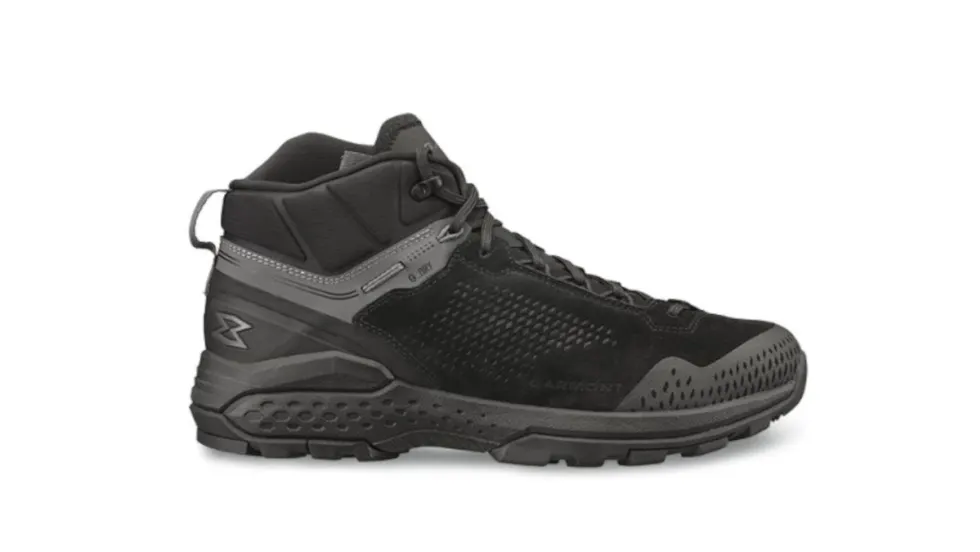
Garmont Working to Grow LE Market Presence
Garmont Tactical has found wide acceptance by military boot buyers, but now the company is trying to better respond to the needs of police officers. Many cops now are not fans of 8-inch boots, so Garmont is adapting.
Read More →
Publisher’s Note: Our Commitment to You
Through our magazine and website and our Police Technology eXchange event, we promise to provide you with information and access to resources to help you do your job safer and better.
Read More →
10 Tips for Responding to Mental Health Crisis Calls
The Harris County Sheriff's Office is a model for other agencies that want to learn about crisis intervention and mental health crisis response. Sgt. Jose Gomez shares the story of their programs and provides 10 tips for mental health crisis call response
Read More →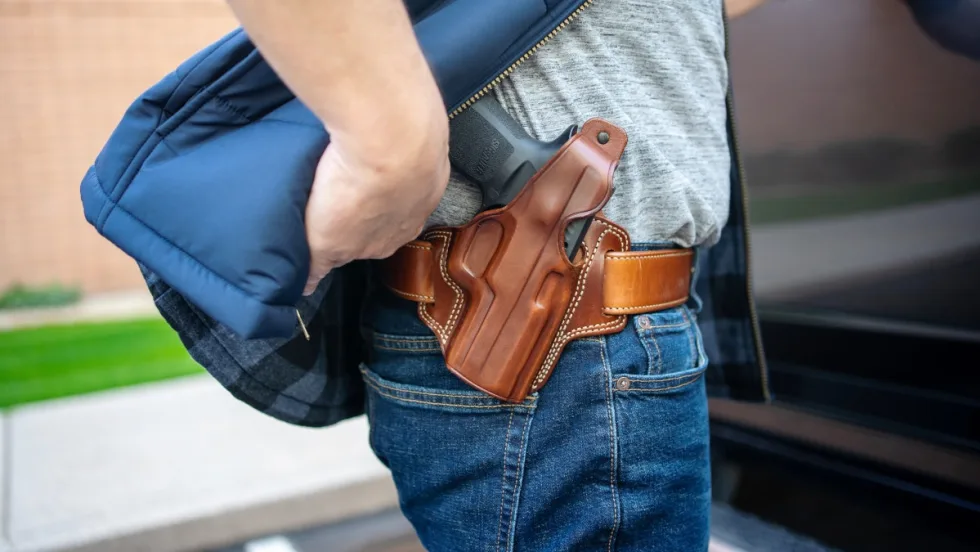
5 Things to Know When Buying Concealed-Carry or Off-Duty Holsters
Mike Barham, of Galco Holsters, shares five important considerations to keep in mind when you buy off-duty concealed or plain-clothes carry holsters.
Read More →
10 Tips for Reviewing Use-of-Force Reports
While the burden of accurately reporting use-of-force situations is on an individual deputy or officer, the person reviewing those reports shares in the responsibility of making sure the reporting is done properly, with clear details included.
Read More →