



GM Gives Chevy Caprice PPV Update
Executives with General Motors' law enforcement fleet unit said building their Chevrolet Caprice PPV in Australia doesn't put them at a competitive disadvantage because the vehicle is well-suited for patrol work.

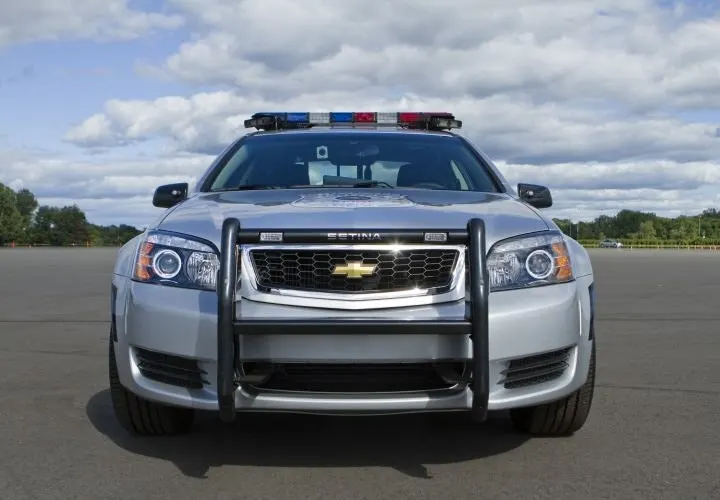
Photo: Jeffrey Sauger/Chevrolet.
Executives with General Motors' law enforcement fleet unit said building their Chevrolet Caprice PPV in Australia doesn't put them at a competitive disadvantage because the vehicle is well-suited for patrol work.
Several agencies, especially on the East Coast, have experienced longer wait times for the patrol version of the PPV, which went into production in April. The detective version was made available sooner, because it went into production in January of 2011.
Earlier this week, Ford touted the Chicago-based production line for its 2013 Police Interceptor while showing the final production version of the patrol car replacing the Crown Vic at the Chicago Auto Show.
GM executives weren't fazed. In an interview with POLICE Magazine, Dana Hammer, GM's manager of law enforcement vehicles, acknowledged that it would take longer for the Caprice to reach agencies. Hammer said the vehicle spends six weeks on a boat being transported from Australia—it's built at the Holden factory in Adelaide, Elizabeth—to the Port of Benecia near Oakland, Calif.
"We have to make sure that everyone understands there will be additional wait times to ship the cars," Hammer said. "Instead of being a three-month delivery, it's going to be a five-month delivery on average."
The Caprice has caught on with fleet buyers, Hammer added, because it's "the right vehicle" for law enforcement. Of all the available patrol cars, the Caprice offers the largest interior and trunk, he said.
The 2012 Chevrolet Caprice PPV is a rear-wheel drive police vehicle available with a standard V-6 engine or an optional V-8 engine that can reach speeds of over 150 mph.
Law enforcement fleet managers use "order to delivery" to estimate the arrival of new patrol vehicles. A typical order-to-delivery timeframe of a GM fleet vehicle would be about 110 days or just under four months.
A vehicle built in Australia faces additional challenges to meet that timetable, including "dwell time"—the number of days a ready-to-ship vehicle sits at the port. Cargo ships leave Australia once a month with Chevy Caprice PPVs, so vehicles that miss the boat sit longer, Hammer said.
Another reason Caprice PPVs have taken longer to reach agencies is due to a process known as "second-stage manufacturing." When the PPVs reach Northern California, a GM-hired automotive supplier adds police-specific equipment to the vehicles before they're delivered to agencies. The supplier installs spotlights and wiring harnesses. The supplier also modifies the rear passenger doors, disabling door handles so prisoners can't escape custody.
GM has taken several steps to deal with the situation, including setting up a surplus inventory of PPVs at the Northern California port known as its E-Fleet. Agencies can acquire E-Fleet vehicles through an alternative ordering process offered by dealers.
Hammer urged agencies to be patient with GM at least initially because the Caprice PPV is being launched for the first time as a police vehicle. The sedan is based on the Pontiac G8, a re-badged Holden Commodore built in Australia until it was discontinued in 2009.
More Blog Posts
Preventing Heat Injury in Police K-9s
In the relentless heat of summer and even early fall in some parts of the country, officers face the important task of protecting their K-9 partners while working in sweltering temperatures. Recognizing changes in a dog’s behavior is the key.
Read More →
Why Your Agency Needs to Attend the ILEETA Conference
ILEETA is a complete resource for trainers to address trainers' needs. Its mission is to enhance the skills and safety of criminal justice practitioners while fostering stronger and safer communities.
Read More →
IACP 2023: New Training Products
Technologies for improving law enforcement training and training management were some of the highlights at this year's show.
Read More →
Initial Results Released from MSP 2024 Police Vehicle Testing
The 2024 pursuit-rated vehicles--all pickup trucks or SUVs, including two battery electric models the Chevrolet Blazer EV AWD and Ford Mustang Mach-E--were put through their paces.
Read More →
Officer Safety Considerations Related to Alternative-Fuel Vehicles
As more alternative-fuel and hybrid vehicles hit the road, police and other first responders need to understand that they are no more dangerous than conventional vehicles. However, there are certain safety considerations every cop should know.
Read More →
Garmont Working to Grow LE Market Presence
Garmont Tactical has found wide acceptance by military boot buyers, but now the company is trying to better respond to the needs of police officers. Many cops now are not fans of 8-inch boots, so Garmont is adapting.
Read More →
Publisher’s Note: Our Commitment to You
Through our magazine and website and our Police Technology eXchange event, we promise to provide you with information and access to resources to help you do your job safer and better.
Read More →
10 Tips for Responding to Mental Health Crisis Calls
The Harris County Sheriff's Office is a model for other agencies that want to learn about crisis intervention and mental health crisis response. Sgt. Jose Gomez shares the story of their programs and provides 10 tips for mental health crisis call response
Read More →
5 Things to Know When Buying Concealed-Carry or Off-Duty Holsters
Mike Barham, of Galco Holsters, shares five important considerations to keep in mind when you buy off-duty concealed or plain-clothes carry holsters.
Read More →
10 Tips for Reviewing Use-of-Force Reports
While the burden of accurately reporting use-of-force situations is on an individual deputy or officer, the person reviewing those reports shares in the responsibility of making sure the reporting is done properly, with clear details included.
Read More →