



Gang Members in the Emergency Room
You are now in the middle of a kill zone between two rival and highly agitated gangs. You watch in slow motion as they drop their wounded and draw their guns. It is as though they cannot even see you or recognize your uniform or police vehicle. You are not the intended target, but you could easily be collateral damage.

Have you ever thought about this one?
One night you are one of the police units in your city responding to a gang fight call. The first units arriving broadcast that a gang shooting has just occurred with several wounded gunshot victims. But you are diverted to respond to the local hospital because an anonymous source called claiming that gang members are rushing their critically wounded to the emergency room.
On your way to the hospital, you see several vehicles ahead of you speeding through the streets, running stop signs, and finally pulling into the hospital emergency room parking lot. Your one-man-unit approaches the vehicle closest to the emergency room doors as several very emotional gang members are dragging an obviously dead homeboy out of the car.
Suddenly you hear shouting from another car behind you. These gangsters are also getting out of their cars, and they also have a wounded homeboy. The air is charged with tension and taunts, threats, and challenges are exchanged.
You are now in the middle of a kill zone between two rival and highly agitated gangs. You watch in slow motion as they drop their wounded and draw their guns. It is as though they cannot even see you or recognize your uniform or police vehicle. You are not the intended target, but you could easily be collateral damage.
This scenario is taken from an incident that actually occurred at the Los Angeles County General Hospital and resulted in an officer-involved shooting in the emergency parking lot. The officer was a member of the Los Angeles County Police Department, the agency that works the county hospitals.
As a gang detective, I once responded to another local hospital trauma center to get a statement from a gunshot victim. He had just barely survived a gunshot wound and an emergency room procedure and was in the Intensive Care Unit.
The hospital security guard led me to ICU, and we both were startled to see my “victim” rolling around on his hospital bed dragging his I.V. bottle and electronic monitoring wires, jousting with another patient in a similar bed with similar lines trying to pull the tubes and wires from each other.
When we separated them, we learned that they were suspect/victim and members of rival gangs. This problem continued to grow for the hospital over the next few days because both patients’ homeboys and homegirls began coming to the hospital to visit their own wounded, and would run into members of the other gang. Eventually hospital security had to be assigned and stationed in front of each of their rooms.
On another occasion, a gang member was brought to the Martin Luther King emergency room under the influence of phencyclidine (PCP) by his homeboys. Officers of the Los Angeles County Police searched the gang member and then strapped him to a gurney in the very busy emergency room. There were, in fact, several PCP overdoses and wounded gang members in the emergency room and hall ways on this night.
This particular gang member was not my charge; I was there with a different gang member who was being cleared for booking by hospital staff. Another Deputy from the Special Enforcement Unit, Steve Nelson, was having another arrested gang member checked out when we both heard screams coming from the emergency room.
The gang member who was under the influence of PCP and strapped to the gurney by the County Police had a pocket knife and had somehow cut himself free from his leather restraints. He had already stabbed the attending emergency room physician and jumped off the gurney to slash a second staff member.
Dep. Nelson and I gave chase in the crowded emergency room. The suspect swung the knife at anyone he passed near enough to reach. We drew our pistols but had no chance of a clear shot in the emergency room and hallway. We ran through the corridors and hallways out to the very crowded lobby.
As the suspect ran outside to the parking lot, we split up, chasing him around several large metal CONEX-style boxes. The suspect charged Nelson with the knife, and Nelson put a very quick but controlled three rounds into his center mass just below the ribs and right of center line.
To Nelson’s and my amazement, the very same emergency room staff that this violent gang member had attacked came out to the parking lot to save his life.
Despite the friendly staff with good attitudes, hospitals are not usually happy places. Domestic violence, child abuse, rape, attempted suicides, gang assaults, and drug overdoses are just a few of the problems encountered in the average day in a busy hospital. If you expect to frequent such a place, do not let your guard down.
Find out if the hospital has a police force or private security officers. Introduce yourself to them and learn their hospital procedures before an emergency occurs. Don’t disrespect them, even if you think that they are only private security guards. Remember you are in their house. If you get into trouble, it will most likely be them coming to your aid as first responders.
Many modern hospitals are equipped with metal detectors and X-ray systems to scan bags and purses. In addition some hospitals require everyone to be stopped, searched, and wanded with a handheld metal detector before entering the building. This is accomplished under implied consent laws and hospital regulations.
However, some hospitals exclude doctors and staff from this requirement. Make yourself aware of the procedures at this checkpoint because it will be one of the possible points where trouble will occur.
When you get to the emergency room, study how it is laid out. Where is the trouble likely to come from? Where are the phones? What code system is the staff using? For example, Code Blue = cardiac arrest.
Talk to the regular emergency room staff on all shifts, especially the Doctors and the floor nurse. Ask them to clue you in when they sense possible trouble. Offer to let them ride along with you one day if they will run you through their emergency room procedures.
Talk to the hospital security personnel about the local gangs. If you have any in your town, I will bet you can find gang graffiti on the hospital grounds. Photograph and identify the gang graffiti for the security people. Point out gang tattoos. Make it a kind of game with the security staff to identify possible gang affiliations and separate them on intake.
Suggest they establish an isolation room for possible problem patients. Talk to them about the use of handcuffs and restraints. Note: some inexperienced doctors and staff members will object to any use of restraints on a person being examined and treated in the emergency room, even a potentially dangerous gang member. Try to convince them that such a precaution is best for everyone.
When you are in the field and responding to a gang fight or shooting, try to roll the wounded to separate hospitals if possible. Talk to the paramedics about this because sometimes the victim’s wounds will determine the trauma center he should be sent to.
Have the desk notify the hospital security that victims associated with this gang are on their way or roll the assisting unit with the victims to prevent clashes with the rival victims or suspects. Have the assisting unit drive through the hospital parking lot looking for the rival gang members who might be spying to find out if they made a kill or just wounded the victim.
The California Penal Code covers the crime of “Resisting public peace officers or medical technicians in the discharge of their duties,” under 148 P.C. The law was designed to protect policemen and paramedics in the field, but it could be applied to emergency room situations too. Look up your state’s codes on interfering, resisting, or obstructing police and medical technicians in emergency situations and see if you can use them against gangs in the emergency room.
More Blog Posts
Preventing Heat Injury in Police K-9s
In the relentless heat of summer and even early fall in some parts of the country, officers face the important task of protecting their K-9 partners while working in sweltering temperatures. Recognizing changes in a dog’s behavior is the key.
Read More →
Why Your Agency Needs to Attend the ILEETA Conference
ILEETA is a complete resource for trainers to address trainers' needs. Its mission is to enhance the skills and safety of criminal justice practitioners while fostering stronger and safer communities.
Read More →
IACP 2023: New Training Products
Technologies for improving law enforcement training and training management were some of the highlights at this year's show.
Read More →
Initial Results Released from MSP 2024 Police Vehicle Testing
The 2024 pursuit-rated vehicles--all pickup trucks or SUVs, including two battery electric models the Chevrolet Blazer EV AWD and Ford Mustang Mach-E--were put through their paces.
Read More →
Officer Safety Considerations Related to Alternative-Fuel Vehicles
As more alternative-fuel and hybrid vehicles hit the road, police and other first responders need to understand that they are no more dangerous than conventional vehicles. However, there are certain safety considerations every cop should know.
Read More →
Garmont Working to Grow LE Market Presence
Garmont Tactical has found wide acceptance by military boot buyers, but now the company is trying to better respond to the needs of police officers. Many cops now are not fans of 8-inch boots, so Garmont is adapting.
Read More →
Publisher’s Note: Our Commitment to You
Through our magazine and website and our Police Technology eXchange event, we promise to provide you with information and access to resources to help you do your job safer and better.
Read More →
10 Tips for Responding to Mental Health Crisis Calls
The Harris County Sheriff's Office is a model for other agencies that want to learn about crisis intervention and mental health crisis response. Sgt. Jose Gomez shares the story of their programs and provides 10 tips for mental health crisis call response
Read More →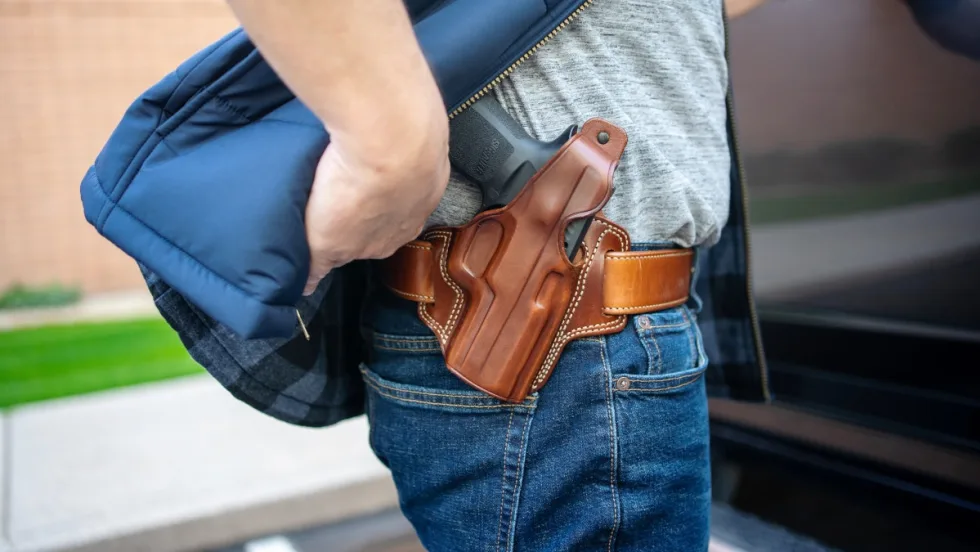
5 Things to Know When Buying Concealed-Carry or Off-Duty Holsters
Mike Barham, of Galco Holsters, shares five important considerations to keep in mind when you buy off-duty concealed or plain-clothes carry holsters.
Read More →
10 Tips for Reviewing Use-of-Force Reports
While the burden of accurately reporting use-of-force situations is on an individual deputy or officer, the person reviewing those reports shares in the responsibility of making sure the reporting is done properly, with clear details included.
Read More →