



Criminal Gangs in the Military
I wondered to myself how these obvious tattoos could be missed by his Marine Corps superiors, especially the Sureño tattoo in large letters across his chest. The suspect was arrested shortly after the shooting and said, "I did it for the brotherhood and the brown side." He then exposed the Sureño tattoo.

"I did it for the brotherhood and the brown side." — Sgt. Jessie Quintanilla
It was late afternoon on March 5, 1996, at the L.A. Sheriff Department's Major Crime Bureau when the telephone rang. One of my Prison Gang Unit detectives answered it and handed me the phone and said, "It's the Provost Marshal's Office at Pendleton, Sarge." The Marine officer on the other end described to me the premeditated murder of USMC Executive Officer, Lieutenant Colonel Daniel Quadron, and the attempted murder of the unit Commander, Lieutenant Colonel Heffner, who came to the first officer's defense.
He asked me to explain the meaning of several tattoos that the suspect prominently wore. The suspect was the unit's supply Sergeant, Jessie Quintanilla, a native of Guam. His gang tattoos suggested that he was a member of, or at least involved with, Hispanic gangs. I wondered to myself how these obvious tattoos could be missed by his Marine Corps superiors, especially the Sureño tattoo in large letters across his chest. The suspect was arrested shortly after the shooting and said, "I did it for the brotherhood and the brown side." He then exposed the Sureño tattoo.
The Military Court Marshal was unanimous in sentencing Quintanilla to death. Since 1916, only 135 men have been executed under Military criminal jurisdiction. Today, despite several appeals and requests for new trials, Quintanilla along with eight other military men await the carrying out of this sentence in Leavenworth Prison. Even if the execution is ever eventually done, it will not bring back Lieutenant Colonel Daniel Quadron. This officer knowingly signed up to be in harm's way, but not by a gang member in his own unit. The denial of this situation weakens our military strength and will continue to cost good servicemen their lives.
Nothing New
After the Civil War, soldiers from the armies of both the North and the South settled in the American West. Forged in the heat of epic military battles and skilled in the use of firearms, some veterans, like Jesse James, used their military skills to become outlaws and bandits. Many formed outlaw gangs. Some became the legendary law men who fought against these gangs. And some did both. In the major cities of the East, former military—especially wounded veterans, many suffering from the "soldiers disease" (morphine addiction)—roamed the streets in gangs begging and stealing to survive. After the assassination of President Lincoln these men rioted in the Capital, requiring the military to put down the riots and secure the peace.
After WW I, military experience helped create the gangsters of the roaring twenties. The Browning Automatic Rifle (BAR) and the Thompson sub-machinegun were the weapons of choice, and the use of these weapons was often carried over from military service. Infamous gangsters like former member of the U.S. Navy, John Dillinger, became outlaw celebrities. Law enforcement also recruited from the military veterans and favored the same weapons.
After WW II and the Korean War, the Italian Mafia especially, attempted to recruit from this pool by making veterans and war heroes offers they could not refuse. Outlaw gangs formed by WW II veterans included the first Los Angeles African American gang the "Purple Hearts" founded by the famous boxer and Army veteran Geronimo Jordan, and the infamous gang of bad boys the "Pissed Off Bastards of Bloomington" (or Berdo) (POBOBs) in San Bernardino, which became the Hells Angels Outlaw Motor Cycle Gang.
Firsthand Experience
When I arrived in Vietnam in February 1967 as an MP with Company A of the 504th, I was lucky enough to be attached to the 101st Airborne Division in the Central Highlands. There was an MP contingent assigned to every infantry unit. There I found that several of the best fighting units had a significant representation of former gang members from New York, Chicago, and Los Angeles. I was especially impressed with a platoon made up of mostly African American soldiers from Chicago who called themselves the "Head Hunters." The Viet Cong greatly feared these troopers and even placed a special bounty on their lives. Later, I was attached to the 4th Division, the 1st Cavalry, and MACV. I found the same kind of ex-gang members in combat fire teams in each of these units.
I believe that many young men today instinctively reject the modern pacifist, self-centered, and materialistic American culture. They often seek membership in gangs as a "positive" setting which allows them to express some of the traits that make them good gang members: self defense skills, team unity, courage, loyalty, and self sacrifice. Once they give up the twisted loyalty to their former street gang, they often make good soldiers utilizing these same traits. I have a brother-in-law who was a Marine Corps Drill Instructor during the Southeast Asian conflicts. He often joked that "Uncle Sam loved his Hispanic Children", and that USMC, in this case, stood for "Uncle Sam's Mexican Children."
But when I became a Deputy Sheriff and was assigned to patrol in East Los Angeles in 1974, I found one of these Vietnam combat veterans had armed the Little Valley street gang with Browning High Power high capacity 9mm handguns, while we were still armed with S&W .38 revolvers. He was teaching them ambush tactics and escape and evasion techniques. Later, when I was assigned in Compton's Lynwood Station in 1978, we had a U.S. Army Reserve unit next door to the Sheriff's station. This unit was made up of mostly Blood and Crip gang members. This was not a good thing.
The Reserve Alternative
In the tough ghetto and barrio gang culture, becoming a macho warrior was every boy's dream. With the rare exception of getting that college sports scholarship and playing professional sports, joining a military unit like the Marine Force Recon, Air Borne Army Special Forces, or Navy Seals was the only alternative to being a street gang warrior. These macho males didn't change, but the U.S. Military did. Women and gays openly became members of some of these military and even some elite units. Macho gang members lost some of their respect for the military as a warrior's way to get out of gangs.
They often chose to join the National Guard and Reserve Units instead. These units were easier to get into, less disciplined, and only required one weekend a month of commitment. In this way they could play weekend warrior and remain loyal to their street gang. However, these reserve units today are frequently activated and sent to support regular military units in combat. In the combat units these street warriors are kept busy, but in the rear or when they are left idle, these gang members gravitate toward trouble.
Drug Heaven
The Gulf Theater just happens to be the world's largest producer of opium, from which street heroin is derived. Hashish is very common in these countries also and culturally is the basis for the derivative word "assassin." The Russian military not only took a beating in Afghanistan, but many Russian soldiers returned home to mother Russia addicted to these drugs. The terrorist "War Lords" who operate here fund their armies through drug trafficking. The great consumer of this garbage is the United States of America. In a way, America is funding the forces that are trying to destroy us. This might seem scary to you, but it is a "financial heaven" for gangs stationed in Afghanistan and Iraq.
Money in Weapons Trafficking
Trafficking in military weapons is another big business interest of gangs in the services. Street gangs across the United States are increasingly utilizing military weapons and body armor. In July of 2006 a series of commando-like bank robberies occurred in the Washington D.C. and the Prince George County areas. The suspects turned out to be soldiers from Fort Meade (one was an MP), and the AK-47 that they used was smuggled out of Iraq by an Army Reserve soldier.
In August of 2006, at the other end of the country, a military shoulder-mounted rocket launcher (armed) was recovered in a parole search in Victorville, Calif. The other address given by the suspect was near LAX International Airport. Military grenades are now increasingly common and recovered in gang raids. Someday we must expect that gang members will use these rockets and grenades against rival gang members, or us.
Let me scare you a little more. The real money in weapons trafficking comes not from firearms, but from more destructive weapons and weapons of mass destruction. Sophisticated explosives, smart rockets, and bio and chemical weapons are all accessible to gang members in the combat arena. Today's gang member is capable of understanding and stealing high-tech weapons including radiological weapons or technical data on these weapons systems. Rumors of this kind of weapons technology trafficking are whispered about in military intelligence units, but denied by the military.
"There is an old saying: 'The military will never admit to having a problem until they have a solution to the problem.'" – Det. Hunter Glass, military gang expert
At least in public, the company line of all military branches has been that gangs are not a problem in the service. But in private, the Military Police and Intelligence Officers I speak to all admit that this is a serious problem in the ranks. If gangs in the military is just a myth, then why is the military so aggressive in going after civilian and military investigators who publicly make contrary statements? I know investigators who lost their jobs over this issue.
This denial is similar to the denial from some cities that fail to report gang statistics or otherwise twist them to avoid the truth. According to sources in military units today, the military has increased the use of waivers for borderline applicants to meet its recruitment goals and continues to retain servicemen that should be discharged. The heavy reliance of reserve units in the war theater ads more gang members to this mix.
You might have read or heard about a 2005 Army report which said that less than 1 percent of crimes investigated by military investigators were found to be "gang related." Or that between the years 2002 and 2005, only 72 criminal incidents reported to Army investigators were "gang related."
This report is flawed because there is no common standard in the military for identifying gang membership or "gang related" crimes. There is no procedure to report and retain gang activity. The majority of gang-related crimes committed by servicemen or their dependants occur off base and after duty hours. Local police investigating these incidents may not identify the suspects as Military personnel or share the information with the MPs.
On-base crimes such as drug trafficking, assaults, and thefts are often viewed by investigators as individual incidents. The membership in most criminal gangs is covert and investigators are not normally trained to identify or deal with gang crimes. Finally, if a member of the military service is being told that there "is no gang problem" and has heard of repercussions that followed those who spoke out saying that there was, how likely do you think that person would be to report gang activity?
On August 31, 2006, former Army Investigator and now Renton (Wash.) Police Officer Scott Barfield expressed his frustration at the statements denying any significant gang activity at Fort Lewis by MP Col. Katherine Miller in a KOMO 4 television news interview. "My frustration over this is nobody is getting kicked out of the military," Barfield said. "We continue to train street gang members to take the training back to the streets to change the gang from a regular street gang to a super gang, like a SWAT team, (with) the training they get in the military."
Extremists and White and Black Supremacists
Unfortunately, the U.S. Military has a long record of white extremists and supremacists coming from its ranks; from Navy commander George Lincoln Rockwell, founder of the American Nazi Party, to Timothy McVeigh, a decorated Army Gulf War veteran, who on April 19, 1995, drove a truck filled with 5,000 pounds of diesel fuel and ammonium nitrate fertilizer to the Alfred P. Murrah Federal Building in Oklahoma City, and murdered 168 men, women, and children.
In December of 1995 racist Skinhead paratroopers, Privates James Burmeister, Malcolm Wright, and Randy Meadows from Fort Bragg, committed the racially motivated random murders of an African American couple. Olympic Bomber Eric Rudolph was a 101st airborne paratrooper stationed at Fort Campbell before joining the "Army of God" and bombing Centennial Park in Atlanta in July of 1996.
John Allen Williams joined the Army Reserve in Baton Rouge in 1978. He joined the regular Army in 1985 and became a combat Engineer stationed at Fort Lewis, Wash. He was a highly disciplined martial arts teacher and qualified expert with the M-16. Military records say he cut through an eight-foot earthen wall on the Saudi-Iraq border to clear lanes for coalition tanks and forces in the liberation of Kuwait of 1990. But he was also full of anger and racial hate. He changed his name to John Muhammad and retired from active service in 1994. He joined the Oregon National Guard for a year and then he hooked up with a young illegal alien who called himself John Lee Malvo. In October of 2002 the two would earn the infamous name of the "Beltway Snipers."
1995 Army Survey
A U.S. Army Task Force was established in 1995 and interviewed 7,600 active duty servicemen at various bases in the United States, Germany, and Korea. The survey found that 3.5 percent of the participants had been approached by extremist groups and asked to take part in their activities. Of the participants, 4.5 percent said that they were approached by extremist groups prior to their enlistment, while 7.1 percent said they knew another soldier who they believed was a member of an extremist group.
Chicago's Gangster Disciples
In 1997 in Killeen, Texas, Army Specialist Jacqueline Billings was the ruthless "Governor" of a set of Gangster Disciples gang members, most of whom were active duty soldiers from Fort Hood. The gang of soldiers were also involved in gun running, drug trafficking, robberies, and gang wars. Acting on orders from Billings, the gang robbed apartment manager and club owner Robert Monaghan and murdered his two employees. Billing had ordered the murders because the club owner had "disrespected" her and her crew by ejecting them after they had engaged in fighting with other patrons at the club. Specialist Billings got 33 years.
In July of 2005 Iraq veteran Juwan Johnson was beaten to death in his barracks in Kaiserslautern, Germany. Army investigators believe that he was the victim of a "Gangster Disciple" gang initiation gone bad. In a Chicago Sun-Times article by Frank Main, a Criminal Investigation Command report is quoted which singled out the Gangster Disciples as being involved in crimes that "appear to be more sophisticated and widespread than those committed by other gangs."
Tactical Gang Ambushes
In my experience, today most criminals—and especially gang members—utilize military-type tactics in gang shootings and ambushes. Like military units in combat, they don't have to clearly see their target before they engage that target under fire, nor do they have to worry about just where the numerous rounds they direct down range will impact. Collateral damage is to be expected. They clear an area by gunfire. Police officers in the U.S. cannot do this.
As a cop, you probably already know about the greater incidence of police suicides by firearms compared to the average citizen. Military servicemen, especially those who have recently returned from combat, have an even greater incidence of suicides than police do.
These factors make approaching a person with military tactical experience very dangerous.
In January of 2005, a troubled 19-year-old Marine, whose unit was fresh from the house-to-house battles in Fallujah and Ramadi in Iraq, returned home on a holiday leave. Andres Raya was from Modesto, Calif., and scheduled to return to Camp Pendleton in the southern part of the state for redeployment in Iraq. Instead, he chose to stop in the city of Ceres near San Jose, Calif. On the night of January 11, he was in the parking lot of George's Liquor Store acting very suspicious. He was wearing a poncho and carrying an SKS assault rifle.
Raya fired several rounds from the rifle, presumably to attract the attention of local police. Then he waited in ambush with the poncho covering his SKS. The following incident was recorded on surveillance cameras and Raya can be seen covering the two avenues of approach. Officer Sam Ryno was the first to arrive. A 50-year-old with 22 years of experience, Ryno parked around the corner and carefully approached the corner of the building.
Raya, using a tactic called slicing the pie, began clearing by fire as he rounded the corner of the Liquor store. Utilizing the element of surprise and his aggressive fire power superiority against the officer, Raya forced Ryno to retreat. The officer returned fire, but Ryno was hit and went down. Seconds later, 39-year-old Sgt. Howard Stevenson engaged suspect Raya from the opposite direction. Stevenson was a 20-year veteran of the Ceres Police Department. Raya sought cover behind a vehicle in the parking lot, but soon began firing through the vehicle, wounding him and pinning Stevenson down. Raya then assaulted and killed the wounded officer and ran into a nearby residential area to hide in one of the yards.
SWAT teams, Sheriff's deputies, and police officers from neighboring cities and counties and the California Highway Patrol responded to the scene. For the following three hours they hunted house to house, searching for the dangerous suspect. Armed with more than just pistols, they shot out the surrounding street lights to avoid becoming silhouetted targets. They were taking away some of Raya's tactical advantage and evening up the odds. About 50 yards from the original location, Raya suddenly reappeared firing at a group of two deputies and two Modesto Police officers. They quickly answered his fire with their own, and Andres Raya was killed.
Sgt. Howard Stevenson was the first Ceres officer to be killed in the line of duty. Officer Sam Ryno was seriously wounded but survived. The SKS rifle used by Andres Raya was illegal in California and not issued by the Marines, but can be purchased in many other states for about $150.
Army 82nd Airborne veteran and Fayetteville gang officer Det. Hunter Glass described the tactics used by Raya in an interview for television news NBC 17 on February 24, 2005 in this way: "Using strictly military tactics he learned in the Marine Corps, he applies suppressive fire power right into the corner…He didn't learn those tactics as a gang member."
More Blog Posts
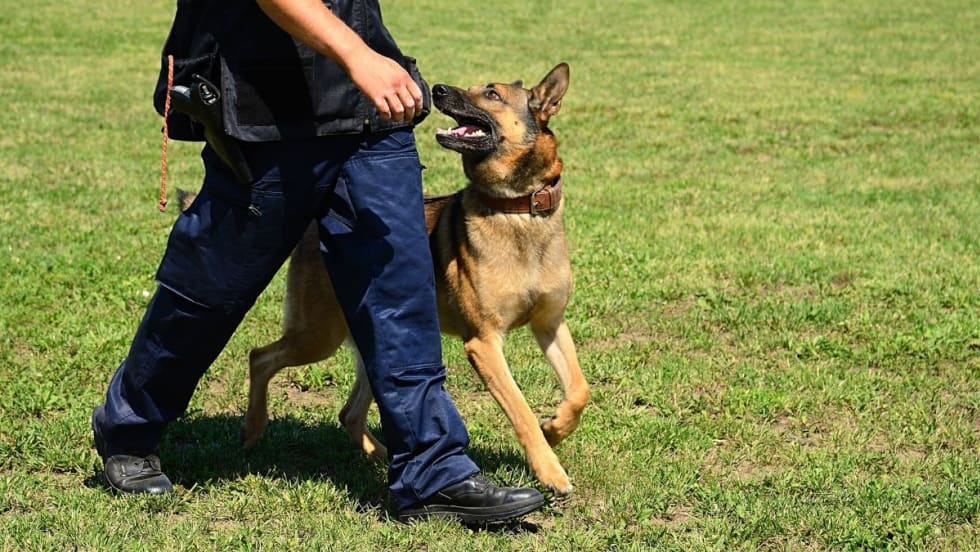
Preventing Heat Injury in Police K-9s
In the relentless heat of summer and even early fall in some parts of the country, officers face the important task of protecting their K-9 partners while working in sweltering temperatures. Recognizing changes in a dog’s behavior is the key.
Read More →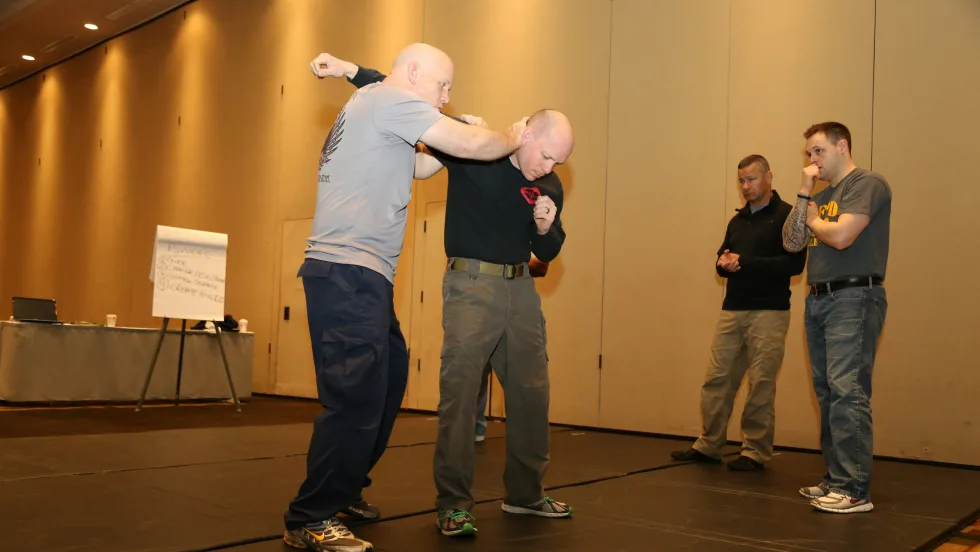
Why Your Agency Needs to Attend the ILEETA Conference
ILEETA is a complete resource for trainers to address trainers' needs. Its mission is to enhance the skills and safety of criminal justice practitioners while fostering stronger and safer communities.
Read More →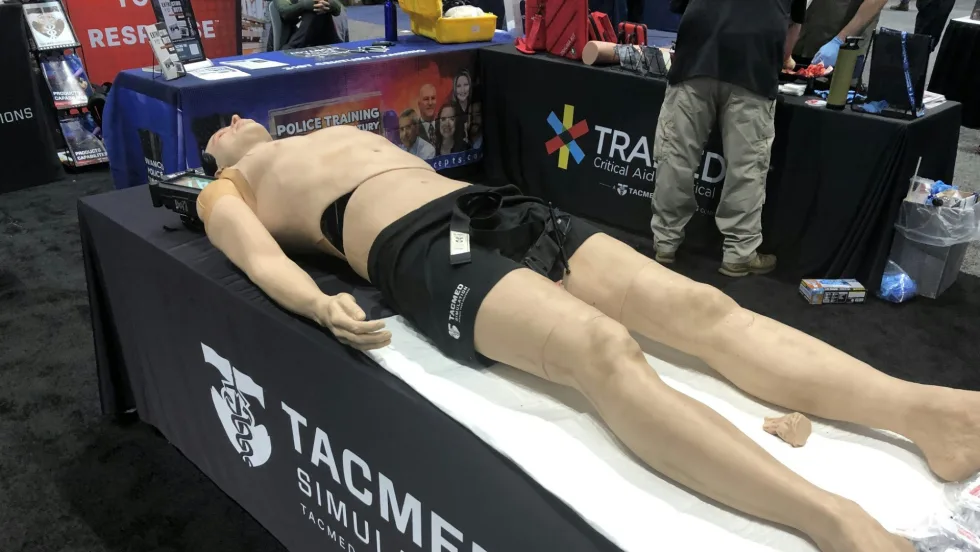
IACP 2023: New Training Products
Technologies for improving law enforcement training and training management were some of the highlights at this year's show.
Read More →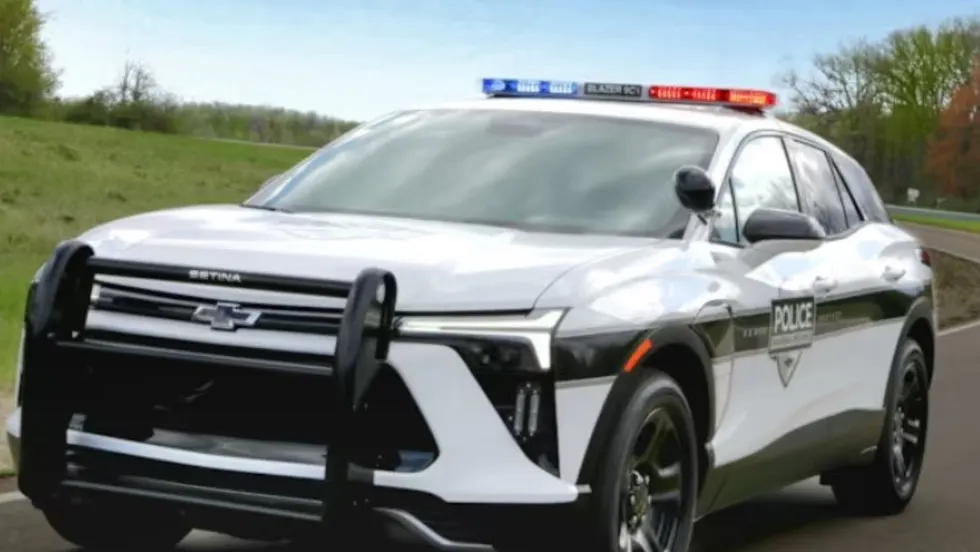
Initial Results Released from MSP 2024 Police Vehicle Testing
The 2024 pursuit-rated vehicles--all pickup trucks or SUVs, including two battery electric models the Chevrolet Blazer EV AWD and Ford Mustang Mach-E--were put through their paces.
Read More →
Officer Safety Considerations Related to Alternative-Fuel Vehicles
As more alternative-fuel and hybrid vehicles hit the road, police and other first responders need to understand that they are no more dangerous than conventional vehicles. However, there are certain safety considerations every cop should know.
Read More →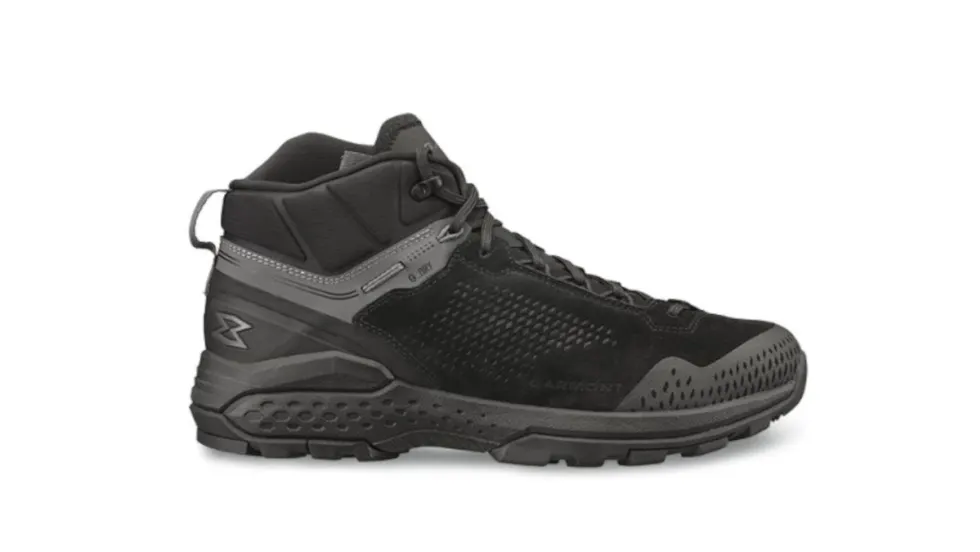
Garmont Working to Grow LE Market Presence
Garmont Tactical has found wide acceptance by military boot buyers, but now the company is trying to better respond to the needs of police officers. Many cops now are not fans of 8-inch boots, so Garmont is adapting.
Read More →
Publisher’s Note: Our Commitment to You
Through our magazine and website and our Police Technology eXchange event, we promise to provide you with information and access to resources to help you do your job safer and better.
Read More →
10 Tips for Responding to Mental Health Crisis Calls
The Harris County Sheriff's Office is a model for other agencies that want to learn about crisis intervention and mental health crisis response. Sgt. Jose Gomez shares the story of their programs and provides 10 tips for mental health crisis call response
Read More →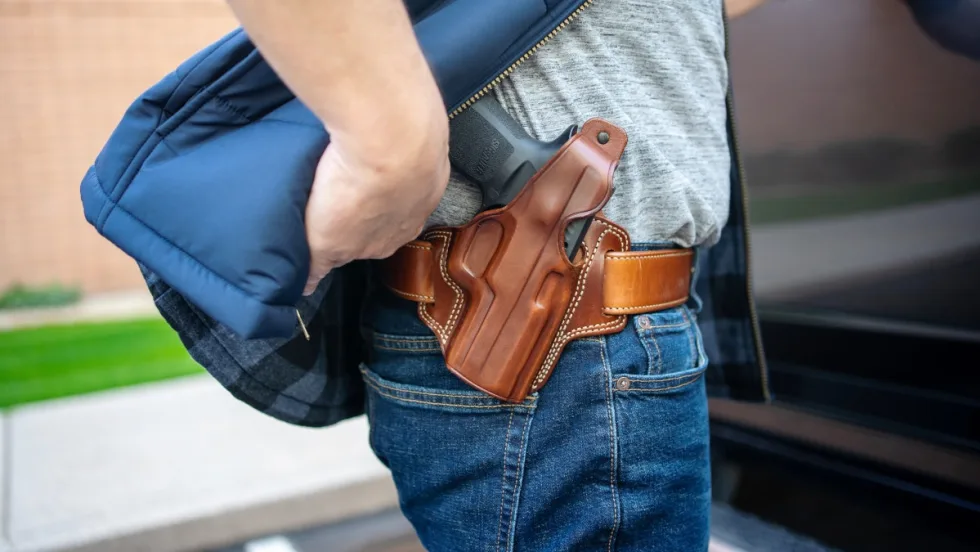
5 Things to Know When Buying Concealed-Carry or Off-Duty Holsters
Mike Barham, of Galco Holsters, shares five important considerations to keep in mind when you buy off-duty concealed or plain-clothes carry holsters.
Read More →
10 Tips for Reviewing Use-of-Force Reports
While the burden of accurately reporting use-of-force situations is on an individual deputy or officer, the person reviewing those reports shares in the responsibility of making sure the reporting is done properly, with clear details included.
Read More →