



Breaking Down Communication Silos in Multi-Disciplinary Response
There are—contrary to common belief among the public and the press and the politicians—substantial successes in multi-disciplinary, multi-jurisdictional response to terrible events. But Improvements can still be made.


The author at Candlestick Stadium during an Urban Shield exercise.
Multi-disciplinary, multi-jurisdictional response to mass-casualty events is complicated even when everyone racing to the scene is on the same page (and the same radio frequencies). Such a response is made massively more difficult when the various responders—police, fire, EMS, public works, and emergent citizen volunteers are NOT on the same page or the same frequencies.
There are—contrary to common belief among the public and the press and the politicians—substantial successes in multi-disciplinary, multi-jurisdictional response to terrible events.
Perfect?
No.
But pretty gal-danged good.
The best example I can think of off the top of my head is the response to the terrorist attacks of 9/11. That was what I call a "Y'all Come Situation."
And y'all came in fierce force, in Lower Manhattan, Northern Virginia, and southwestern Pennsylvania.
The amazing response—about which every American first responder should be proud—could have been even more effective with improved communications.
Improvements in the Making
In reading after-action reports of active shooter events like Las Vegas, Orlando, Virginia Tech, and others—as well as similar reports on response to large-scale natural disasters like earthquakes, hurricanes, wildfires, and tornados—one thing is clear: communication between all the first responders is key to successfully saving lives and preserving the welfare of those who bravely enter the fray.
Despite their success in stopping the gunfire or extinguishing the wildfire, it's abundantly clear that at times, the left hand didn't know what the right hand was doing.
This is not about radio communications technology—it's about prior planning.
It's about training together in advance.
It's about working with hospitals and emergency room staff to give them the ability to deal with people packed in the back of a pickup truck driven by an "emergent volunteer"—I'm looking at you, Taylor Winston, American Hero.
Firefighters—as much as we like joking about how well they can cook a meal at the fire station—are true partners when police officers are responding to a mass casualty situation.
That requires prior planning and preparation, including communications capabilities.
Training, Training, and Communicating
This is not about technology. There are reasons—really good ones—for the different agencies in the area to have their own frequencies for communication without random cross-talk from others who are not working a scene.
But getting everybody on the page in planning, setting up incident support plans, emergency operations plans, and just exchanging business cards and phone numbers before "bang" happens is invaluable.
The most impressive multi-disciplinary training exercises I've ever participated in was Urban Shield in the San Francisco Bay Area. It was a 48-hour continuous exercise that put me onboard a freight ship, in a school yard, rappelling down an elevator shaft in a building, and on the field of the now-demolished Candlestick football field.
During the exercise first responders were mobilized and deployed to dozens of different exercise scenarios hosted by dozens of various agencies."
It was part Broadway ballet and part California chaos—but communication was key for every team that excelled. One year I rode around in the van of one team (pretty sure I cannot divulge the agency's name), and it was awesome to hear those guys dissect the last scenario, and to plan to do better at the next one.
The "Other" First Responders
One thing police, fire and EMS responders have a tendency to forget about is public works employees and their vital role in response to catastrophe. The local power company, the phone companies, the Internet providers, the sanitation department are all also potential "first responders."
Heck, they might get to a scene way before you do.
My dad worked for "Ma Bell" (the phone company that eventually became AT&T). A hurricane hit the region when I was in junior high. It was bad—downed trees, power lines, plenty of flooding. Bad. Oh, and nobody's phones worked.
I went out with my dad to help repair the phone lines. There were no cops or firefighters around—just me and my dad and his buddy from work, climbing phone poles to restore communication capabilities to families in the area.
I've done some crazy stuff in my life but climbing those phone poles without any harness or protection—or even any actual training—to test the wires kind of tops the list.
All I had was gumption and a "walkie-talkie" radio connected only to the other AT&T guys climbing poles a mile away.
We couldn't call the cops or the firefighters on those radios.
I remember my dad cursing that flaw, and I'll never forget it.
Final Words
Dealing with an emergency in real time, as it unfolds, requires prior planning and preparation. It requires creating solutions to problems that haven't happened yet. It requires a special kind of imagination—some would call it a "dark" imagination and I would agree. However, it also requires understanding of the lingo and the language of the counterparts likely to arrive on scene.
This isn't about technology.
The radios are a tool—nothing more and nothing less.
The training is the language. The training is the key.
More Blog Posts
Preventing Heat Injury in Police K-9s
In the relentless heat of summer and even early fall in some parts of the country, officers face the important task of protecting their K-9 partners while working in sweltering temperatures. Recognizing changes in a dog’s behavior is the key.
Read More →
Why Your Agency Needs to Attend the ILEETA Conference
ILEETA is a complete resource for trainers to address trainers' needs. Its mission is to enhance the skills and safety of criminal justice practitioners while fostering stronger and safer communities.
Read More →
IACP 2023: New Training Products
Technologies for improving law enforcement training and training management were some of the highlights at this year's show.
Read More →
Initial Results Released from MSP 2024 Police Vehicle Testing
The 2024 pursuit-rated vehicles--all pickup trucks or SUVs, including two battery electric models the Chevrolet Blazer EV AWD and Ford Mustang Mach-E--were put through their paces.
Read More →
Officer Safety Considerations Related to Alternative-Fuel Vehicles
As more alternative-fuel and hybrid vehicles hit the road, police and other first responders need to understand that they are no more dangerous than conventional vehicles. However, there are certain safety considerations every cop should know.
Read More →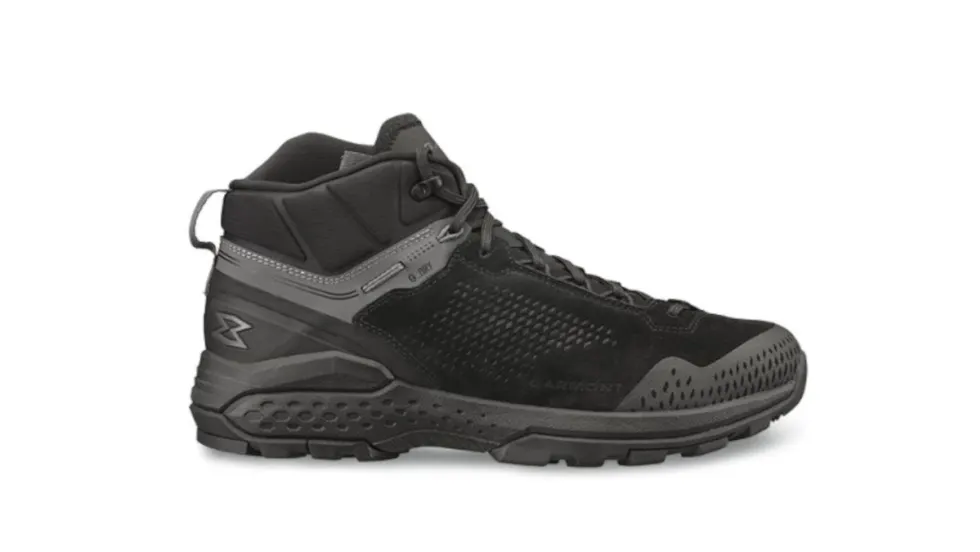
Garmont Working to Grow LE Market Presence
Garmont Tactical has found wide acceptance by military boot buyers, but now the company is trying to better respond to the needs of police officers. Many cops now are not fans of 8-inch boots, so Garmont is adapting.
Read More →
Publisher’s Note: Our Commitment to You
Through our magazine and website and our Police Technology eXchange event, we promise to provide you with information and access to resources to help you do your job safer and better.
Read More →
10 Tips for Responding to Mental Health Crisis Calls
The Harris County Sheriff's Office is a model for other agencies that want to learn about crisis intervention and mental health crisis response. Sgt. Jose Gomez shares the story of their programs and provides 10 tips for mental health crisis call response
Read More →
5 Things to Know When Buying Concealed-Carry or Off-Duty Holsters
Mike Barham, of Galco Holsters, shares five important considerations to keep in mind when you buy off-duty concealed or plain-clothes carry holsters.
Read More →
10 Tips for Reviewing Use-of-Force Reports
While the burden of accurately reporting use-of-force situations is on an individual deputy or officer, the person reviewing those reports shares in the responsibility of making sure the reporting is done properly, with clear details included.
Read More →