



Will Police Radios and Smartphones Merge?
Many experts say the smartphone will not become a truly viable law enforcement tool until a new high-speed data (LTE) system for public safety is in place. But even with the current commercial cellular data system smartphones are playing a major role in law enforcement operations.

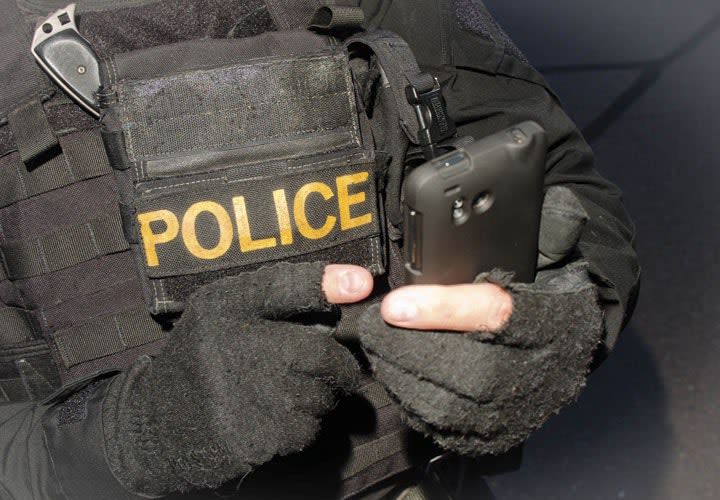
Photo: Mark W. Clark
When the definitive history of the early 21st century is written decades from now, it's likely that scholars will focus much of their energy on explaining the impact of June 29, 2007. Most Americans have no idea how important that day has become. But it changed our lives more than any other day in recent history. It's the day that Apple launched the iPhone, and the smartphone revolution began.
More than just a phone, the iPhone was the first true handheld computer that could run applications and easily browse the Internet in the same manner as a desktop computer. It was soon rivaled by a wide variety of smartphones running Google's Android operating system. The result has been an explosion of smartphone technology that has changed the way Americans and people worldwide communicate and use computers. Smartphones are also changing the way public safety personnel communicate, and they will continue to do so into the next decade.
Many experts say the smartphone will not become a truly viable law enforcement tool until a new high-speed data (LTE) system for public safety is in place. But even with the current commercial cellular data system smartphones are playing a major role in law enforcement operations.
Apps and Tools
The most common use of smartphones in law enforcement today is as reference tools. There are numerous apps that detail laws, policies, and procedures for cops in the field.
But more sophisticated software tools are also being developed for the smartphone. Spillman Technologies has adapted many of its mobile computing products for both phones and tablets. Spillman's Touch software is an app that lets officers access records, search databases, view dispatch information, and receive assignments on their phones. Most importantly, officers using Touch can be alerted to concerns about a contact while away from their in-car or desktop computers.
One of the most unusual software tools for the smartphone comes from covert video surveillance company Sur-Tec. The company's VP Covert Audio and GPS software is a 21st century version of a wireless mic for undercover operations. It runs in the background of a smartphone and cannot be detected by the target. Also because it uses Internet data instead of voice protocols, it can be monitored over a secure Web connection by multiple listeners based anywhere in the world.
The Next Level
But the smartphone revolution in law enforcement is not just about using the device as a platform for apps. Soon it may also be a mission critical communications tool for law enforcement.
That's the idea behind Covia Labs' new Alert & Respond. Scheduled for release this month, Alert & Respond provides any off-the-shelf smartphone with the command and control features and situational awareness needed by public safety.
Covia Labs' CEO David Kahn says the software is Java based, and it allows officers to share information securely over a variety of smartphones. "The platform is fundamentally an interoperability platform that allows the sharing of information between officers in the same or different agencies. But it goes beyond that because it allows the information to be shared securely," he says.
Using the software, which is available to agencies by subscription, officers can send texts, photos, and video. They can also track the location of other officers in their unit. Kahn gives the example of a team assembling for an operation. Using Alert & Respond, the team commander could indicate an assembly point on the map and send it to all team members over their phones.
Alert & Respond is also designed to aid in voice communications. "If you listen to police during a real incident, you'll hear a lot of officers asking, 'Can you repeat that?' Alert & Respond allows officers to play back voice communications so they will not need to repeat so many messages," Kahn explains.
Kahn says the only real problem with using smartphones for critical public safety communications is that cell phones have very weak signals. "They are generally half a watt. So police are rightfully wary."
Covia Labs and other companies are working on a solution to the cell signal problem. "We have come to the conclusion that if you add software to the land-mobile radios (LMR) and to the smartphones, you can make it so the LMR acts as a backup for the smartphones," Kahn says.
Push To Talk
One of the first steps in this direction was announced by radio manufacturer Harris Corp. last year. Harris' BeOn transforms an Android platform smartphone into a push-to-talk P25 radio handset.
Paul May, Harris' manager of systems marketing, says BeOn is like "Skype for public safety communications." Once the software is installed, the phone can be connected to the agency's land-mobile radio network. "We took all the functionality of a P25 standard radio, all of the functionality that we would build into the hardware, and incorporated it into BeOn.
May envisions BeOn as a way for administrators and brass to monitor the communications of their troops and stay in touch when they do not have access to a radio. It could also be a lifeline for an officer during those times when the radio is not working.
Here Come the Hybrids
BeOn and Alert & Respond are software marriages between public safety radios and smartphones. In the next few years we will also begin to see hybrid hardware that incorporates the best features of LMR systems and smartphones.
These devices will probably look something like today's P25 radio sets but with very different displays. "Public safety radio is a very conservative market," says Harris' May. "But as capabilities change over time so will the form factor. You can certainly envision a device that has a touch screen display, that's ruggedized, and has a long battery life."
Battery life would be an issue for smartphone-LMR hybrids on patrol. Few current smartphone models have batteries robust enough to last a 10-hour shift of constant use. In order to incorporate such batteries smartphone-LMR hybrids will likely be considerably thicker than commercial smartphones.
Shamik Mukherjee, director of global solutions for Motorola, says the hardware will not be the only difference between commercial smartphones and the next generation of police communication devices. "The user interface and user experience will be very different from a commercial smartphone," he says. "When an incident occurs or an alert is sent, that potentially life-saving information will have to be brought forward and made instantly accessible to the officer."
Motorola's corporate vice president and general manager of broadband solutions Darren McQueen believes the real revolution in police communications will come when handheld computer-communications devices replace the in-car computer. He envisions a dockable multi-mode device that will be attached to a display in the car and taken with the officer out of the car. fficer out of the car.
Such multi-mode devices may sound like science fiction, but they are coming. And probably sooner than later. Motorola representatives are very cagey about when these devices will hit the market, but Mukherjee would say, "We are in very rapid fashion working with our customers to develop these systems and the networks to operate them.
"It's a tremendously exciting time for the public safety communications industry. We are seeing a real transformation. Broadband and multi-mode devices are taking a foothold," Mukherjee adds.
For More Information:
Covia Labs
Harris Corp.
Motorola
Spillman Technologies
Sur-Tec
More Technology
A police agency's guide to data-driven fleet management
Costs are rising and the public expects more transparency into how their tax dollars are spent. This e-book shows how police agencies can use fleet data to take control of fleet expenses while improving officer safety and demonstrating fiscal responsibility to the communities they serve.
Read More →
AI and analytics for law enforcement: Turning data into insights
Law enforcement agencies are managing more video, sensor data and digital evidence than ever before. Discover how AI and analytics can help turn that data into actionable insights that strengthen situational awareness, accelerate investigations and support more informed decisions.
Read More →
Vasco Electronics Adds Automatic Language Detection to Vasco Translator Q1
Vasco Electronics’ software update introduces hands-free language switching and expanded offline translation across 45 language pairs, empowering law enforcement, healthcare, and front-office enterprise teams
Read More →

North Miami Police Department Deploys Mark43
The North Miami Police Department has deployed Mark43 as part of its Five-Year Strategic Plan that represents its collective vision and goals for a more proactive police department, anchored by a core commitment to leveraging modern technology to enhance efficiency and public safety.
Read More →
Cellebrite Genesis for Enterprise Now Generally Available
Made available to the public sector in June, Cellebrite Genesis is serving a growing mix of national, regional, and local agencies worldwide, including some of the largest regional and metropolitan police departments. It is now available for enterprise organizations.
Read More →
2026 Vision FirstNet Users Summit to Host Emerging Leaders Training on Grassroots Advocacy for Public Safety
“Emerging Leaders Training: Understanding the Importance of Grassroots Advocacy for Public Safety," a session during the 2026 Vision FirstNet Users Summit, will offer a roadmap for unified advocacy at the federal level.
Read More →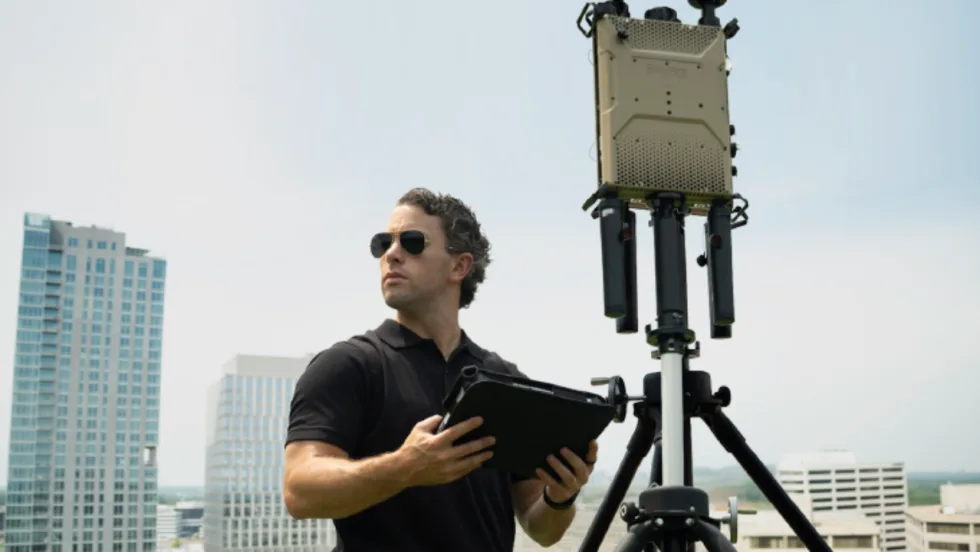
Motorola Solutions Completes Acquisition of D-Fend Solutions
Motorola Solutions has acquired D-Fend Solutions, an industry leader in counter-drone technology. This deal provides public safety and enterprise customers with access to advanced counter-unmanned aerial systems.
Read More →
ZeroEyes, Advantech & Camden Police Partner to Bring AI Gun Detection Technology to Delaware School District
ZeroEyes has partnered with Advantech and the Camden Police Department to deploy ZeroEyes’ AI gun detection and intelligent situational awareness platform at Delaware’s Caesar Rodney School District (CRSD).
Read More →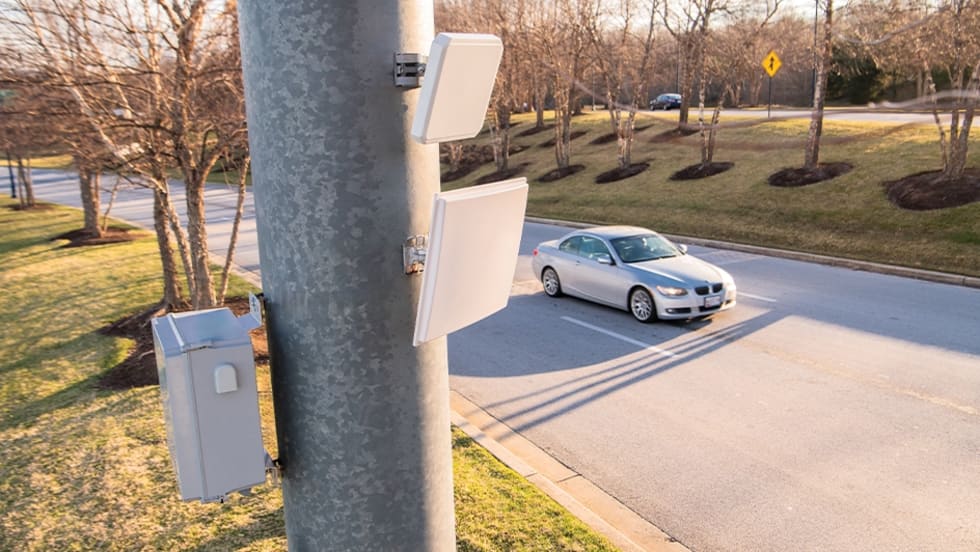
Leonardo U.S. Cyber & Security Solutions Introduces SignalTrace, the Next Evolution in Electronic Signature Detection Technology
SignalTrace reflects years of product refinement and a clearer expression of the technology’s purpose of recognizing and correlating electronic signatures in publicly broadcast wireless signals to reveal patterns, relationships, and trends that might otherwise go undetected.
Read More →
Pimloc Launches Secure File Sharing to Streamline Release of Redacted Video
Pimloc’s Secure File Sharing lets organizations deliver redacted video, audio, and documents through expiring, passcode-protected links, accelerating delivery while reducing security, compliance, and chain-of-custody risks.
Read More →