



Will I Get Sued?
Years ago when I was attending my police academy recruit training, one of the many questions my fellow recruits and I pondered was: Will I get sued? In my case, the answer turned out to be, "Yes." And several times at that!

Years ago when I was attending my police academy recruit training, one of the many questions my fellow recruits and I pondered was: Will I get sued? In my case, the answer turned out to be, "Yes." And several times at that!
The question of getting sued is similar to another that haunts new recruits: Will I have to shoot someone? The answer to both questions is a resounding: maybe.
I know that sounds like a typical lawyer response to the question but, actually, it is the response of someone who has been in law enforcement for more than 32 years and who is also an attorney who defends officers and law enforcement agencies. The answer is, "Maybe," because there are too many variables involved.
I have defended officers who have done nothing wrong. I have defended officers who could have done things better. And I have defended other officers who just plain screwed up. Which one will you be? Well, if you are like most of us, at one time or another, you will fall into all three categories. Hopefully you will not fall into the fourth category of officer lawsuits: officers who knowingly do wrongful, willful, malicious, and/or unlawful acts.
Probable Cause
While luck and circumstance play into whether youwill be sued, so do your own concerted efforts tokeep yourself from being sued.
What efforts would these be? Well for starters: know the law! I know that sounds like a no-brainer, but I'm here to tell you that most lawsuits focus around the cause of action of false arrest either in state or federal court. The foundation of this claim is a lack of probable cause. As you have probably been taught in your academy by now, it is a tenant of the Constitution of the United States that unless you have a warrant, you must have probable cause to make a warrantless arrest.
So for starters, one good thing would be to know the definition of probable cause. You say you know what probable cause is; they already covered that stuff in class. Well, I hope that your studies included not only memorizing the Miranda warnings, but also learning a definition of probable cause.
Still, you would be surprised how many times during lawsuits that I find the sued officer cannot give a short, succinct definition of what constitutes probable cause. How many times? Almost always!
Don't get me wrong, most officers can kinda tell you what probable cause is and get it kinda right, sometimes, but that is about it. Like the old Supreme Court Justice Potter Stewart's comment about pornography, most officers know probable cause when they see it, but they have a heck of a time defining it. And if you can't define it, then a judge and jury may think you don't know what it is and that your "ignorance" led you to make a false arrest.
Here's my favorite definition of probable cause: "A law enforcement officer has probable cause to arrest a suspect if the facts and circumstances within the officer's knowledge, of which he or she has reasonably trustworthy information, would cause a prudent person to believe, under the circumstances shown, that the suspect has committed, is committing, or is about to commit an offense." Williamson v.Mills, 65 F.3d 155, 158 (11th Cir. 1995).
If you memorize this definition, or another accepted judicial definition of probable cause, you will be light years ahead of the game.
Read the Books
From there you need to know the elements of each of the laws, statutes, and ordinances that you will be enforcing in your future jurisdiction. Not just kinda know what constitutes the crime; know the elements that the prosecutor will need to prove to get a conviction, or at the least a plea.
Most jurisdictions have books and manuals that break out the elements of state statutes and federal laws. I would strongly recommend that you get a copy of one of these and have it by your side for the rest of your career. Oh, and by the way, these are updated yearly, so that means making sure you have the current edition of the manual and not one that is 10 years old. Yes, I did once represent an officer who charged someone with an outdated statute. Oops.[PAGEBREAK]
The Prosecutor's Prerogative
So now you've got your definition of probable cause and you are going to have the elements of the crimes that, coupled with a little luck, may keep you out of a lawsuit. But keep in mind that many times district attorneys and state attorneys make determinations on whether or not to prosecute based on different criteria than officers do in making arrests.
As officers, we arrest the people who break the laws. The prosecuting attorneys, however, do not always want to prosecute all of these cases.
Why? Because sometimes they think it is an iffy case and don't want to lose. Sometimes, they just don't like the charge or don't like the facts. Like it or not, it is their prerogative, not yours.
Unfortunately, many times when the prosecuting attorney decides to not file the case, this emboldens the criminal/arrestee, and he now wants to get back at the officer. So he goes to see some-pardon the expression-attorney, who decides to sue the police.
The good news is that most of the time the fact that the prosecuting attorney did or did not go forward with the case cannot even be entered as evidence in a civil suit against an officer and is really of no legal consequence.
Further, even if the prosecuting attorney puts it in writing that he or she believes that the officer did not have probable cause, that fact is also not of any consequence because it is up to the judge in the civil suit or the jury to determine whether the officer had probable cause to make the arrest. In federal cases when the officer is sued individually, the standard for qualified immunity (getting out of the suit) is arguable probable cause, which means that the officer did not actually have to have probable cause, only a reasonable/arguable belief that he thought he had probable cause for the arrest.
Excessive Force
Along with false arrest, lawsuits against cops almostalways include an allegation of excessive force or battery. If you, the officer, did not have probable causeto arrest the suspect, then you also did not have legal authorizationto use force and lay hands (Taser/baton/OC) on the person, thus use of force becomes an almost automatic component.[PAGEBREAK]
So, how do you deal with that issue? Well, first go back and read the above. Now, assuming that you had probable cause or arguable probable cause, then you had a right to use force. Therefore, if you have studied your use-of-force principles and matrix for your jurisdiction and know what use of force is appropriate under what circumstances, you should be in good shape for any lawsuit. You just need to be able to articulate why you used the force you did and how you used it. This of course leads us to that old bugaboo Report Writing.
I am sure that your academy has emphasized report writing in your training, and I hope you had an instructor who made it interesting to you because you're going to be writing a lot of reports in your career, so you better get used to the idea.
My tip for you is that you shouldn't just write adequate reports. Make them thorough and articulate. Here's why: Three or four years after the arrest, when the lawsuit is being filed you will probably not remember much about what took place and neither will anyone else, except the plaintiff (the person suing you).
The plaintiff will remember everything that happened and in great detail. Of course, his version of the events will probably be a magical mystery tour, but he will swear that his account is exactly what happened and the truth. As Mark Twain once wrote: "The reason why truth is so much stranger than fiction is that there is no requirement for it to be consistent."
This is why it is important for you to document the truth in your reports in such a way that years later both you and everyone else who reads your report will know exactly what happened and why. I know this means writing more than you might feel like at the end of a 12-hour shift but, believe me, it will someday save your butt in a civil suit. And even if you don't get sued, a great report certainly won't hurt your criminal case.
An Out-of-Body Experience
I tell my clients and the other officers that I meet tohave an out-of-body experience when they are makingan arrest, using force, or taking other actions thatmay result in a lawsuit.
This means that you should look at what you are doing or about to do, not from your eyes in the moment, but from the eyes of someone outside your body who is watching what you are doing. Think about how your actions will look years from today in a sterile courtroom filled with non-police officers who don't know any more about police work than what they see on television. If you follow this rule during your career, I bet you will discover that sometimes you are getting ready to do something that is not really a good idea.
I recall a member of a police academy class asking me if I didn't think it stinks that "all these people are videoing officers?" I asked this recruit why he cared. He went on to point to things like the Rodney King arrest, as proof of how hard it is on officers now with all "these people" having video cameras.
First of all, all of us are also "these people" and, within reason, we all have the right to video whatever we see on the street. A little thing called the Constitution guarantees us certain rights.
Secondly, why would you care? If you conduct yourself at all times like everything you are saying and doing is being captured on video and audio, why would it matter to you? On the other hand, if you are doing things wrong, I can certainly understand why you would not want that memorialized forever on reruns of "COPS" or, worse, in a courtroom.[PAGEBREAK]
Conduct yourself properly and within the lawful boundaries of your profession and you will probably never have anything to worry about and, even if you do get sued, you can still take pride in what you did.
Finally, I would advise all of you to not let your education end with your graduation from the police academy. You are entering one of the finest professions that I can think of. Believe me when I tell you that I am personally much prouder of being a law enforcement officer than I am of being an attorney.
You are a professional. And a professional is always striving to learn more about his or her profession. Continue your education by reading everything you can get your hands on.
A good start is POLICE Magazine, the sister publication of POLICE RECRUIT. I have been reading this magazine, every month since it has been published, and that's a lot of years.
Also, join professional organizations like the International Associations of Chiefs of Police (no, you don't have to be a chief to join). In addition, most professional organizations have newsletters and magazines that will keep you informed and updated, not only on police products, but also on changes in the laws and civil court decisions affecting law enforcement.
I would also recommend that you try to develop an interest in training. The old adage that he who teaches learns is right on point. There's no better way to really learn something than to teach it to others. Go forth and prosper as law enforcement officers, take pride in what you do, serve the public, and stay safe.
John A. Makholm, served in law enforcement for 32 years and retired as a chief. He is the founding partner of The Makholm Law Group, a firm that concentrates on defending law enforcement and corrections officers and their agencies. He also is a member of the POLICE Magazine Advisory Board.
More Training
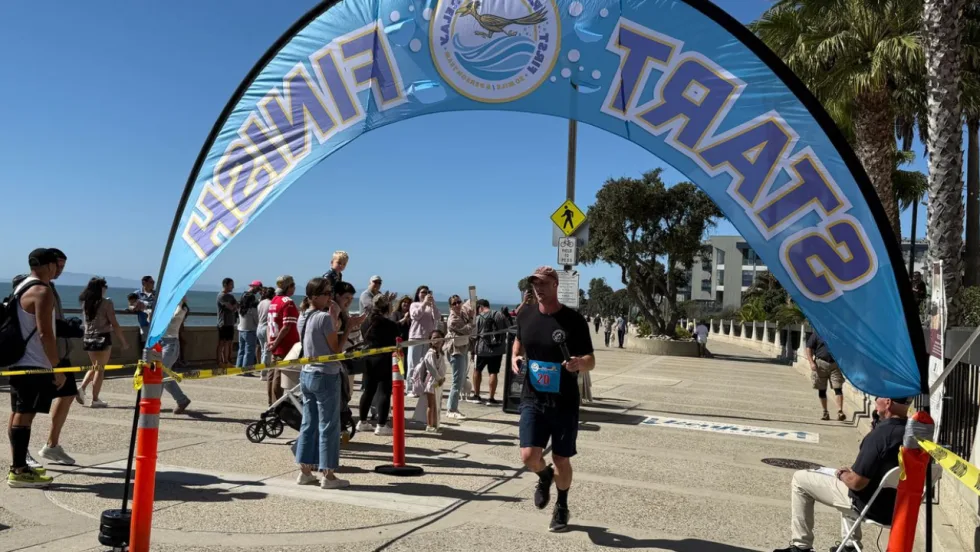
Registration Underway for Sixth Annual First Responders Relay
The California Police Athletic Federation’s annual First Responder Relay will welcome first responder teams from across the globe to compete along Ventura's scenic coastline on Oct. 11. Registration is underway.
Read More →
Vector Solutions Launches Comprehensive Online Dispatch Training Catalog for Emergency Communications Professionals
Vector Solutions’ new catalog of 35 expert-developed online courses can help emergency communication centers strengthen training, meet certification requirements, and simplify continuing education.
Read More →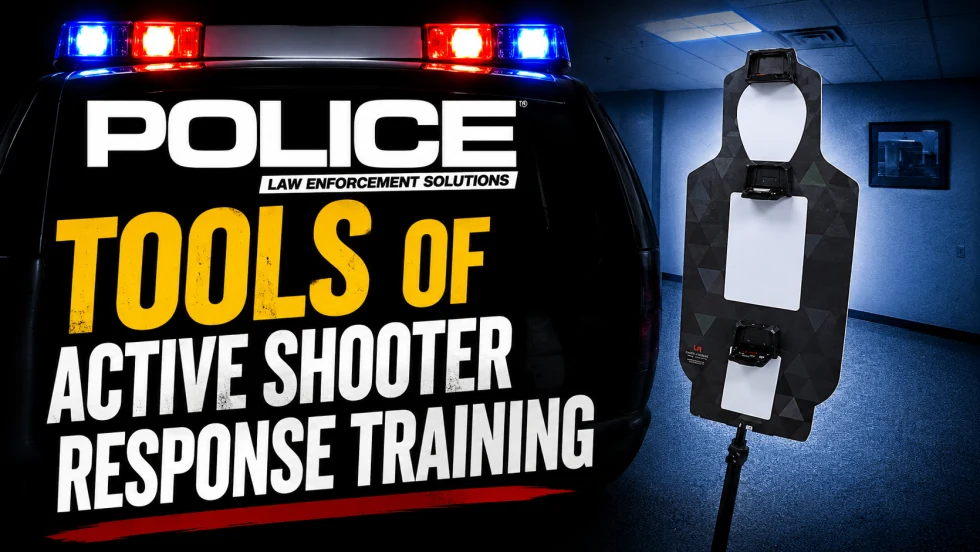
Tools for Active Shooter Response Training
What technologies help prepare officers for active shooter response situations? This behind-the-scenes look at law enforcement training explores shot simulators, smart firearms, laser target systems, and the tools used to build safer, more effective training environments.
Read More →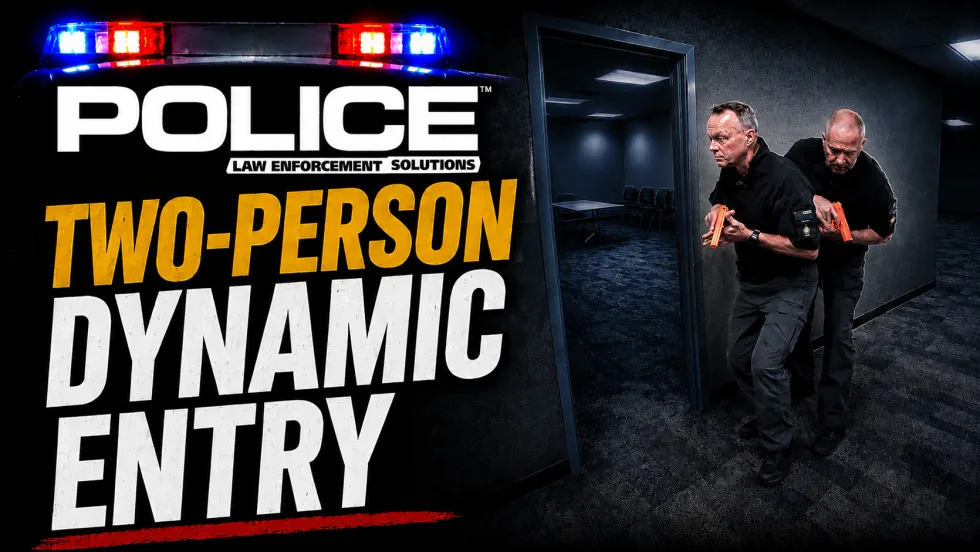
Two-Officer Tactical Doorway Entry Techniques
Entering a room during active-threat situations requires communication, coordination, and disciplined tactical movement. In this video, trainers from the United States Deputy Sheriff’s Association demonstrate critical room entry concepts, including fatal funnel awareness, team coordination, and safe tactical movement.
Read More →
High Compressed Ready Explained | Muzzle Control For Room Entry
In this video, Mike Willis, law enforcement national training and program director for the United States Deputy Sheriffs’ Association, demonstrates the high compressed ready position and discusses muzzle control during room entry.
Read More →
Why Attend the DroneSense Innovation Summit by Versaterm?
Let’s hear from Ryan Bracken, head of product, about why your agency should send someone to the first annual DroneSense Innovation Summit by Versaterm in April.
Read More →
Caswell Live Fire Spins Off from InVeris
Caswell Live Fire has spun off from parent company InVeris, coinciding with the 100th anniversary of Caswell’s founding. Over the past 100 years, Caswell has developed pioneering solutions that support military, law enforcement, and commercial clients worldwide.
Read More →
When Do You Transport a Wounded Officer Instead of Waiting for EMS?
Thumbnail for video series POLICE Topics, Tactics & Tips with a yellow headline that reads When Do You Transport a Wounded Officer Instead of Waiting for EMS?
Read More →
How to Pick Your High-Risk Stop Location for Tactical Advantage
Hear veteran trainer Mike Willis, of the United States Deputy Sheriff’s Association, explain several considerations that can help you wisely pick your best spot to initiate high-risk or felony traffic stops.
Read More →
Coffee Break with Police Experts: Using Your Patrol Vehicle for Cover
In this video, hear from Dustin Mowery, a product specialist at Team Wendy, as he discusses how to best use a patrol vehicle for cover.
Read More →