



Wash The Hands
Infection control is about taking care of yourself and the people around you by just doing some simple things that can be a pain in the butt.


Illustration: Sequoia Blankenship
The recent rise of Ebola awareness got me thinking about all the modern threats crime fighters face. In the age of ambushes, social and civil unrest, budget issues affecting staffing and resources, and the debate over the "militarization of the police," now comes another increased risk in the form of disease. AIDS/HIV, Hepatitis A and C, TB, MRSA, skin infections, eye infections, flus of all kinds, West Nile Virus, and a whole alphabet of contagious illnesses have descended upon the land and we are going to be in contact with many of their hosts.
Now, in the interest of full disclosure, I am a bit of a hypochondriac. I can't read about Lyme Disease and not feel ticks crawling all over me. If I watch a show about Hantavirus I get to feeling woozy hours after dumping a successful mousetrap, and if you live in Arizona this is a real concern. But I want you to be concerned, not goofy about this stuff like me. My dad was a physician and surgeon, and as a youngster, I would look things up in his books and suddenly be convinced I had Dengue Fever or the beginning of Elephantiasis. My long suffering father would explain in detail that I did not have the disease and that I did not want to catch it.
So, needless to say, when teaching "Universal Precautions" classes in the 1980s, or doing a training video about it a decade later, I invariably dragged my bleach mixture and gloves with me everywhere I went. I saw, and still do see, microbes everywhere and, indeed, they are everywhere. In recent years much of my life has been spent on some form of mass conveyance and nothing makes me cringe more than a deep bronchial cougher in the seat behind me for four hours on a flight. In short, I'm oversensitive about this stuff, but I'm not the norm; most of us need to take disease more seriously.
Movies like "Outbreak," "Contagion," "The Andromeda Strain," and "12 Monkeys" only increase the anxiety about disease, but do little to educate us in exactly how to get a grip on the real risks. Like how the heck do we reduce our chances of turning zombie?
All first responders get training about "universal precautions," but how many follow the protocols every single time? Heck, the single greatest step in ensuring you live through today is putting on a seat belt, yet officer killed statistics show we still don't do that simple step regularly, much less put on gloves when dealing with people we are about to search, arrest, or give aid to.
The real issue is this: Do you habitually protect yourself from disease by following the basic steps to prevent infection? In doing so you also protect the folks you care about. How often do you think about the bottom of your boots? What did you walk through on today's shift that you are bringing home with you? What's on your clothes after that fight with that creepy sickly fellow who was way stronger than he looked? How well did you clean up your backseat after that prisoner transport?
Infection control is about taking care of yourself and the people around you by just doing some simple things that can be a pain in the butt, such as putting on those stupid gloves, or wiping down your equipment and cuffs, or even washing your hands … a lot. Unless we do this habitually (always) we can develop the habit of never doing it, and that can lead to real tragedy. Disease is something law enforcement has always had to deal with, and this day and age of open borders and the "global village" is making the problem something that sort of feels like "piling on" when we evaluate our risks.
I was hunting with some physicians recently and the talk came around to the Ebola threat and law enforcement. Every one of those doctors said, "Forget about Ebola; the real problem is Hepatitis C," a terribly communicable disease that is really gaining traction and is prevalent in exactly the populations we deal with in law enforcement. By the time the docs were done lecturing me my liver was aching. Again, the precautions are good basic steps and yet I wonder if many of us don't just stop doing them because they are annoying and, more than anything, we don't really perceive the threat.
So, if fear of catching Ebola will make you do the basics to protect yourself, which in turn protects those around you, great. Then go online and read the symptoms…I did and then didn't sleep for a week. I just kept washing my hands…
Dave Smith is an internationally recognized law enforcement trainer and is the creator of "JD Buck Savage." You can follow Buck on Twitter at @thebucksavage.
More Patrol

Adept Armor Introduces Two New Rifle Plates
Adept Armor has launched two new Level IV ballistic plates, the Emperor and the Archon Mark 2, which brings Adept Armor’s new Quatroid ceramic to the high-threat, performance-value center of the range at 5.2 pounds.
Read More →
POLICE Product Test: Benchmade Bailout
The Benchmade Bailout is a slim, lightweight carry knife with a deep-ride pocket clip and comes in a variety of blade steels and scales. Here is a detailed review of the Taiga Green Bailout, released earlier this year.
Read More →
NLEOMF Announces July 2026 Officer of the Month
NLEOMF honored a Michigan deputy sheriff as the July 2026 Officer of the Month for rescuing a trapped driver from a burning vehicle following a Fourth of July crash.
Read More →
Streamlight to Showcase Newest Lighting Products at National Safety Council’s Safety Congress & Expo 2026
Streamlight will showcase its latest lights, including the Portable Scene Light III and the LiteBox 1Million, at the 2026 National Safety Council (NSC) Safety Congress & Expo.
Read More →
The 2027 World Police & Fire Games Set for Perth, Australia
The 2027 World Police & Fire Games (WPFG) will take place in Perth, Western Australia, from Friday, March 12 through Sunday, March 21, 2027.
Read More →
5.11 Partners with National Fallen Firefighters Foundation to Support #ForThe343
5.11 has joined the nationwide movement honoring the 343 New York City Fire Department firefighters lost on Sept. 11, 2001.
Read More →
Team Wendy Announces Title Sponsorship of the Jorge Pastore Foundation
Team Wendy’s 3-year partnership with the Jorge Pastore Foundation expands access to programs that strengthen those who serve.
Read More →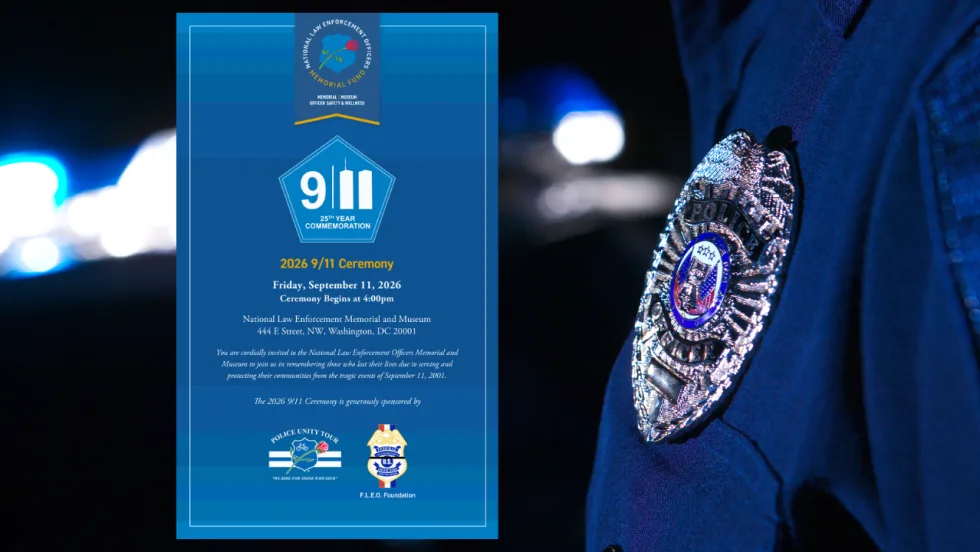
National Law Enforcement Memorial and Museum Hosting 9/11 25th-Year Commemoration Ceremony
The National Law Enforcement Memorial and Museum is hosting a 9/11 25th Year Commemoration Ceremony on Sept. 11 at 4 p.m.
Read More →
National Law Enforcement Officers Memorial Fund Announces June 2026 Officers of the Month
The National Law Enforcement Officers Memorial Fund (NLEOMF) named 15 officers of the Chico Police Department (California) as the Officers of the Month for June 2026 for their roles in responding to an active-shooter incident at a public library.
Read More →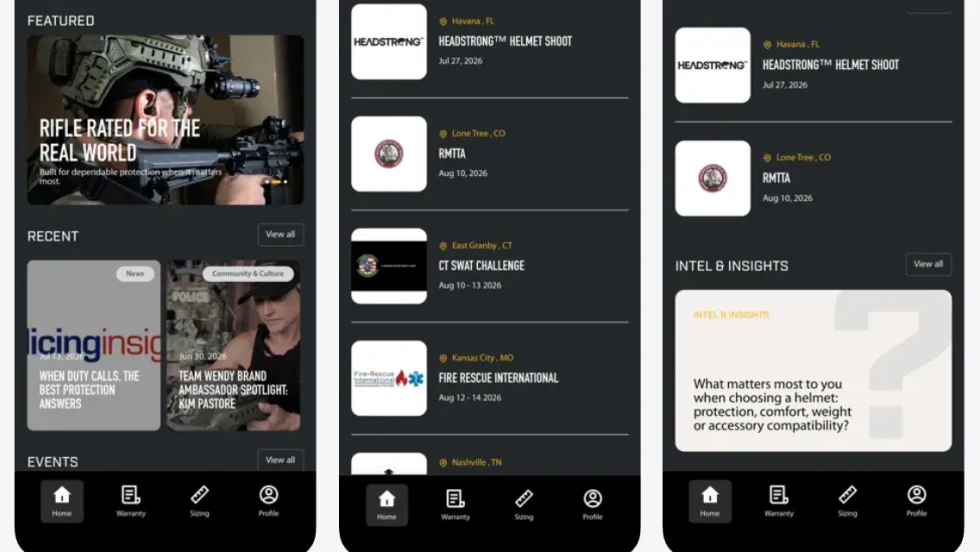
Team Wendy App Creates New Digital Hub for Helmet Owners
The Team Wendy Community App provides one location for warranty registration, size-fit tools, product updates, and community connection. For helmet owners, the new app creates a simpler path to the information and tools that matter most.
Read More →