



Video Analysis: Caught on Camera
Ocean Systems' dTective is a video analysis software suite devoted to the task, which the Tarrant County District Attorney's Office in Texas routinely uses to run one of four regional labs across the country dedicated to retrieving and processing video evidence.

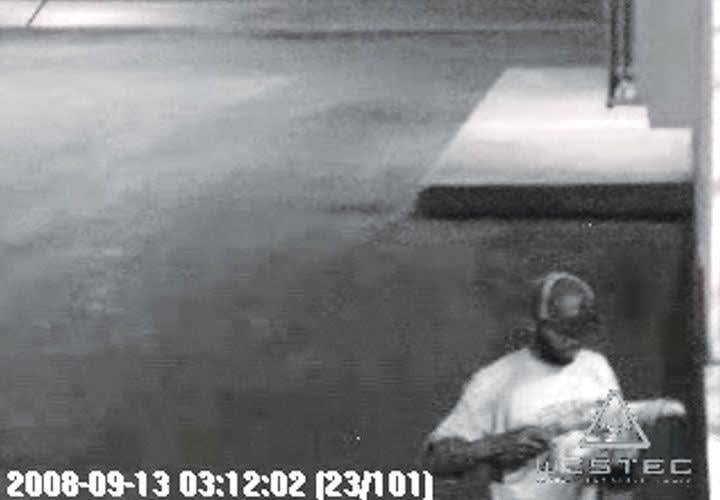
By comparing the size and shape of the incendiary devices in this arson case, video analysis yielded definitive proof that the suspect held the same items in the video.
You've seen it in countless movies and television shows: A forensic video analyst magnifies and clarifies grainy surveillance footage of a person's face or a license plate to get the key piece of evidence to catch the killer. While some of the details are exaggerated in Hollywood scripts, such tools do exist and they are frequently used to identify and prosecute offenders.
Ocean Systems' dTective is a video analysis software suite devoted to the task, which the Tarrant County District Attorney's Office in Texas routinely uses to run one of four regional labs across the country dedicated to retrieving and processing video evidence.
A recent arson investigation in Tarrant County required multiple Ocean Systems forensic video analysis tools to identify the person seen on surveillance video setting fire to a Fort Worth dry cleaning business. This involved pinpointing and comparing items of interest in the case.
Accident or Arson
When the Fort Worth Fire Department responded to the scene, it wasn't clear what had caused the blaze. Fortunately, the business used a surveillance system, which the owner hoped could provide some answers.
So while the agency collected and photographed physical evidence, an investigator from the Fort Worth Fire Department's Arson and Bomb Unit contacted Mark Porter, a forensic video analyst with the Regional Forensic Video Lab-Fort Worth at the Tarrant County District Attorney's Office, to retrieve the data. Porter brought to the scene his laptops equipped with Ocean Systems' software suite and set to work.
"I have a dedicated laptop from Ocean Systems that has the Avid product Media Composer and Ocean Systems' DVR dCoder program on it. That allows us to capture the video [on the scene] in its native format, and we can export that data and put it on our laptop from Ocean Systems," explains Porter.
"If the player [that plays the video] is on the disk, we can use the DVR dCoder, which is like a screen capture utility, to highlight the playback window and capture the images as they're playing in the playback software. We can then export them out uncompressed, which is very important to make sure we have the best image quality to work with."
Porter found that the DVR system had survived the fire with little smoke damage. Two cameras from the business' digital video surveillance system had recorded video of the incident. One camera was positioned on an outside wall with a clear view of a window on the side of the building. The other was positioned inside with a view of the opposite side of the window.
Using the playback software, Porter viewed the video from both cameras, which showed a man walk up to the window of the business three separate times between 2:20 and 3:15 in the morning. Each time, he ignited an incendiary device and pushed it through a gap in the window. This proved the fire had been caused by arson.
"If you can get to the scene and get the evidence collected, and do an initial processing of it early on in the investigation, a lot of times it can aid you in what you're looking for," says Miles Brissette, Tarrant County assistant criminal district attorney. "With this case, we were able to rule out quickly that this was not an accidental fire. The video showed that this was an intentional act, so we knew we had a crime."
Finding the Right Person
With the knowledge that the building fire had been caused by arson, Porter set about determining who was in the photo. "Once I come back to the lab, I import the collected still images and Quicktime movie files into our Avid system from Ocean Systems. Then I can start working with the images," says Porter.
One of the first steps was going through the video frame by frame to create clear still images of the person's face. They were printed and handed out to police officers and citizens in the area.
"Between the beat officers and the owner of the store they were able to narrow down the list of people we wanted to talk to," says Brissette. "And, in fact, one person walked right up to us and said, 'I know exactly who that guy is and here's where he hangs out.'"
Within a few days, a suspect was arrested just around the corner from the dry cleaning business on other charges. He was a transient who was known to hang out in the area.
But the case didn't end there.
The suspect's defense claimed the person seen in the video was instead the suspect's brother. To settle the matter, Porter and his team needed to compare images of the suspect with those of his brother, and compare both against images from the surveillance video. Because the brother had been in the corrections system, photos of him were readily available.
It's often difficult to compare high-resolution images such as recent mug shots to low-resolution video stills. Porter used Ocean Systems' MAGNIFi filter to enlarge the images and ClearID to clarify the pictures.
Based on height and facial characteristics, it was determined conclusively that the brother was not the person in the surveillance video. This put the investigation's focus back on the original suspect.
Known v. Unknown
In this case, in addition to the person seen on screen, the items the person was wearing and carrying were all being compared to items found at the scene or on the suspect's person. Zeroing in on details such as the piping on a hat, a specific logo on a T-shirt, and the coloration, size, and shape of the bag being carried by the person in the video proved essential in tying the suspect to the scene of the crime.
Incendiary devices found in the dry cleaning business and photographed by the fire department were also compared to the sources of fuel shown in the surveillance video both in the hands of the person and seen entering the establishment via the window.
"The forensic tools that Ocean Systems provides with its suite allow us to take that next evolutionary step and really get it narrowed down to see and find out if this person committed the elements of the crime or not," says Brissette.
When the investigation report was complete, the evidence was so damning that the case never reached trial.
"We were ready to pick a jury, and the defendant decided he was going to plead guilty and go to the judge for punishment," says Brissette. "He did and he was eligible for a lower sentence, but the judge gave him 15 out of 20 years for this fire."
What's in it for You
Ocean Systems' forensic video analysis tools can help law enforcement agencies solve many types of crimes, including kidnappings, murders, and burglaries. Using video taken at businesses near the scene of a crime could capture valuable data about suspects and victims if you know what to look for and how to process it.
It's often surprising what evidence can be collected, even from crime scenes where the recording system might have suffered damage. "It's not just fire scenes," says Brissette. "It's police vehicles that have been completely destroyed in accidents where we have to use power tools to cut the DVRs or VCRs out from the trunks to get the evidence off of them."
Such resources can be a boon to both police departments and prosecutors. But if you're interested in establishing your own in-house forensic video analysis staff, you need to be prepared to follow through after purchasing the equipment. Expertise is essential, and it takes three or four years for someone to become proficient in forensic video analysis. And that's just the beginning. Tarrant County's Porter is one of 45 people in the world to achieve his level of certification, CompTIA A+. He continues to attend three or four training classes per year through the Law Enforcement Video Association (LEVA) to maintain his skill set.
If you're at a smaller agency, one of the country's four regional labs can process your evidence. But it might take a while. If you're a larger agency that can take on the cost of the necessary equipment and both initial and continual training of experts on staff, it could greatly benefit you.
As Brissette says, "It is a commitment, but it's a commitment that can make the difference between a jury saying guilty and not guilty."
Ocean Systems Forensic Solutions
Video Analysis: dTective
Image Analysis: ClearID
Audio Clarification: QEAS
Asset Storage: archive-R
More Technology
How Motorola Solutions’ New “Insights” Platform Helps Public Safety Agencies Identify Trends to Improve Their Operations
Motorola Solutions has introduced Insights, which leverages Assist, its mission-critical artificial intelligence (AI), to address these challenges and shape what’s next for public safety analytics and reporting technology.
Read More →
What Qualifies a Laptop as Rugged or Fully Rugged?
Police officers face a wide range of working conditions that can damage or even destroy a regular consumer laptop. Learn what qualifies a computer as rugged or fully rugged and why those devices are vital for law enforcement.
Read More →
Panasonic Connect Launches the Toughbook 34 and Toughbook G3, Fully Rugged 2-in-1 Mobile Computers
Panasonic Connect has launched the Toughbook 34 and Toughbook G3 to facilitate in-vehicle dispatch, records management, and mobile command operations from any location.
Read More →
A police agency's guide to data-driven fleet management
Costs are rising and the public expects more transparency into how their tax dollars are spent. This e-book shows how police agencies can use fleet data to take control of fleet expenses while improving officer safety and demonstrating fiscal responsibility to the communities they serve.
Read More →
AI and analytics for law enforcement: Turning data into insights
Law enforcement agencies are managing more video, sensor data and digital evidence than ever before. Discover how AI and analytics can help turn that data into actionable insights that strengthen situational awareness, accelerate investigations and support more informed decisions.
Read More →
Vasco Electronics Adds Automatic Language Detection to Vasco Translator Q1
Vasco Electronics’ software update introduces hands-free language switching and expanded offline translation across 45 language pairs, empowering law enforcement, healthcare, and front-office enterprise teams
Read More →
North Miami Police Department Deploys Mark43
The North Miami Police Department has deployed Mark43 as part of its Five-Year Strategic Plan that represents its collective vision and goals for a more proactive police department, anchored by a core commitment to leveraging modern technology to enhance efficiency and public safety.
Read More →
Cellebrite Genesis for Enterprise Now Generally Available
Made available to the public sector in June, Cellebrite Genesis is serving a growing mix of national, regional, and local agencies worldwide, including some of the largest regional and metropolitan police departments. It is now available for enterprise organizations.
Read More →
2026 Vision FirstNet Users Summit to Host Emerging Leaders Training on Grassroots Advocacy for Public Safety
“Emerging Leaders Training: Understanding the Importance of Grassroots Advocacy for Public Safety," a session during the 2026 Vision FirstNet Users Summit, will offer a roadmap for unified advocacy at the federal level.
Read More →
Motorola Solutions Completes Acquisition of D-Fend Solutions
Motorola Solutions has acquired D-Fend Solutions, an industry leader in counter-drone technology. This deal provides public safety and enterprise customers with access to advanced counter-unmanned aerial systems.
Read More →