



Vehicle Impounding
If the court finds that the Constitution was violated by a vehicle impound, the existence of an authorizing statute or policy may not be enough to save you and your agency from civil liability and suppression of resulting evidence.

The circumstances under which a vehicle may be impounded by a law enforcement officer may be described in city or county ordinances, state statutes, and departmental policies. But even when a vehicle is authorized to be impounded under such provisions, the impoundment may still be an unreasonable seizure of property under the Fourth Amendment. If the court finds that the Constitution was violated by a vehicle impound, the existence of an authorizing statute or policy may not be enough to save you and your agency from civil liability and suppression of resulting evidence.
Criminal Investigations vs. “Community Caretaking”
Sometimes vehicles used in criminal enterprises are made forfeitable. For example, if the vehicle is used to transport drugs or other contraband or to facilitate commission of a crime, it may be subject to being declared a nuisance and forfeited to the state. Examples include Van Oster v. Kansas (running moonshine whiskey), Cooper v. California transportation of narcotics), and Bennis v. Michigan (prostitution act in the car). Other common examples could include a drive-by shooting, kidnapping, hit-and-run accident, and assault or homicide by vehicle.
But if the vehicle was not itself used as an instrumentality of a crime, when could you constitutionally seize it merely because of parking violations or because you have cited or arrested the driver?
In South Dakota v. Opperman, the U.S. Supreme Court upheld the impound and inventory of a car that remained illegally parked in a no-parking zone after multiple citations had been left on the windshield. The court said, “In the interests of public safety and as a part of what the Court has called ‘community caretaking functions,’ automobiles are frequently taken into police custody. Vehicle accidents present one such occasion. Police will also frequently remove and impound automobiles which violate parking ordinances and thereby jeopardize both the public safety and the efficient movement of vehicular traffic. The authority of police to seize and remove from the streets vehicles impeding traffic or threatening public safety and convenience is beyond challenge.”
Plainly, therefore, you have the right to impound cars used in the commission of crimes, vehicles damaged in traffic collisions to the extent that they cannot safely be driven away, and cars that present traffic hazards or obstruct the normal traffic flow. In other circumstances, however, your right to impound is not so clear.
Statutes vs. the Fourth Amendment
Because the Constitution is the supreme law of the land (Article VI), states are not at liberty to empower their officers to conduct seizures of property that may be unreasonable under the Fourth Amendment. In Sibron v. New York, the Supreme Court considered the conflict between a state statute that purported to authorize certain seizures and the overriding command of the Fourth Amendment that all seizures be reasonable. Finding the seizure in that case unreasonable, the court said, “[A state] may not authorize police conduct which trenches upon Fourth Amendment rights. The question is not whether the search or seizure was authorized by state law. The question is rather whether the search or seizure was reasonable under the Fourth Amendment.”
The federal appellate courts and many state courts have drawn the same distinction, finding that vehicles impounded under state or local laws or policies were nevertheless unreasonable under the Fourth Amendment. In U.S. v. Squires, for example, New York City police impounded a car from a parking lot “for safekeeping” after arresting its occupant on a warrant. The Second Circuit Court of Appeals held that this seizure was unreasonable under the Fourth Amendment because the car could have been left lawfully parked in the parking lot, and “the officers did not have a reasonable basis for concluding that it was necessary to take the Cadillac to the police station in order to protect it.”
In U.S. v. Duguay, a drug suspect was a passenger in a car that was driven into a parking lot and parked. After he was arrested, the car was impounded and inventoried and drugs were found. The Illinois officers testified that it was their standard policy to impound all vehicles “for safekeeping” when an occupant had been arrested. The court found the impound to be an unreasonable seizure and suppressed the resulting evidence: “The decision to impound an automobile is only valid if the arrestee is otherwise unable to provide for the speedy and efficient removal of the car from public thoroughfares or parking lots.” Finding that in this instance two unarrested associates who were present could have taken custody of the car, the court found the impound to be in violation of the Fourth Amendment.
The Ninth Circuit Court of Appeals considered a civil suit arising from an Oregon officer’s impound of a car after citing the driver and passenger for traffic violations in Miranda v. City of Cornelius. Jorge Miranda, a licensed driver, was trying to teach his wife to drive. An officer saw errant driving and signaled the driver to stop. Mrs. Miranda pulled the car into the driveway of their home and stopped. Both occupants were cited and the officer impounded the car under local and state statutes authorizing an impound when a vehicle was driven by an unlicensed driver. The Mirandas brought a federal civil rights suit for violation of their Fourth Amendment rights, and the Ninth Circuit agreed that the impound was an unreasonable seizure.
Although the city argued that the impound was lawful because it was authorized by local laws, the court said, “The decision to impound pursuant to the authority of a city ordinance or state statute does not, in and of itself, determine the reasonableness of the seizure under the Fourth Amendment.” Noting that the Mirandas’ car was lawfully parked in their own driveway the court ruled the seizure unreasonable.
The court limited the circumstances under which a vehicle could lawfully be impounded: “The violation of a traffic regulation justifies impoundment of a vehicle if the driver is unable to remove the vehicle from a public location without continuing its illegal operation. But an officer cannot reasonably order an impoundment in situations where the location of the vehicle does not create any need for the police to protect the vehicle or to avoid a hazard to other drivers.”
Prudent Practice
Whenever a driver is arrested and the vehicle is not considered an instrumentality of a crime, it may be advisable to have the driver select the disposition of the vehicle by asking whether he or she wants the vehicle impounded, lawfully parked and locked (driver assumes risk of theft or vandalism), or driven away by another. Local advisors should be consulted to determine whether present departmental policies provide adequate liability protection.
POLICY REVIEW
For both suppression of evidence and civil liability reasons, it may be wise for departments to review their impound policies for constitutional compliance. Impounds can usually be made in the following circumstances:
• Probable cause that the vehicle is an instrumentality of a crime
• Vehicle is unlawfully parked, with no one to move it
• Vehicle is a traffic hazard, with no one to move it
• Driver was arrested or evacuated and the vehicle must be moved from a bad area for safekeeping
More Patrol
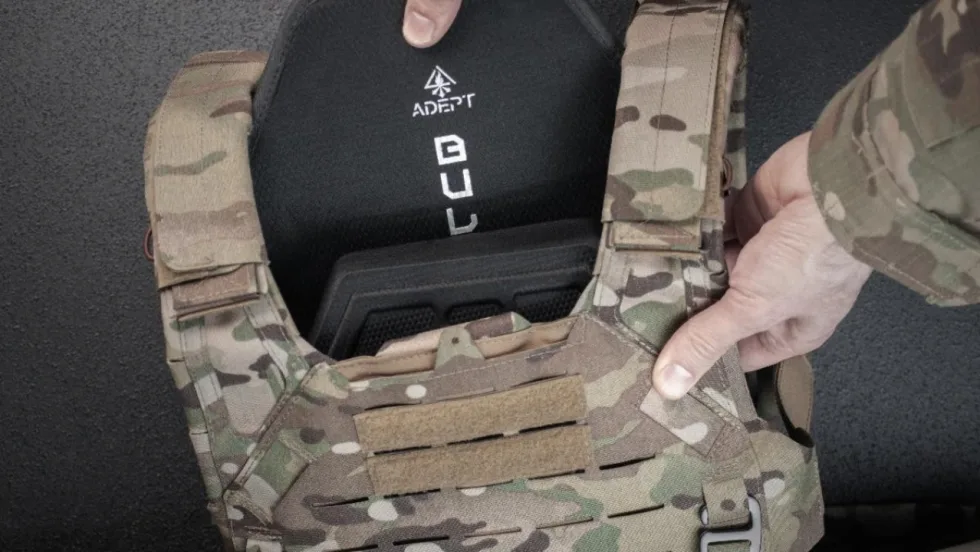
Adept Armor Introduces Two New Rifle Plates
Adept Armor has launched two new Level IV ballistic plates, the Emperor and the Archon Mark 2, which brings Adept Armor’s new Quatroid ceramic to the high-threat, performance-value center of the range at 5.2 pounds.
Read More →
POLICE Product Test: Benchmade Bailout
The Benchmade Bailout is a slim, lightweight carry knife with a deep-ride pocket clip and comes in a variety of blade steels and scales. Here is a detailed review of the Taiga Green Bailout, released earlier this year.
Read More →
NLEOMF Announces July 2026 Officer of the Month
NLEOMF honored a Michigan deputy sheriff as the July 2026 Officer of the Month for rescuing a trapped driver from a burning vehicle following a Fourth of July crash.
Read More →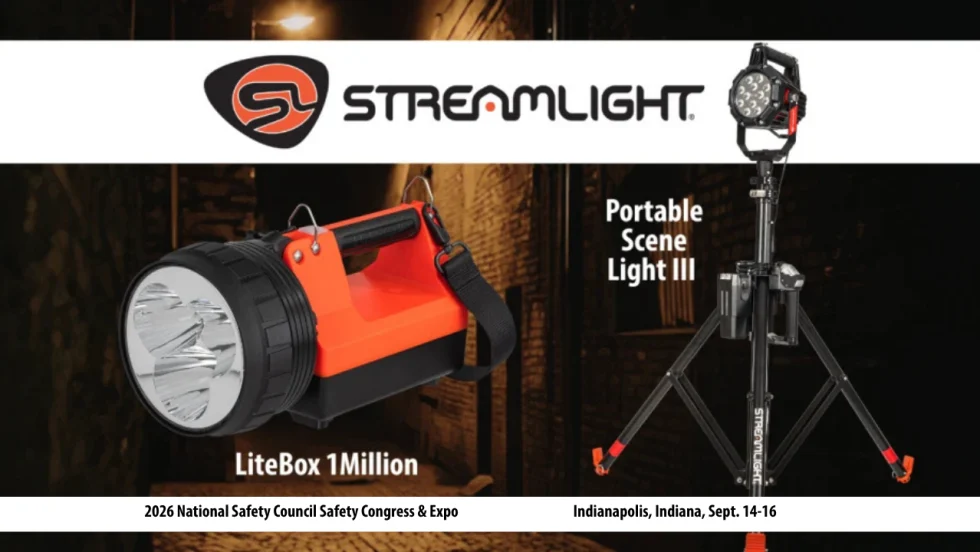
Streamlight to Showcase Newest Lighting Products at National Safety Council’s Safety Congress & Expo 2026
Streamlight will showcase its latest lights, including the Portable Scene Light III and the LiteBox 1Million, at the 2026 National Safety Council (NSC) Safety Congress & Expo.
Read More →
The 2027 World Police & Fire Games Set for Perth, Australia
The 2027 World Police & Fire Games (WPFG) will take place in Perth, Western Australia, from Friday, March 12 through Sunday, March 21, 2027.
Read More →
5.11 Partners with National Fallen Firefighters Foundation to Support #ForThe343
5.11 has joined the nationwide movement honoring the 343 New York City Fire Department firefighters lost on Sept. 11, 2001.
Read More →
Team Wendy Announces Title Sponsorship of the Jorge Pastore Foundation
Team Wendy’s 3-year partnership with the Jorge Pastore Foundation expands access to programs that strengthen those who serve.
Read More →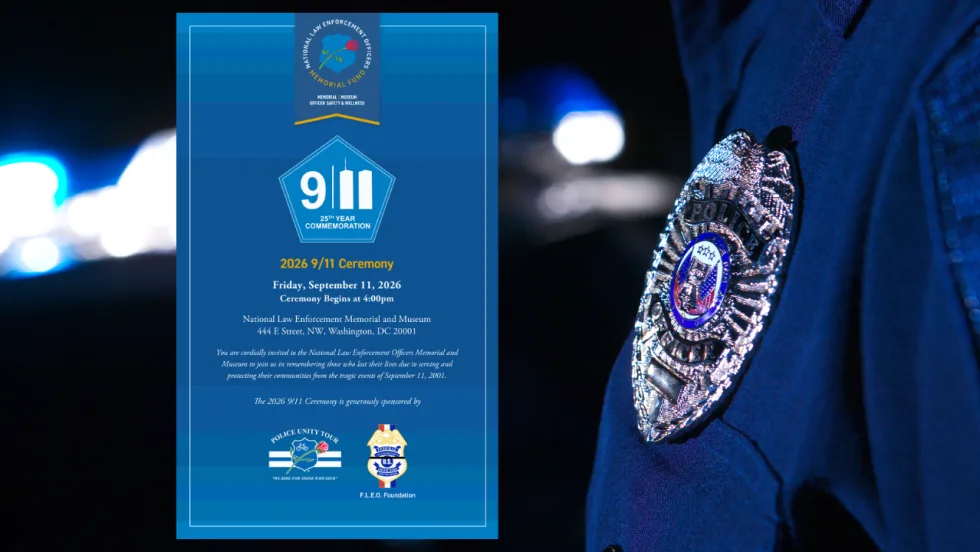
National Law Enforcement Memorial and Museum Hosting 9/11 25th-Year Commemoration Ceremony
The National Law Enforcement Memorial and Museum is hosting a 9/11 25th Year Commemoration Ceremony on Sept. 11 at 4 p.m.
Read More →
National Law Enforcement Officers Memorial Fund Announces June 2026 Officers of the Month
The National Law Enforcement Officers Memorial Fund (NLEOMF) named 15 officers of the Chico Police Department (California) as the Officers of the Month for June 2026 for their roles in responding to an active-shooter incident at a public library.
Read More →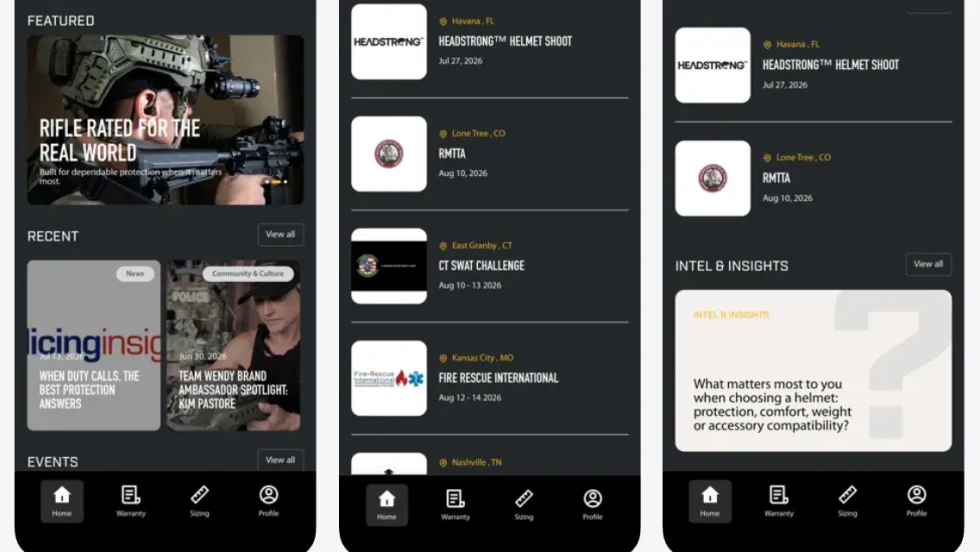
Team Wendy App Creates New Digital Hub for Helmet Owners
The Team Wendy Community App provides one location for warranty registration, size-fit tools, product updates, and community connection. For helmet owners, the new app creates a simpler path to the information and tools that matter most.
Read More →