



Using Night Vision in Law Enforcement Vehicles
In the air and on the ground, the ability to see in the dark while mobile enhances crime fighting capabilities and makes officers safer.

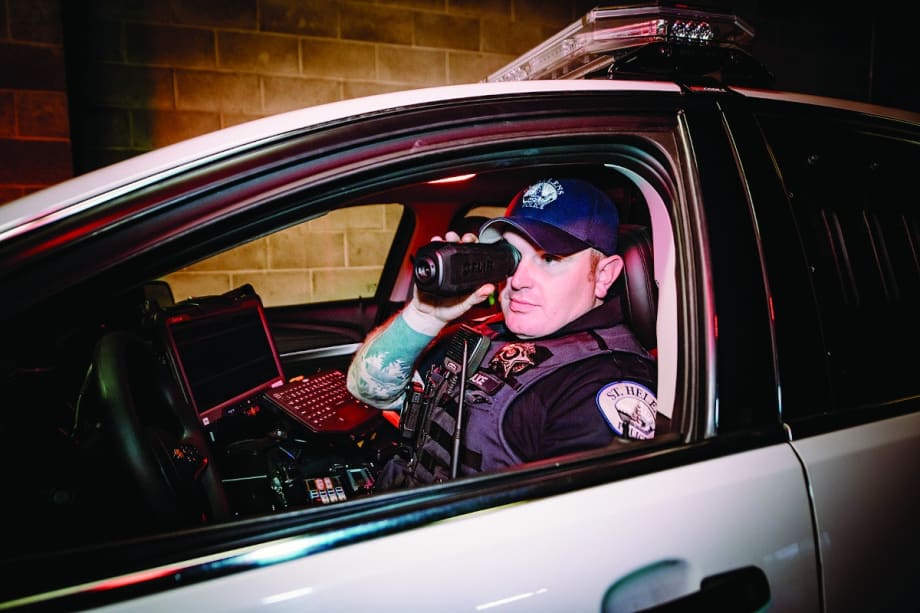
Thermal systems such as this FLIR Systems Scion PTM cannot "see" through glass. So users must roll down the window or use an externally mounted system.
Photo: FLIR Systems
The first practical night vision systems were mounted on World War II tanks. With good reason; they were not exactly man-portable. Today, however, when we think of night vision systems, we generally don't think about vehicles.
Night vision systems in law enforcement are most common today on the helmets of tactical operators working to achieve an objective with stealth and surprise. They're also often seen in the hands of officers surveilling a location or a person or searching for someone lost in the woods. What is less known is that law enforcement vehicle operators, including helicopter pilots, often use night vision to enhance their capabilities.
Aviation NVG
There are two types of night vision commonly used in law enforcement aviation operations: light intensification and thermal systems. Light intensification systems are the tubed goggles that take small amounts of ambient light such as that from the stars and moon and amplify it to the point where you can see in the dark. Thermal systems use sensors to convert the temperature differential between objects and living things and their surroundings into visible images.
Guy Blocker, field applications and law enforcement business development manager for FLIR Systems (www.flir.com), has long used and instructed others on how to use both types of night vision for both ground and air operations. He says flying a helicopter with night vision goggles (NVG) gives the pilot a better idea of what hazards including power lines and hillsides await in the dark.
Blocker, who piloted helicopters for the Army in some of the earliest NVG aviation programs, says the best night vision systems for pilots are dual tube goggles. "You need both eyes in the system so you are not getting mixed signals," he explains.
There are many benefits of a dual tube system for pilots, according to Blocker. These include depth perception and distance estimation. "When you have one eye in and one eye out, you are constantly second guessing yourself and that's not the time to be doing that."
In addition to safety, another reason that more and more law enforcement pilots are flying at night with NVG is stealth. Image intensification lets them fly in the dark, and it lets them use infrared spotlights not readily visible to the naked eye to light up targets on the ground. Blocker says that unless the suspect knows what to look for, he'll hear the helicopter but not see it.
Aviation Thermal
Police aviation teams consist of a pilot and an observer working together. One of the jobs of the observer is to track the suspect on the ground using forward looking infrared (FLIR). One of the manufacturers of these systems is Blocker's employer, FLIR Systems.
The FLIR camera is usually mounted on a gimbal on the bottom of the helicopter, and the user inside the helicopter can maneuver the system to pinpoint the suspect on the ground. Blocker says the FLIR cameras on law enforcement helicopters have cooled systems and larger lenses that give them much greater capabilities than the smaller systems used on the ground. "You can pick out targets at a mile or two miles while orbiting at 2,000 feet," he explains.
On the Ground
Blocker says that in the same fashion that NVG are used to pilot helicopters at night they can also be used to drive ground vehicles. "You can turn off the lights and drive down the road as if your vehicle was illuminated by headlights," he says. Typical law enforcement applications for driving with NVG include SWAT operations that require stealth and game wardens searching for poachers. In addition to driving with NVG, officers often use night vision tools for surveillance from vehicles.
Although it cannot be used to operate the vehicle in the dark, thermal imaging is commonly used in vehicles during a wide variety of public safety operations, including search and rescue and evidence search (residual heat from a person's hand can be seen on the discarded object).
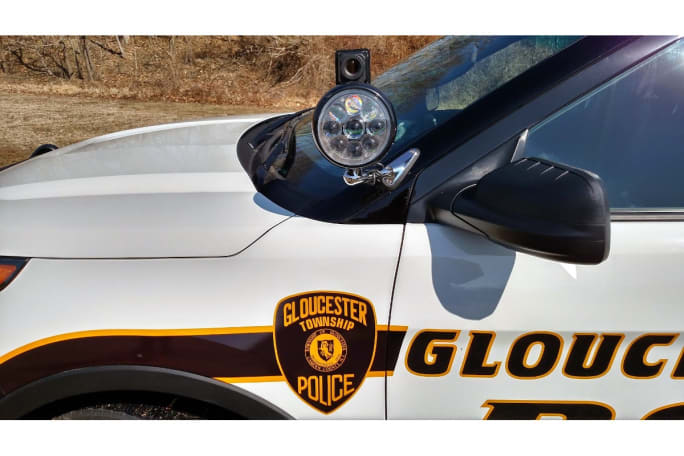
Noptic thermal imaging system atop patrol vehicle spotlight. Noptic uses the pan and tilt capabilities of the spotlight system to give officers the ability to view a specific target. The system comes with a spotlight head.
Photo: MSM Public Safety
Mike Martin, president of MSM Public Safety, says thermal imaging can also be an excellent officer safety tool. MSM Public Safety (info@nopticthermalcamera.com) is the largest U.S. distributor of the Noptic thermal surveillance system.
The Noptic system mounts onto a patrol vehicle spotlight and can alert officers to potential threats hidden in the night. Martin says the system ships with a spotlight head so that it can easily be installed on a vehicle spotlight platform for full pan and tilt operation. It also comes with a USB cable and software so that the patrol vehicle's computer can be used for viewing the images it captures.
Noptic can be used while the vehicle is stationary or while traveling at slow enough speed so the officer can glance at the computer screen. "That way you can sweep an area looking for a suspect," Martin says.
Optimal range for Noptic is 500 yards. But Martin says he has picked up faint signatures at half a mile. "If you can see it during the day, you can see it at night with Noptic," he says.
Because it is a thermal imager, Noptic can see threats or suspects hiding in greenery such as shrubs or even woods. "The tactical advantage of Noptic is it gives law enforcement professionals the ability to see heat signatures in the dark. You may not know if it's a threat, but you know someone is out there," he says.
Martin adds: "Noptic is such a powerful officer safety tool that many of my clients tell me they don't want to work in a patrol car that doesn't have one."
More Vehicle Ops
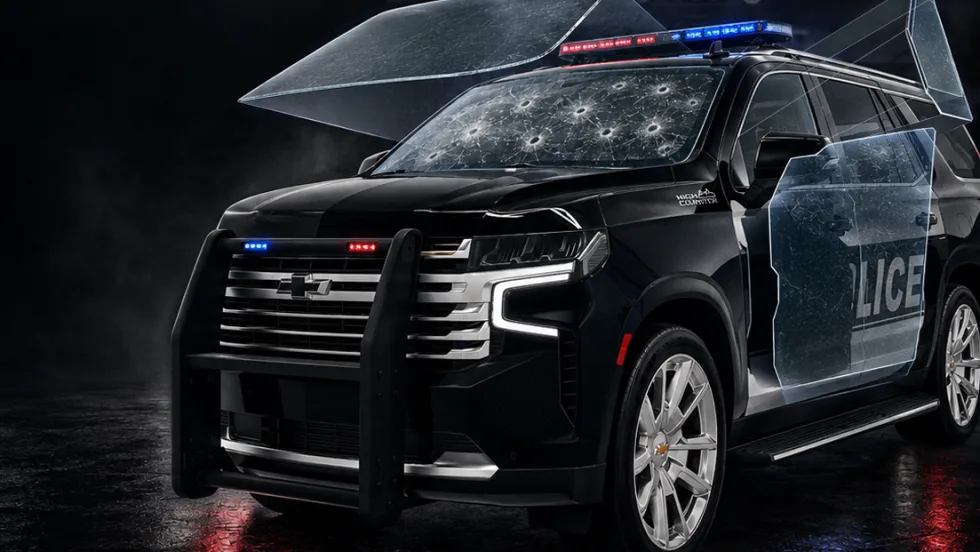
It’s an Ambush: How Ballistic Glass Redefines Patrol Vehicle Safety
Dana Safety Supply is setting a new standard for officer safety with windshields capable of withstanding multiple rounds and saving lives — and one Texas deputy is living proof.
Read More →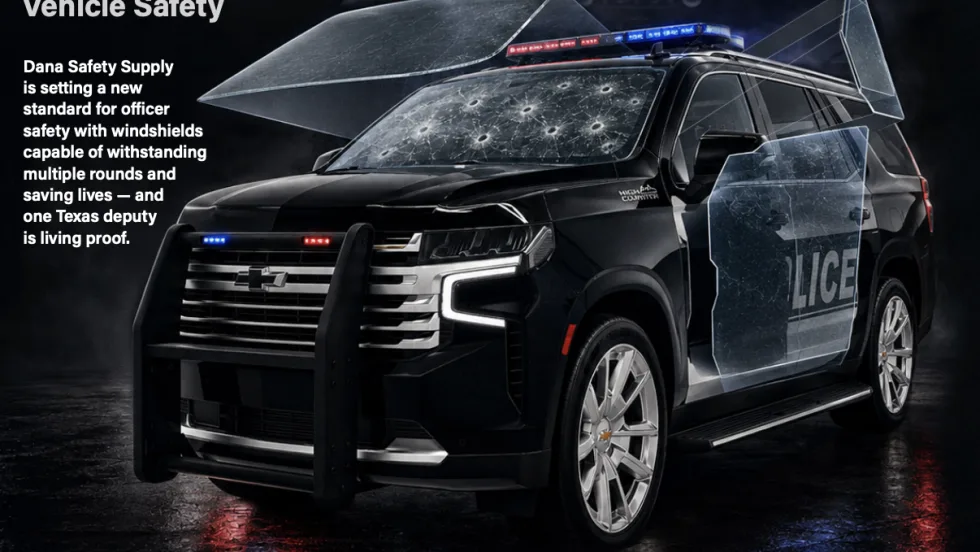
Dana Safety Supply’s BallisTech Vehicle Armoring Solutions
Dana Safety Supply is setting a new standard for officer safety with windshields capable of withstanding multiple rounds and saving lives.
Read More →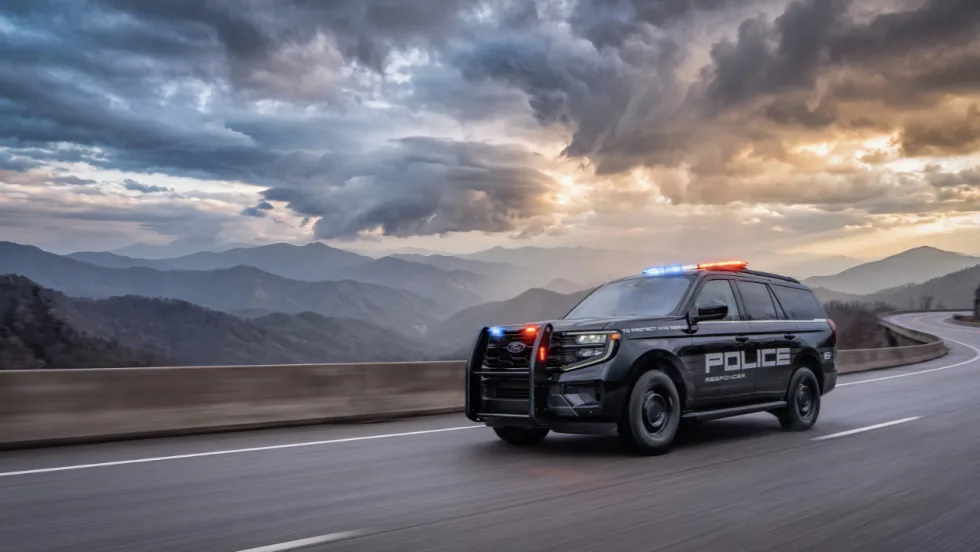
Ford Showcases 2028 Ford Expedition Police Responder
Ford showcased its 2028 Ford Expedition Police Responder, a full-size, pursuit-rated utility vehicle, at Police Fleet Expo this week. It comes standard with 4x4 and a 3.5-liter EcoBoost V6 producing 400 horsepower and 480 lb.-ft. of torque.
Read More →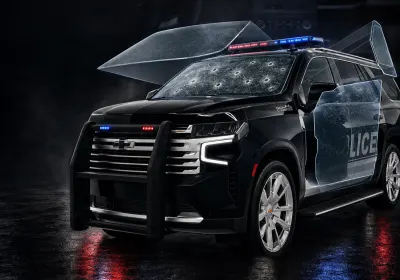
Pickups on Patrol: Understanding the Vehicle Dynamics
Pickup trucks are not new to patrol duties, but with the debut of the 2027 Ram 2500 Emergency Response Vehicle, they are getting larger and heavier. POLICE reached out to the Michigan State Police Precision Driving Unit to learn more about pickup truck handling, vehicle dynamics, and what officers need to know.
Read More →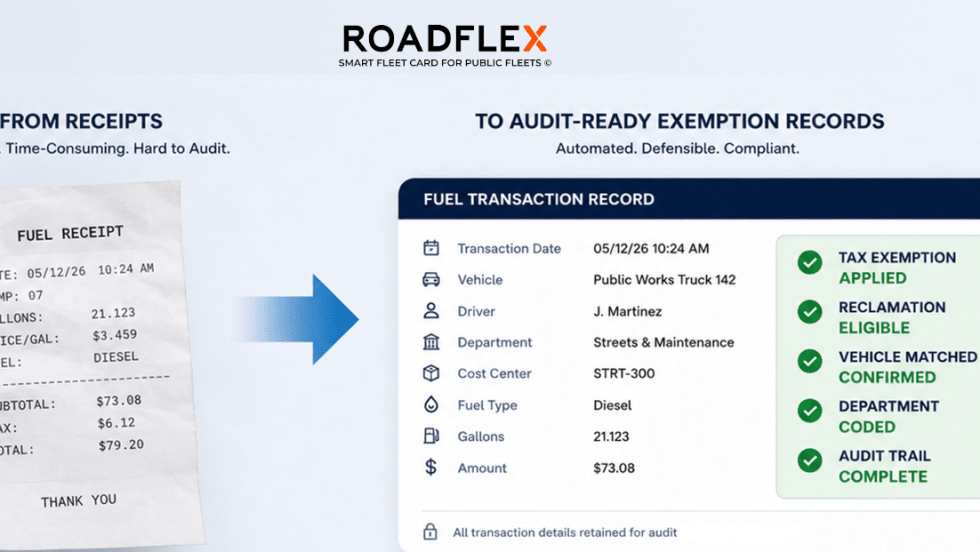
RoadFlex Brings Fuel Tax Compliance & Audit-Ready Reporting to Government Fleets
RoadFlex now offers its capabilities to help public-sector fleets streamline fuel tax exemptions, reclamation, reconciliation, and audit-ready reporting.
Read More →
Rynse Awarded Cooperative Purchasing Contract, Expanding Nationwide Fleet Wash Access for Law Enforcement
Rynse has secured a 2026-2027 NCSA contract, giving law enforcement agencies nationwide fast-track access to its fleet wash network and management platform, which streamlines procurement, reduces administrative burdens, and helps fleets stay road-ready with greater oversight.
Read More →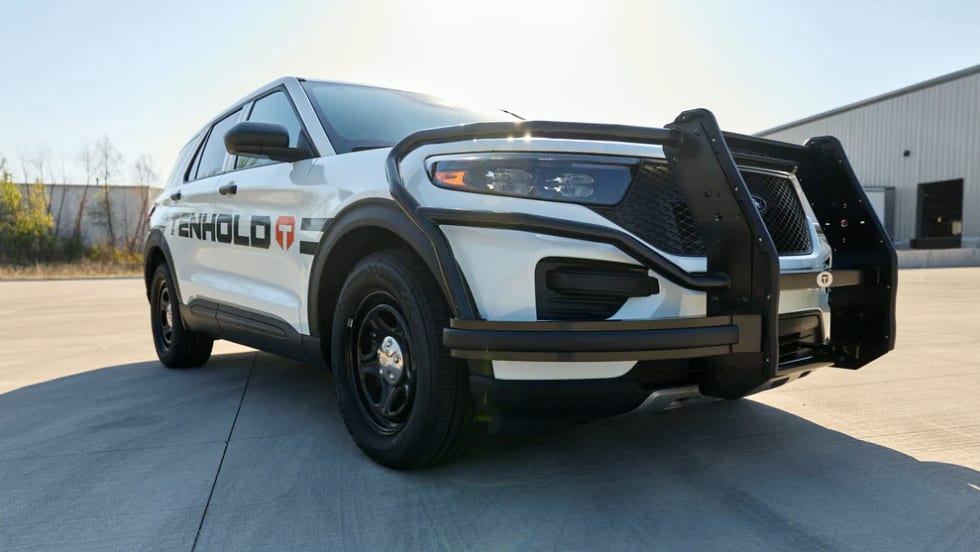
Tenhold Introduces Suppressor Gun Rack System
Tenhold, formerly Jotto Desk, provides next-generation vehicle systems for law enforcement and public safety and recently debuted its Suppressor Lock Head for its Weapon Mounting system.
Read More →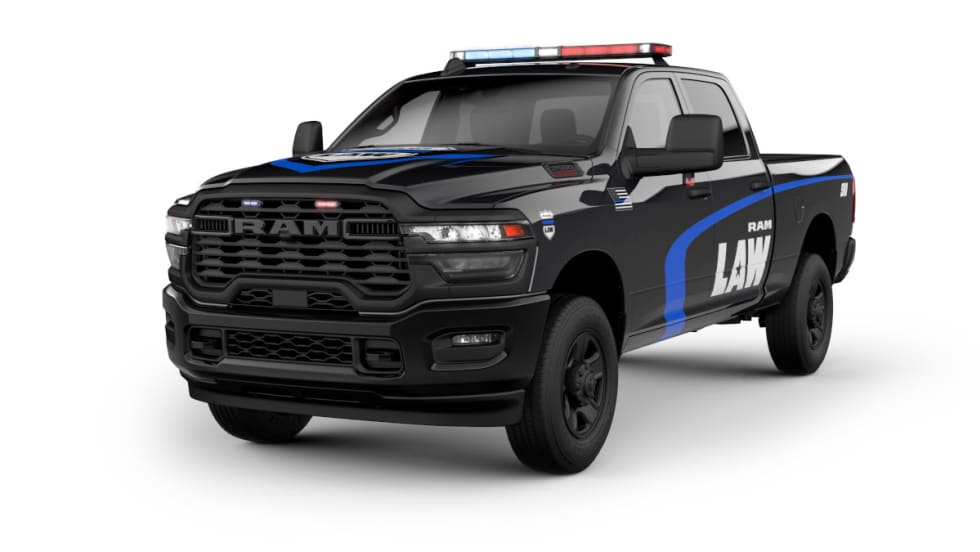
Ram Debuts Pursuit-Capable 2500 Emergency Response Vehicle
The 2027 Ram 2500 Emergency Response Vehicle is the first and only ¾-ton truck to complete the Michigan State Police vehicle trials, and Ram said it delivered outstanding performance in testing scenarios designed to replicate extreme real-world duty.
Read More →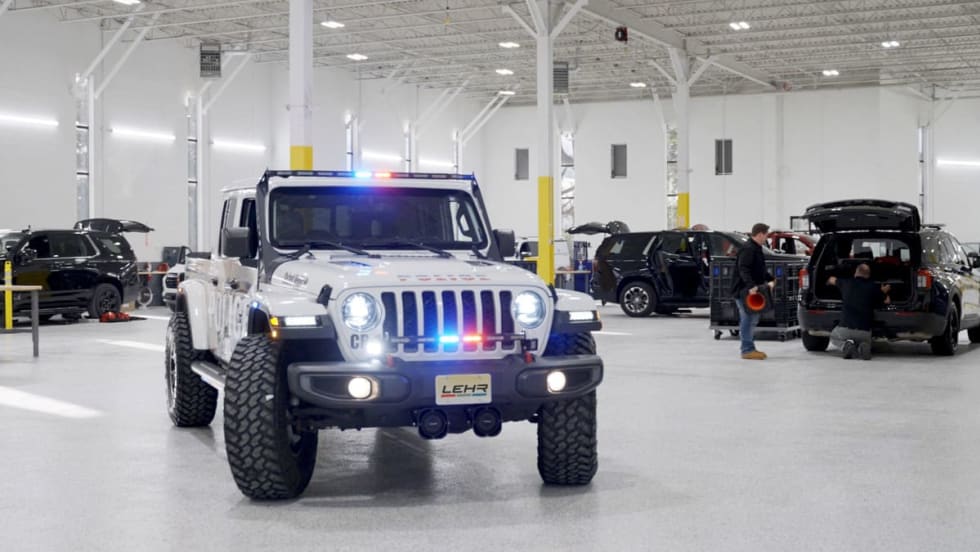
Emergency Vehicle Upfitter LEHR Opens New Facility in New Jersey
LEHR’s new centralized upfitting facility in New Jersey consolidates operations to deliver faster turnaround times and enhanced fleet capacity for law enforcement agencies across the Northeast.
Read More →
North Carolina Sheriff’s Office Improves Fueling Reliability & Operational Control
The Madison County Sheriff’s Office overcame fuel management and accounting challenges by turning to RoadFlex to improve fueling reliability, visibility, and administrative control.
Read More →