



Updating Weapons Frisks
Although it's common to see the term "stop and frisk," it's possible that there might be justification for a stop, but not for a frisk.

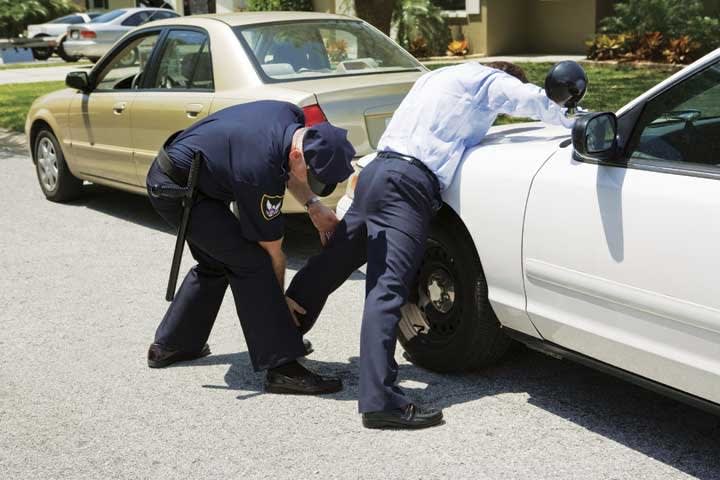
The legal definition of a weapons "pat down" search traces back to the 1968 U.S. Supreme Court decision in Terry v. Ohio. In that case, the court considered two different kinds of Fourth Amendment actions—a "stop" (a temporary detention of a pedestrian or driver, which is a seizure of the person), and a "frisk" (a limited search of the stopped person's outer clothing to check for weapons). The court set standards for justifying each: the stop is justifiable if there is a reasonable suspicion the person is involved in criminal activity; the frisk is justifiable if there is a reasonable suspicion the detainee may be armed and dangerous.
Although it's common to see the term "stop and frisk" to describe this pairing, it's important to realize that this phrase describes both a seizure and a search, each of which requires specific justification. It's possible that there might be justification for a stop, but not for a frisk.
For example, if you stop someone based on reasonable suspicion that he was recently involved in an act of indecent exposure, the stop would be valid, but no frisk could be lawfully performed in the absence of reasons to believe the suspect was armed and dangerous. In other words, it's not the rule that you can automatically frisk everyone you lawfully stop.
Arizona v. Johnson
Lemon Johnson was a passenger in a car stopped in Tucson for vehicle registration violations. The stop occurred in a neighborhood associated with the Crips gang. Johnson was wearing Crips colors, including a blue bandana. He had a scanner in his jacket pocket, which suggested to the officers that he was monitoring police radio traffic. This was an indication that the occupants of the car might be engaged in some kind of illegal activity. Johnson's given address was in a Crips area, and he disclosed that he had been to prison for burglary. An officer then asked him to step out of the car.
Based on the observed facts and the inferences the officer drew from them, she suspected that Johnson might be armed and dangerous. A frisk of his outer clothing revealed a handgun, which Johnson was not legally entitled to possess. He was arrested, charged, and convicted, but the Arizona Court of Appeals reversed. That court held that because there was no reasonable suspicion to believe Johnson was engaged in any criminal activity as a passenger in a stopped car, police had no right to frisk him—even if they had a reasonable suspicion he might be armed. The Arizona Supreme Court declined to review the case, and the State appealed to the U.S. Supreme Court.
The U.S. Supreme Court unanimously reversed the Arizona suppression ruling. The court pointed out that under its decision in Brendlin v. California, all passengers in a stopped vehicle are necessarily detained during the traffic stop. If there is then articulable suspicion to believe that a particular passenger may be armed and dangerous, a pat search is justifiable.
Said the court, "A lawful roadside stop begins when a vehicle is pulled over for investigation of a traffic violation. The temporary seizure of driver and passengers ordinarily continues, and remains reasonable, for the duration of the stop. Normally, the stop ends when the police have no further need to control the scene, and inform the driver and passengers they are free to leave. An officer's inquiries into matters unrelated to the justification for the stop, this Court has made plain, do not convert the encounter into something more than a lawful seizure, so long as those inquiries do not measurably extend the duration of the stop.
[PAGEBREAK]
"In sum," the court continued, "as stated in Brendlin, a traffic stop of a car communicates to a reasonable passenger that he or she is not free to terminate the encounter with the police and move about at will. Nothing happened in this case that would have conveyed to Johnson that, prior to the frisk, the traffic stop had ended or that he was otherwise free to depart without police permission. The officer surely was not constitutionally required to give Johnson an opportunity to depart the scene after he exited the vehicle without first ensuring that, in so doing, she was not permitting a dangerous person to get behind her." (Arizona v. Johnson)
The Supreme Court did not decide whether the facts known to the officer did or did not amount to a reasonable suspicion to believe Johnson was armed and dangerous. That question was to be answered by the Arizona court on remand. The Supreme Court did decide, however, that there is no requirement that officers have reasonable suspicion to believe that a passenger in a lawfully stopped vehicle is involved in criminal activity in order to perform a frisk where supported by reasonable suspicion of danger.
Combining Principles
The Johnson case is an example of the court combining the rulings of various decisions when analyzing search and seizure issues. The rule of Brendlin is that passengers are necessarily detained when their vehicle is stopped; the rule of Terry is that detainees can be searched based on reasonable suspicion they are armed and dangerous. Combining these two rulings, the court created the new Johnson rule that whenever an officer has reasonable suspicion to believe that a passenger at a lawful traffic stop may be armed and dangerous, a weapons pat-down search is permissible.
Safety and Control
Note that in Johnson, the officer did not have the suspect get out of the car until after she had noticed the colors and the scanner and found out that he was a con from a gang neighborhood. During this time, Johnson was seated inside a vehicle, protected by steel car doors, with access to places of concealment of possible weapons inside the car and with portions of his body and clothing unobservable from the officer's viewpoint. Also, he happened to have a concealed handgun on him.
In Pennsylvania v. Mimms, the Supreme Court noted statistics showing that 30 percent of officers shot in the line of duty were shot as they approached someone seated in a vehicle. To reduce this risk, the court held in Mimms that officers making a traffic stop may routinely order the driver out. No reason need be given.
In Maryland v. Wilson, the court extended this rule to all passengers. All passengers in a lawfully stopped vehicle may be ordered out. No reason need be given.
In case either a driver or passenger is armed and dangerous, promptly ordering him out reduces his cover and concealment and his access to weapons stashed in the vehicle. It gets him outside into plain view. It permits the officer to pat down the person who has a suspicious bulge beneath his clothing at the waistline. (Pennsylvania v. Mimms) It allows a frisk based on reasonable suspicion that he may be armed and dangerous—even if there is no separate suspicion of criminal wrongdoing. (Arizona v. Johnson)
While ordering occupants out is not necessary or appropriate for all vehicle stops, the option is lawfully available, where you feel the need to exercise it. Naturally, sound safety and survival techniques are always the primary consideration.
Devallis Rutledge is a former police officer and veteran prosecutor who currently serves as Special Counsel to the Los Angeles County District Attorney. He is the author of 11 books, including "Courtroom Survival, The Officer's Guide to Better Testimony."
More Patrol

Adept Armor Introduces Two New Rifle Plates
Adept Armor has launched two new Level IV ballistic plates, the Emperor and the Archon Mark 2, which brings Adept Armor’s new Quatroid ceramic to the high-threat, performance-value center of the range at 5.2 pounds.
Read More →
POLICE Product Test: Benchmade Bailout
The Benchmade Bailout is a slim, lightweight carry knife with a deep-ride pocket clip and comes in a variety of blade steels and scales. Here is a detailed review of the Taiga Green Bailout, released earlier this year.
Read More →
NLEOMF Announces July 2026 Officer of the Month
NLEOMF honored a Michigan deputy sheriff as the July 2026 Officer of the Month for rescuing a trapped driver from a burning vehicle following a Fourth of July crash.
Read More →
Streamlight to Showcase Newest Lighting Products at National Safety Council’s Safety Congress & Expo 2026
Streamlight will showcase its latest lights, including the Portable Scene Light III and the LiteBox 1Million, at the 2026 National Safety Council (NSC) Safety Congress & Expo.
Read More →
The 2027 World Police & Fire Games Set for Perth, Australia
The 2027 World Police & Fire Games (WPFG) will take place in Perth, Western Australia, from Friday, March 12 through Sunday, March 21, 2027.
Read More →
5.11 Partners with National Fallen Firefighters Foundation to Support #ForThe343
5.11 has joined the nationwide movement honoring the 343 New York City Fire Department firefighters lost on Sept. 11, 2001.
Read More →
Team Wendy Announces Title Sponsorship of the Jorge Pastore Foundation
Team Wendy’s 3-year partnership with the Jorge Pastore Foundation expands access to programs that strengthen those who serve.
Read More →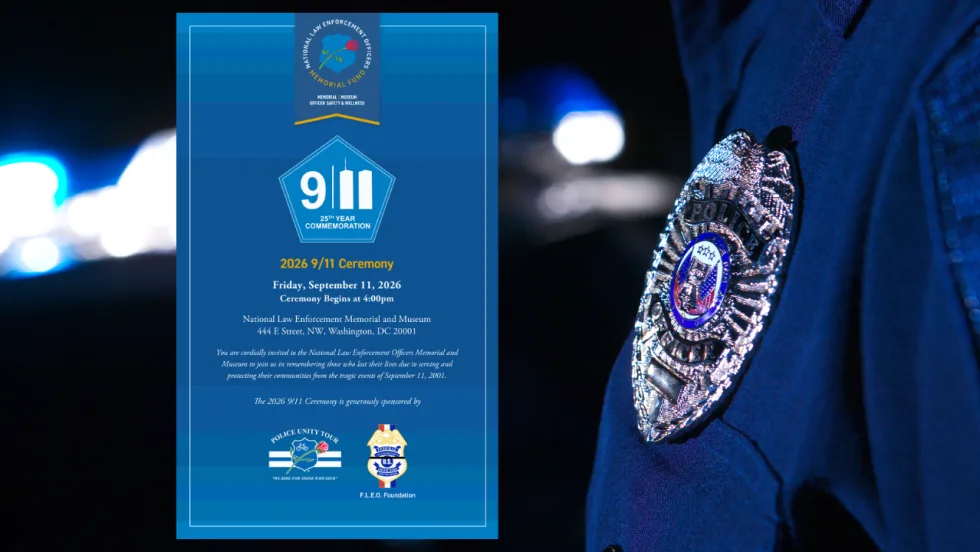
National Law Enforcement Memorial and Museum Hosting 9/11 25th-Year Commemoration Ceremony
The National Law Enforcement Memorial and Museum is hosting a 9/11 25th Year Commemoration Ceremony on Sept. 11 at 4 p.m.
Read More →
National Law Enforcement Officers Memorial Fund Announces June 2026 Officers of the Month
The National Law Enforcement Officers Memorial Fund (NLEOMF) named 15 officers of the Chico Police Department (California) as the Officers of the Month for June 2026 for their roles in responding to an active-shooter incident at a public library.
Read More →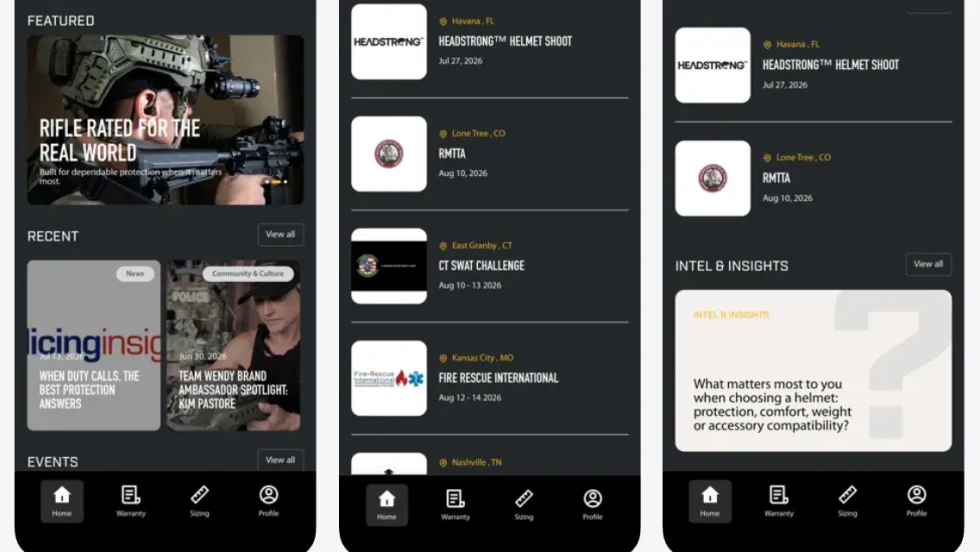
Team Wendy App Creates New Digital Hub for Helmet Owners
The Team Wendy Community App provides one location for warranty registration, size-fit tools, product updates, and community connection. For helmet owners, the new app creates a simpler path to the information and tools that matter most.
Read More →