



Understanding Probable Cause
Probable cause is much less than proof "beyond a reasonable doubt," which the prosecutor must meet in order to convict a defendant. But PC is something more than the "reasonable suspicion" required to justify a temporary investigative detention.

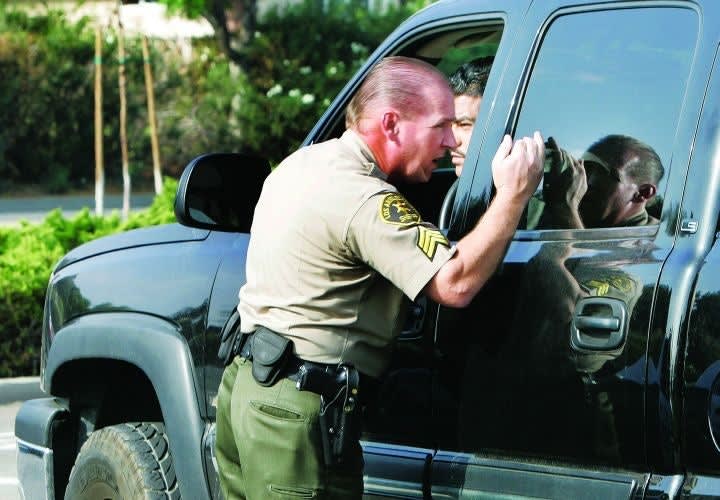
Photo courtesy of Zuma Press.
Confusion. That's the best word to describe the state of understanding of the concept of "probable cause," which is often abbreviated as "PC." Not only is there widespread misunderstanding as to the meaning of the term, there's also a deeply entrenched practice among many law enforcement officers, lawyers, and judges of wrongly applying the probable-cause standard where it doesn't belong. Let's see if we can reduce the confusion.
"Probable Cause" Defined
The Fourth Amendment protects a right to be free from unreasonable searches and seizures, and it specifies that "no warrants shall issue, but upon probable cause." This makes it a constitutional requirement that search warrants and arrest warrants be based on probable cause. However, the Constitution does not define "probable cause" or give any examples of what does or does not constitute PC.
That task, as well as the job of figuring out when to apply the same standard to warrantless searches and seizures, was left for the courts to perform. Therefore, our body of law explaining and applying the concept is found in U.S. Supreme Court decisions, and sometimes in lower court decisions applying Supreme Court rulings.
Over the years, the Supreme Court has tried to describe the level of suspicion that would amount to PC, but it has always done so in general wording that leaves it up to courts to apply, case by case. In a 1949 opinion, the court said this about probable cause:
"The rule of probable cause is a practical, nontechnical conception. In dealing with probable cause, we deal with probabilities. These are not technical; they are the factual and practical considerations of everyday life on which reasonable and prudent men, not legal technicians, act. Probable cause exists where the facts and circumstances within the officers' knowledge and of which they have reasonably trustworthy information are sufficient in themselves to warrant a man of reasonable caution in the belief that an offense has been or is being committed." (Brinegar v. U.S.)
The essence of this discussion is that it is not possible for judges and lawyers ("legal technicians") to assign some mathematical probability value for PC. Instead, the "technicians" must try to measure the facts of each case from a practical viewpoint and assess whether those facts would justify a reasonable officer in believing criminal activity was afoot.
Because some lower courts persisted in an effort to create a legal checklist of complicated "prongs" or "factors" to be evaluated, the Supreme Court made another effort to define PC in a 1983 case, saying the following:
"Perhaps the central teaching of our decisions bearing on the probable cause standard is that it is a practical, nontechnical conception. The process does not deal with hard certainties, but with probabilities. The evidence must be seen and weighed not in terms of library analysis by scholars, but as understood by those versed in the field of law enforcement. Probable cause is a fluid concept, turning on the assessment of probabilities in particular factual contexts-not readily, or even usefully, reduced to a neat set of legal rules." (Illinois v. Gates)
Translation: lower courts should stop using a law school approach to analyzing PC issues and simply consider how an officer in the field would understand the situation he or she confronted.
In a later decision, the court admitted that it had been unable to give a precise definition of probable cause but gave this guidance for lower courts engaged in assessments of probable-cause issues:
"The probable-cause standard is incapable of precise definition or quantification into percentages because it deals with probabilities and depends on the totality of the circumstances. The substance of all the definitions of probable cause is a reasonable ground for belief of guilt, and that the belief of guilt must be particularized with respect to the person to be searched or seized." (Maryland v. Pringle)
Translation: PC is a substantial suspicion, based on all the circumstances, that someone is a criminal.
"Probable Cause" Illustrated
Perhaps the best way to understand probable cause is by comparing it with other levels of suspicion or proof that are more easily understood.
PC is much less than proof "beyond a reasonable doubt," which is the much higher standard the prosecutor must meet in order to convict a defendant.
PC is much less than "clear and convincing" proof, which is the higher standard that must be met as to certain legal rulings, such as whether jury challenges were improperly based on group bias.
PC is less than a "preponderance of the evidence" (meaning 50 percent-plus), which is the plaintiff's burden of proof to win a civil case.
But PC is something more than the "reasonable suspicion" required to justify a temporary investigative detention.[PAGEBREAK]
A familiar example helps illustrate the distinctions. An officer on night patrol sees a car ahead without lights on, weaving slightly within the lane. This is not PC to arrest, but it is reasonable suspicion to detain for investigation, so a stop is made. The driver might turn out to be sober, driving a rented vehicle and trying to find the light switch, which would explain both of the suspicious circumstances that justified the stop. Or, he might exhibit symptoms of being under the influence and might fail field sobriety tests. These additional facts, added to the erratic driving, would constitute PC to arrest for impaired driving. If his blood alcohol level were subsequently found to be above legal limits and he gave an admissible confession, all of the evidence combined would generally be enough to prove his guilt at trial, beyond a reasonable doubt.
As this example shows, probable cause is a fairly low level of suspicion when compared with courtroom standards of proof. In fact, the Supreme Court has pointed out that an officer can have PC even though the prosecutor might not be able to file charges or convict the person-and even though it might turn out that the person arrested was actually innocent, or that no crime had in fact been committed.
"There is a difference between what is required to prove guilt in a criminal case and what is required to show probable cause for arrest and search." (Brinegar v. U.S.)
"Innocence of the charge is largely irrelevant to [the question of the existence of probable cause]. The Constitution does not guarantee that only the guilty will be arrested." (Baker v. McCollum)
When is PC required?
As discussed above, the Fourth Amendment mandates that warrants be supported by probable cause. The Supreme Court has ruled that in limited circumstances, officers may make warrantless searches and seizures based on PC. These include vehicle searches and public arrests.
Vehicle searches: The court has given two reasons for allowing warrantless searches of a vehicle when police have PC to believe something seizable is inside, and when the vehicle is lawfully accessible (street, driveway, carport, parking lot). First, people have a reduced level of expectation of privacy in vehicles, because vehicles are constantly exposed to public view, are licensed and regulated, and are subject to safety inspections. Second, vehicles are inherently mobile, allowing them to be quickly removed from the jurisdiction while a warrant is being sought. The Supreme Court has therefore dispensed with the warrant requirement for vehicle searches. Such searches may lawfully be made based on lawful access and PC-even if there might have been time to get a search warrant. (Florida v. Meyers)
Public arrests: When officers have PC to believe a particular individual has committed or is committing any public offense, the person may constitutionally be arrested in a public place, without an arrest warrant. (U.S. v. Santana) To make a non-emergency, non-consensual entry into a residence in order to arrest, a warrant is usually required. (Payton v. New York)
When is PC not required?
Although PC is necessary to get a search or arrest warrant, to make a warrantless arrest where permissible, or to search a vehicle for suspected contraband or the fruits, instrumentalities, or evidence of crime, it is not necessary in some situations where many criminal justice professionals wrongfully insist on talking about it. When the law actually sets a lower standard than PC for certain investigative conduct, it can be harmful to police and prosecutors to talk in terms of "probable cause" for acts that do not need that much justification.
For example, there is no constitutional concept called "PC for the stop." A stop is a detention, either of a pedestrian or a vehicle. Detentions are lower levels of intrusion on a person's liberty than arrests. They may be made on the basis of a lower quantity and quality of suspicion. That lower level is called "reasonable suspicion." The Supreme Court has made the distinctions clear:
"The level of suspicion required for a detention [stop] is obviously less demanding than that for probable cause. The police can stop and briefly detain a person for investigative purposes if the officer has a reasonable suspicion that criminal activity may be afoot, even if the officer lacks probable cause." (U.S. v. Sokolow)
"Reasonable suspicion is a less demanding standard than probable cause not only in the sense that it can be established with [less information], but also in the sense that reasonable suspicion can arise from information that is less reliable than that required to show probable cause." (Alabama v. White)
Some other investigative steps may be justified at the lower "reasonable suspicion" level, and should not be misconnected in reports or testimony to the higher PC standard. Examples include weapons pat-downs or "frisks," which require only a reasonable suspicion that the person is armed and dangerous (Terry v. Ohio), safety sweeps of lawfully entered premises based on a reasonable suspicion that a potential assailant may be present (Maryland v. Buie), and making a no-knock entry to serve a warrant based on reasonable suspicion that knocking and announcing would imperil officers, facilitate escape, or permit the destruction of evidence. (Richards v. Wisconsin)
Officers do themselves and prosecutors a disservice when they carelessly speak of their PC for a stop, or a weapons frisk, or a safety sweep. The proper standard is "reasonable suspicion." Sometimes, PC is not required.
Devallis Rutledge is a former police officer and veteran prosecutor who now serves as Special Counsel to the Los Angeles County District Attorney. He is the author of the book "Investigative Constitutional Law" and is POLICE Magazine's resident legal writer.
More Training
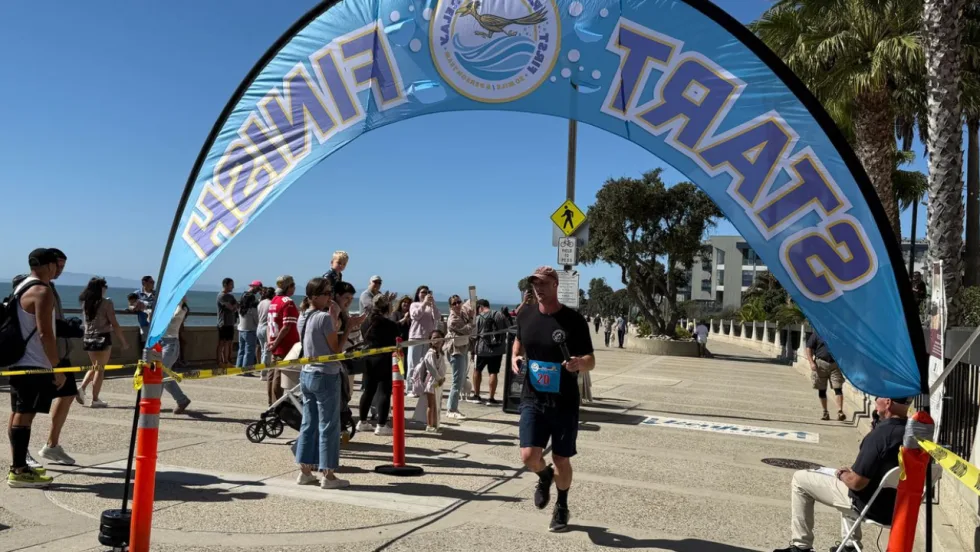
Registration Underway for Sixth Annual First Responders Relay
The California Police Athletic Federation’s annual First Responder Relay will welcome first responder teams from across the globe to compete along Ventura's scenic coastline on Oct. 11. Registration is underway.
Read More →
Vector Solutions Launches Comprehensive Online Dispatch Training Catalog for Emergency Communications Professionals
Vector Solutions’ new catalog of 35 expert-developed online courses can help emergency communication centers strengthen training, meet certification requirements, and simplify continuing education.
Read More →
Tools for Active Shooter Response Training
What technologies help prepare officers for active shooter response situations? This behind-the-scenes look at law enforcement training explores shot simulators, smart firearms, laser target systems, and the tools used to build safer, more effective training environments.
Read More →
Two-Officer Tactical Doorway Entry Techniques
Entering a room during active-threat situations requires communication, coordination, and disciplined tactical movement. In this video, trainers from the United States Deputy Sheriff’s Association demonstrate critical room entry concepts, including fatal funnel awareness, team coordination, and safe tactical movement.
Read More →
High Compressed Ready Explained | Muzzle Control For Room Entry
In this video, Mike Willis, law enforcement national training and program director for the United States Deputy Sheriffs’ Association, demonstrates the high compressed ready position and discusses muzzle control during room entry.
Read More →
Why Attend the DroneSense Innovation Summit by Versaterm?
Let’s hear from Ryan Bracken, head of product, about why your agency should send someone to the first annual DroneSense Innovation Summit by Versaterm in April.
Read More →
Caswell Live Fire Spins Off from InVeris
Caswell Live Fire has spun off from parent company InVeris, coinciding with the 100th anniversary of Caswell’s founding. Over the past 100 years, Caswell has developed pioneering solutions that support military, law enforcement, and commercial clients worldwide.
Read More →
When Do You Transport a Wounded Officer Instead of Waiting for EMS?
Thumbnail for video series POLICE Topics, Tactics & Tips with a yellow headline that reads When Do You Transport a Wounded Officer Instead of Waiting for EMS?
Read More →
How to Pick Your High-Risk Stop Location for Tactical Advantage
Hear veteran trainer Mike Willis, of the United States Deputy Sheriff’s Association, explain several considerations that can help you wisely pick your best spot to initiate high-risk or felony traffic stops.
Read More →
Coffee Break with Police Experts: Using Your Patrol Vehicle for Cover
In this video, hear from Dustin Mowery, a product specialist at Team Wendy, as he discusses how to best use a patrol vehicle for cover.
Read More →