



Trijicon Advanced Combat Optical Gunsight (ACOG)
Glyn Bindon was a South African immigrant who came to the United States and worked in the auto industry and also for NASA. He was also the founder of one of America’s most innovative manufacturers of tactical optics.

Glyn Bindon was a South African immigrant who came to the United States and worked in the auto industry and also for NASA. He was also the founder of one of America’s most innovative manufacturers of tactical optics.
Bindon made the first Trijicon sights in the basement of his home. Then the company boomed when the FBI adopted Trijicon sights after the infamous Miami shootout. Today, Trijicon is one of the world’s leading manufacturers of tritium night sights and state-of-the-art rifle scopes.
One of Trijicon’s most popular scopes is the Advanced Combat Optical Gunsight (ACOG). This sight is very popular with Special Forces and SEALs, and it is now being fitted on every rifle carried by the U.S. Marines.
What makes this scope so appealing to the military is that it requires no batteries and has dual illumination of the aiming point. When ambient light is available, it uses a fiber-optic light collector to produce a bright aiming point during daylight. When there is not enough ambient light, tritium illuminates the aiming point. The neat thing about this set-up is that the user can go from bright sunlight of the street and duck through a doorway into a completely dark room without losing his aiming point.
Another selling point of the ACOG is its rugged design. It has no wire crosshairs that can break; its aiming point is actually etched onto a prism. The ACOG is 100-percent U.S. made and is waterproof to two atmospheres. Navy SEALs actually dive with this scope.
Each ACOG scope possesses a Bullet Drop Compensator (BDC). The idea here is to be able to make distant hits without the need for making an elevation adjustment. The fine stradia below the aiming point has horizontal bars that correspond to 19 inches (the width of an average man’s shoulders) at ranges of 600 to 800 meters, depending on which ACOG is used.
There are a variety of ACOG scopes and a number of different styles of reticles and different color aiming points. Trijicon also offers the Compact ACOG, which is lighter and more compact than its bigger brother. It’s also available in a number of different powers and reticles.
Both Eyes Open
Recently, Trijicon arranged for me to attend a daylong seminar at its 88-acre Fredricksburg, Va., facility. The Trijicon training complex features a 300-yard range, a 50-meter outdoor range, and a shoot-house for Simunition training.
The day started in the classroom with a PowerPoint presentation by Curt Monnig, a strapping former Marine who has worked for Trijicon for the last five years. His course includes a history of Trijicon and a discussion of the Bindon Aiming Concept (BAC), developed by the late Glyn Bindon.
The Bindon Aiming Concept is a method for keeping both eyes open while using a scope. It’s designed to give the shooter faster target acquisition, improved depth perception, and greater peripheral vision. It also facilitates faster and more accurate fire, especially in low-light scenarios.
Using BAC, the focus is on the target as the weapon is raised and the illuminated reticle appears on the target. As the weapon moves, the shooter’s view through the scope blurs so his or her brain automatically selects the view of the non-shooting eye. The illusion is that of non-magnification. As the weapon slows, the blur ceases and the brain automatically switches to the greater detail of magnified view.
No Squinting
After a quick lunch, Monnig took us to the range along with a collection of rifles and a variety of Trijicon scopes. Then he ran us through a series of exercises to practice the BAC. From the ready position, we were instructed to move the rifles up to the shooting position and fire as soon as we saw the aiming point on the target with both eyes open.
Monnig noticed that I was squinting my left eye, which, of course, is counterproductive to the BAC, so he put a lens cover over the front lens of my ACOG.
Looking through the scope with my right eye only, I could still see the aiming point glowing brilliantly though the rest of the scope was completely black. Now he had me perform the same presentation-and-shoot exercise, and this forced me to keep my left eye wide open. What I saw was the aiming point superimposed on my target. This dramatically reinforced the importance of two-eye shooting and the BAC.
Monnig also had me perform drills with multiple targets and this is where the BAC and the ACOG scopes really shine. It’s much easier to transition to the next target if you’re shooting with both eyes open, as you’re able to pick up the next target more quickly with your peripheral vision. This became especially noticeable when Monnig moved us up to the five-yard line and had us fire on targets at the extreme right and left with maybe 40 feet between the targets. Such a target scenario might be exactly what our Marines and soldiers experience when clearing urban areas in Iraq or Afghanistan.
Our next exercise had us move out to 250 yards and fire on steel targets. Shots that would have been nearly impossible to make were easy with the Trijicon scopes.
An ACOG for Each Gun
Monnig had a variety of AR rifles, each with a different Trijicon ACOG on top. I was able to ring steel at 250 yards offhand with the 4-power ACOG about 70 percent of the time. Moving to a seated position, I was able to ring it every time.
Monnig also brought out an M240 in 7.62 NATO and an M249 Squad Automatic Weapon (SAW) in 5.56mm, both fitted with ACOG scopes. The heavier recoiling M240 machine gun was fitted with a TA11 ACOG, primarily for the fact that it has longer eye relief.
Shooting the M240 machine gun from the prone position and using the donut aiming point, it was easy to envelop our distant targets in an effective cone of fire. The SAW has a much higher cyclic rate than the M240 but was just as controllable.
While I realize that POLICE readers are not using ACOGs on Squad Automatic Weapons and other military hardware, it’s important to realize that the military and law enforcement both share the need to be able to identify a threat at a distance and decisively eliminate it.
Optics that aid fast target acquisition and are compatible with low-light use offer an LE officer a distinct advantage. And Trijicon’s ACOG systems combined with the Bindon Aiming Concept are great for the kinds of low-light operations in which police are most likely to use patrol rifles. That makes the ACOG a very useful rifle optic for law enforcement applications.
Mike Detty is an NRA-certified rifle, pistol, and shotgun instructor. A certified rangemaster and competition shooter, Detty served as an officer in the U.S. Marine Corps and holds a degree in Criminal Justice from the University of Arizona.
The Bindon Aiming Concept
You wouldn’t drive your patrol car with just one eye open during a pursuit, nor would you keep one eye closed while fighting to handcuff a suspect. So why on earth would you want to keep one eye closed during a gunfight?
This is exactly what Glyn Bindon, the late founder of Trijicon, thought when he developed the Bindon Aiming Concept (BAC) of shooting with both eyes open with an optical sight. This method guarantees faster target acquisition, improved depth perception, greater peripheral vision, and dramatically faster speed and hit probability, especially in low light scenarios.
Using BAC, the focus is on the target as the weapon is raised and the illuminated reticle appears on the target. As the weapon moves, the shooter’s view through the scope blurs so the brain automatically selects the view of the non-shooting eye. The illusion is that of non-magnification. As the weapon slows, the blur ceases and the brain automatically switches to the greater detail of magnified view.
More Patrol

Team Wendy Introduces the EXFIL Endurance Ballistic Helmet, Engineered to Reduce the Burden of Extended Wear
Team Wendy has launched its EXFIL Endurance, a new lightweight ballistic helmet engineered to deliver protection, comfort, and fit during demanding, extended operations.
Read More →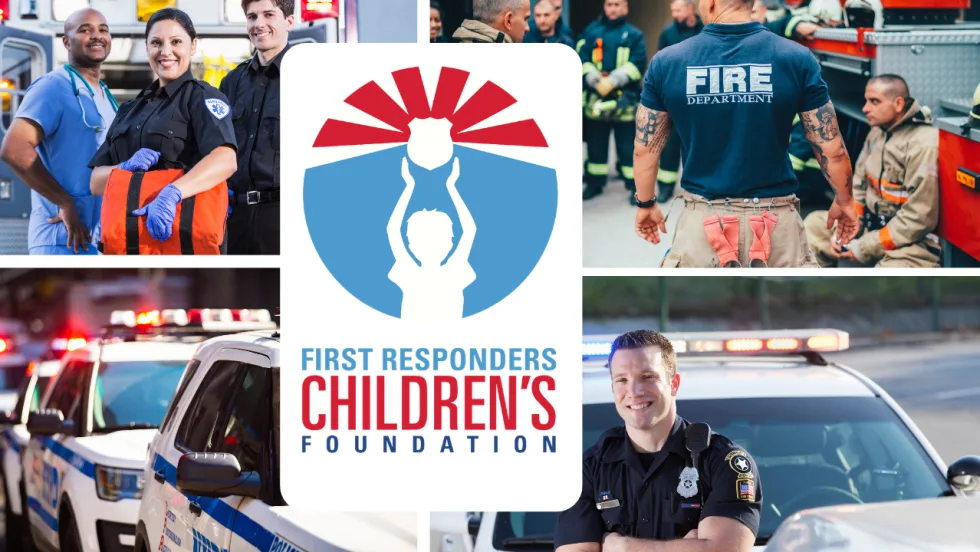
The First Responders Children’s Foundation National First Responders Day Roll Call of Heroes Ceremony Returns to Times Square, NYC
First Responders Children’s Foundation (FRCF), in collaboration with T-Mobile, will host the Roll Call of Heroes ceremony in Times Square to commemorate National First Responders Day on Wednesday, Oct. 28. During the event, FRCF will present 18 Hero Awards.
Read More →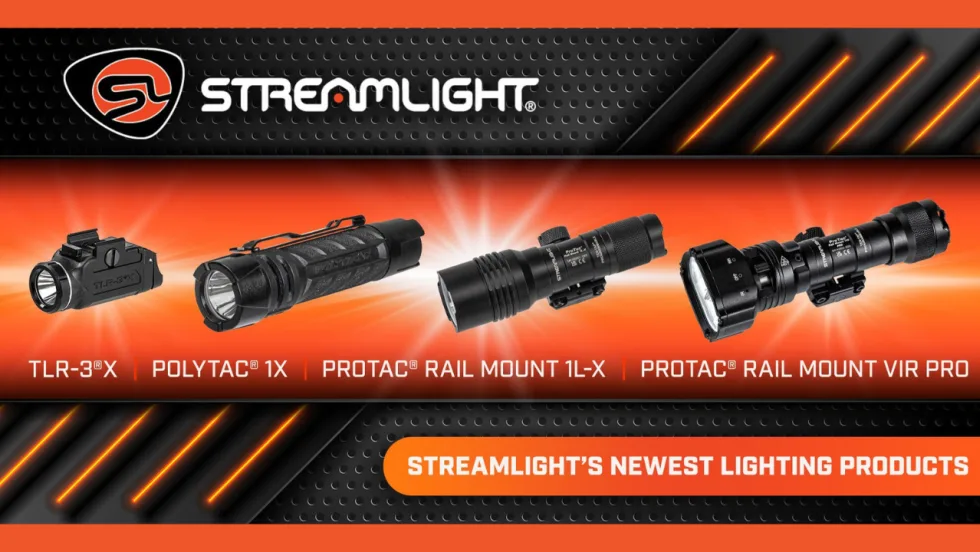
Streamlight to Showcase Newest Lighting Products for Law Enforcement Professionals at IACP 2026
Streamlight will showcase its newest lights for law enforcement at the International Association of Chiefs of Police Annual Conference & Expo. Featured lights will include the TLR-3 X, the PolyTac 1X, and more.
Read More →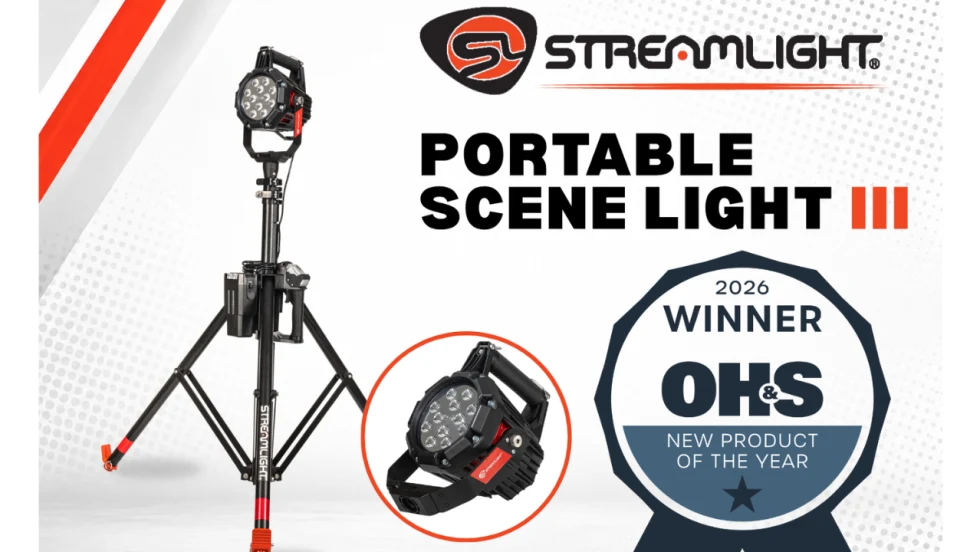
Streamlight Portable Scene Light III Wins 2026 OH&S New Product of the Year Award
Streamlight’s Portable Scene Light III has won the 2026 Occupational Health & Safety (OH&S) New Product of the Year Award in the Lighting category.
Read More →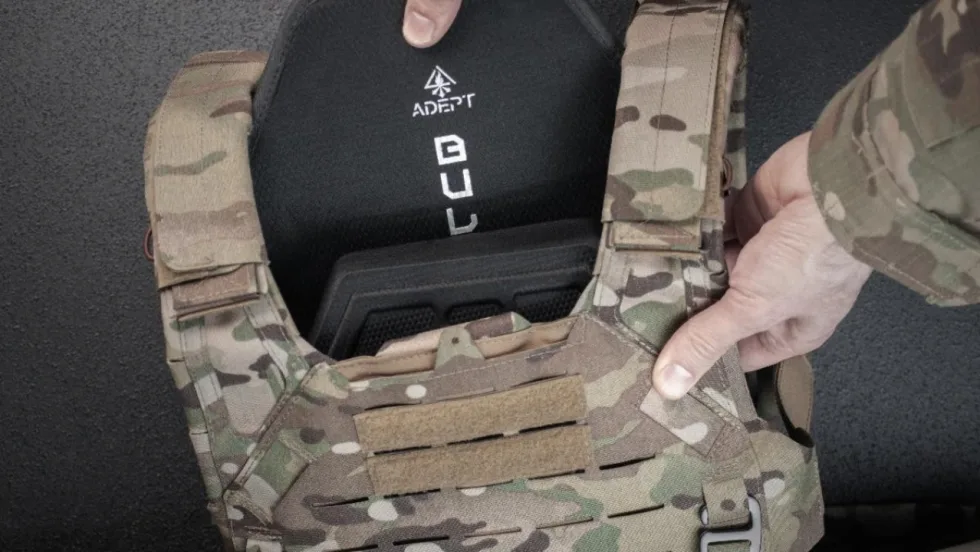
Adept Armor Introduces Two New Rifle Plates
Adept Armor has launched two new Level IV ballistic plates, the Emperor and the Archon Mark 2, which brings Adept Armor’s new Quatroid ceramic to the high-threat, performance-value center of the range at 5.2 pounds.
Read More →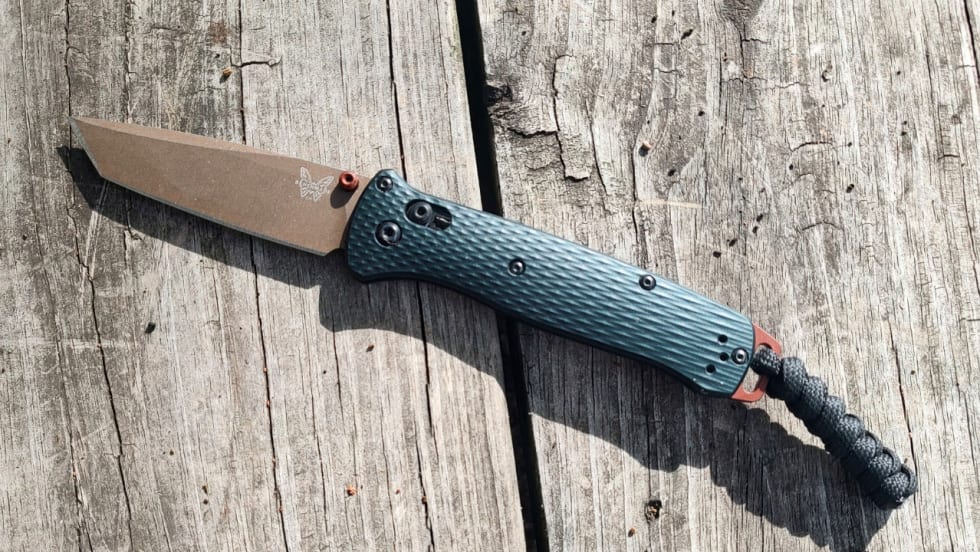
POLICE Product Test: Benchmade Bailout
The Benchmade Bailout is a slim, lightweight carry knife with a deep-ride pocket clip and comes in a variety of blade steels and scales. Here is a detailed review of the Taiga Green Bailout, released earlier this year.
Read More →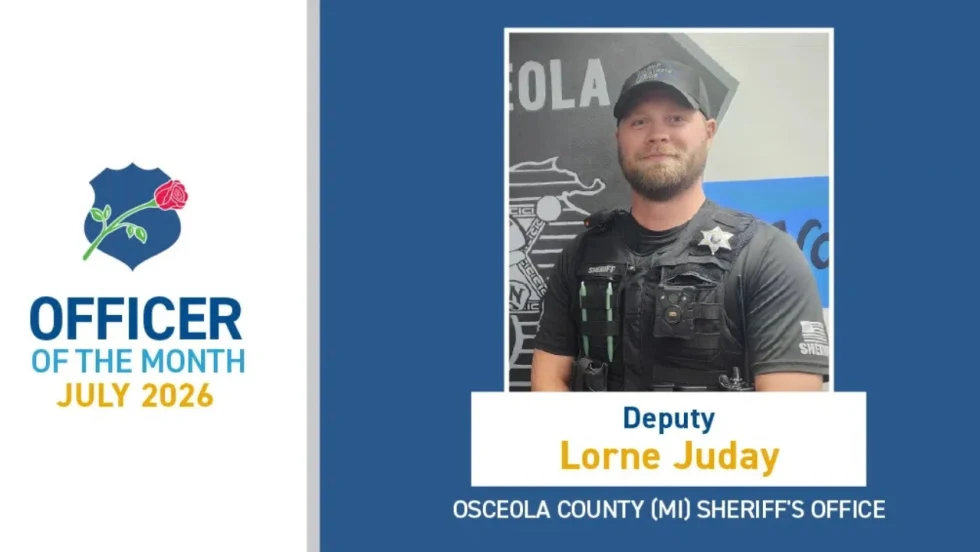
NLEOMF Announces July 2026 Officer of the Month
NLEOMF honored a Michigan deputy sheriff as the July 2026 Officer of the Month for rescuing a trapped driver from a burning vehicle following a Fourth of July crash.
Read More →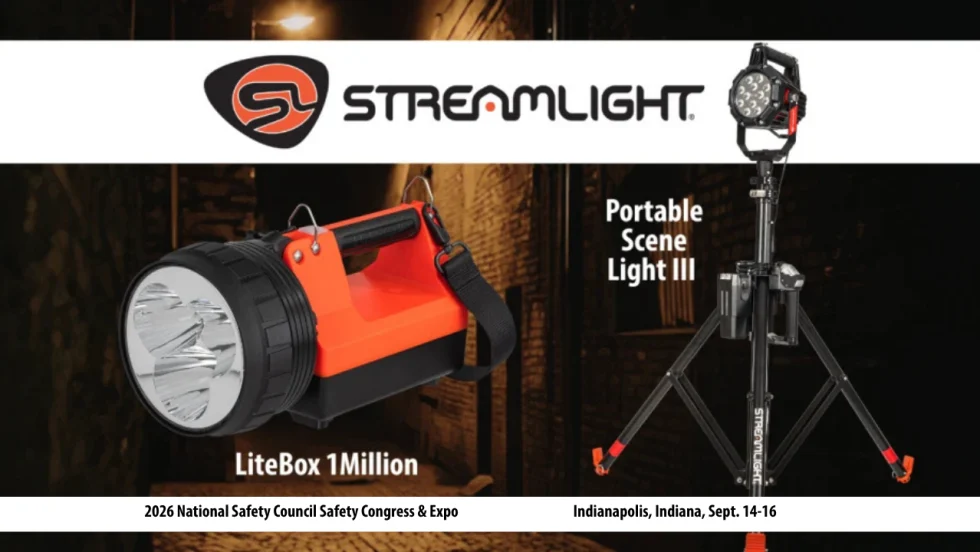
Streamlight to Showcase Newest Lighting Products at National Safety Council’s Safety Congress & Expo 2026
Streamlight will showcase its latest lights, including the Portable Scene Light III and the LiteBox 1Million, at the 2026 National Safety Council (NSC) Safety Congress & Expo.
Read More →
The 2027 World Police & Fire Games Set for Perth, Australia
The 2027 World Police & Fire Games (WPFG) will take place in Perth, Western Australia, from Friday, March 12 through Sunday, March 21, 2027.
Read More →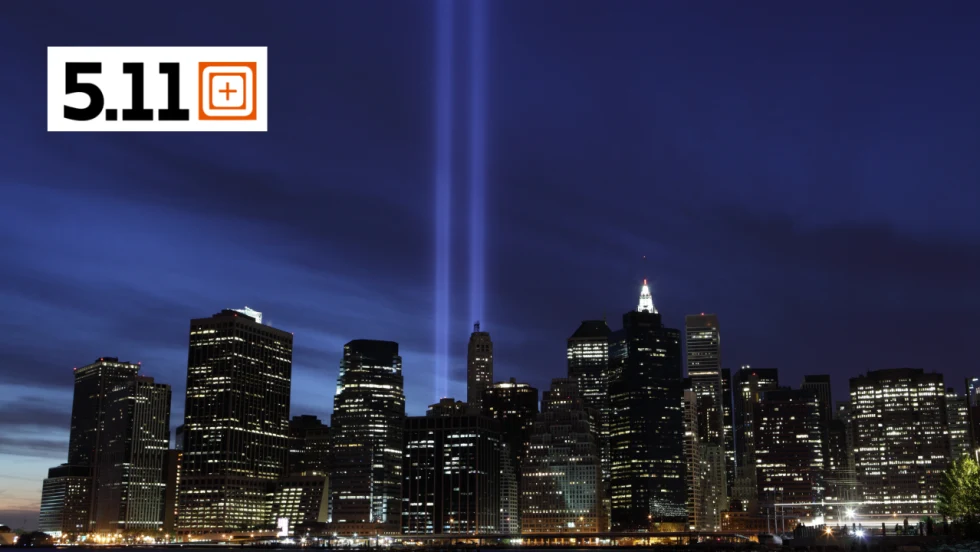
5.11 Partners with National Fallen Firefighters Foundation to Support #ForThe343
5.11 has joined the nationwide movement honoring the 343 New York City Fire Department firefighters lost on Sept. 11, 2001.
Read More →