



The Threat of Technology
Officer safety remains a paramount concern even if some choose to ignore it. We are losing our basic skills by relying too much on modern toys to do our jobs for us. In today's world, one of the biggest unrecognized threats to officer safety and survival is technology.

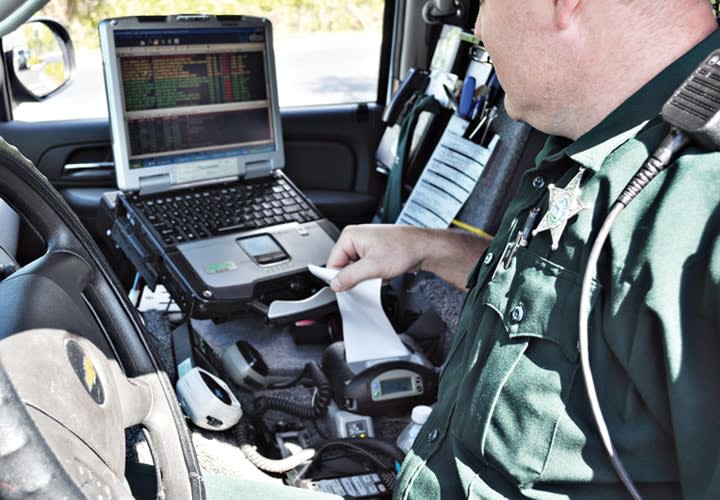
Photo: Amaury Murgado.
People who use the words officer safety and survival fall into two camps: the serious and the dismissive. Those who take officer safety seriously tend to stay on top of trends, work within an overall strategy, and are flexible in matching their tactics with the situation. These officers are usually the proactive ones who are seldom recognized for their efforts. They are informal leaders and avid trainers. The dismissive ones are the complete opposite.
Those in the dismissive camp gamble with their lives on a daily basis by ignoring the basic tenets of officer safety and survival. They make it easier to become a victim or a casualty. They put others at risk because they have no strategy and use poor tactics. These are the officers that consistently duck training but are first in line when it comes to going to lunch. They value time off with the family and yet seldom do anything to ensure that they get back to them safely.
Officer safety remains a paramount concern even if some choose to ignore it. Many agencies spend a great deal of time, energy, and money on the high liability aspects of the job. Their officers routinely shoot, practice combatives, and work on their emergency driving skills. However, the same agencies ignore the everyday and less appreciated threats and distractions. We are losing our basic skills by relying too much on modern toys to do our jobs for us. In today's world, one of the biggest unrecognized threats to officer safety and survival is technology.
Digital Distractions
There is no denying that the use of technology has made an officer's life more efficient. But that efficiency has come at an overlooked price: compromising aspects of the officer's safety. The down side to technology is that it creates an inherent loss in environmental awareness.
Take for example the use of in-car Mobile Data Computers (MDC). With an MDC, you have easy access to law enforcement databases at the local, state, and federal levels. The problem is not with information but in how you obtain it. In order to understand where I am coming from, you first have to ask, "Am I at a complete stop at a traffic light, safely parked completing a report, or am I driving and typing while accessing the information?"
As a watch commander, I sometimes had to handle citizen complaints about officers swerving on the road (even going off the road). The complainant was driving behind an officer and it was obvious to the driver that the officer's attention was on his computer instead of on driving. I don't have any research to show how many crashes have involved MDCs as a contributing factor, nor am I even sure anyone tracks MDC use that way. Regardless, the potential for disaster remains high.
The MDC has become a crutch for expediency. More importantly, it has helped make some officers soft in their safety and survival skills. Officers play more and more license tag bingo while they drive. Using their radio is becoming archaic. I know of an agency that has stopped allowing license plates to be run on the radio as they prefer them run on the MDC instead. While it's not practical or even advisable to not use your MDC or in-car computer, it's important to use it as safely as possible. Do what you can to keep your eyes on the road.
Cell Phones
What agency doesn't have a policy restricting cell phone use while driving? And yet you can see officers and command staff alike using them while they drive. There is research galore on the dangers of cell phone use while driving. Still, we are all guilty of it; I am no exception. But we are hypocrites as we complain when other people do it. I guess we feel we have special skills that civilians don't. And while we're at it, let's be honest with ourselves and look at how much of our phone use is business and just how much of it is personal.
As if talking on the phone weren't bad enough, there is an even worse distraction (more like addiction) while driving: texting. At least if you use your phone like a phone, you can still see the road while driving. Unfortunately, texting leaves you clueless.
For the sake of argument, let's say that the use of a phone is not a driving issue. The fact remains that the phone still distracts you and splits your attention. You are apt to miss cues that would otherwise alert you to danger. It might be nice to see the car running a stop sign before it hits you.[PAGEBREAK]
Electronic Control Device
Electronic Control Device (ECD) is normally a dirty word for me as a combatives instructor. Please don't get me wrong, I feel that an ECD (TASER being the most famous) is a valuable and perfectly legitimate tool in the hands of a well rounded officer. The problem is when it's turned into a crutch for those who refuse, or worse, are afraid, to go hands-on. Officers lose their combative skills when they rely on gadgets rather than their own abilities.
My main concern with ECDs is not that they are used, but what happens when they fail. Every ECD will periodically fail because it's like every other mechanical device. It will also have no effect on some of its targets. When officers have let their combatives skills lapse, the original purpose of the ECD has been lost. Officers routinely grab for their ECD instead of their firearms. You would think that we would know better than to bring an ECD to a gunfight...ECDs were designed as an option, not the only option.
In-Car Ticket Printers
Another device that can distract you from the task at hand is an in-car ticket printer. It's already bad enough that officers pay more attention to their MDC instead of to the passengers in the car they stopped. There have been instances where suspects have escaped unnoticed. Be careful when using a ticket printer, and don't look at it for longer than needed. You can, of course, also write tickets the old fashioned way. Keep your ticket book chest high and use your peripheral vision to keep an eye on the person you're dealing with, while using your car door as cover. You have no peripheral vision when you are focusing all of your attention on a computer or printer monitor.
Social Networks
Who hasn't read about, heard of, or known someone who has been bitten in the ass by the social network bug? Agencies focus policy around what officers say, what pictures they post, and in general, how their Internet use reflects on the agency as a whole. But no one ever talks about personal security issues. There is no regulation on cyberspace, so when you post something on the Web you may as well assume it's forever. Anyone with enough time and patience can find out all sorts of things about you...and your family.
Take a moment and think about what you place on Facebook, Twitter, etc., in terms of officer safety and survival. Think about the volumes of information about yourself, your family, and where you work. Those pictures of you and your loved ones are now out in cyberspace for anyone to see. Oh I know, you're comforted by the fact that your site has security settings and only your friends can see you. If that's what you truly believe, then I guess you can safely add that belief to the list that contains Santa Claus, the Easter Bunny, and the Tooth Fairy.
Place only the information on the Web that you are willing to show the world. Recently, someone responded to one of my articles from overseas who didn't contact me through my agency's or magazine's e-mail. He found my résumé online that included my personal e-mail address and used that to contact me. He warned me that some of my personal information was accessible. I have posted my résumé with several training companies as a combatives instructor and already knew what information was out there, including the personal e-mail address I chose to make available. But not everyone is so conscientious.
A Paper Tiger Still Has Teeth
The dismissive types sometimes found in upper level command positions often deal with real-life issues as a paper tiger; through policy and procedure. These often overlooked and seldom enforced uses of technologically based policies are only enforced when an issue becomes a problem.
And by problem I mean, when someone complains or it appears in the media. Once it hits the media your agency will always find religion. Someone is going to pay dearly for violating policy and in doing so will amaze the world with just how concerned your agency is. You and I both know better. The fact of the matter is the only person you can rely on for officer safety and survival is you. Anything else is just a convenient facade.
Final Thoughts
You are ultimately responsible for your own safety and survival. No one can ever do that for you. If you use a cell phone in the car, don't text while driving. If you have an ECD, remember it's a tool and not an end-all. If you surf the Web, don't let the wave crash down on you. Officer safety is never just about the big high liability issues; it's about all the issues. Don't let something that's become so easy or commonplace end up being the last thing you remember before seeing the white light. By the way, the white light is not the doorway to heaven, it's the headlights of the car you didn't see coming at you because you were looking down...
Amaury Murgado is a special operations lieutenant with the Osceola County (Fla.) Sheriff's Office. He is a retired master sergeant from the Army Reserve, has 23 years of law enforcement experience, and has been involved with martial arts for 37 years.
More Technology
A police agency's guide to data-driven fleet management
Costs are rising and the public expects more transparency into how their tax dollars are spent. This e-book shows how police agencies can use fleet data to take control of fleet expenses while improving officer safety and demonstrating fiscal responsibility to the communities they serve.
Read More →
AI and analytics for law enforcement: Turning data into insights
Law enforcement agencies are managing more video, sensor data and digital evidence than ever before. Discover how AI and analytics can help turn that data into actionable insights that strengthen situational awareness, accelerate investigations and support more informed decisions.
Read More →
Vasco Electronics Adds Automatic Language Detection to Vasco Translator Q1
Vasco Electronics’ software update introduces hands-free language switching and expanded offline translation across 45 language pairs, empowering law enforcement, healthcare, and front-office enterprise teams
Read More →

North Miami Police Department Deploys Mark43
The North Miami Police Department has deployed Mark43 as part of its Five-Year Strategic Plan that represents its collective vision and goals for a more proactive police department, anchored by a core commitment to leveraging modern technology to enhance efficiency and public safety.
Read More →
Cellebrite Genesis for Enterprise Now Generally Available
Made available to the public sector in June, Cellebrite Genesis is serving a growing mix of national, regional, and local agencies worldwide, including some of the largest regional and metropolitan police departments. It is now available for enterprise organizations.
Read More →
2026 Vision FirstNet Users Summit to Host Emerging Leaders Training on Grassroots Advocacy for Public Safety
“Emerging Leaders Training: Understanding the Importance of Grassroots Advocacy for Public Safety," a session during the 2026 Vision FirstNet Users Summit, will offer a roadmap for unified advocacy at the federal level.
Read More →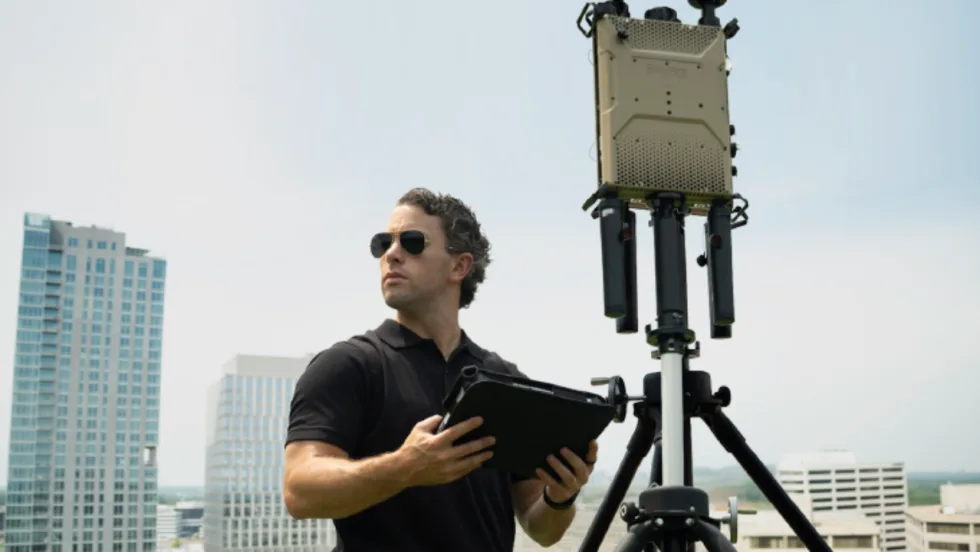
Motorola Solutions Completes Acquisition of D-Fend Solutions
Motorola Solutions has acquired D-Fend Solutions, an industry leader in counter-drone technology. This deal provides public safety and enterprise customers with access to advanced counter-unmanned aerial systems.
Read More →
ZeroEyes, Advantech & Camden Police Partner to Bring AI Gun Detection Technology to Delaware School District
ZeroEyes has partnered with Advantech and the Camden Police Department to deploy ZeroEyes’ AI gun detection and intelligent situational awareness platform at Delaware’s Caesar Rodney School District (CRSD).
Read More →
Leonardo U.S. Cyber & Security Solutions Introduces SignalTrace, the Next Evolution in Electronic Signature Detection Technology
SignalTrace reflects years of product refinement and a clearer expression of the technology’s purpose of recognizing and correlating electronic signatures in publicly broadcast wireless signals to reveal patterns, relationships, and trends that might otherwise go undetected.
Read More →
Pimloc Launches Secure File Sharing to Streamline Release of Redacted Video
Pimloc’s Secure File Sharing lets organizations deliver redacted video, audio, and documents through expiring, passcode-protected links, accelerating delivery while reducing security, compliance, and chain-of-custody risks.
Read More →