



The Independent Source Doctrine
Although some searches and seizures may only be justifiable under a single approach, many can be justified several different ways. The U.S. Supreme Court has long held that when this is the case, any independent source of contested evidence will suffice, even when another does not.

Photo: iStockPhoto.com
I became a prosecutor in 1976. In the 36 years since, I've seen hundreds—maybe thousands—of cases we lost because critical evidence was ruled inadmissible based on police search-and-seizure error. Sometimes, this unfortunate result was correct under the law. Too often, it wasn't. We should have won, but we didn't. A guilty criminal went unpunished, and it shouldn't have happened.
Why did we lose when we ought to have won? Was it faulty police report writing? Inadequate advocacy by the prosecuting attorney? Shoddy analysis by the magistrate conducting the suppression hearing? Erroneous rulings by appellate courts reviewing suppression orders? Yes, all of the above. But who has the first and best chance to keep these mistakes from happening? You do.
When busy prosecutors and judges look at your reports to see whether your detentions, searches, and arrests are justifiable under the vast body of Fourth Amendment rules, they generally focus on the justification you asserted in your reports and your testimony at a suppression hearing. This means they may miss alternative justifications you could have relied on, but failed to. You can help prevent prosecutorial and judicial oversight by making sure your reports cover every possible way to back up your investigative steps, instead of simply picking one theory that may get picked apart by the defense.
Although some searches and seizures may only be justifiable under a single approach, many can be justified several different ways. The U.S. Supreme Court has long held that when this is the case, any independent source of contested evidence will suffice, even when another does not.
The "Independent Source" Doctrine
Let's say you searched the trunk of the suspect's car after arresting him on an outstanding traffic warrant. You found drugs in the trunk and added a possession charge. Your asserted justification for the search was that it was incident to arrest. You request a filing from the prosecutor for the drug charge, but your case gets rejected because, as the prosecutor is aware, the proper scope of a search incident to arrest is limited to the passenger compartment and does not extend to the trunk. (New York v. Belton; Arizona v. Gant) Therefore, the search is not justifiable as incident to arrest, and the evidence is inadmissible.
Although your report made no mention of it, you lawfully impounded the car based on the traffic arrest and conducted a standard inventory, which would include the trunk. The drugs would be admissible under this exception to the warrant requirement, except that you failed to include it because you mistakenly thought your search was permissible incident to arrest. If you don't include all of the independent sources for your searches and seizures and if the prosecutor neglects to explore them, we needlessly lose a good case.
Numerous Supreme Court rulings acknowledge that we need not put all our search-and-seizure eggs in one basket but may spread them out. Here are a few examples:
"The independent source doctrine allows admission of evidence that has been discovered by means wholly independent of any constitutional violation." (Nix v. Williams)
"It is clear from our prior holdings that the exclusionary rule has no application where the government learned of the evidence by means wholly independent of any constitutional violation." (Segura v. U.S.)
"The 'independent source' doctrine permits the introduction of evidence initially discovered during, or as a consequence of, an unlawful search, but later obtained independently from lawful activities untainted by the initial illegality." (Murray v. U.S.)
In our hypothetical above, if your report had covered both the incident-to-arrest theory and the impound-inventory theory, the prosecutor could have charged the case and prevailed at any suppression hearing by relying on the independent source of the inventory to justify a search that could not be justified as incident to the suspect's arrest. Moral: Try to identify as many legal grounds for your actions as you can. This will improve the odds that your cases get filed, and that we win suppression motions and trials when we should.
How Many Baskets?
You can't identify all of the relevant grounds for your searches and seizures if you're not aware they exist. Just in case your training may have overlooked one or two, here's a list of potential search-and-seizure baskets that may sometimes apply, and that should be considered when you compose your reports. If you're unfamiliar with the requirements and scope of any of these searches, they're all explained and discussed in my latest book, Criminal Evidence, LawTech Publishing, 2012. Many of these topics have also been covered in past "Point of Law" articles here in POLICE Magazine.
Grounds for Search and Seizure:
Search warrant
"Steagald warrant"
Anticipatory search warrant
"Sneak and peek" warrant
Administrative warrant
Court order for electronic surveillance
Consent
Incident to arrest
"Fleeting targets" (probable cause for vehicle search)
Officer safety
Public safety/rescue
Booking search
Inventory
Jail/prison inspection
Probation/parole search
Public school search
Public employment search
Border search
Customs search
Inspection of highly regulated business
"Evanescent evidence" search
Exigent circumstance entry/search
"Community caretaking" entry/search
It might be useful to you to keep this list handy where you write or dictate your reports and to refer to it to be sure you've covered every possible justification for your searches and seizures.
It's Not Too Late
Even if you fail to include an alternative, independent source for evidence when you file your report, a savvy prosecutor can identify other ways to justify your actions, and we're still OK—even though the alternative justification wasn't one you subjectively considered. That's because the Supreme Court has said repeatedly that Fourth Amendment principles are to be applied objectively, without regard to the officer's subjective motivation or intent.
"Whether a Fourth Amendment violation has occurred turns on an objective assessment of the officer's actions in light of the circumstances confronting him at the time, and not on the officer's actual state of mind at the time the challenged action was taken." (Maryland v. Macon)
"Evenhanded law enforcement is best achieved by the application of objective standards of conduct, rather than standards that depend on the subjective state of mind of the officer." (Horton v. California)
In Devenpeck v. Alford, for example, officers based their arrest on an offense for which they had no probable cause. The Supreme Court held that the prosecutor was entitled to justify the arrest on PC as to two other crimes, even though the officers did not rely on those grounds. Said the court, "Subjective intent of the arresting officer is simply no basis for invalidating an arrest."
Likewise, if you overlook a valid ground for a detention, search, entry, or arrest, the prosecutor will still have the opportunity at the suppression hearing to explore any independent source of the evidence that might be supported by the facts and the law. You can help by suggesting that the prosecutor consider alternative justifications, if he or she seems inclined to reject your case at the charging stage, or to throw in the towel at the suppression hearing.
Devallis Rutledge is a former police officer and veteran prosecutor who currently serves as special counsel to the Los Angeles County district attorney. He is the author of numerous books, including his latest, "Criminal Evidence."
More Patrol
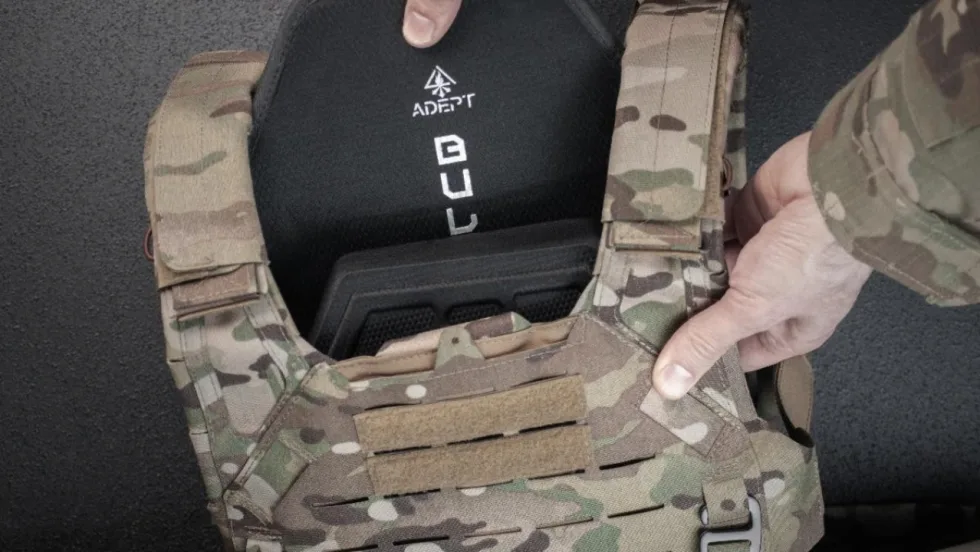
Adept Armor Introduces Two New Rifle Plates
Adept Armor has launched two new Level IV ballistic plates, the Emperor and the Archon Mark 2, which brings Adept Armor’s new Quatroid ceramic to the high-threat, performance-value center of the range at 5.2 pounds.
Read More →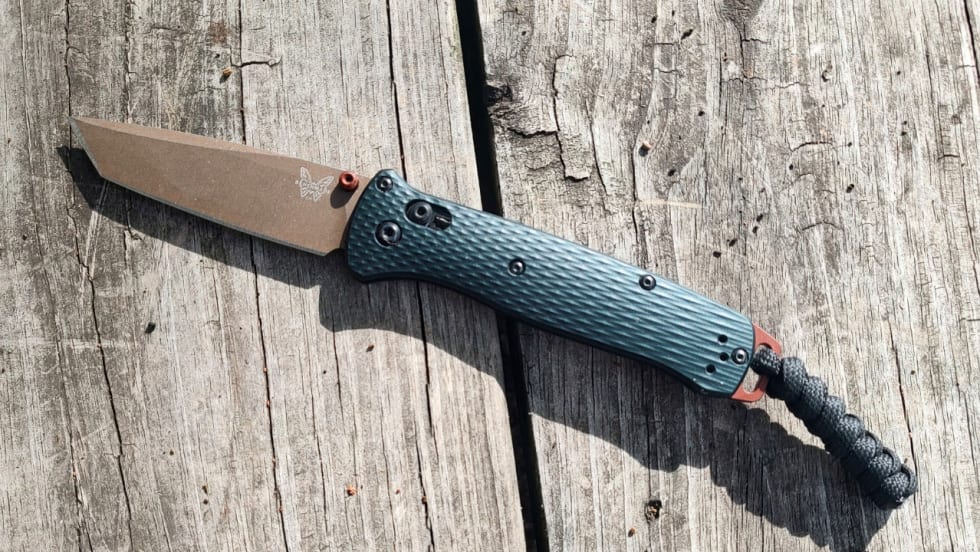
POLICE Product Test: Benchmade Bailout
The Benchmade Bailout is a slim, lightweight carry knife with a deep-ride pocket clip and comes in a variety of blade steels and scales. Here is a detailed review of the Taiga Green Bailout, released earlier this year.
Read More →
NLEOMF Announces July 2026 Officer of the Month
NLEOMF honored a Michigan deputy sheriff as the July 2026 Officer of the Month for rescuing a trapped driver from a burning vehicle following a Fourth of July crash.
Read More →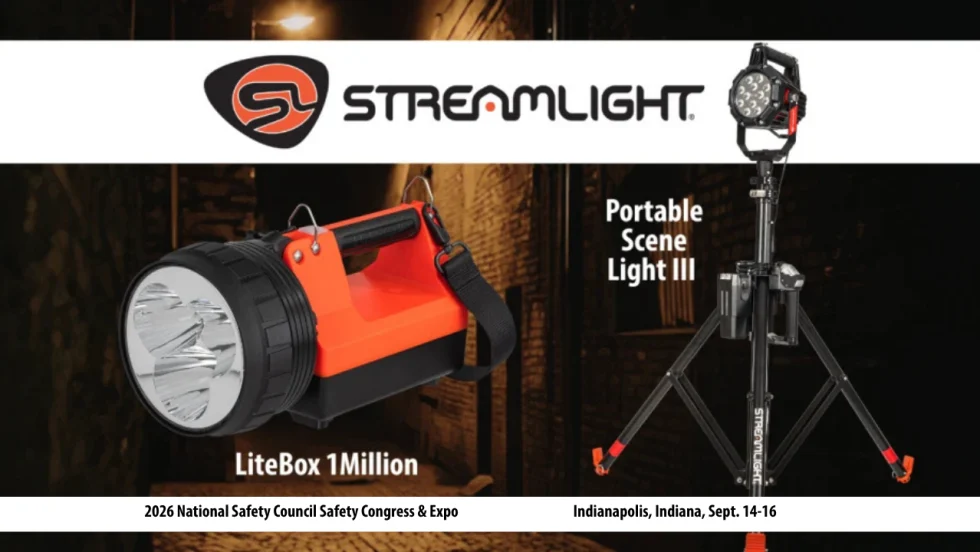
Streamlight to Showcase Newest Lighting Products at National Safety Council’s Safety Congress & Expo 2026
Streamlight will showcase its latest lights, including the Portable Scene Light III and the LiteBox 1Million, at the 2026 National Safety Council (NSC) Safety Congress & Expo.
Read More →
The 2027 World Police & Fire Games Set for Perth, Australia
The 2027 World Police & Fire Games (WPFG) will take place in Perth, Western Australia, from Friday, March 12 through Sunday, March 21, 2027.
Read More →
5.11 Partners with National Fallen Firefighters Foundation to Support #ForThe343
5.11 has joined the nationwide movement honoring the 343 New York City Fire Department firefighters lost on Sept. 11, 2001.
Read More →
Team Wendy Announces Title Sponsorship of the Jorge Pastore Foundation
Team Wendy’s 3-year partnership with the Jorge Pastore Foundation expands access to programs that strengthen those who serve.
Read More →
National Law Enforcement Memorial and Museum Hosting 9/11 25th-Year Commemoration Ceremony
The National Law Enforcement Memorial and Museum is hosting a 9/11 25th Year Commemoration Ceremony on Sept. 11 at 4 p.m.
Read More →
National Law Enforcement Officers Memorial Fund Announces June 2026 Officers of the Month
The National Law Enforcement Officers Memorial Fund (NLEOMF) named 15 officers of the Chico Police Department (California) as the Officers of the Month for June 2026 for their roles in responding to an active-shooter incident at a public library.
Read More →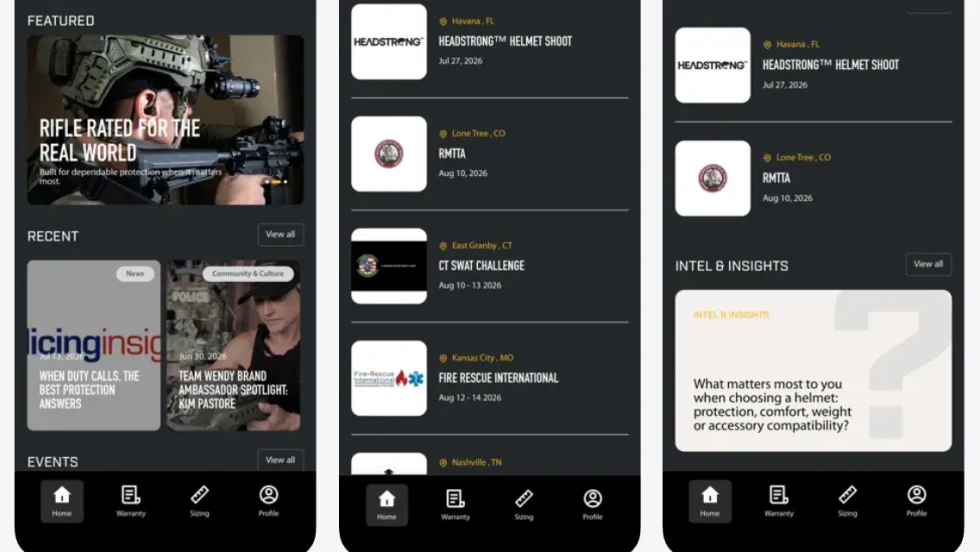
Team Wendy App Creates New Digital Hub for Helmet Owners
The Team Wendy Community App provides one location for warranty registration, size-fit tools, product updates, and community connection. For helmet owners, the new app creates a simpler path to the information and tools that matter most.
Read More →