



The "Emergency Aid Doctrine"
Officers can enter when it reasonably appears someone inside may need emergency aid, regardless of the officers' actual, subjective motivations for going inside.


It's a familiar principle that warrantless searches and seizures are presumed to be unreasonable, with the burden on the government to show that any warrantless search or seizure came within a recognized exception. (Katz v. U.S.) Since an entry into a person's home infringes the legitimate expectation of privacy residents have there, an entry qualifies as a Fourth Amendment "search" under the Supreme Court's definition, and therefore generally requires a warrant. (Payton v. New York)
The three broad categories of exceptions to the warrant requirement for entering a home (or other private premises not open to the public) are (1) consent, (2) a resident's probation or parole term allowing entry, and (3) exigent circumstances. The exigency category includes a half-dozen varieties: imminent substantial property damage, imminent destruction of evidence, fresh pursuit of a dangerous offender, preventing escape of someone sought to be detained or arrested in public, public safety/community caretaking, and rescue/emergency aid. This last form of exigency has been the subject of two recent Supreme Court cases.
Brigham City v. Stuart
In a 2006 opinion, the U.S. Supreme Court considered the reasonableness of the entry made by police officers into a home where a fistfight was in progress. Police had been called to the home in the early morning hours because of a reported disturbance. Through a window, officers saw several people trying to restrain an unruly juvenile, who punched another person in the face, causing that person to spit out blood. Officers entered, stopped the fighting, and made an arrest. The defendant moved to suppress the evidence of the officers' in-home observations as the fruit of an illegal entry.
The state trial court, appellate court, and supreme court all ordered suppression of evidence. The Utah Supreme Court believed that a fistfight did not qualify as an exigency because no one appeared to be in danger of being killed or rendered unconscious. Also, the Utah Supreme Court questioned the officers' true motives for entering, whether to render emergency aid or to investigate possible crimes involving alcohol and fighting. The State appealed the suppression order to the U.S. Supreme Court.
The U.S. Supreme Court unanimously reversed and held the officers' entry to have been reasonable under the Fourth Amendment. The court held that an ongoing fight with even a minor injury was a sufficient exigency to excuse the warrant requirement, under the "emergency aid doctrine."
In the words of the court, "One exigency obviating the requirement of a warrant is the need to assist persons who are seriously injured or threatened with such injury. The role of a peace officer includes preventing violence and restoring order, not simply rendering first aid to casualties. Accordingly, law enforcement officers may enter a home without a warrant to render emergency assistance to an injured occupant or to protect an occupant from imminent injury."
As for the approach of the Utah courts in considering the speculative subjective intent of officers in making entry, the Supreme Court repeated what it had said many, many times: "Our cases have repeatedly rejected this approach. An action is reasonable under the Fourth Amendment, regardless of the individual officer's state of mind, as long as the circumstances, viewed objectively, justify the action. The officer's subjective motivation is irrelevant." (Brigham City v. Stuart)
Although the lesson of the Stuart opinion would seem to be fairly clear-officers can enter when it reasonably appears someone inside may need emergency aid, regardless of the officers' actual, subjective motivations for going inside-this ruling had to be repeated by the Supreme Court only three years later, in a 2009 case from Michigan.
Michigan v. Fisher
In Brownstown, Mich., police responded to a call about a neighborhood disturbance. They were met by neighbors who pointed to Jeremy Fisher's home and said that Fisher was "going crazy" in his house. As they approached the residence, officers saw that a pickup truck in the driveway was smashed in the front, the fencing was damaged, three house windows were broken out with glass scattered around, and blood was visible on the hood of the truck, on clothing inside it, and on the doorknob to the house. Through a window, the officers could see Fisher throwing things and they could hear him screaming. When their knocks were answered by Fisher's profanity-laced demand that they get a warrant, the officers forced entry and ultimately arrested Fisher after he pointed a gun at one of them.
Fisher was charged with assault and weapons offenses, and he moved to suppress the officers' observations inside the home as the products of illegal entry. The trial court granted the motion, and this ruling was upheld by the Michigan Court of Appeals, which reasoned that there were insufficient signs of serious injury to justify entry, and therefore the officers would not be justified in a subjective belief of exigency. The Michigan Supreme Court let this ruling stand. The state appealed to the U.S. Supreme Court, arguing that the suppression ruling was contrary to the holding of Stuart. The Supreme Court agreed.
"The decision of the Michigan Court of Appeals is indeed contrary to our Fourth Amendment case law, particularly Brigham City v. Stuart," said the court. "The 'emergency aid exception' does not depend on the officers' subjective intent or the seriousness of any crime they are investigating when the emergency arises. It requires only an objectively reasonable basis for believing that a person within the house is in need of immediate aid. It was error for the Michigan Court of Appeals to replace that objective inquiry into appearances with its hindsight determination that there was in fact no emergency. The Michigan Court of Appeals required more than what the Fourth Amendment demands."
The court considered the circumstances confronting police sufficient to furnish an objective basis for entry: "It would be objectively reasonable to believe that Fisher's projectiles might have a human target (perhaps a spouse or child), or that Fisher would hurt himself in the course of his rage. Officers do not need ironclad proof of a likely serious, life-threatening injury to invoke the emergency aid exception. It does not meet the needs of law enforcement or the demands of public safety to require officers to walk away from a situation like the one they encountered here." (Michigan v. Fisher)
A New Twist
Twice in the Fisher opinion, the court spoke of applying the emergency aid exception to protect a person from himself. Previous cases have involved the rescue of someone from the threats or attacks of others. But the Supreme Court made no such distinction when issuing its ruling in Fisher, saying this: "It sufficed to invoke the emergency aid exception that it was reasonable to believe that Fisher had hurt himself (albeit nonfatally) and needed treatment that in his rage he was unable to provide." This language appears to support immediate, warrantless entry where an occupant threatens suicide, or where other facts indicate that someone has already hurt or is about to hurt himself or herself.
Note: As always, officers are encouraged to consult local advisers to determine whether greater restrictions may apply on the basis of state law.
Devallis Rutledge is a former police officer and veteran prosecutor who currently serves as Special Counsel to the Los Angeles County District Attorney. He is the author of 12 books, including "Investigative Constitutional Law."
More Patrol
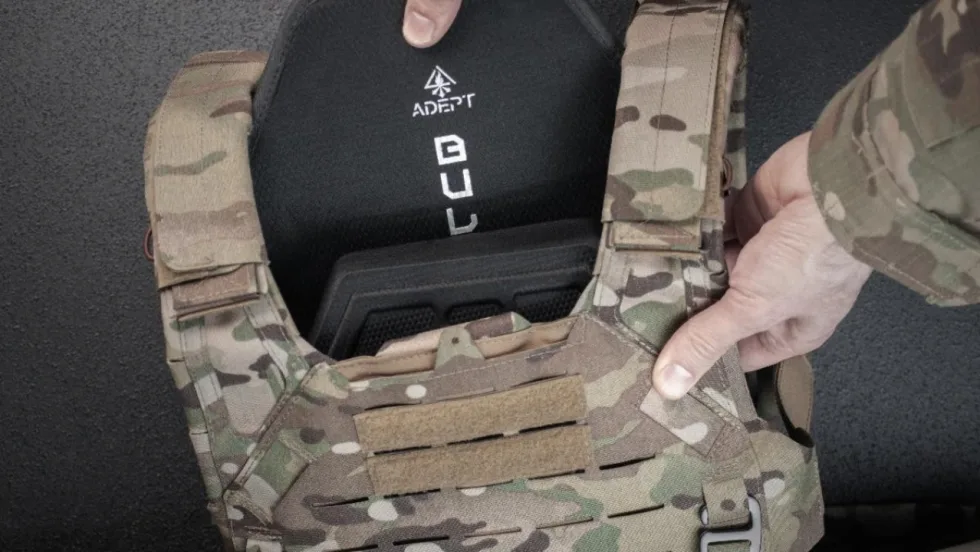
Adept Armor Introduces Two New Rifle Plates
Adept Armor has launched two new Level IV ballistic plates, the Emperor and the Archon Mark 2, which brings Adept Armor’s new Quatroid ceramic to the high-threat, performance-value center of the range at 5.2 pounds.
Read More →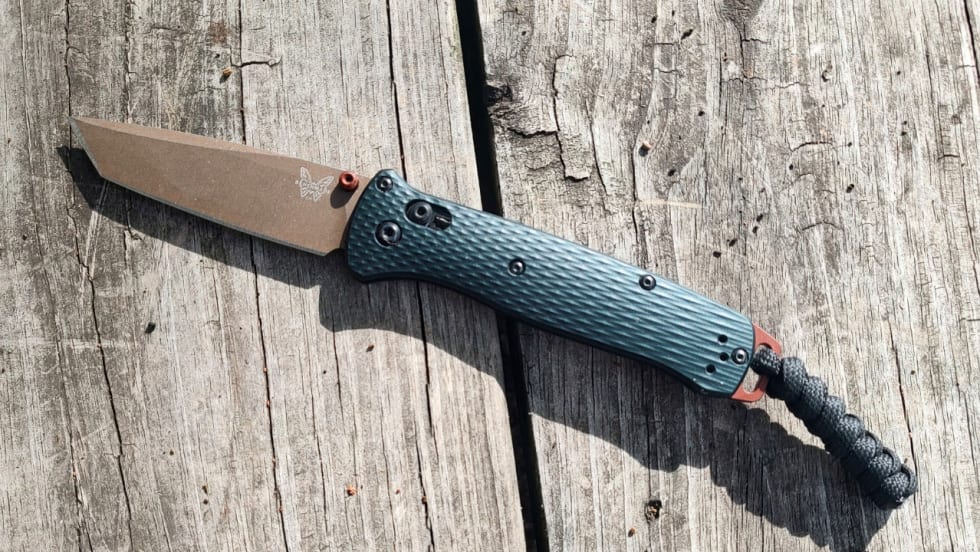
POLICE Product Test: Benchmade Bailout
The Benchmade Bailout is a slim, lightweight carry knife with a deep-ride pocket clip and comes in a variety of blade steels and scales. Here is a detailed review of the Taiga Green Bailout, released earlier this year.
Read More →
NLEOMF Announces July 2026 Officer of the Month
NLEOMF honored a Michigan deputy sheriff as the July 2026 Officer of the Month for rescuing a trapped driver from a burning vehicle following a Fourth of July crash.
Read More →
Streamlight to Showcase Newest Lighting Products at National Safety Council’s Safety Congress & Expo 2026
Streamlight will showcase its latest lights, including the Portable Scene Light III and the LiteBox 1Million, at the 2026 National Safety Council (NSC) Safety Congress & Expo.
Read More →
The 2027 World Police & Fire Games Set for Perth, Australia
The 2027 World Police & Fire Games (WPFG) will take place in Perth, Western Australia, from Friday, March 12 through Sunday, March 21, 2027.
Read More →
5.11 Partners with National Fallen Firefighters Foundation to Support #ForThe343
5.11 has joined the nationwide movement honoring the 343 New York City Fire Department firefighters lost on Sept. 11, 2001.
Read More →
Team Wendy Announces Title Sponsorship of the Jorge Pastore Foundation
Team Wendy’s 3-year partnership with the Jorge Pastore Foundation expands access to programs that strengthen those who serve.
Read More →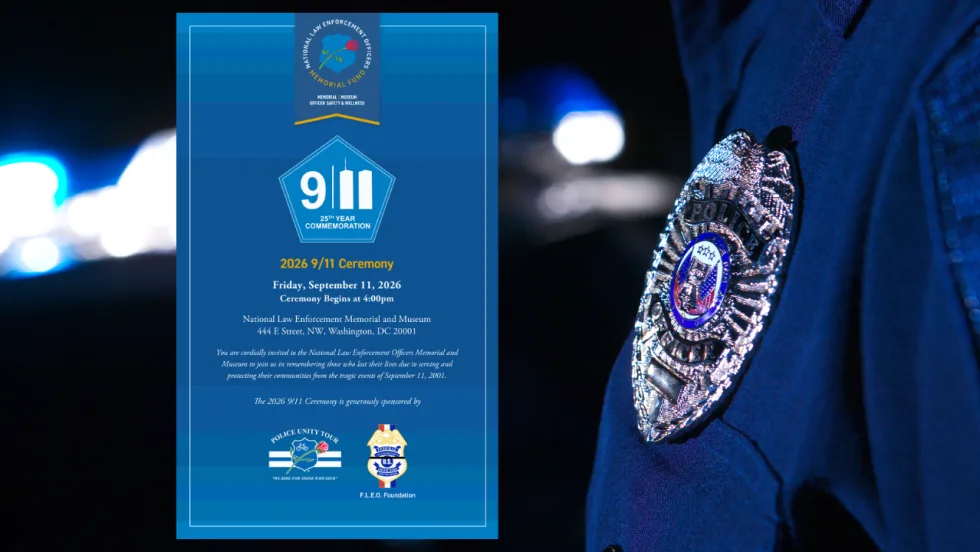
National Law Enforcement Memorial and Museum Hosting 9/11 25th-Year Commemoration Ceremony
The National Law Enforcement Memorial and Museum is hosting a 9/11 25th Year Commemoration Ceremony on Sept. 11 at 4 p.m.
Read More →
National Law Enforcement Officers Memorial Fund Announces June 2026 Officers of the Month
The National Law Enforcement Officers Memorial Fund (NLEOMF) named 15 officers of the Chico Police Department (California) as the Officers of the Month for June 2026 for their roles in responding to an active-shooter incident at a public library.
Read More →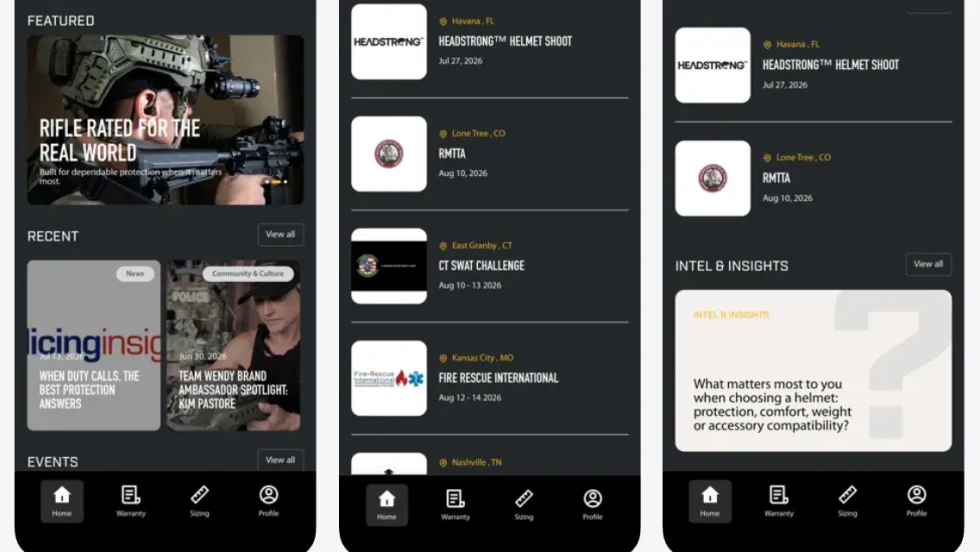
Team Wendy App Creates New Digital Hub for Helmet Owners
The Team Wendy Community App provides one location for warranty registration, size-fit tools, product updates, and community connection. For helmet owners, the new app creates a simpler path to the information and tools that matter most.
Read More →