



The Dreaded Report: We Must Do it, So Why Not Get it Write?
"We're not report takers. We're the police."

"We're not report takers. We're the police."
Posted inside the New York City Police Department's Crime Strategy Center, this sign is one of the first things a visitor will see. And as far as some cops are concerned, they can take that sentiment to the bank.
That the quality of police reports runs the gamut shouldn't be surprising. For when it comes to report writing, the street cop is not allowed the more romantic idiosyncratic luxuries afforded some. He writes when he must, not in the morning when fresh nor in the late evening when reflective. Working under a dim yellow bulb, over a misshapen posse box and on two pints of coffee, he's lucky to compose a report that'll survive a statute of limitations, let alone withstand the test of time.
Sadly, sometimes he doesn't get that far.
Besides being a homicide detective for Miami-Dade Police Department, Ramesh Nyberg writes a humorous column for the department. Police reports give him plenty of humorous inspiration.
"On one police report, the charge line read: 'Resisting Arrest With Violets." One wouldn't think "violence" would be that much of a spelling reach, but then, it was written after the assault." Nyberg chuckles. "I had a field day with that one: 'Willful Throwing of Tulips? Crime is blooming?'"
But then Nyberg is of the mindset that if he didn't laugh, he'd cry, and feels that given its import, police report writing is one of the least emphasized training issues in law enforcement today.
"That and court testimony. Of course, they're intertwined. The success of the latter is dictated by that of the former. We go over an officer's report meticulously.
"Unfortunately, we often end up doing damage control, reviewing cases in a D.A.'s office, trying to decipher just what a cop intended to say in his police report."
It's been said that he who tries to please everyone pleases no one. Unfortunately, report writing is one arena where anything less can be most displeasing for the author. Like it or not, officers write for criminal and civil attorneys, detectives, social workers, supervisors-and the victims they represent. Rejection slips come in the form of frustrated detectives, unimpressed lawyers, irate judges, and cases that don't get filed or end up dismissed.
How do our reports fail us? Sometimes, the nexus of the suspect to a crime is never established; or the probable cause for an officer's search and seizure is in doubt. Or, as John Quinn, a county prosecutor in Vermont notes, "the report may content a crime when the facts do not cover the elements of the statute."
The irony is that often the officer has done the requisite legwork in establishing a case; and few trial lawyers will argue that many of these cases might have been successfully tried if the arresting officer had been as vigilant in his documentation as he was in his investigation.
The tragic legacies of such apathies are legion. Beyond releasing offenders, we put ourselves on the defensive, face potential civil actions and the likelihood of recidivist acts by persons who wouldn't have been in the position to commit more nefarious doings if we'd done our jobs in the first place.
Sometimes, we in law enforcement learn from our mistakes. Sometimes, we don't.
Cerritos, Calif. Los Angeles County Sheriff's Department deputies respond to a loud-party call. The situation deteriorates to the point where several deputies, including a sergeant, are injured and numerous revelers arrested.
In-house, many feel the department has done no wrong, and are surprised to find themselves the defendants in a civil suit. Jurors feel otherwise, finding the department and the county and it s contract cities are culpable for excessive force to the tune of $24 million.
In the wake of the civil suit, the Los Angeles County Sheriff's Department turned a critical eye upon itself. Department members reviewed the highly publicized case, concluding that some familiar factors came into play throughout the course of the trial. Among their conclusions was that the incident had been poorly documented: Officers' reports were disputed by those of other deputies, lacked information, or were refuted by videotapes.
In other words, it was Rodney King all over again.
Why is this?
A variety of factors come into play. First, while we may occasionally find ourselves going up against lawyers with Ivy League backgrounds, few of us have such pedigree: It's left to the police academy to remediate its fledging scribes in the rudimentary rules of grammar and spelling. But the time allocated is often shared with other topics, subjects that run the gamut from sexual harassment training to cultural sensitivity training to force training to physical conditioning. Once out of the academy, these cops find themselves under pressure to get the job done and get back in the field. Finally, reports are as good-or, at least as credible-as the witnesses we quote. Taking such factors into account, it's easy to see why the effort is often executed with a butcher's finesse, and not a surgeon's.
Some even take pride in their report deficiencies. Years ago, I heard a deputy bragging about all the court overtime he was getting. Unimpressed, his partner said that he should start writing crappy paper, too. That way, his defendants would be able to offer an affirmative defense.
Joke or not, there's some truth to the sentiment. Examine the converse, a reality of the judicial system: Faced with a well-documented police report, defendants are more apt to cop a plea than go to trial, in hopes of a more lenient sentence. Indeed, it's not unfair to say that plea bargaining is often a trial by police report.
What can be done?
The cop gets a report call. He gets an overview of the situation, asks pertinent questions-and writes. And when he's done, he'll review his product, trim a little here and there, clean it up, and turn it in.
In a bid to make their reports more legible, some officers have migrated from the posse box to laptop computers. Unfortunately, too few have explored the grammar and spell checking functions. As a result, first reviews of most police reports by supervisors often constitute little more than line editing.
While inexpensive and portable dictionaries have theoretically obviated any excuse for the presence of misused or misspelled words, I nevertheless find some officers doing their part to speed up the evolution of the American lexicon. It is estimated that Shakespeare coined approximately 8 ½ percent of his written vocabulary. In know cops who have eclipsed the Bard's record.
Dennis Sloman, a captain with the Chicago (Ill.) Police Department, recalls some of the reports that have come across his desk.
"I've seen a lot of reports with poor spelling and no punctuation. Poor penmanship. We've gotten reports where there were no spaces between the words-all the letters were written together. There might be punctuation; there might not. I've seen troops try to write in third person, only to switch back and forth from third person to first: "R.O. interviewed subject X who told me...'
"Add another trooper in the interview and you can have a lot of fun: 'Assisting R.O. asked subject X what he knew about the crime and he told Trooper Jones that he didn't know anything about it.' Drives you crazy trying to figure our how many people were in the interview! Is ARO Trooper Jones? Or did Trooper Jones talk to the subject earlier?
"Another problem is too many pronouns: 'He told him that he and she had a camera and a tape recorder.'[PAGEBREAK]
"Rather than draw conclusions in a report (such as 'the subject appeared intoxicated'), I try to get them to avoid conclusions and describe the details. This not only forms a permanent record for future testimony, but it allows the lawyers and judges to see exactly what the police officer was seeing rather than guess at what symptoms the officer might have been seeing to come to the conclusion that the person was intoxicated."
Absent a photograph or videotape, proper documentation may be the sole difference between a misdemeanor or felony filing. This is not an endorsement to lie, but it'd be equally disingenuous not to acknowledge the possible consequences of arbitrary verbiage.
At the same time, remember the maxim: A picture is worth a thousand words.
One never knows where and in what form one's report may end up. California Highway Patrol Officer Greg Mason found a crime report he'd authored posted on the Internet by a disgruntled parent.
And in a federal court case, LASD Sgt. Bruce Prewett and two fellow deputies found themselves confronted with copies of their reports replicated to heights of 8 feet. Prosecuting attorneys sought to use the reports against the deputies in a highly publicized trial that was coming on the heels of the Rodney King riots; in fact, the Los Angeles Times (parroting a prosecuting attorney) referred to the incident as "The White Rodney King."
In a case of "damned if you do, damned if you don't," federal prosecutors deemed the consistency in their reports to be indicative of a "conspiracy." Indeed, among the charges brought against the deputies were "filing false police reports," "excessive force" and "planting evidence." In other words, the same department that had been slammed for a lack of consistency in its documentation was now being indicted for the same.
But because the feds had introduced the reports at trial, the deputies were given the opportunity to get on the witness stand and read their reports; because they were "reading" their reports, they were not testifying, ergo, they could not be cross-examined: It gave the deputies a means of testifying without having to "testify." Ironically, the same reports with which the feds had sought to nail the deputies factored considerably in their being found not guilty-on all counts.
Report writing isn't romantic, it's not dashing, and it sure as hell isn't why many of us got into the job in the first place. Nobody ever saw Dirty Harry writing paper. But it is an essential part of the job.
Despite this reality, the benefits of a well-written report are obvious. It reflects well on both the officer and his department. Doing it right the first time can save us time, energy and lives. Coveted positions often require samples of one's written product; indeed, the documentation of an officer's actions is often the only tangible evidence of his work product.
Even Quinn acknowledges that police reports have improved. "It makes my job easier."
We can use our improved technologies, improved tactics, and state-of-the-art firepower. But if we fail to adequately document what transpired, to explain our actions or inactions, it may all be for naught. Not only are the suspects released, but in this day of increased litigation we may find ourselves civilly and criminally liable to things we shouldn't be.
As our beloved Bard said, "The pen is mightier than the sword."
We may not wield sabers, and use a No 2 lead instead of a fountain quill, but the maxim still carries weight.
Finally, once an officer establishes himself as a good scribe, he probably won't be waiting around so long to get his report approved.
Sgt. Scoville is a patrol supervisor and a longtime, regular contributor to POLICE. He can be reached at http://www.concentric.net/~comicdet.
[sidebar]
Want more pride in your final product that may end up being challenged in court?
Following are some techniques for producing seamless reports.
• Tone plays an important role in most languages, and English is no exception. Maintain a professional tone throughout each report.
• Document as closely as possible the actual chronology of an investigation. Use a patrol notebook to chronicle the order and content of witness's statements, noting specific times wherever possible. Introduce witness's statements and evidence in the order they were presented to you during the field investigation
• Do not stray from the purpose of the report. Fulfill the requirements of the six keys to successful journalism by asking Who? What? When? Where? Why? and How? The ability to tie all of these elements together may result in the difference between a successful trial and a dismissed case.
• During the investigation, play devil's advocate: What do I naturally expect to find if___? What else might I find? How do I explain what I do find? Or don't find? How can I reconcile my observations with my personal/professional experience?
• Always check the spelling, punctuation, and grammar. If a computer is used to compose a report, take advantage of the spell checking function. Many word processing applications offer dictionary, thesaurus, and grammar checking features. Invest in an electronic dictionary or, at the very least, a good portable dictionary. Strunk and White's Elements of Style and Elements of Grammar are indispensable tools for all writers.
• Practice using different phrasing to describe common elements of arrest reports, keeping in mind future audiences, their knowledge and understanding of law enforcement policies and procedures, and their motives for reading the report. Use your thesaurus to find the most appropriate words to describe a person, evidence, action, or scene.
• Be open to critique during the review of a report and learn from each correction. Be prepared to rewrite, add or delete information as necessary.
• In detailed, complicated cases, or cases involving supplemental reports by multiple officers, see to it that one sergeant is responsible for reviewing each report. In this manner, one can recognize where reports are lacking in information, or in conflict with one another.
More Patrol
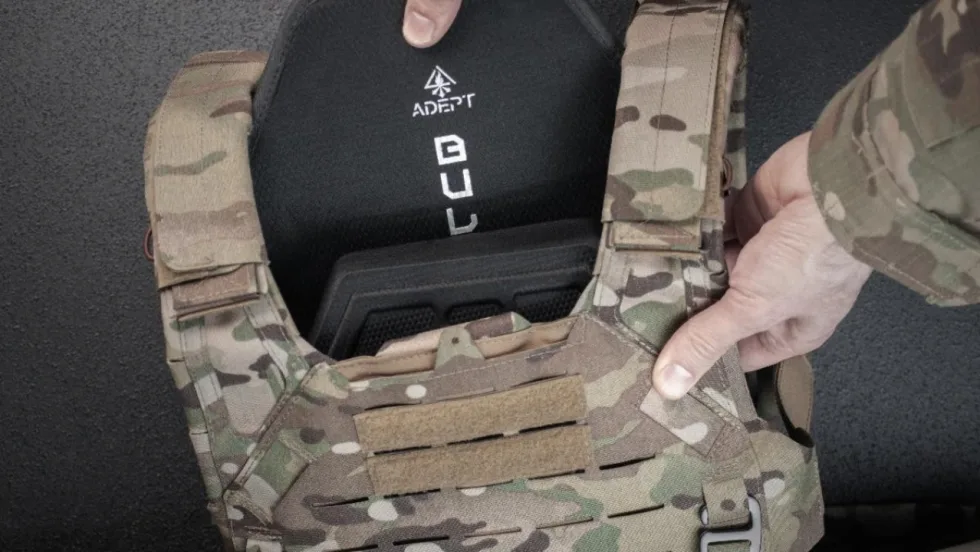
Adept Armor Introduces Two New Rifle Plates
Adept Armor has launched two new Level IV ballistic plates, the Emperor and the Archon Mark 2, which brings Adept Armor’s new Quatroid ceramic to the high-threat, performance-value center of the range at 5.2 pounds.
Read More →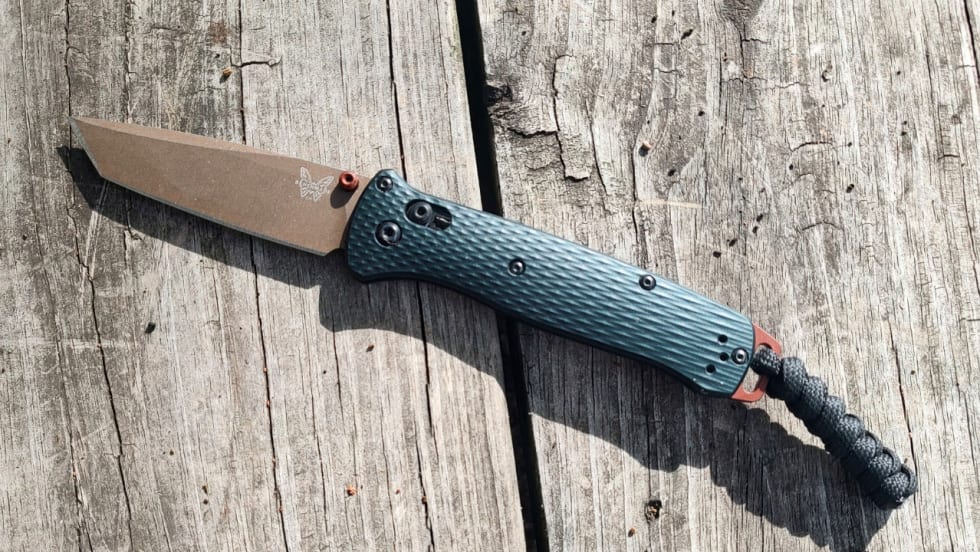
POLICE Product Test: Benchmade Bailout
The Benchmade Bailout is a slim, lightweight carry knife with a deep-ride pocket clip and comes in a variety of blade steels and scales. Here is a detailed review of the Taiga Green Bailout, released earlier this year.
Read More →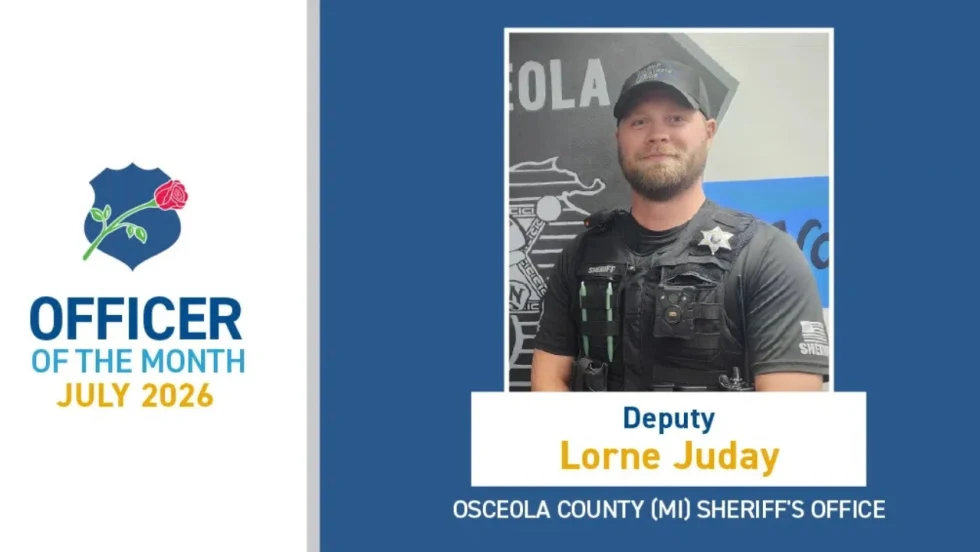
NLEOMF Announces July 2026 Officer of the Month
NLEOMF honored a Michigan deputy sheriff as the July 2026 Officer of the Month for rescuing a trapped driver from a burning vehicle following a Fourth of July crash.
Read More →
Streamlight to Showcase Newest Lighting Products at National Safety Council’s Safety Congress & Expo 2026
Streamlight will showcase its latest lights, including the Portable Scene Light III and the LiteBox 1Million, at the 2026 National Safety Council (NSC) Safety Congress & Expo.
Read More →
The 2027 World Police & Fire Games Set for Perth, Australia
The 2027 World Police & Fire Games (WPFG) will take place in Perth, Western Australia, from Friday, March 12 through Sunday, March 21, 2027.
Read More →
5.11 Partners with National Fallen Firefighters Foundation to Support #ForThe343
5.11 has joined the nationwide movement honoring the 343 New York City Fire Department firefighters lost on Sept. 11, 2001.
Read More →
Team Wendy Announces Title Sponsorship of the Jorge Pastore Foundation
Team Wendy’s 3-year partnership with the Jorge Pastore Foundation expands access to programs that strengthen those who serve.
Read More →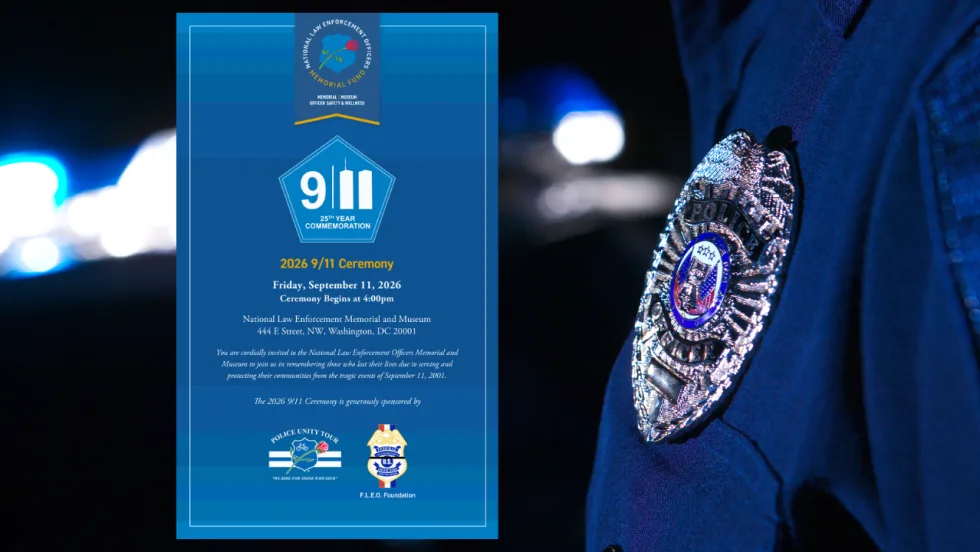
National Law Enforcement Memorial and Museum Hosting 9/11 25th-Year Commemoration Ceremony
The National Law Enforcement Memorial and Museum is hosting a 9/11 25th Year Commemoration Ceremony on Sept. 11 at 4 p.m.
Read More →
National Law Enforcement Officers Memorial Fund Announces June 2026 Officers of the Month
The National Law Enforcement Officers Memorial Fund (NLEOMF) named 15 officers of the Chico Police Department (California) as the Officers of the Month for June 2026 for their roles in responding to an active-shooter incident at a public library.
Read More →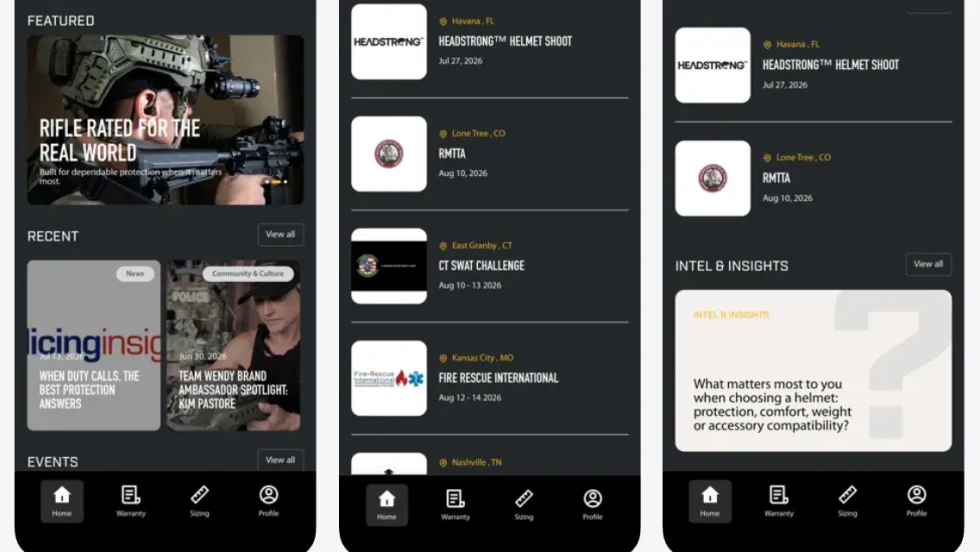
Team Wendy App Creates New Digital Hub for Helmet Owners
The Team Wendy Community App provides one location for warranty registration, size-fit tools, product updates, and community connection. For helmet owners, the new app creates a simpler path to the information and tools that matter most.
Read More →