



The Chair: Use It to Get a Leg Up on Violent Subjects
Criminals beware: You have a piece of Chippendale in your arsenal. How a common household item can be used in a pinch to gain control of a noncompliant subject.

Criminals beware: You have a piece of Chippendale in your arsenal. How a common household item can be used in a pinch to gain control of a noncompliant subject.
Improvised weapons are nothing new to the officers working street beats. Every day they enter a home, business, alley or make a traffic stop they are faced with common items that can be turned into weapons. Not all of these items are a disadvantage to the officer. In some cases officers may not be able to get the weapons on their belts and must report to something ready at hand to defend themselves. There is a common item that is often overlooked as a powerful ally to an officer. It is found almost everywhere and is usually found in one of the most weapon-ridden areas—the kitchen. The tool is the common chair.
You won’t find the chair listed on any use of force continuum or in any department’s general orders under use of force, but you will find that this everyday item can solve a multitude of force situations. The nice thing about the chair is that it can be used on a person who has armed him-or herself with a weapon, such as a knife or club, as well as on one without a weapon.
Most Chairs Have Four Legs
Imagine that you are seeing a chair for the first time. The design makes it a unique defensive weapon in that if held horizontally, there is about a 3-foot barrier between the person holding the chair and his or her would-be attacker. Most chairs have four legs that protrude outward. These can be striking points. Some new designs of chairs don’t have four legs but there is still something on the bottom that points outward. Then there is the seat, which acts like a barrier between the holder and the person on the other side. The back of the chair also makes for a nice, strong handhold.
In short, the chair has many facets that make it a unique tool that can be employed in a variety of situations a law enforcement officer might encounter. For example, say an officer was faced with a subject who was acting in a violent manner, perhaps shouting, clenching his fists and generally being threatening to those around him. Once the decision has been made to effect an arrest, the chair can act as a barrier in a couple of ways.
First, just by resting as it normally does, the chair can be used by an officer as a barrier to keep some distance until he or she is ready to make the initial move. The suspect will not be able to launch a surprise attack because the barrier will force the officer time, as the suspect will have to go around the barrier to attack. Strange as it may seem, people will normally try to go around the barrier even though they can often reach right through it. The visual perception of an object in the way creates in the mind a physical barrier that cannot be penetrated but must be gone around. Even something as simple as a chair can provide enough of a mental distraction to give an officer the extra moment needed to respond to a threat.
If the subject has become violent and the officer feels threatened, then he or she can merely pick the chair up by the backrest and point the four legs at the suspect. This can give an officer several options. The officer can use the legs to trap the suspect or to pin him or her against a wall, allowing the back-up officer to move in to gain better position without the suspect being able to move around. If the suspect grabs hold of the chair, then the officer merely has to let go of the chair and move around to get hold of the suspect. Since the suspect’s hands will be busy holding the chair, the officer has the time to move and gain control of the suspect before he or she realizes what is happening.
Going to the Floor
Another advantage the chair offers, should the subject remain combative, is that it can be used as a takedown device. To execute this maneuver, move the chair into a position where the legs are just past the suspect. Do not do this slowly, as the suspect will not allow you to set-up for this. The chair closing in is a threat and he or she will attempt some kind of defensive technique. So be prepared to thrust the chair forward. As soon as you have it in position, begin to twist the chair in the direction which you want to take the subject down. The chair legs will act as a lever against the suspect’s body, and the twisting motion will take him or her to the ground. Once on the ground, set the chair on top of the subject, with the legs separating the head from the arms and preferably the arms split as well. This again creates the visual perception of a barrier and again gives the officer an extra moment to gain control of the subject.
There’s More
But the usefulness of the chair doesn’t stop there. When faced with a combative suspect, an officer can use the chair legs as weapons. By turning the chair so that one of the legs is directly in front of you, you will also line up the bottom leg so that should you decide to strike the subject, there will be two contact points instead of just one.
So a strike to the upper chest by the chair leg on top will also result in a simultaneous strike to the lower regions, possibly the groin of the subject. This will help to provide the subject with sensory overload and again give the officer that extra moment so that he or she can move in and follow-up with control techniques to effect the arrest.
The chair can be especially effective if the subject has a knife. The very construction of the chair makes it difficult for someone to push a knife through it. The seat is a solid obstacle and the legs allow an officer distance as well as several striking opportunities. Perhaps the most important item the chair can provide an officer in a situation like this is time—time to think of an effective strategy or time to get to a better force option and even time to talk the subject out of the knife. Any way you look at it, the simple chair can offer many possibilities as an aid to law enforcement.
In matters of officer survival, the scope of tools available or improvised to resolve the situation shouldn’t be limited to the weapons found on our duty belts. There are many items already provided to officers in the types of situations in which they find themselves that can become useful tools. Just as officers are warned of everyday weapons, such as screwdrivers, forks and others, they should also be aware of what common items can benefit them. After all, the goal is to do the job as safely as possible and be able to go home after the shift is over.
Joe Niehaus, a sergeant with the Kettering (Ohio) Police Department, created his agency’s defensive tactics unit and developed realistic integrated use-of-force training. Niehaus co-created the “Emotion-Based Threat Response” program featured at last year’s conference, this month. He is a published author whose works include books on street awareness and forensic hypnosis. This is his first contribution to POLICE.
More Patrol

Adept Armor Introduces Two New Rifle Plates
Adept Armor has launched two new Level IV ballistic plates, the Emperor and the Archon Mark 2, which brings Adept Armor’s new Quatroid ceramic to the high-threat, performance-value center of the range at 5.2 pounds.
Read More →
POLICE Product Test: Benchmade Bailout
The Benchmade Bailout is a slim, lightweight carry knife with a deep-ride pocket clip and comes in a variety of blade steels and scales. Here is a detailed review of the Taiga Green Bailout, released earlier this year.
Read More →
NLEOMF Announces July 2026 Officer of the Month
NLEOMF honored a Michigan deputy sheriff as the July 2026 Officer of the Month for rescuing a trapped driver from a burning vehicle following a Fourth of July crash.
Read More →
Streamlight to Showcase Newest Lighting Products at National Safety Council’s Safety Congress & Expo 2026
Streamlight will showcase its latest lights, including the Portable Scene Light III and the LiteBox 1Million, at the 2026 National Safety Council (NSC) Safety Congress & Expo.
Read More →
The 2027 World Police & Fire Games Set for Perth, Australia
The 2027 World Police & Fire Games (WPFG) will take place in Perth, Western Australia, from Friday, March 12 through Sunday, March 21, 2027.
Read More →
5.11 Partners with National Fallen Firefighters Foundation to Support #ForThe343
5.11 has joined the nationwide movement honoring the 343 New York City Fire Department firefighters lost on Sept. 11, 2001.
Read More →
Team Wendy Announces Title Sponsorship of the Jorge Pastore Foundation
Team Wendy’s 3-year partnership with the Jorge Pastore Foundation expands access to programs that strengthen those who serve.
Read More →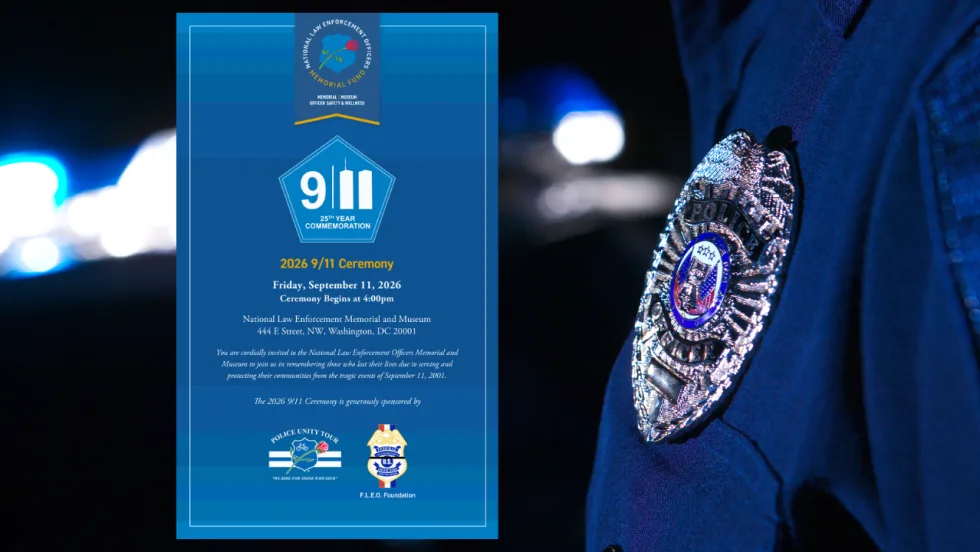
National Law Enforcement Memorial and Museum Hosting 9/11 25th-Year Commemoration Ceremony
The National Law Enforcement Memorial and Museum is hosting a 9/11 25th Year Commemoration Ceremony on Sept. 11 at 4 p.m.
Read More →
National Law Enforcement Officers Memorial Fund Announces June 2026 Officers of the Month
The National Law Enforcement Officers Memorial Fund (NLEOMF) named 15 officers of the Chico Police Department (California) as the Officers of the Month for June 2026 for their roles in responding to an active-shooter incident at a public library.
Read More →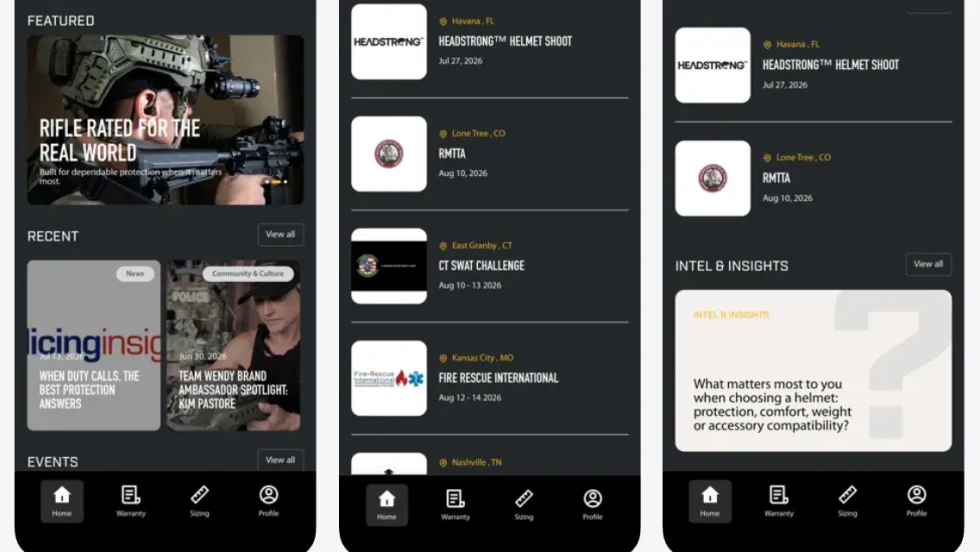
Team Wendy App Creates New Digital Hub for Helmet Owners
The Team Wendy Community App provides one location for warranty registration, size-fit tools, product updates, and community connection. For helmet owners, the new app creates a simpler path to the information and tools that matter most.
Read More →