



The 5 Biggest Search-and-Seizure Myths
Ever since the U.S. Supreme Court made the Fourth Amendment exclusionary rule binding on the states in the 1961 decision in Mapp v. Ohio, thousands of published decisions from state and federal courts have applied the exclusionary rule to thousands of searches and seizures. It's no wonder the 50-year tidal wave of exclusionary decisions has left confusion and misunderstanding in its wake. Here are five areas of the law that seem to suffer the most in translation.

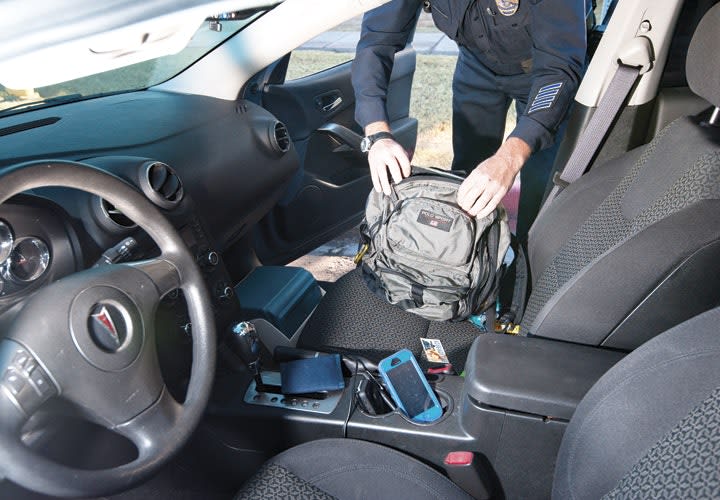
Photo: Mark W. Clark
Ever since the U.S. Supreme Court made the Fourth Amendment exclusionary rule binding on the states in the 1961 decision in Mapp v. Ohio, thousands of published decisions from state and federal courts have applied the exclusionary rule to thousands of searches and seizures. It's no wonder the 50-year tidal wave of exclusionary decisions has left confusion and misunderstanding in its wake. Here are five areas of the law that seem to suffer the most in translation.
Myth 1: "I Need PC for the Stop."
This mistake is repeated ad nauseum in police reports, testimony, television, and movies. At least since Terry v. Ohio in 1968, it has been incorrect to link probable cause with temporary detentions. In Terry, the Supreme Court said that since vehicle stops and pedestrian detentions represent a lower level of intrusion on a person's liberty than an arrest, they can be justified with the lower level of "reasonable suspicion," rather than the probable cause needed for an arrest. Subsequent Supreme Court decisions have repeated this distinction.
"The police can stop and briefly detain a person for investigative purposes if the officer has a reasonable suspicion of criminal activity, even if the officer lacks probable cause. The level of suspicion required for a detention is obviously less demanding than that for probable cause." (U.S. v. Sokolow)
"PC for the stop" is an improper coupling that should not be used by law enforcement officers, lawyers, or judges, because it can lead to erroneous rulings as to whether or not a particular stop was legally justified.
Myth 2: "I Can Frisk Anybody I Stop."
What you do to make sure you go home walking and talking at the end of every watch is your call. But for Fourth Amendment purposes over in the courthouse, every pat-down search for weapons has to be justified by articulable suspicion that the detainee "is armed and presently dangerous to the officer or to others." (Terry v. Ohio)
This means that a weapons frisk does not automatically go with every stop you make. Instead, there's a two-step analysis that applies: (1) the stop (a seizure of the person) must be justified by reasonable suspicion that the person is involved in criminal activity, and (2) the frisk or pat-down (a search of the person) must be separately justified by articulable suspicion that the person may be armed and dangerous. Sometimes you'll be able to justify the stop, but not the frisk.
For example, if you see a pedestrian closely matching the distinct perpetrator description of an indecent exposure that was just reported nearby, you would have reasonable suspicion to detain for investigation, but in the absence of any reasons to think he might be armed, you wouldn't be justified in patting him down for weapons. This is why there is no such legal concept as a "stop and frisk."
Myth 3: "Pretext Stops Are Unlawful."
A narcotics suspect runs a red light in front of you, so you stop him. Subjectively, you're hoping to make plain-view seizures or get consent to search, or find some other way to further a narcotics investigation. Is the stop unreasonable under the Fourth Amendment, just because you used a traffic violation as a "pretext" to make the stop?
In Whren v. U.S., the Supreme Court considered just such a case, and the court said that an officer's subjective reasons for making a stop are irrelevant under the Fourth Amendment. All that matters is whether the suspect's conduct objectively justified the stop. Since a traffic violation justifies a stop, there is no need to inquire into the officer's subjective motivation for making the stop. "We have been unwilling to entertain Fourth Amendment challenges based on the actual motivations of individual officers." (Whren v. U.S.) And in Arkansas v. Sullivan, the court repeated that using justifiable "pretexts" to facilitate criminal investigations does not run afoul of the Fourth Amendment.
In other words, if you need to check suspicious activity but feel you may not have enough grounds to constitute reasonable suspicion for a stop, an observed traffic violation or other minor offense can be used to justify the stop.
Myth 4: "I Can Do A ‘Safety Sweep' Whenever I'm Lawfully Inside a Residence."
As with the weapons search discussed above, I don't feel called on to advise you as to the precautions you may decide are prudent to protect your personal safety. But as for the Fourth Amendment principles that will be applied in court, there is a parallel between the "safety sweep" and the weapons frisk. That is, just because you are lawfully inside a residence does not automatically give you the right under the Fourth Amendment to conduct a safety sweep in every case.
You may lawfully enter private premises for law enforcement purposes with one or more of four categories of justification: (1) search or arrest warrant, (2) valid consent, (3) search term of a resident's probation or parole status, or (4) recognized exigency. But those justifications only get you inside and allow limited actions associated with those justifications.
A safety sweep is not justified by the same grounds that authorized your entry, but by your reasons for suspecting that a potential assailant may be concealed somewhere inside, presenting a danger to you while you're there. The Supreme Court first laid down the standard for justifying a safety sweep (in connection with an in-home arrest) in Maryland v. Buie, saying this: "The type of sweep we authorize today is decidedly not automatic, but may be conducted only on reasonable suspicion that the house is harboring a person posing a danger to those on the arrest scene."
Lower courts have since applied the safety sweep exception in cases where officers were legitimately inside for reasons other than to make an arrest, but always requiring articulable suspicion of the possible presence of a potential assailant on the premises.
Myth 5: "I Must Get A Warrant to Search a Vehicle, Once It's in Exclusive Police Custody and Control."
Although search warrants are always the preferred justification for searches (U.S. v. Ventresca), they are not constitutionally required merely because you have the vehicle locked up in the police impound lot and have plenty of time to seek a warrant. Assuming you have probable cause to believe the vehicle contains contraband or the fruits, instrumentalities, or evidence of a crime, and provided you have lawful access (which you should, in your own impound lot), you may search anyplace in the vehicle and its contents that might contain the object of your search. (U.S. v. Ross)
In a series of decisions, the Supreme Court has found it necessary to repeat this rule several times, reversing lower courts that wrongly required warrants once the vehicle was in police custody. Examples: Chambers v. Maroney, Michigan v. Thomas, U.S. v. Johns, Texas v. White and Florida v. Meyers.
Verify Local Rules
As always, you should check with local advisors to ensure that courts in your local jurisdiction follow these U.S. Supreme Court rulings, because a handful of states place greater restrictions on police activity as a matter of state law.
Devallis Rutledge is a former police officer and veteran prosecutor who currently serves as special counsel to the Los Angeles County district attorney.
More Patrol
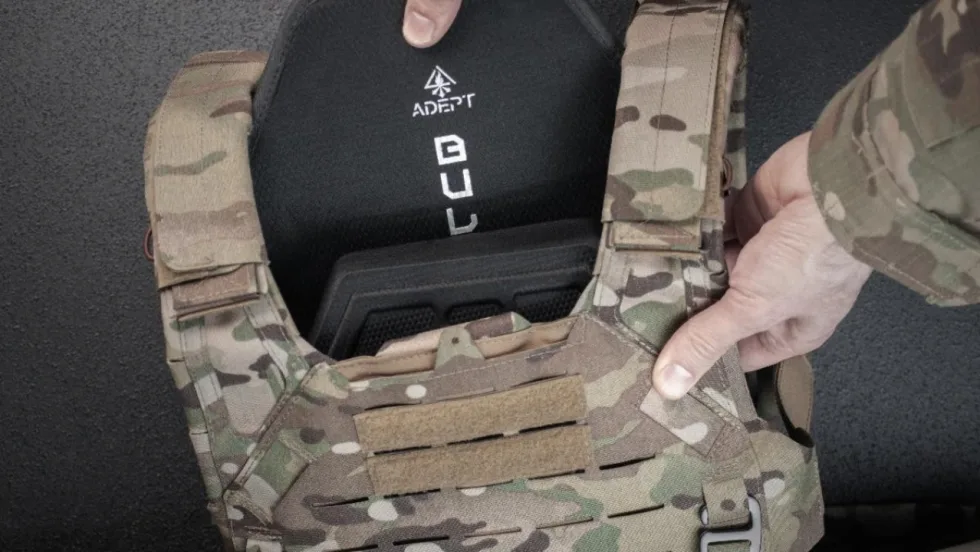
Adept Armor Introduces Two New Rifle Plates
Adept Armor has launched two new Level IV ballistic plates, the Emperor and the Archon Mark 2, which brings Adept Armor’s new Quatroid ceramic to the high-threat, performance-value center of the range at 5.2 pounds.
Read More →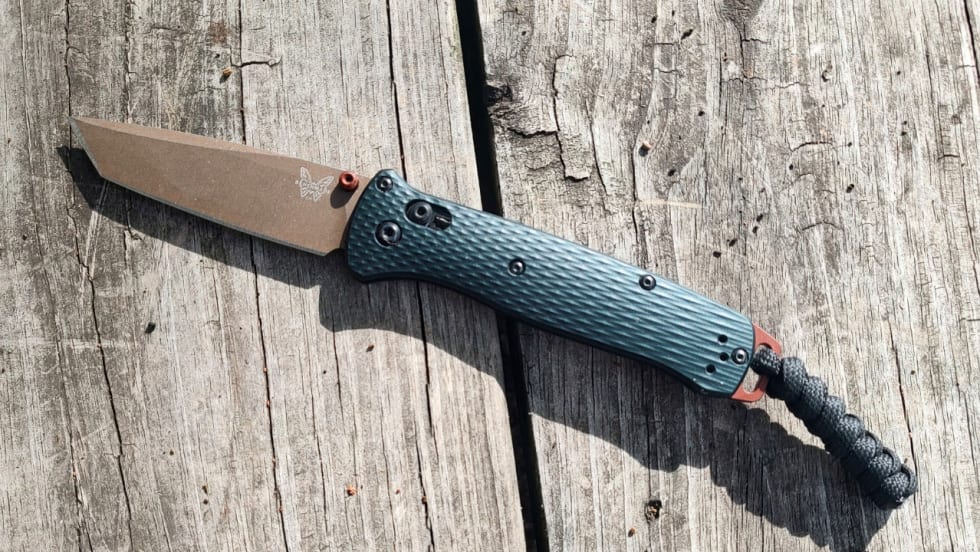
POLICE Product Test: Benchmade Bailout
The Benchmade Bailout is a slim, lightweight carry knife with a deep-ride pocket clip and comes in a variety of blade steels and scales. Here is a detailed review of the Taiga Green Bailout, released earlier this year.
Read More →
NLEOMF Announces July 2026 Officer of the Month
NLEOMF honored a Michigan deputy sheriff as the July 2026 Officer of the Month for rescuing a trapped driver from a burning vehicle following a Fourth of July crash.
Read More →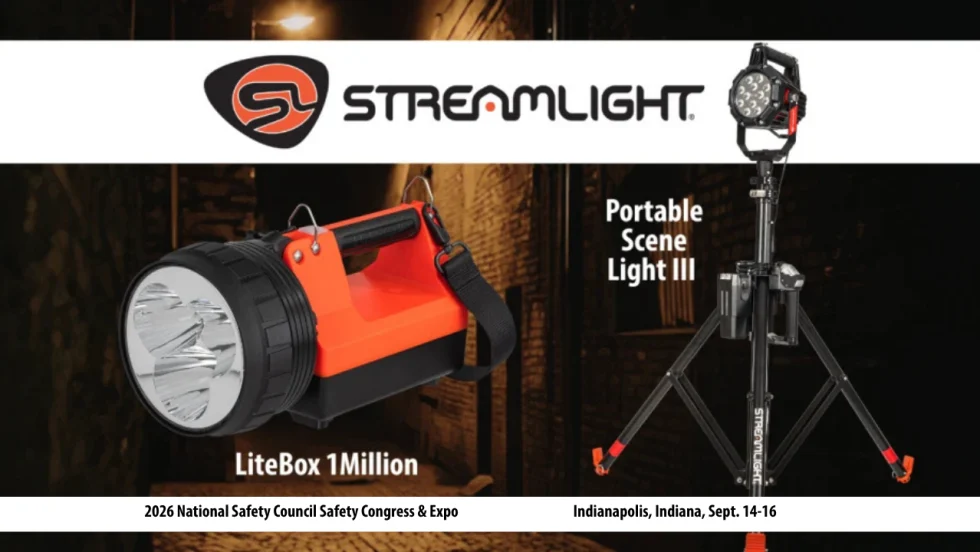
Streamlight to Showcase Newest Lighting Products at National Safety Council’s Safety Congress & Expo 2026
Streamlight will showcase its latest lights, including the Portable Scene Light III and the LiteBox 1Million, at the 2026 National Safety Council (NSC) Safety Congress & Expo.
Read More →
The 2027 World Police & Fire Games Set for Perth, Australia
The 2027 World Police & Fire Games (WPFG) will take place in Perth, Western Australia, from Friday, March 12 through Sunday, March 21, 2027.
Read More →
5.11 Partners with National Fallen Firefighters Foundation to Support #ForThe343
5.11 has joined the nationwide movement honoring the 343 New York City Fire Department firefighters lost on Sept. 11, 2001.
Read More →
Team Wendy Announces Title Sponsorship of the Jorge Pastore Foundation
Team Wendy’s 3-year partnership with the Jorge Pastore Foundation expands access to programs that strengthen those who serve.
Read More →
National Law Enforcement Memorial and Museum Hosting 9/11 25th-Year Commemoration Ceremony
The National Law Enforcement Memorial and Museum is hosting a 9/11 25th Year Commemoration Ceremony on Sept. 11 at 4 p.m.
Read More →
National Law Enforcement Officers Memorial Fund Announces June 2026 Officers of the Month
The National Law Enforcement Officers Memorial Fund (NLEOMF) named 15 officers of the Chico Police Department (California) as the Officers of the Month for June 2026 for their roles in responding to an active-shooter incident at a public library.
Read More →
Team Wendy App Creates New Digital Hub for Helmet Owners
The Team Wendy Community App provides one location for warranty registration, size-fit tools, product updates, and community connection. For helmet owners, the new app creates a simpler path to the information and tools that matter most.
Read More →