



Survive Your Vacation
While you may be tempted to think you are "getting away from it all," an experience I had this summer while floating the Yukon River forced me to re-evaluate the steps I undertook to prepare for such journeys.

You’re on vacation. You want to relax. But can you ever really afford to drop your guard? The key lies in preparation.
Like most police officers, I look forward to my vacations. In addition to discovering new and exciting places, they provide a mental break from the day-to-day stresses of police work. As is the case with most of my counterparts here in Alaska, vacation often means heading into remote wilderness areas. While you may be tempted to think you are "getting away from it all," an experience I had this summer while floating the Yukon River forced me to re-evaluate the steps I undertook to prepare for such journeys.
Strangers in the Night
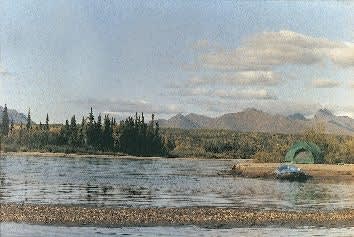
My brother David (a former police officer who now teaches at a University in Finland) had joined my son Casey and me on a two-week float of the Yukon River from Dawson City, Yukon, to Circle, Alaska. Five days into the trip found us approaching the confluence of the Nation and Yukon Rivers, deep in the heart of the Yukon-Charley National Preserve - truly the "middle of nowhere." We had made camp for the evening and were amidst our dinner preparations when a strange cry suddenly erupted from the brush behind our camp. The cry was followed by the sounds of someone dumping a heavy backpack to the ground. We watched as a somewhat bizarre-looking man came staggering out from the brush.
The stranger related that his name was "Joe." He proceeded to tell us a rather unbelievable story, involving a prolonged trek that he had undertaken with two companions, from whom he had been separated during a nearby forest fire. Joe now wanted to "hitch a ride back upriver" to the village of Eagle and "just get the hell out of there." Joe seemed to have no idea (or concerns) as to the whereabouts of his hiking partners, and did not seem the least bit interested in their welfare. During the telling of his tale, Joe had casually mentioned that he had discharged his 12-gauge shotgun twice while trying to signal his friends during the forest fire.
As the story progressed, my brother and I exchanged several knowing glances, common to those who have spent numerous years "on the job," dealing with criminal suspects and defendants. What were we dealing with here? Was this a helpless greenhorn who'd had a falling-out with his hiking buddies and been sent back to the river? (Or was the National Park Service goingto have to start searching for bodies?)
While it's probably not the best story-telling form to "give away the ending," I'll tell you now that Joe's buddies were located several weeks later when they abandoned their cross-country trek and returned to the mouth of the Nation River. They confirmed that they had indeed had a "parting of the ways" with Joe, after it was obvious to them that he was not up to the physical rigors of their planned trek. While I can now see that Joe's "forest fire separation story" was his attempt to save face at being abandoned, it presented several significant issues at the time that I was ill-prepared to deal with.
The Meaning of Off-Duty
I have read, and have taken to heart, numerous articles dealing with off-duty preparedness for the police officer. I must admit, however, that I had somehow created a "mental compartment" in my head, filing this information in the context of being off-duty as I ran errands around town, attending to usual daily activities, etc. I had continued to treat vacations, particularly wilderness travel, as "totally getting away from the job." As a result, I realized that I had not been making adequate preparations should I possibly encounter a situation where I had to slip back into "cop-mode." Reflecting on this, I made a list.
File a trip plan: While this should already be on your "mandatory to-do list," it is especially important for remote/wilderness travel. Someone close to you should know when you're expected to show up at certain locations, and when you're due to return to home and work.
Whenever possible, maintain communications capability: I have to admit, this is a tough one for me. I enjoy remote wilderness travel, and part of the "true wilderness experience" comes from knowing that you will have to deal with any eventualities that you encounter, without the ability to immediately summon aid. While the solo-traveler (always risky in itself) might be able to justify this selfish deprivation as part of his/her "total experience," the fact that I was traveling with my brother and son should have forced me to consider bringing a radio or cellular phone, should I have had to summon aid on their behalf. In the situation that we encountered, it would have been very nice to have been able to contact the National Park Service Ranger Station in Eagle, (approximately 50 miles upriver) advise them of Joe's location and story, and continue down-river.
Personal protection: I normally have my off-duty .45 with me at all times, particularly during wilderness travel. (This has a lot more to do with Alaskan Brown Bears than with people.) As we had started this particular trip in Canada, however, we were precluded from bringing any handguns. I did not have any OC (pepper) spray with me, (commonly sold and marketed in Alaska and Canada in higher concentrations as bear spray) as I was not overly concerned with bear activity along the river. In retrospect, it would have been prudent to have brought some along, both as a cautionary measure against bears, as well as a temporary incapacitating measure against a person, should the need arise. I suppose I could have also sent my .45 to Eagle, (the first village you reach on the river after crossing the border back into Alaska) where I could have picked it up and had it for the remainder of our trip. I recommend that police officers traveling to any locale should do the research ahead of time and determine what forms of personal protection they will be able to safely and legally bring into the area - then bring it!
Have restraints available: I talked with my brother about this after our trip, as I was kicking myself for not having a pair of handcuffs or other restraining device available. If Joe had "gone off the deep end" and needed to be restrained, we could have tied him up with rope (which we had in abundance), but that would certainly not have been as quick or easy as using normal restraints. While handcuffs are often overlooked when packing for a wilderness venture, (often due to size and weight - every ounce counts if you're carrying it on your back) a couple of flex-cuffs weigh nearly nothing, take up no room, and can be packed about anywhere. They are now included as a "standard item" on my trip list.
Don't identify yourself as a police officer: I don't ever like to advertise the fact that I'm a police officer when I'm off-duty. I don't wear "funny cop T-shirts," don't have identifying stickers on my personal vehicles, etc. When encountering an individual, particularly in a remote setting, there is usually no reason to let them know that you're a law enforcement officer unless you're ready to take immediate law enforcement action. In our situation with Joe on the Yukon, I preferred him to have the initial impression that he was dealing with a couple of river travelers who were "just passing through" and not likely to give him a second thought, rather than a couple of "curious cops."
Proper mindset: This is the hardest area to quantify, and the area that has caused the most introspection on my part. As I stated earlier, a large part of vacation is "getting away from the job." To prepare for possible enforcement action seems to defeat this purpose, and I always wonder where the line is drawn between preparation and paranoia. I suppose I've resigned myself to the fact that, while you can afford to take a vacation from your job, you cannot afford to take a vacation from common sense. By making adequate and reasonable preparations ahead of time you can have a more relaxed vacation experience, as you know in the back of your mind that you're prepared for most circumstances that you'll encounter.
Vacations should be fun - that's why we take them. While it may be tempting to think that you're "getting away from the job," you can't afford to bet on the fact that the job might not find its way to you. The fleeing felon or fugitive from justice that you may encounter doesn't know that you're on a well-deserved vacation, and I doubt that they'd care. Take the time to take a few simple preparatory steps before you go, then enjoy yourself to the fullest - secure in the knowledge that you're prepared for whatever comes your way.
Sgt. Dan Hoffman is a detective sergeant with the Fairbanks Police Department. The 12-year law enforcement veteran is a state-certified defensive tactics instructor and NRA firearms instructor. This is his second contribution to POLICE.
More Patrol

Adept Armor Introduces Two New Rifle Plates
Adept Armor has launched two new Level IV ballistic plates, the Emperor and the Archon Mark 2, which brings Adept Armor’s new Quatroid ceramic to the high-threat, performance-value center of the range at 5.2 pounds.
Read More →
POLICE Product Test: Benchmade Bailout
The Benchmade Bailout is a slim, lightweight carry knife with a deep-ride pocket clip and comes in a variety of blade steels and scales. Here is a detailed review of the Taiga Green Bailout, released earlier this year.
Read More →
NLEOMF Announces July 2026 Officer of the Month
NLEOMF honored a Michigan deputy sheriff as the July 2026 Officer of the Month for rescuing a trapped driver from a burning vehicle following a Fourth of July crash.
Read More →
Streamlight to Showcase Newest Lighting Products at National Safety Council’s Safety Congress & Expo 2026
Streamlight will showcase its latest lights, including the Portable Scene Light III and the LiteBox 1Million, at the 2026 National Safety Council (NSC) Safety Congress & Expo.
Read More →
The 2027 World Police & Fire Games Set for Perth, Australia
The 2027 World Police & Fire Games (WPFG) will take place in Perth, Western Australia, from Friday, March 12 through Sunday, March 21, 2027.
Read More →
5.11 Partners with National Fallen Firefighters Foundation to Support #ForThe343
5.11 has joined the nationwide movement honoring the 343 New York City Fire Department firefighters lost on Sept. 11, 2001.
Read More →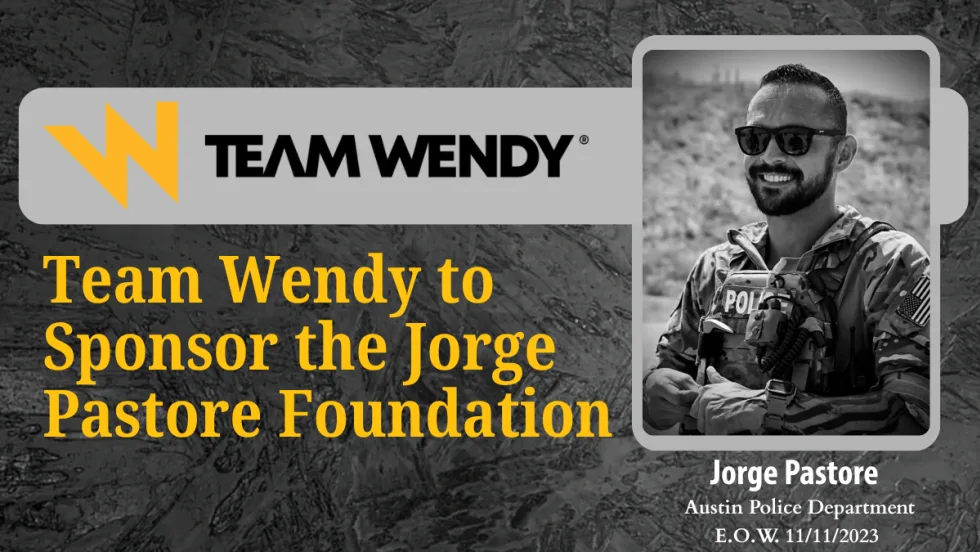
Team Wendy Announces Title Sponsorship of the Jorge Pastore Foundation
Team Wendy’s 3-year partnership with the Jorge Pastore Foundation expands access to programs that strengthen those who serve.
Read More →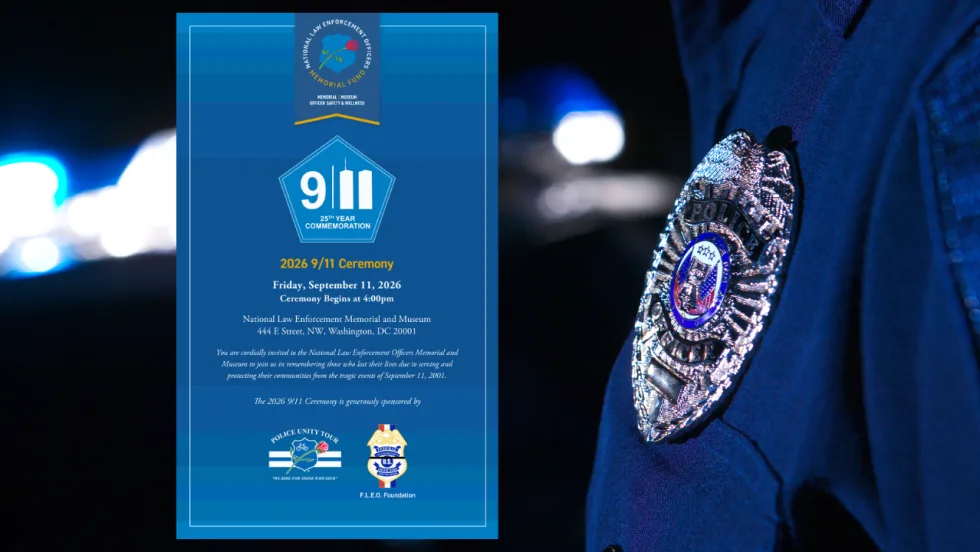
National Law Enforcement Memorial and Museum Hosting 9/11 25th-Year Commemoration Ceremony
The National Law Enforcement Memorial and Museum is hosting a 9/11 25th Year Commemoration Ceremony on Sept. 11 at 4 p.m.
Read More →
National Law Enforcement Officers Memorial Fund Announces June 2026 Officers of the Month
The National Law Enforcement Officers Memorial Fund (NLEOMF) named 15 officers of the Chico Police Department (California) as the Officers of the Month for June 2026 for their roles in responding to an active-shooter incident at a public library.
Read More →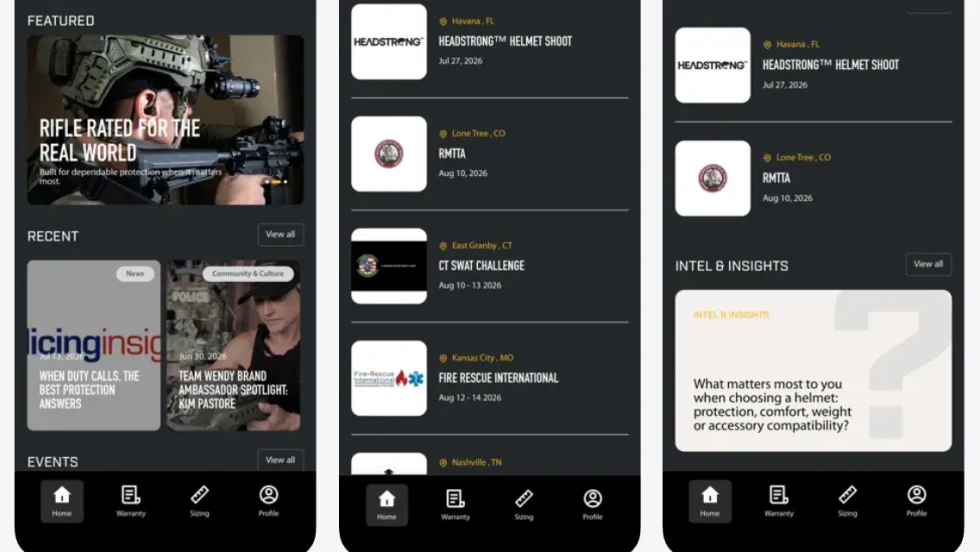
Team Wendy App Creates New Digital Hub for Helmet Owners
The Team Wendy Community App provides one location for warranty registration, size-fit tools, product updates, and community connection. For helmet owners, the new app creates a simpler path to the information and tools that matter most.
Read More →