



Suggestive Eyewitness ID
Identifying the perpetrator and clearing innocent suspects are crucial goals of every criminal investigation, and both depend on the use of reliable evidence. The Supreme Court has applied a constitutional due process test to the admissibility of testimony about an eyewitness's pretrial ID.

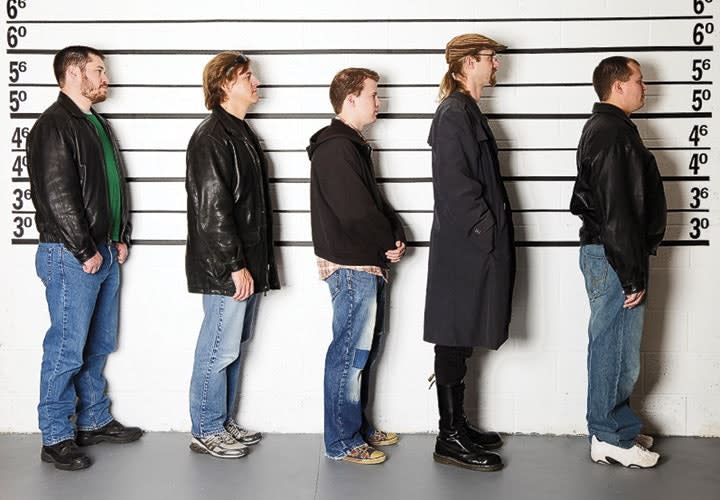
Photo: iStockphoto.com
Lacking DNA, fingerprints, or a confession, an eyewitness ID is sometimes the best way to establish a criminal’s guilt. Increasingly, efforts are being made by eyewitness ID "experts" to undermine admissibility of, and reliance on, evidence of an eyewitness ID. These "experts" often testify as to the reasons why eyewitnesses pick the wrong person at a roll-by field showup, or from a photo array or a live lineup. Defense attorneys then argue the "SODDI" defense—"some other dude did it."
Identifying the perpetrator and clearing innocent suspects are crucial goals of every criminal investigation, and both depend on the use of reliable evidence. For the most part, it's up to trial judges to rule on the admissibility of evidence under applicable statutes, and it's up to juries to decide how credible they believe any particular form of evidence is, and how much weight they want to give it in their determinations of guilt and innocence. But the Supreme Court has also applied a constitutional due process test to the admissibility of testimony about an eyewitness's pretrial ID.
The Due Process Standard
Both the Fifth and Fourteenth Amendments contain due process clauses. The Fifth Amendment clause applies to federal investigations and trials; the Fourteenth Amendment applies to state and local cases. The principles and rules are the same for both, and court decisions on each are applicable to the other. (Dusenbery v. U.S.)
One use of the due process clause is to prevent unfairness in the government's use of evidence to obtain a conviction, as a result of which the defendant is deprived of life, liberty, or property. For example, if police improperly coerce a confession from a suspect through mistreatment or threats or promises of leniency, the confession is said to be "involuntary," and it is inadmissible in court, for any purpose. (Mincey v. Arizona)
Another application of the due process clause is preventing prosecutorial use of evidence of an unreliable ID of the defendant, where law enforcement officers used techniques that were "so impermissibly suggestive as to give rise to a very substantial likelihood of misidentification." (Neil v. Biggers) On this issue, it is common for attorneys to examine police officers on the witness stand about the circumstances of the ID, especially any words or conduct officers may have used to lead the witness to ID a particular suspect.
For this reason, it's also common for officers to take precautions against suggestiveness by doing nothing to call attention to a particular suspect in a photo display or lineup, or other presentation to the witness. Many officers also recite a "witness admonition," advising the witness that the perpetrator may or may not be present, and cautioning the witness to consider any identification very carefully.
In a series of due process decisions, the Supreme Court has refined the guidelines dealing with one-person field showups, photo displays, and lineups. These cases include Manson v. Brathwaite, Neil v. Biggers, Stovall v. Denno, Simmons v. California, and Foster v. California. As a result of the rulings in these and other cases, most trained officers now know the dos and don'ts of conducting the various ID procedures, in order to avoid unnecessarily suggestive techniques that might produce an unreliable ID. Under the due process test, the court has said, "We conclude that reliability is the linchpin in determining the admissibility of identification testimony." (Manson v. Brathwaite)
But what if circumstances other than police conduct created the possibility of a suggestive ID? Should the due process clause preclude evidentiary use of such an ID, or is the Constitution only concerned with unfairness traceable to police impropriety? This was the issue decided in 2012 by the Supreme Court, in a case where critics of eyewitness identifications were hoping the court would make it more difficult for prosecutors to use evidence of a pretrial ID. Their hopes were disappointed.
Perry v. New Hampshire
It was around three o'clock in the morning when an apartment resident heard someone breaking into cars in the parking lot and called the police in Nashua, N.H. The witness described the perpetrator as a tall African-American man and said he had opened the trunk of her neighbor's car and removed a box.
Responding officers saw Barion Perry, who matched the given description, and who was the only person present in the parking lot at that time of night. Perry was holding two car-stereo amplifiers, and a metal baseball bat lay on the ground behind him. One officer detained Perry while another went to the witness's apartment for more information.
After taking the witness's statement, the officer asked her for a more specific description of the man she saw breaking into cars. She pointed through the kitchen window and said the man was the one standing beside the officer in the parking lot. Perry was arrested and charged.
Before trial, officers showed the witness a photo array that included Perry's picture. She was unable to make an ID. At trial, two officers testified to the pretrial ID made by the witness through her kitchen window, and confirmed that Perry was the man standing beside the officer in the parking lot when ID was made.
The defense objected to this testimony as violating the due process clause, claiming that the ID process was unnecessarily suggestive and the ID was unreliable. The judge allowed the ID testimony, ruling that even if the ID circumstances were suggestive, that situation was not caused by the police, and the due process clause did not apply. Perry was convicted.
On appeal to the U.S. Supreme Court, Perry argued that it should not matter whether police were responsible for causing an ID process to be too suggestive. He contended that if an ID was unreliable, government involvement in causing the unreliability should not be a factor. Four organizations of defense lawyers and psychologists filed briefs in support of Perry's argument.
The Supreme Court ruled (8-1) that the due process clause does not apply to private conduct not arranged or manipulated by the police. Even if the ID in this case was unreliable, that would be a matter for the judge and jury to consider—not a constitutional issue. The court said this:
"The due process check for reliability comes into play only after the defendant establishes improper police conduct. The fallibility of eyewitness evidence does not, without the taint of improper state conduct, warrant a due process rule requiring a trial court to screen such evidence for reliability before allowing the jury to assess its creditworthiness. We hold that the due process clause does not require a preliminary judicial inquiry into the reliability of an eyewitness identification when the identification was not procured under unnecessarily suggestive circumstances arranged by law enforcement." (Perry v. New Hampshire)
The Lesson
What officers should take from the Perry case is this: Even if something about the witness or the circumstances puts reliability of the ID into question, officers should simply report the facts and let the judge and jury handle the evaluation. As long as police played no role in causing an unreliable ID, the Constitution does not bar its use at trial.
Devallis Rutledge is a former police officer and veteran prosecutor who currently serves as special counsel to the Los Angeles County district attorney. He is the author of numerous books, including "Investigative Constitutional Law" and "Criminal Interrogation: Law and Tactics."
More Patrol

Adept Armor Introduces Two New Rifle Plates
Adept Armor has launched two new Level IV ballistic plates, the Emperor and the Archon Mark 2, which brings Adept Armor’s new Quatroid ceramic to the high-threat, performance-value center of the range at 5.2 pounds.
Read More →
POLICE Product Test: Benchmade Bailout
The Benchmade Bailout is a slim, lightweight carry knife with a deep-ride pocket clip and comes in a variety of blade steels and scales. Here is a detailed review of the Taiga Green Bailout, released earlier this year.
Read More →
NLEOMF Announces July 2026 Officer of the Month
NLEOMF honored a Michigan deputy sheriff as the July 2026 Officer of the Month for rescuing a trapped driver from a burning vehicle following a Fourth of July crash.
Read More →
Streamlight to Showcase Newest Lighting Products at National Safety Council’s Safety Congress & Expo 2026
Streamlight will showcase its latest lights, including the Portable Scene Light III and the LiteBox 1Million, at the 2026 National Safety Council (NSC) Safety Congress & Expo.
Read More →
The 2027 World Police & Fire Games Set for Perth, Australia
The 2027 World Police & Fire Games (WPFG) will take place in Perth, Western Australia, from Friday, March 12 through Sunday, March 21, 2027.
Read More →
5.11 Partners with National Fallen Firefighters Foundation to Support #ForThe343
5.11 has joined the nationwide movement honoring the 343 New York City Fire Department firefighters lost on Sept. 11, 2001.
Read More →
Team Wendy Announces Title Sponsorship of the Jorge Pastore Foundation
Team Wendy’s 3-year partnership with the Jorge Pastore Foundation expands access to programs that strengthen those who serve.
Read More →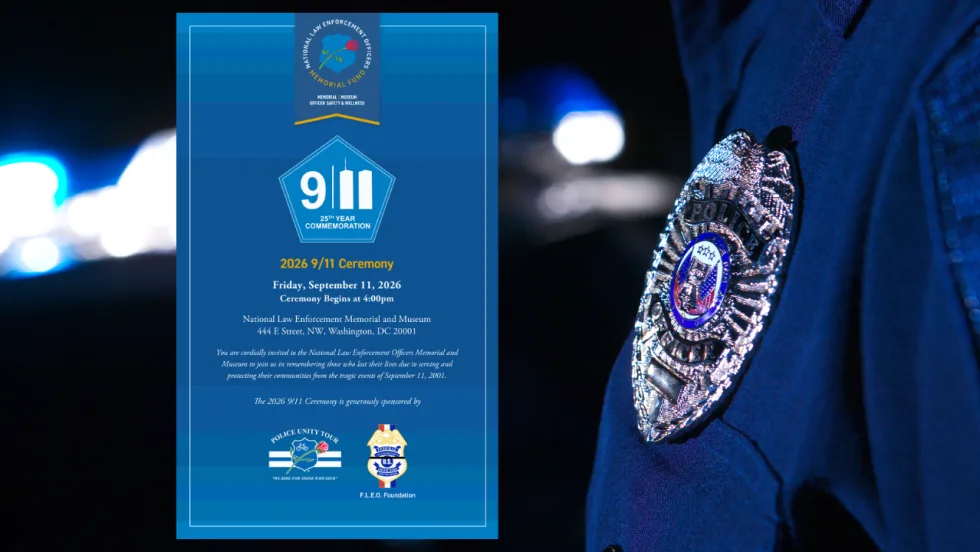
National Law Enforcement Memorial and Museum Hosting 9/11 25th-Year Commemoration Ceremony
The National Law Enforcement Memorial and Museum is hosting a 9/11 25th Year Commemoration Ceremony on Sept. 11 at 4 p.m.
Read More →
National Law Enforcement Officers Memorial Fund Announces June 2026 Officers of the Month
The National Law Enforcement Officers Memorial Fund (NLEOMF) named 15 officers of the Chico Police Department (California) as the Officers of the Month for June 2026 for their roles in responding to an active-shooter incident at a public library.
Read More →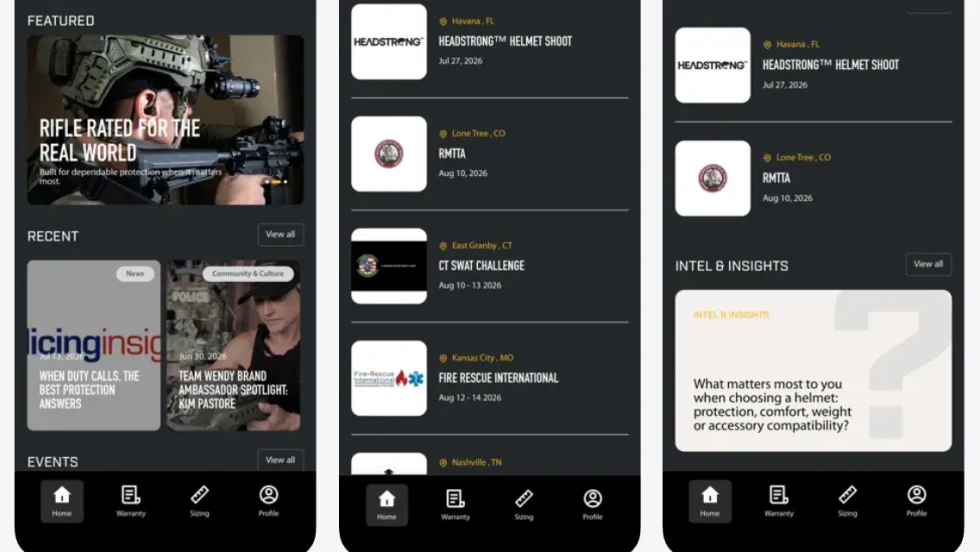
Team Wendy App Creates New Digital Hub for Helmet Owners
The Team Wendy Community App provides one location for warranty registration, size-fit tools, product updates, and community connection. For helmet owners, the new app creates a simpler path to the information and tools that matter most.
Read More →