



Stop and Frisk?
Many people who use the term "stop and frisk" fail to realize that there actually is no such concept in the law, and that the phrase "stop and frisk" couples two constitutionally distinct activities that do not necessarily coincide. This misunderstanding is easily traced to the coincidence in Terry v. Ohio.

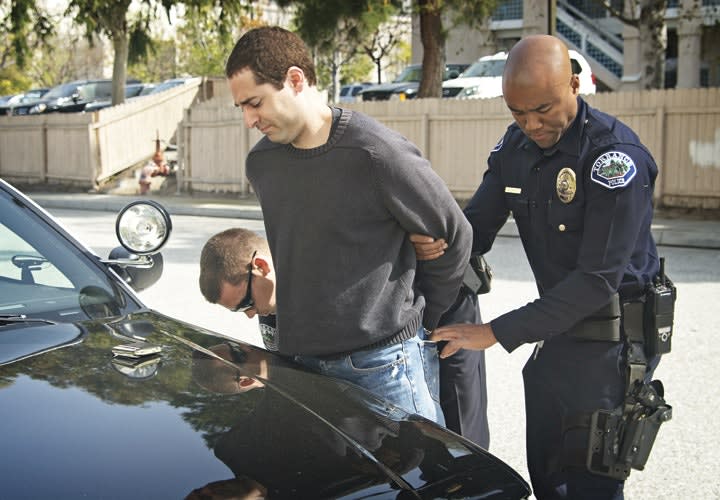
Photo: Vincent Taroc
Civil litigation against the New York City Police Department's use of the technique known as "stop and frisk," and lawsuits and legislation spawned elsewhere in the aftermath of the New York ruling, have refocused attention on the investigative procedure. Whatever may be the sociological and political factors involved in the NYPD case, the Fourth Amendment principles that apply to stops and frisks are straightforward enough.
The problem is, the law often isn't well understood. That may be because many people who use the term "stop and frisk" fail to realize that there actually is no such concept in the law, and that the phrase "stop and frisk" couples two constitutionally distinct activities that do not necessarily coincide. This misunderstanding is easily traced to the coincidence in Terry v. Ohio.
Fourth Amendment Basics
The Fourth Amendmentprotects individuals against unreasonable searches and seizures. The Supreme Court has said that a search occurs when a government official infringes a person's legitimate expectation of privacy (Katz v. U.S.), or commits a trespass to private property in an effort to obtain information. (U.S. v. Jones)
Seizures are of two varieties—seizures of the person, and seizures of property. Seizures of the person include detentions (Florida v. Bostick), arrests (Beck v. Ohio), and taking a suspect's life by use of deadly force. (Tennessee v. Garner) Seizures of property occur when the government interferes with a person's possessory interests in retaining an item of property. (U.S. v. Jacobsen)
Under these definitions, a "stop" is a seizure of the person—a detention. A "frisk" is a search, because it invades the person's legitimate expectation of privacy in his body and clothing. Therefore, a "stop and frisk" includes both a seizure and a search. Each must be independently justified.
Two Holdings of Terry V. Ohio
In Cleveland,three men were seen walking back and forth, apparently casing a store for a robbery when they were stopped and frisked by a policeman. One of the men, John Terry, was carrying a handgun, which he later moved in court to suppress as the "fruit" of Fourth Amendment violation. Rejecting this motion, the U.S. Supreme Court ruled that both the stop and the frisks of Terry and his accomplices were reasonable.
As the first step in its analysis, the court recognized that two distinct Fourth Amendment activities were involved. Said the court, "We must decide whether and when the officer 'seized' Terry, and when he conducted a 'search'."
As for the seizure, the court noted the constitutional differences between arrests and detentions. Arrests usually involve taking physical custody of a person and transporting for booking or further investigation; a seizure of this magnitude must be supported by probable cause. By contrast, detentions are typically brief investigative stops of vehicles or pedestrians to confirm or dispel an officer's suspicion; these temporary seizures need only be justified with reasonable suspicion of criminal activity, a standard which is much lower than the PC needed for arrest, and which can be based on information that is lower in quantity and reliability than is needed for PC.
In the court's words, to justify the stop, "the police officer must be able to point to specific and articulable facts which, taken together with rational inferences from those facts, reasonably warrant that intrusion." Subsequent decisions have described this standard simply as "reasonable suspicion." In Terry, the court held that the suspicious conduct of the three men in casing the store for a planned robbery, as seen by an experienced officer, justified the stop.
As for the search, the court acknowledged the likelihood that men intent on committing a robbery would be armed with weapons that could be used against the officer during the stop. This would justify the frisk of outer clothing to detect any such weapons and to disarm the suspects.
The court said this: "When an officer is justified in believing that the individual whose suspicious behavior he is investigating at close range is armed and presently dangerous to the officer or to others, it would appear to be clearly unreasonable to deny the officer the power to take necessary measures to determine whether the person is in fact carrying a weapon and to neutralize the threat of physical harm." Limiting the search to a pat-down of the outer clothing to feel for weapons, the court upheld the "frisk."
So the two holdings of Terry were these: (1) "stops" may be made if there is a reasonable suspicion the person may be involved in criminal activity; and (2) pat-downs or "frisks" of the detainee's outer clothing may be performed if there is a reasonable suspicion the person is armed and dangerous.
By coincidence in Terry, the same circumstances that justified the stop also justified the frisks—namely, three men preparing to commit an armed robbery. However, not all stops will also allow a frisk. For example, if you have reasonable suspicion to believe that a particular suspect just passed a check backed by insufficient funds, or recently committed an act of indecent exposure, a stop could be justified, but a frisk could not. The same facts that gave you reasonable suspicion to detain would not coincidentally support a reasonable suspicion that the suspects in such non-violent crimes would be armed and dangerous.
This is why there is no such legal concept as a "stop and frisk." There are stops (seizures of the person), and there are frisks (limited searches for weapons), but they do not automatically go together, for each must be separately analyzed and justified. Sometimes the particular circumstances may justify both, though many times a stop will be justifiable but a frisk will not. Becoming conditioned to the language "stop and frisk" can cause officers to make unsupportable searches during justified detentions. When this happens, evidence may be suppressed and civil liability may be incurred.
Other Considerations
In the highly publicized NYPD case,the federal judge did not find a wholesale practice of stops or frisks that violated the Fourth Amendment standards laid down in Terry. Instead, she concluded that evidence of racially disproportionate stops and frisks showed a violation of the equal protection clause of the Fourteenth Amendment.
There are, of course, counter-arguments as to why evenhanded enforcement may nevertheless produce results that may appear racially biased. And the public-safety impact of the order in the New York case was promptly called into question when the New York Post reported that in the first month following the court ruling, shootings there spiked by 13% and the number of reported shooting victims rose by 9%, as compared with the same month in the prior year.
However, the success of plaintiffs in the New York case may be expected to inspire others to mount similar challenges to "stop-and-frisk" practices in other jurisdictions. Your best protection against such challenges remains the same as always: know and abide by the constitutional principles that govern your conduct, justify every search and every seizure you make, and avoid racial profiling. At the same time, do not be intimidated into sacrificing prudent precautions for your safety. "Certainly, it would be unreasonable to require that police officers take unnecessary risks in the performance of their duties." (Terry v. Ohio)
Devallis Rutledge is a former police officer and veteran prosecutor who currently serves as special counsel to the Los Angeles County district attorney. He is the author of 12 books, including "Investigative Constitutional Law."
More Patrol
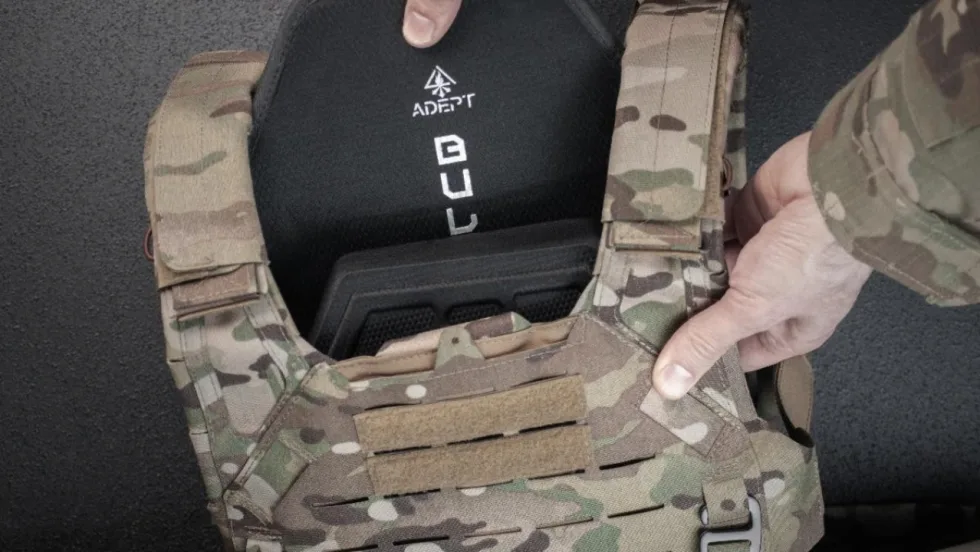
Adept Armor Introduces Two New Rifle Plates
Adept Armor has launched two new Level IV ballistic plates, the Emperor and the Archon Mark 2, which brings Adept Armor’s new Quatroid ceramic to the high-threat, performance-value center of the range at 5.2 pounds.
Read More →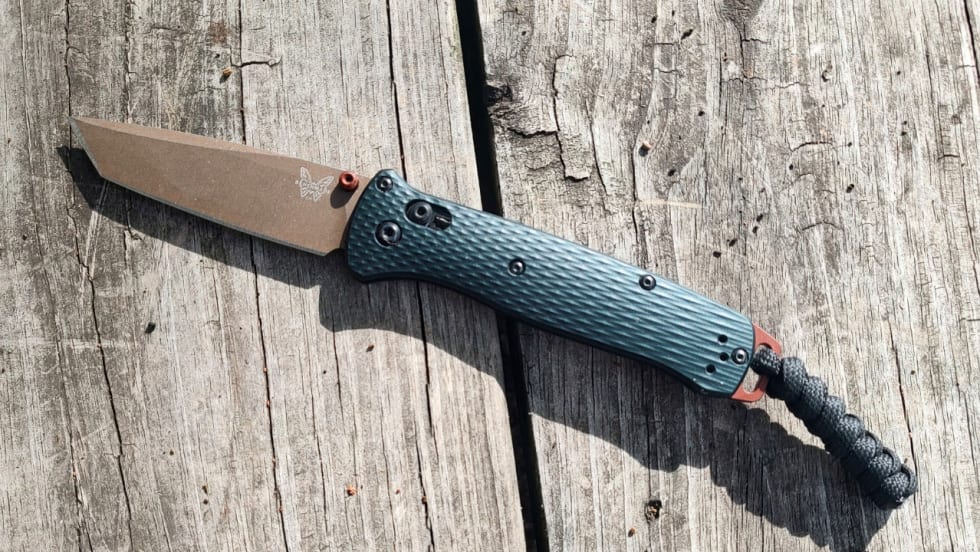
POLICE Product Test: Benchmade Bailout
The Benchmade Bailout is a slim, lightweight carry knife with a deep-ride pocket clip and comes in a variety of blade steels and scales. Here is a detailed review of the Taiga Green Bailout, released earlier this year.
Read More →
NLEOMF Announces July 2026 Officer of the Month
NLEOMF honored a Michigan deputy sheriff as the July 2026 Officer of the Month for rescuing a trapped driver from a burning vehicle following a Fourth of July crash.
Read More →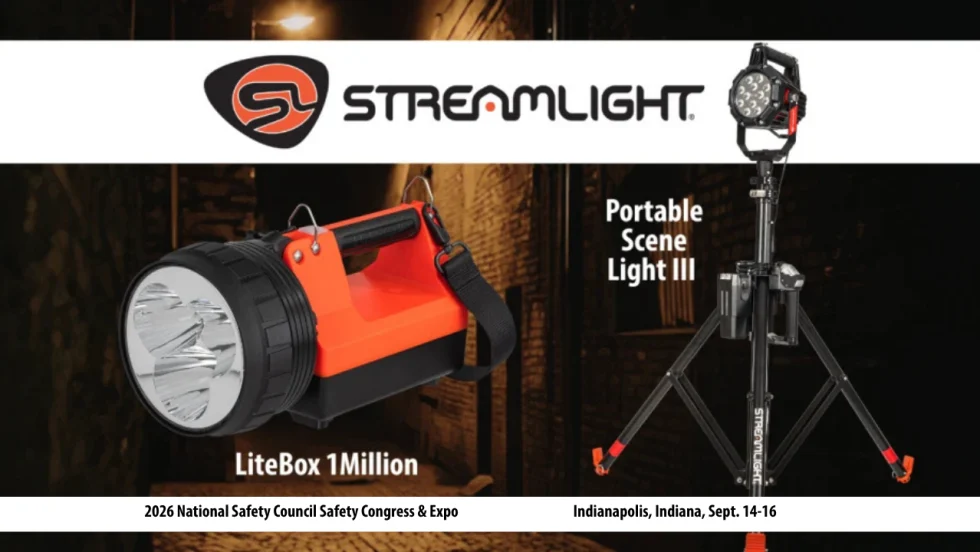
Streamlight to Showcase Newest Lighting Products at National Safety Council’s Safety Congress & Expo 2026
Streamlight will showcase its latest lights, including the Portable Scene Light III and the LiteBox 1Million, at the 2026 National Safety Council (NSC) Safety Congress & Expo.
Read More →
The 2027 World Police & Fire Games Set for Perth, Australia
The 2027 World Police & Fire Games (WPFG) will take place in Perth, Western Australia, from Friday, March 12 through Sunday, March 21, 2027.
Read More →
5.11 Partners with National Fallen Firefighters Foundation to Support #ForThe343
5.11 has joined the nationwide movement honoring the 343 New York City Fire Department firefighters lost on Sept. 11, 2001.
Read More →
Team Wendy Announces Title Sponsorship of the Jorge Pastore Foundation
Team Wendy’s 3-year partnership with the Jorge Pastore Foundation expands access to programs that strengthen those who serve.
Read More →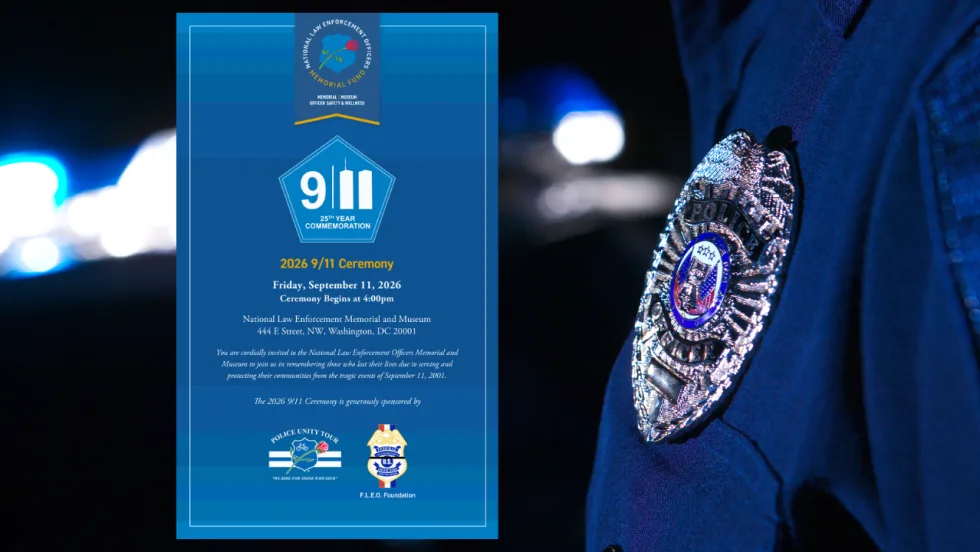
National Law Enforcement Memorial and Museum Hosting 9/11 25th-Year Commemoration Ceremony
The National Law Enforcement Memorial and Museum is hosting a 9/11 25th Year Commemoration Ceremony on Sept. 11 at 4 p.m.
Read More →
National Law Enforcement Officers Memorial Fund Announces June 2026 Officers of the Month
The National Law Enforcement Officers Memorial Fund (NLEOMF) named 15 officers of the Chico Police Department (California) as the Officers of the Month for June 2026 for their roles in responding to an active-shooter incident at a public library.
Read More →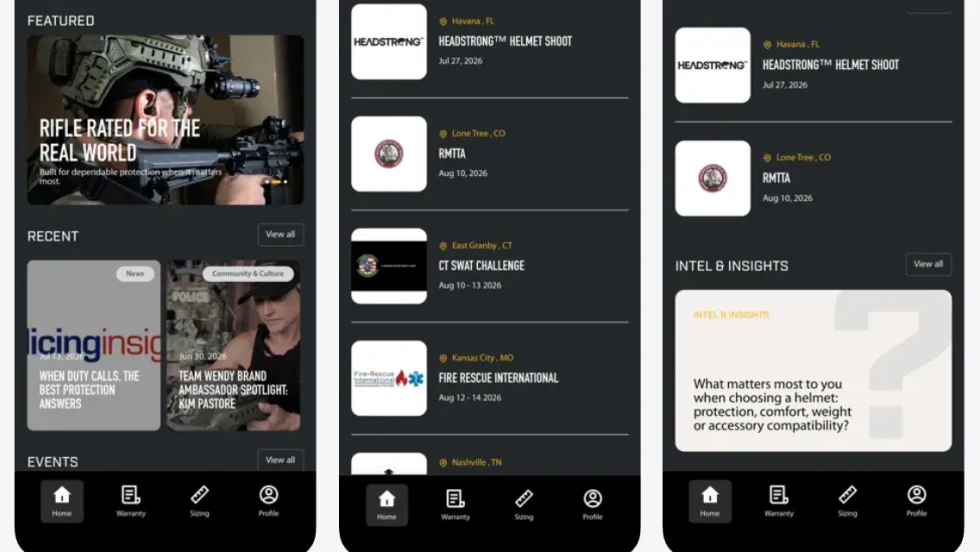
Team Wendy App Creates New Digital Hub for Helmet Owners
The Team Wendy Community App provides one location for warranty registration, size-fit tools, product updates, and community connection. For helmet owners, the new app creates a simpler path to the information and tools that matter most.
Read More →